
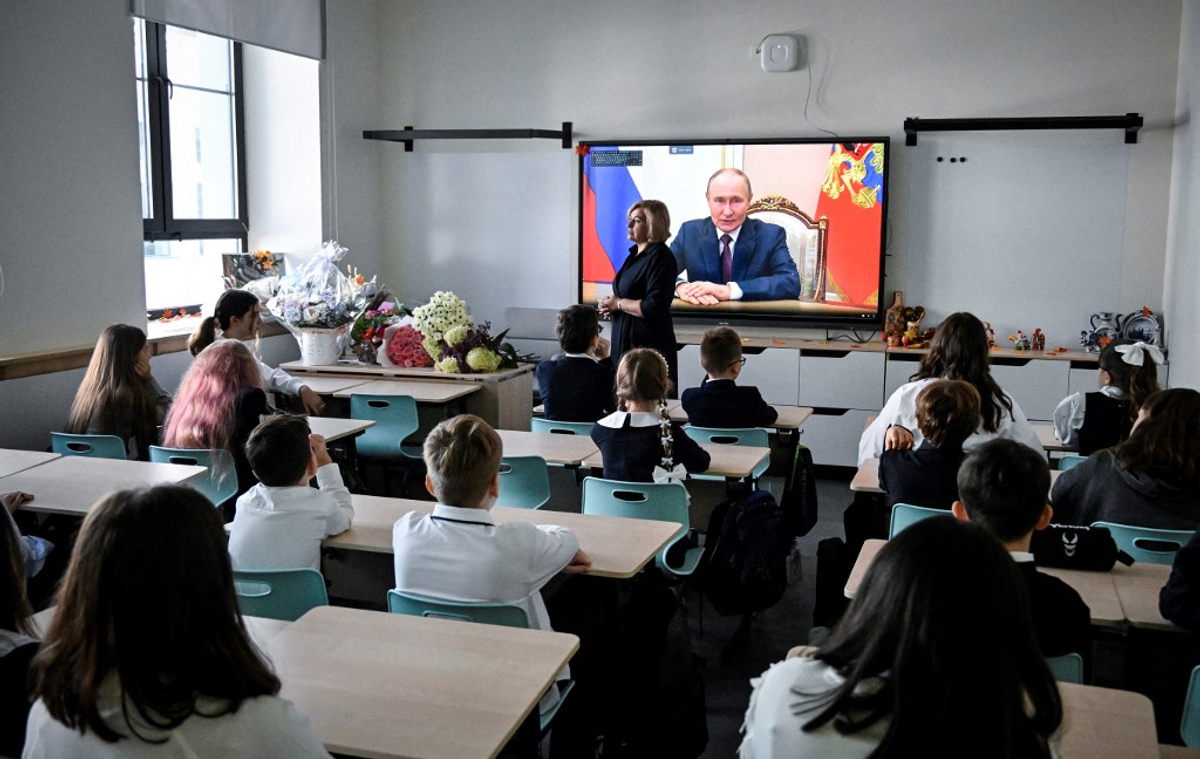
As Russia enters a fourth winter of full-scale war against Ukraine, the invasion is increasingly reshaping daily life across the country, from nightly air raid sirens in central regions to mounting economic strain in households, industries and state finances.
Dozens of regions in central and southern Russia are now exposed to drone and missile strikes hitting energy sites and residential buildings, underscoring the war’s growing influence on civilian life. At the same time, the country’s economic resilience – previously propped up by heavy fiscal stimulus and high energy revenues – is showing visible signs of fatigue, Bloomberg reported.
JOIN US ON TELEGRAM
Follow our coverage of the war on the @Kyivpost_official.
Analysts say the cumulative toll is rising even as the Kremlin shows no sign of altering its strategic course. “Based on the overall economic indicators, it would be in Russia’s best interest to stop the war now,” said Alexander Gabuev, director of the Carnegie Russia Eurasia Center in Berlin.
“Still, to want to end the war, one must see the edge of the cliff. Russia is not there yet.”
Rising costs, shrinking consumer power
Russian households are increasingly feeling the squeeze as prices outpace wages, according to locals.
“Prices are now rising faster than wages,” Elena, a 27-year-old event company manager from the Moscow region, told Bloomberg. She said she has shifted to buying fewer clothes and more domestic products as imports have become unaffordable.
Other Topics of Interest
Trump Envoys Reportedly Mulling Recognition of Russian-Held Ukrainian Lands
Diplomats and analysts warn that legalizing Russia’s territorial seizures could undermine international norms and institutionalize gains achieved through military aggression.
While Russia’s gross domestic product (GDP) previously expanded due to military-linked investment and wage growth of nearly 20% in 2024, Bloomberg reported that momentum is now fading. Although inflation eased to 6.8% in early November, analysts attribute the slowdown largely to weakening consumer demand.
SberIndex data indicates Russians are cutting back on food purchases, while retail sales of staples such as milk, pork, buckwheat and rice fell by 8-10% in September and October.
Industry slowdown, mounting debt
Russia’s broader economy is also showing deepening structural strain.
The Center for Strategic Research, a Moscow-based think tank, warned in November that “there is almost no chance left to avoid a recession,” noting output declines across more than half of Russian industries.
Steel demand has dropped sharply, coal mining is facing its worst conditions in a decade and car sales fell by nearly a quarter in the first nine months of the year, weighed down by high borrowing costs and rising taxes.
Russia’s largest grocery chain, X5 Group, reported higher revenues driven by inflation, but net income fell almost 20%, reflecting weaker purchasing power and higher operational costs.
The banking sector is also deteriorating. The share of troubled corporate debt climbed to 10.4%, while retail debt distress rose to 12%, according to the Bank of Russia.
Energy attacks deepen fiscal crisis amid trade chokepoints
Fuel prices spiked after Ukrainian drone strikes targeted oil refineries and ports across Russia. Although gasoline prices edged down in November, shortages persist in some regions and fuel shipments have declined to their lowest levels since the invasion began.
Oil and gas revenues fell by over 20% in the first ten months of the year, further weakening state finances. The budget deficit reached 1.7% of GDP in October and is expected to rise to 2.6% by year-end, while the government expands borrowing and prepares a yuan-denominated bond sale to plug fiscal gaps.
The strain is compounded by recent disruptions to key supply routes, as Russia faces growing bottlenecks on overland corridors through Central Asia, where tightened enforcement of secondary sanctions by Kazakhstan has stalled the transit of essential goods and components, pressuring an already overstretched economy.
Underutilized economic leverage
The economic pressure coincides with increasing Western pressure on Russia’s energy revenues as Washington seeks leverage for a potential ceasefire. Momentum for negotiations is growing, with US and Russian talks occurring behind the scenes over proposals that could include sanctions relief.
However, the growing strain has led some observers to question why this economic leverage is not being more forcefully applied in negotiations, as the emerging peace framework appears to demand few concrete compromises from Moscow despite its mounting financial exposure.
Warning signs intensify
A Russian researcher has warned of an impending crisis.
“The immunity of the Russian economy has been severely weakened,” said Oleg Buklemishev, head of the Center for Economic Policy Research at Lomonosov Moscow State University. “A systemic crisis may not occur in 2026, but a steady deterioration in economic conditions will continue.”
He added that maintaining normal economic functioning would require scaling down military operations.
“The realization they need to make the choice has not fully come, but the warning bells are already ringing,” he said.
Despite these pressures, Bloomberg noted that the suffering remains far from the scale experienced in Ukraine and is unlikely, for now, to compel Kremlin leader Vladimir Putin to reverse course – even as the economic cost of war continues to embed itself into Russian daily life.