
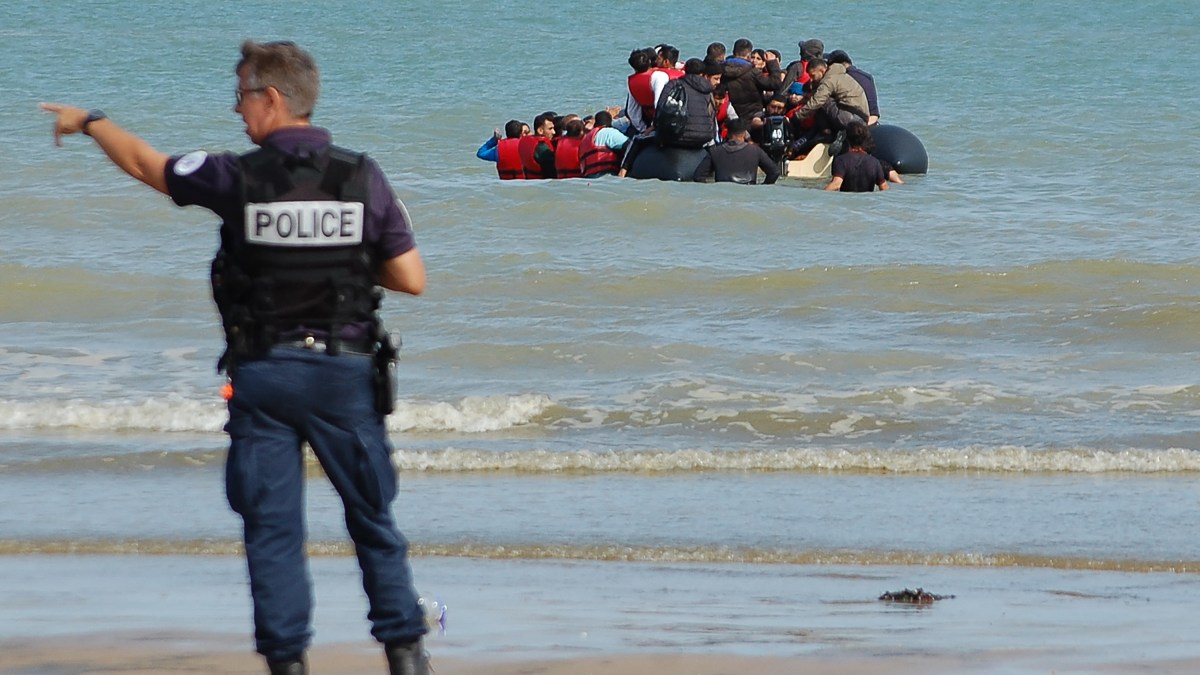
Sir Keir Starmer has admitted there is “no effective deterrent in the Channel” as the French finally authorised police to start intercepting small boats.
France bowed to months of pressure from the UK government to start implementing a plan first agreed by Starmer and Emmanuel Macron in July to allow police to intervene to stop boats in shallow waters.
However, the new power for police to intercept boats will be limited as it will only allow them to intervene against boats before they have picked up migrants.
It is designed to tackle the tactic used by people smugglers to avoid detection by the French police whereby they launch dinghies from more discreet locations on inland waterways before making their way to collect migrants from beaches where they are asked to wade into shallow waters to board the boats.
The new maritime doctrine adopted by the French gendarmerie — one of France’s two national police forces — falls short of British demands for them to intercept boats packed with migrants up to 300 metres into the sea.
It has emerged that Starmer wrote to the French president earlier this month after months of delay in implementing the new tactics.
In a letter to Macron, first reported by the French daily newspaper Le Monde and confirmed by Downing Street sources to The Times, Starmer said the measures were urgently needed because of the lack of measures to deter migrants making the dangerous crossings.
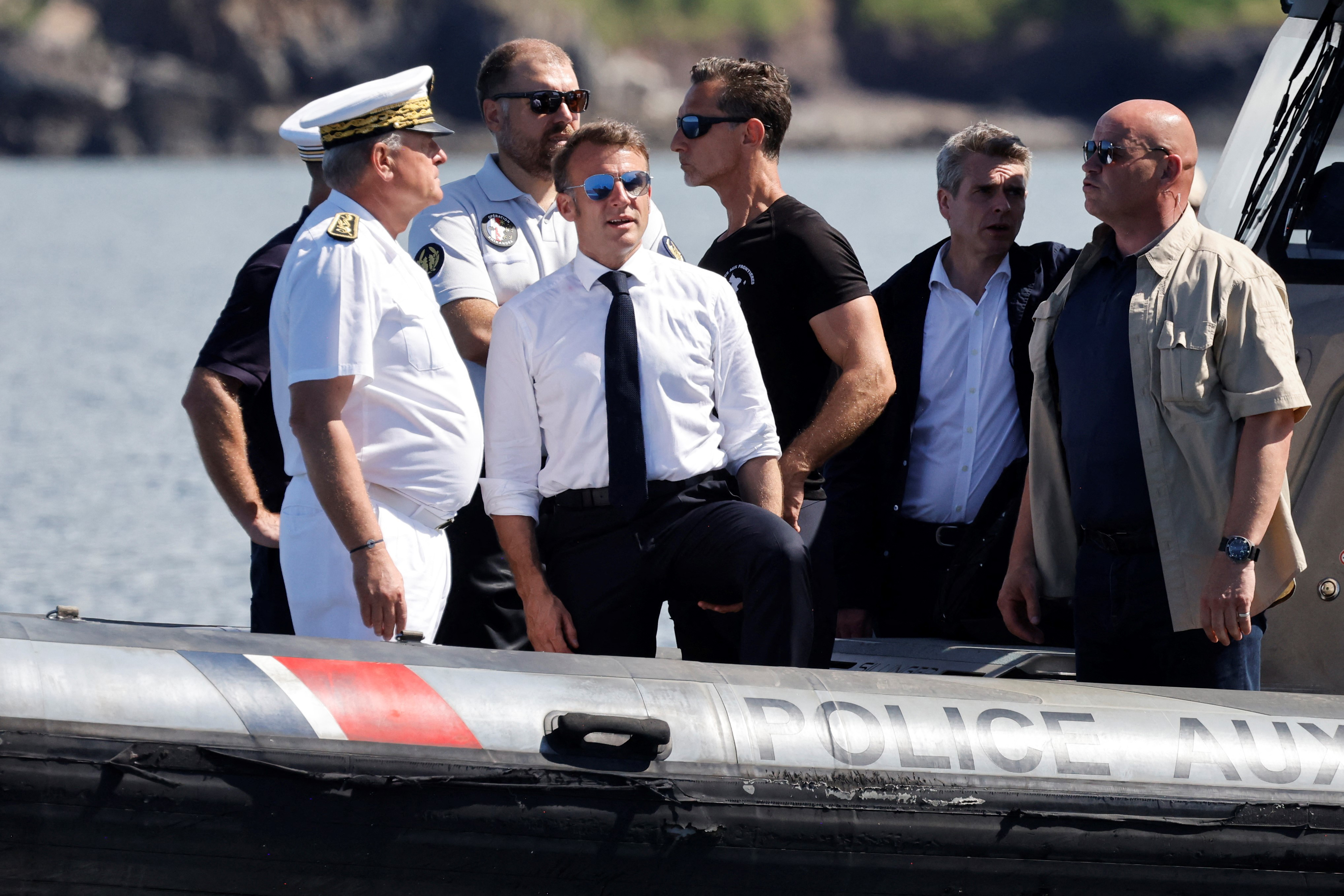
President Macron on patrol with officials
LUDOVIC MARIN/AFP/GETTY IMAGES
Starmer wrote: “It is essential that we deploy these tactics this month … We have no effective deterrent in the Channel.”
It is the first time Starmer has explicitly admitted that his government is failing to deter migrants crossing the Channel in small boats.
Downing Street confirmed that the prime minister had written to Macron about the issue.
A spokesperson said: “We continue to work closely with our French partners on the shared challenge of illegal migration, and we have already worked to ensure officers in France review their maritime tactics so they can intervene in the shallow waters.”
The new powers were outlined in a confidential document signed by four senior interior ministry officials this week.
Under current police rules, officers can intervene on the shore to prevent boats being put in the water, but are powerless once they are at sea.

People thought to be migrants wading through the sea to board a small boat in Gravelines, France
GARETH FULLER/PA
In July, France vowed to review its maritime rules to allow police to intervene when boats are in shallow water, rather than requiring them still to be on land. However, the change stalled due to concerns from police unions worried about the liability of officers whose actions may inadvertently lead to fatalities. The French political crisis has also been blamed for delaying the plans.
Martin Hewitt, Britain’s border security commander, admitted to MPs last month it was “frustrating” it had taken time to bring in the rules. Downing Street said: “As you know, we never comment on reported leaks of private correspondence. “ou’ll be aware that the prime minister and President Macron speak regularly on this topic, and we always want to go further on our work with our French partners on tackling illegal migration.
“Our close co-operation with the French continues and has prevented over 20,000 crossings this year. That close co-operation obviously includes our landmark one in, one out scheme and, for the first time ever, we’ve secured agreement from the French to review their maritime response so their border enforcement teams can intervene on shallow waters.”
Asked about the lack of a deterrent, the spokesman said: “The position the government inherited was having no effective deterrent. It was a Rwanda gimmick that spent over £700 million to remove just four volunteers.”
The spokesman said there was “no silver bullet” to tackling the crossings but “it is crucially important that, under this government, we have secured, for the first time, agreement for the French to review their maritime response so that their border enforcement teams can intervene in shallow waters”.
The document leaked to Le Monde said that gangs have developed an “almost infallible” method of avoiding the police, which involves launching the boats further down the coast and then picking up migrants who wade into the water, mainly from beaches around Dunkirk. The document said the “taxi boats” have an 81 per cent “success” rate.
The issue has caused frustration among British ministers and officials trying to curb the crossings.
The Conservatives said Starmer was effectively admitting that it was a mistake to scrap the Rwanda scheme.
Chris Philp, the shadow home secretary, said: “This is a staggering admission of failure by Keir Starmer. He is admitting that his smash the gangs gimmick, his ‘one in, one out’ gimmick and his asylum reforms are not deterrents.
“He is now admitting that it was a catastrophic mistake to cancel a deterrent plan that was available — Rwanda — just days before it was due to start. Crossings have surged as a result and Starmer is effectively now admitting that it was his fault.”
Under the new doctrine, the gendarmerie will be able to employ “graduated and reversible measures” against the boats, including an order to stop and if that is not obeyed, their “immobilisation” and “rerouting”. Le Monde said maritime gendarmes would use nets to halt the boat propellers.
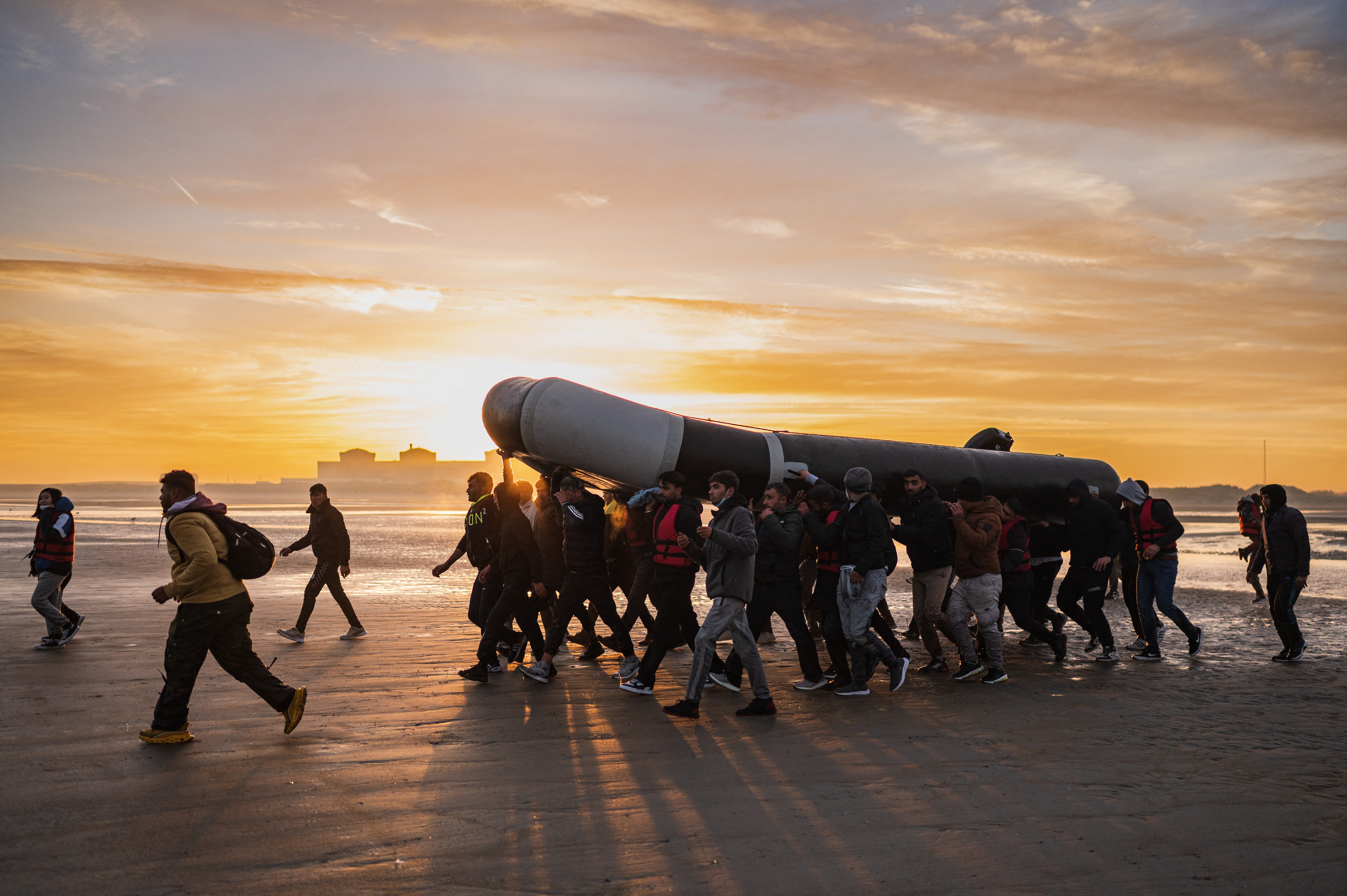
Migrants prepare to embark on a Channel crossing from France
SAMEER AL-DOUMY/AFP/GETTY IMAGES
The people smugglers piloting the boats will be handed over to the police, the document says.
Le Monde said the gendarmerie vessels will be accompanied by a lifeboat on each occasion, suggesting that there will only be a limited number of interventions.
The newspaper said the change in tactics was contested within the French government amid fears that it could lead to drownings, with officers held responsible if that happens.
The document says that the “absolute priority” is saving lives and advises government press officers to underline this aspect of the policy and also the prosecution of people . “The communication will seek to highlight the preventive safeguarding of human life in this type of intervention and the [prosecution] of the people smugglers”.
• On the Bulgarian border, where fight to stop Channel boats begins
Meanwhile, the Home Office announced that a migrant who re-entered Britain after being deported to France under the “one in, one out” deal was removed on a flight on Thursday.
The unnamed man is among the 153 migrants who have been removed under the returns deal with France since the scheme was first enacted in September.
He was initially removed to France on October 16 but returned on a small boat on November 8.