
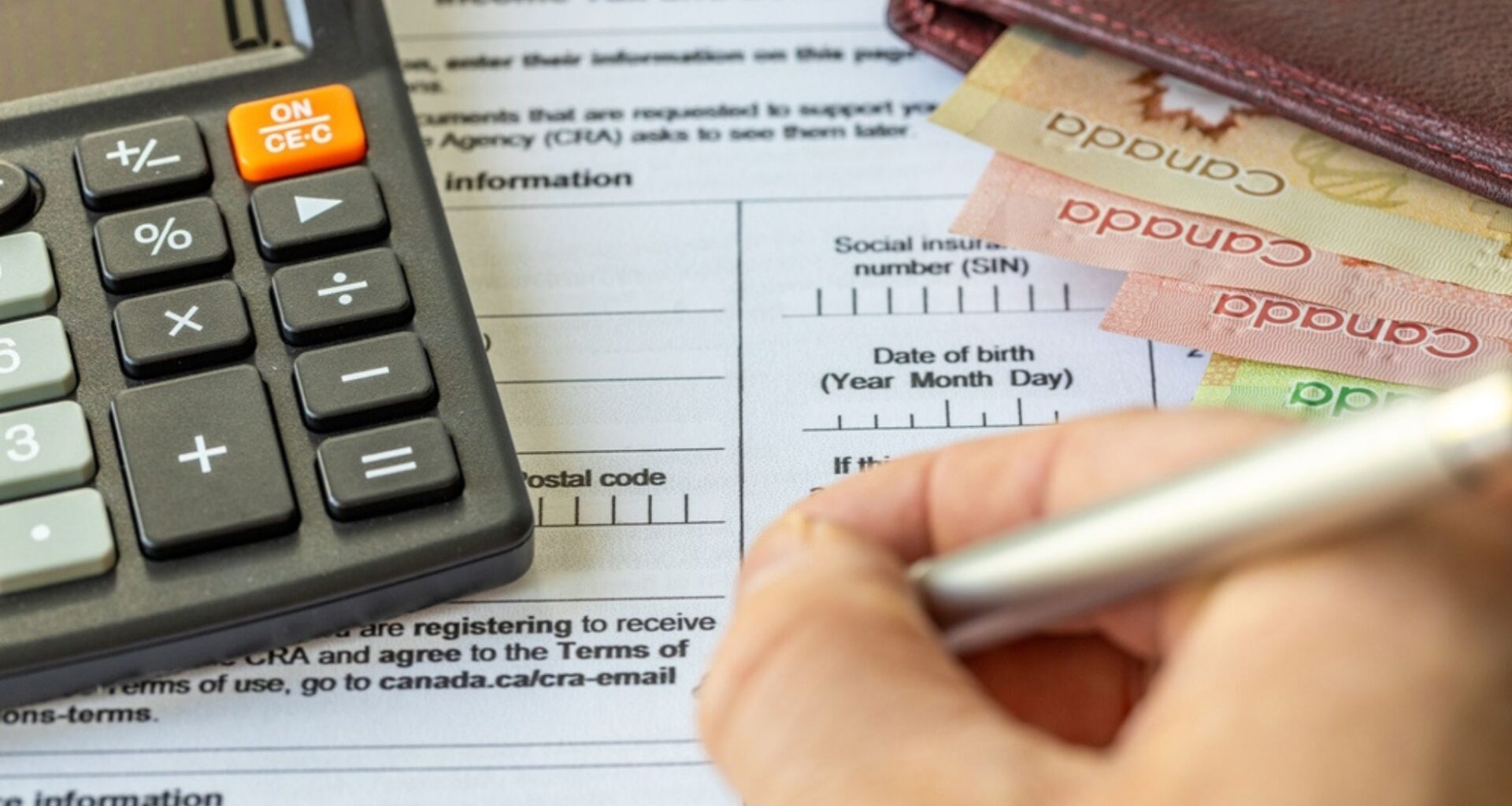
Canada has announced the income tax thresholds for 2026, and your tax bracket will change slightly next year.
The Canada Revenue Agency (CRA) revealed the new federal income tax brackets, adjusted for inflation, this week. While federal tax rates are the same, the income thresholds for each bracket have shifted.
According to the agency, in 2026, the indexation increase will be two per cent, which is lower than the 2.7 per cent increase in 2025.
Vergani Fotografia/Shutterstock
This is how much income tax you’ll have to pay next year based on your bracket:
Less than or up to $58,523 — 14 per cent
Between $58,523 and $117,045 — 20.5 per cent
Between $117,045 and $181,440 — 26 per cent
Between $181,440 and $258,482 — 29 per cent
$258,482 and over — 33 per cent
In July, Canada cut the lowest marginal personal income tax rate from 15 to 14 per cent, which is reflected in the brackets for 2026.
The middle-class tax cut will reduce the tax rate that is applied to the first $58,523 of an individual’s taxable income in 2026, regardless of their income level.
A majority of the tax relief will go to Canadians in the two lowest tax brackets, including nearly half to those in the first bracket.
Ottawa says the maximum tax savings will be $420 per person and $840 per couple in 2026. All in all, this is expected to deliver over $27 billion in tax savings to Canadians over five years, starting in the 2025/2026 tax year.
The CRA’s indexation increase will also affect the amounts of certain income-tested benefits like the GST credit, the Canada Child Benefit, and the Child Disability Benefit. These increases will kick in on July 1, 2026, which is the beginning of the new benefit year.