
Social service providers working with Southland’s most vulnerable say there has been a concerning rise in people doing it tough.
Food distributions climbing at local schools, severe weather displacing rough sleepers and a stretched middle class are just some of the issues at play.
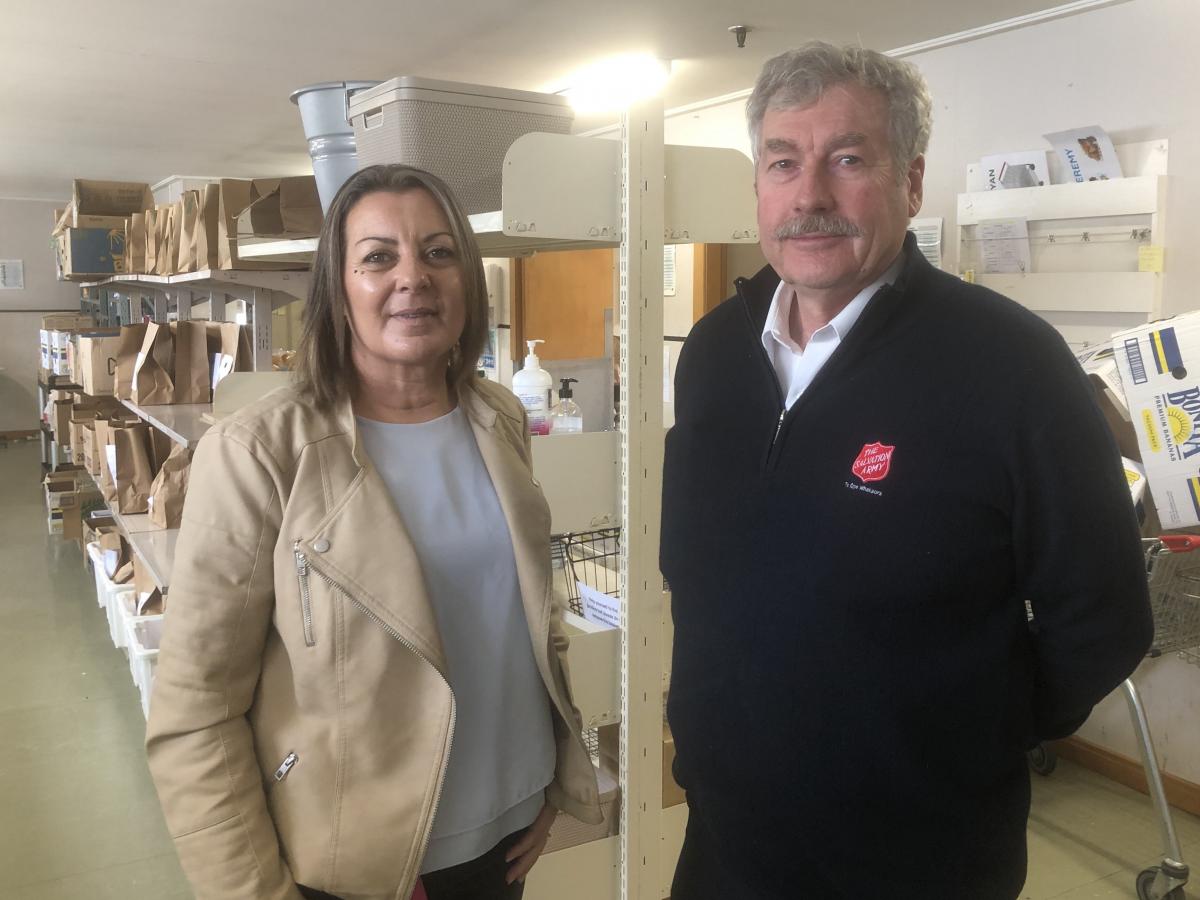
Salvation Army Invercargill community ministries manager Cathy Strong said it was “shocking” to see the number of new families coming through their doors, including a bump in the middle-income demographic.
Over a one-week period this month, more than 30 new families reached out for help.
“So I found it quite a sad shift, to see how much more the community is hurting.
“I mean they were hurting before, but now it’s even escalated further than that.”
Rising rent seemed to be an annual issue, and increased power costs over winter were problematic.
“They’re robbing Peter to pay Paul, and it’s finally caught up with them and so they’re coming asking for help.”
Homelessness was also an issue in the city with the Salvation Army estimating about 50-60 people fit that category, including those living in cars.
The Invercargill City Council this year delayed a cost-cutting decision to close a community shower used by the homeless as other alternatives could not be found.
Recent extreme weather had proven problematic for people living in places such as Queens Park and Thomsons Bush, Salvation Army Major Murray Sanson said.
“It affected a lot of our homeless ones because there were certain shelters the wind just whipped around.”
He indicated life was getting harder for homeless people around the country, noting issues in Tauranga and Rotorua closing emergency housing.
He also criticised banks for not doing more to support people, saying the economy was “geared up against the poor”.
“To try and reform society [so] that we don’t have homeless, it’s going to mean that people [have] got to be a lot less selfish.”
In discussing the city’s most vulnerable, Mrs Strong and Maj Sanson highlighted the nuance of owning a pet.
Maj Sanson said some people could not get a rental property because they had a dog but would rather live in a car than give up that companionship.
“It’s a huge challenge for them to say no to their animal just so they can get a roof over their head.”
Often, it was pets that had saved people, Mrs Strong said.
“Their pets haven’t failed them, and they’ve been loyal and they’ve stuck with them.”
The issue of homelessness reared its head at the Invercargill City Council this year when a decision was made to close one of the only facilities available to people living rough.
In May, the council voted to close the Wachner Pl toilet and shower facility to save costs, on the proviso alternative locations were explored.
Council group manager Trudie Hurst said homelessness was a diverse term which covered a broad range of experiences.
It was difficult to get an accurate estimate of how many there were in the community.
The council regularly participated with the Southland Community Housing Network which had discussed an emergency night shelter in the city, she said.
Closure of the Wachner Pl facility was ultimately delayed, and the council is working on a contract to continue operating it until March 31 next year.
KidsCan founder and chief executive Dame Julie Chapman said the cost-of-living struggle was stretching into middle income households as well.
More children were going without the basics.
“For households everywhere there’s little to no buffer against unexpected bills or price rises.”
In Invercargill and wider Southland, there had been a 60% increase in food distributed to schools since the start of the year, coming in at almost 8tonnes.
The need for jackets in the region had risen by 47% compared with last year.
Dame Julie’s organisation was also witnessing a nationwide issue which she described as “awful and heartbreaking” — children taking turns to share shoes.
KidsCan had 58 schools on its national wait list, meaning there were 10,000 children who still needed support.
“For many people, they’re just a payday away from being plunged into poverty.”
— Matthew Rosenberg, Local Democracy Reporter
— LDR is local body journalism co-funded by RNZ and NZ On Air