
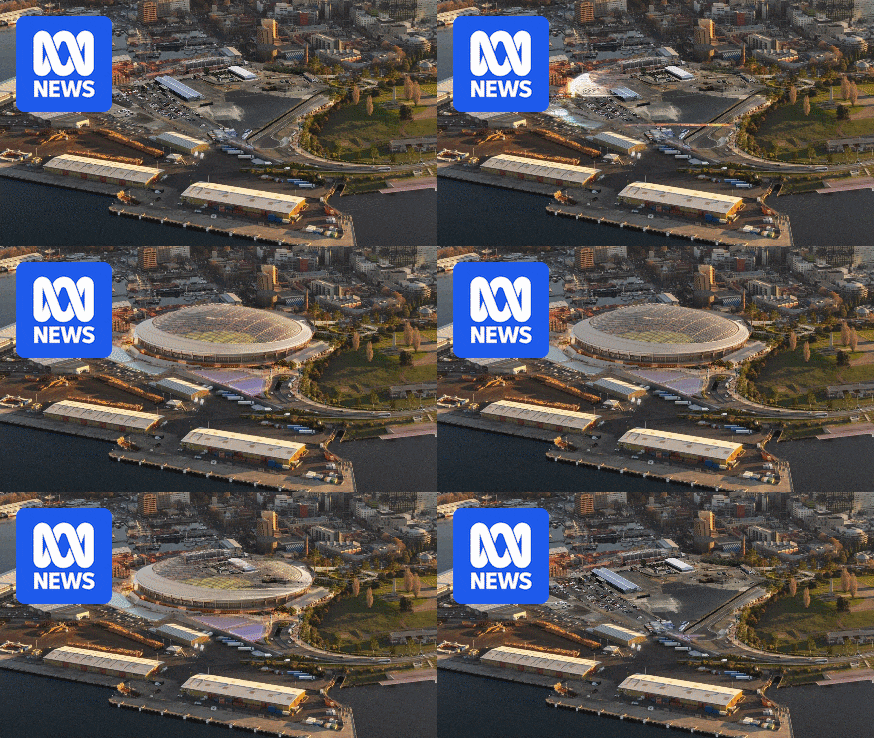
Since its inception, the stadium project has divided the Hobart community in a tug of war between development and preservation of its historic waterfront.
In just days, parliament will decide on whether it will go ahead or not.
A ‘Yes’ vote will change the face of Hobart.
Loading…
Emily Mifsud thinks a Hobart stadium will kick Tasmania into the future.
“If this doesn’t go ahead now, I don’t think it’s ever going to go ahead, we’re in the best position for this to happen.”
The 30-year-old moved to Tasmania nine years ago and plays for the North Hobart Football Club.
“There have been multiple times I’ve actually thought about leaving … but this opportunity here would definitely keep me longer, if not forever.”
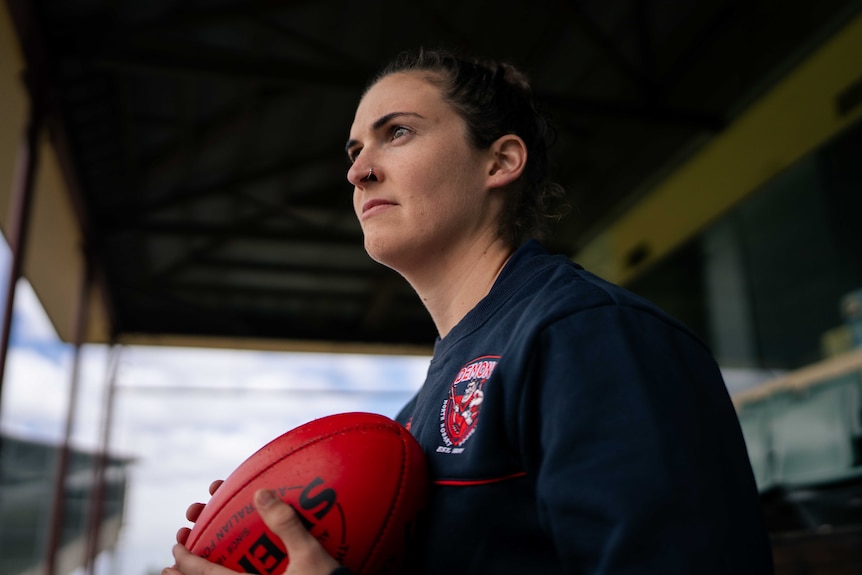 Emily Misfud is a keen Aussie Rules player.(ABC News: Ebony ten Broeke)
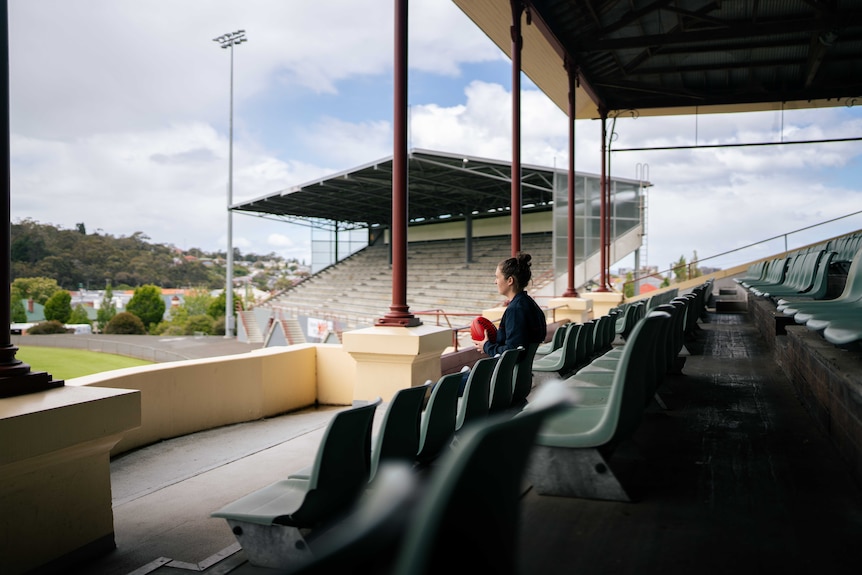 She wants to see the stadium built.(ABC News: Ebony ten Broeke)
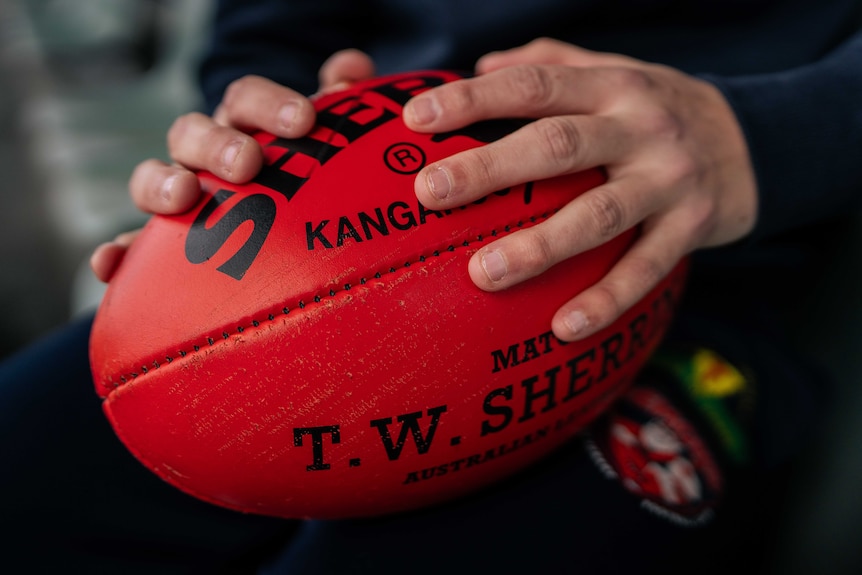 Footy is her passion.(ABC News: Ebony ten Broeke)
She says the sporting opportunities across different codes at the proposed stadium, including cricket, will be invaluable for the state. So too will concerts and other cultural events.
“I understand it’s going to cost a lot of money to build it, but every kind of large infrastructure is going to cost a lot of money, so I think you put the money into it, then you’re going to grow the money back.”
The stadium is set to cost $1.13 billion — a figure which has ballooned from $715 million in 2022.
A roofed stadium at Macquarie Point is a requirement for the Tasmania Devils to obtain an AFL licence.
“It’s not just about playing football, it’s coming back to work at the stadium or to be a part of it,” Ms Mifsud says.
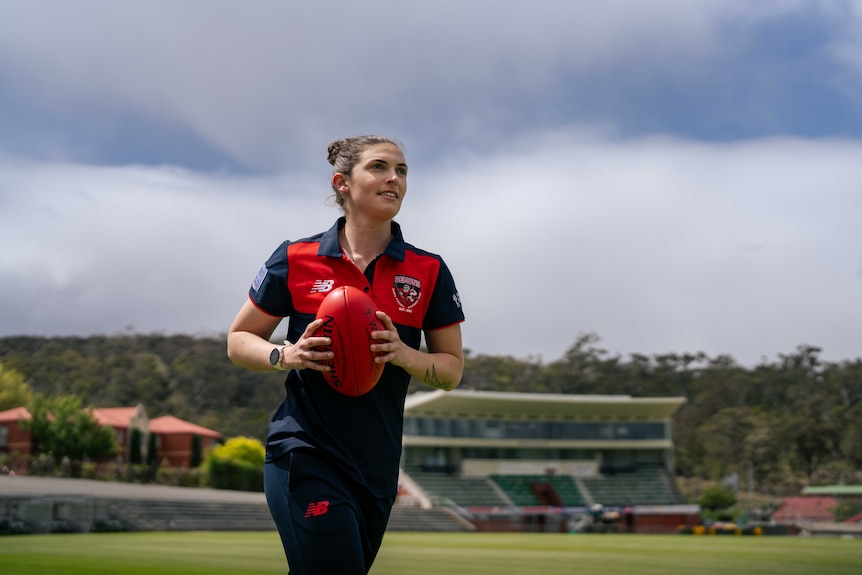 She began playing Aussie Rules five seasons ago. (ABC News: Ebony ten Broeke)
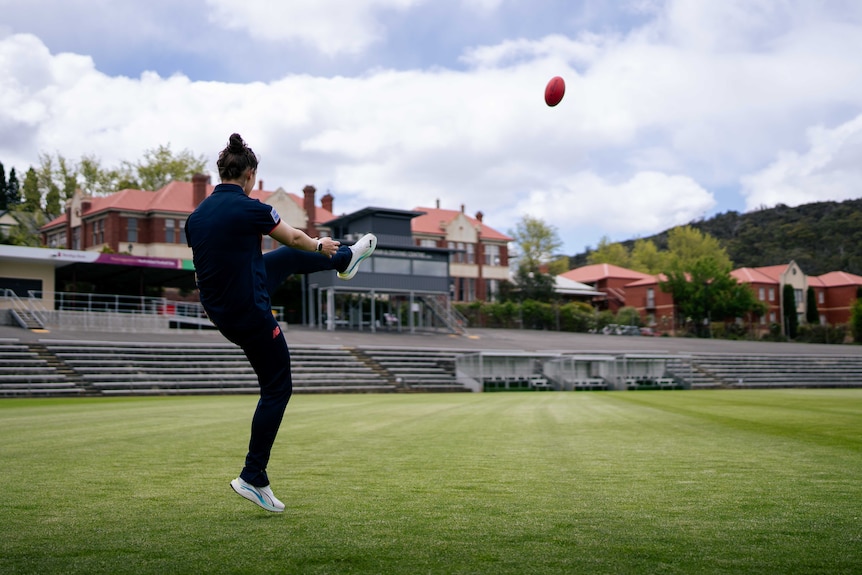 She kicked the winning goal in her team’s grand final this year, winning them the premiership.(ABC News: Ebony ten Broeke)
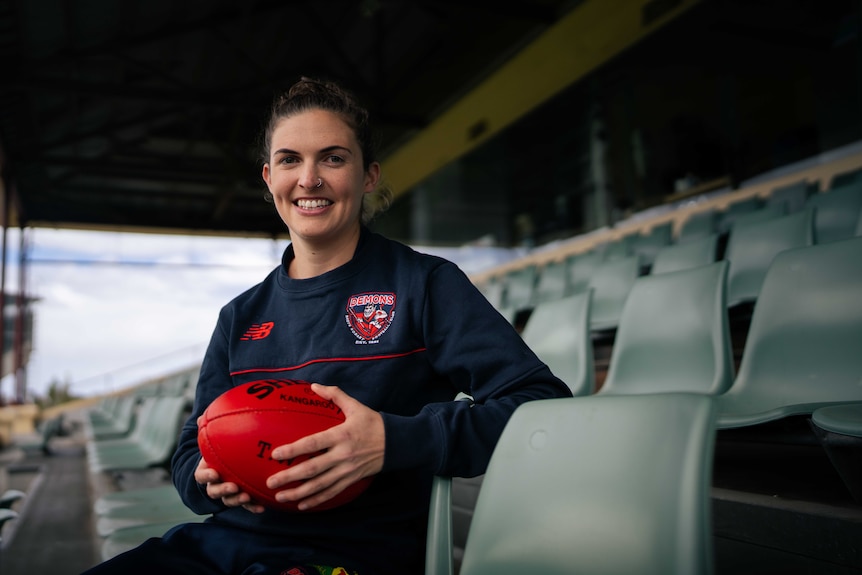 A stadium and team will transform Tasmania, she thinks. (ABC News: Ebony ten Broeke)
Although she says she may be a bit too old when 2028 rolls around and the AFL team bounces off, she can see the hope in the eyes of her younger teammates.
“I know they all dream about it and up until now they probably never thought it was possible,” she says.
“But now hearing that the AFL licence is there as long as the stadium goes ahead … all their dreams are achievable … the sky’s the limit for all of them.”
Loading…
For RSL Tasmania president Mike Gallagher, the decision of whether a stadium is built at Macquarie Point is a matter of respect.
The Hobart Cenotaph turns 100 years old in December.
It was erected to honour Tasmanian service people who died in battle.
The Cenotaph on the hill is visible from afar.
“This area has an ambience, it’s open,” Mr Gallagher says.
“It was built for a reason here and that reason, we believe, will be destroyed if the stadium goes ahead at the current location.”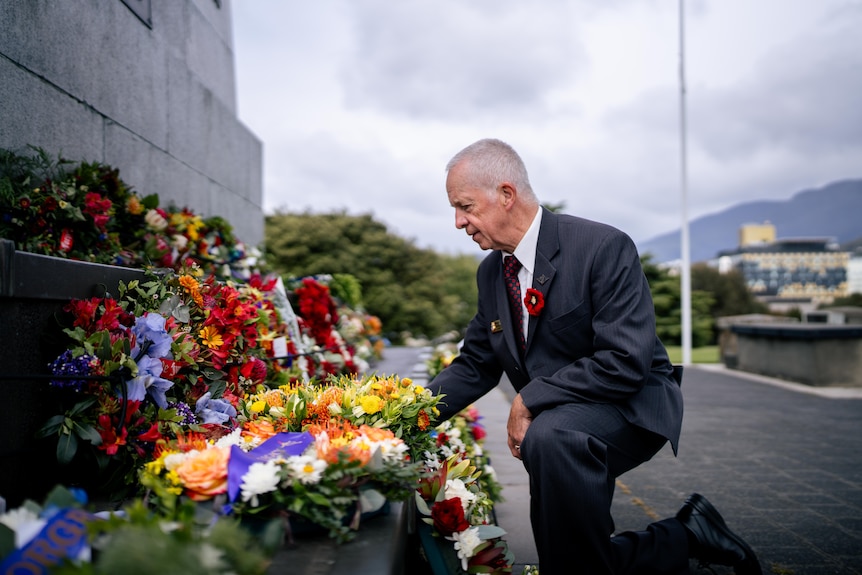 Mike Gallagher is the President of RSL Tasmania. (ABC News: Ebony ten Broeke)
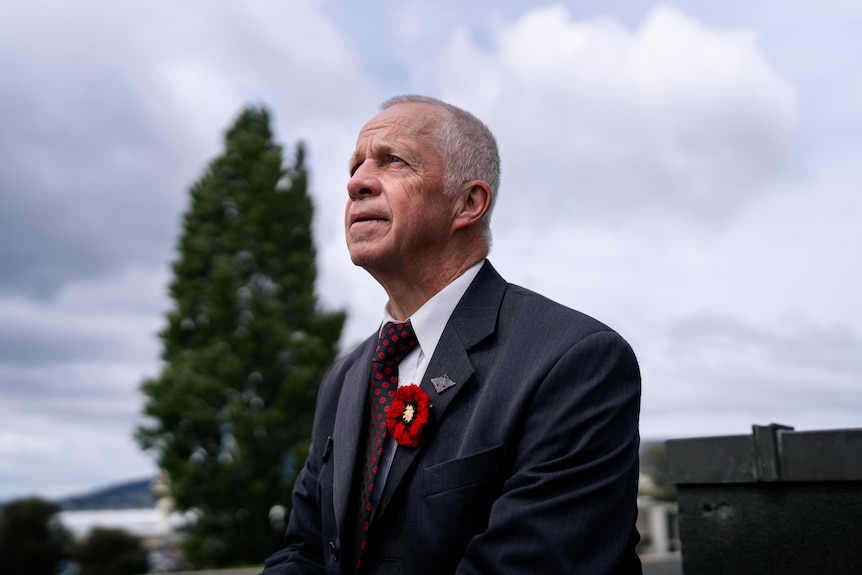 RSL Tasmanian is worried the stadium will override the Cenotaph. (ABC News: Ebony ten Broeke)
 Mike Gallagher represents veterans and servicepeole in Tasmania.(ABC News: Ebony ten Broeke)
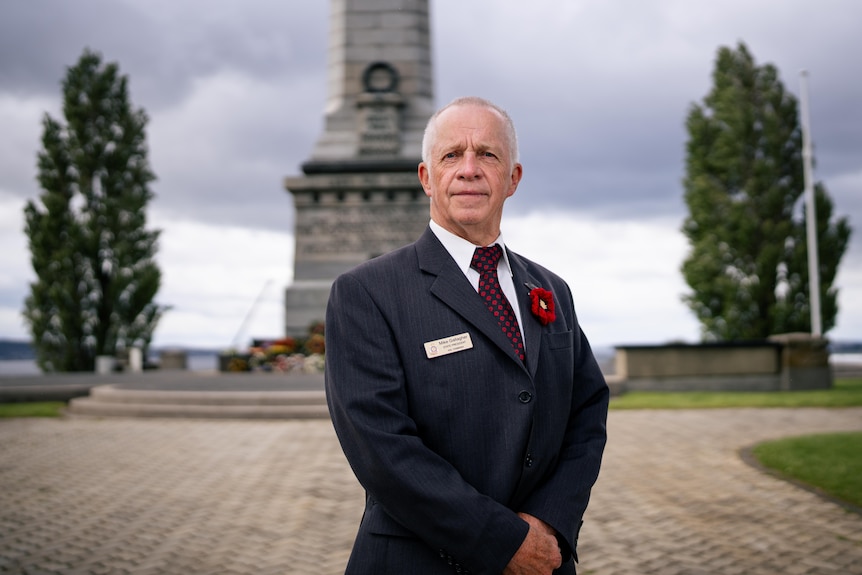 Mike Gallagher supports the team and a stadium, but at a different site.(ABC News: Ebony ten Broeke)
Along with disrupting the ambience, Mr Gallagher says the stadium will block two major sightlines to the Cenotaph: St George’s Church at Battery Point and the mouth of the River Derwent.
“How do we explain to our veterans, how do we explain to our children in the future that we decided to give something up so easily? That’s what we’re fighting for.”
Mr Gallagher says he still wants the men’s and women’s AFL teams.
But when it comes to the current site of the proposed stadium, it is a “No”.
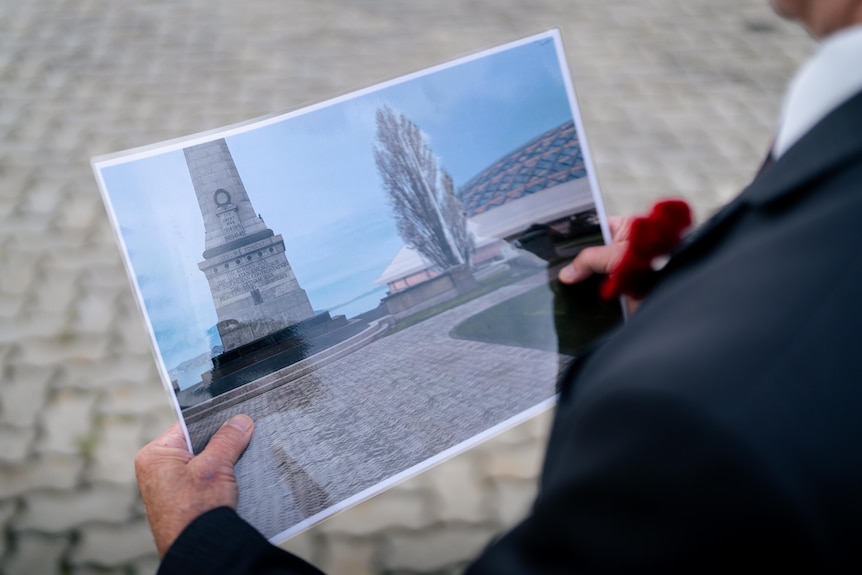 The proposed stadium will stand at 54 metres tall at its peak.(ABC News: Ebony ten Broeke)
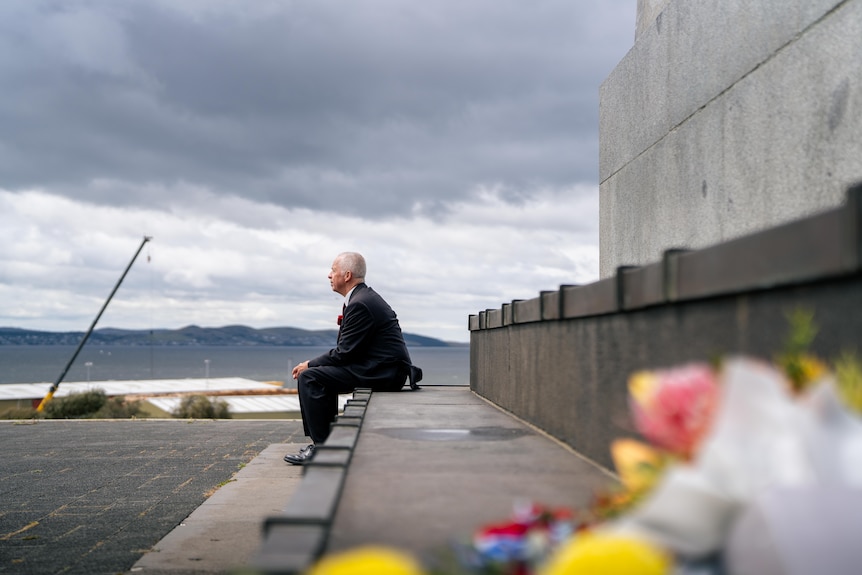 RSL Tasmania have been vocal about their opposition, but Mike Gallagher said he respects the democratic process.(ABC News: Ebony ten Broeke)
For years, the Tasmanian government has stuck to a promise that the state’s capital spend on the stadium will be capped at $375 million.
Another $240 million will flow from the federal government for the wider urban renewal precinct, of which the stadium is the centrepiece. And the AFL will stump up a further $15 million.
The rest will come from debt, with state-owned Macquarie Point Development Corporation to borrow the remaining $490.7 million from the government to pay for construction.
The government intends to eventually recoup some of that by selling off parcels of the wider precinct.
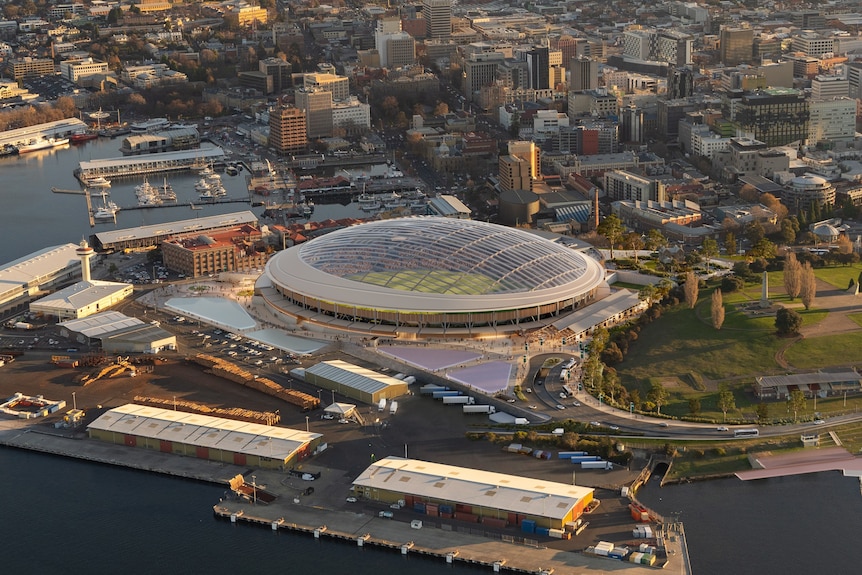 The stadium would dominate Macquarie Point.(Supplied: MPC)
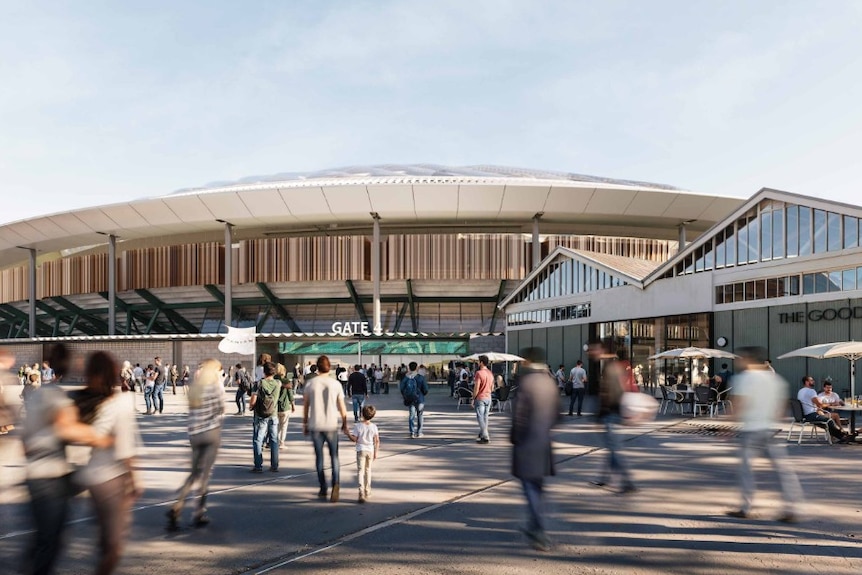 The proposed stadium seen from Gate 4.(Supplied: Macquarie Point Development Corporation)
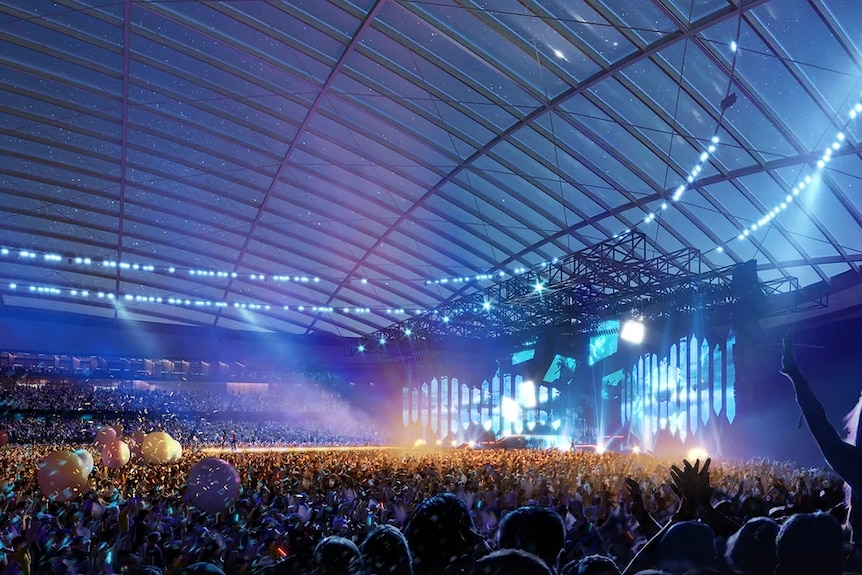 The stadium would also be used for other events, such as concerts.(Supplied: Macquarie Point Development Corporation)
There are those who say either the state can’t afford it or that it doesn’t make sense for the location.
In its report assessing the project, a Tasmanian Planning Commission panel forecast the stadium would add an extra $1.8 billion to the state’s debt over 10 years.
The panel has since told a parliamentary committee that those costs will have risen after Tasmania’s credit rating was downgraded in November and borrowing costs were forecast to rise.
The project’s high costs and low returns will “diminish the economic welfare of Tasmanians as a whole,” planning commission report found.
The panel ended up recommending against building the project.
“The fundamental problem is the size, location and geographical features of the site, in its highly valued context, do not support the disproportionately large, monolithic building proposed,” the report reads.
But that didn’t matter to the Liberal government, which had already decided to push ahead with the project by drafting an order to parliament, bypassing the Project of State Significance assessment process.
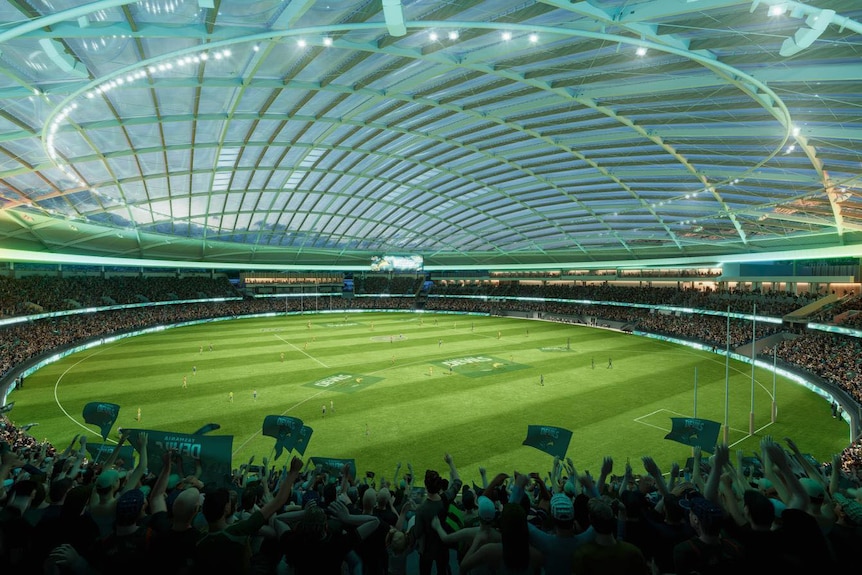 The stadium would host the state AFL team, the Tasmania Devils.(Tasmanian government)
The government’s order easily sailed through the lower house with the support of the Liberals and Labor earlier in November.
The final decision to approve or reject the project will be determined in a vote in parliament’s independent-dominated upper house, likely this Thursday.
With most upper house members already making their positions clear, the decision is expected to rest on the shoulders of two independents — Bec Thomas and Dean Harriss.
Loading…
The “No” state is what publican Ben Hickey is scared Tasmania will be known as if the vote fails.
Ben owns a popular pub in Salamanca, one of the hospitality hubs of Hobart.
To him, the stadium presents an unmatched opportunity for his sector.
 Ben Hickey believes a stadium will be good for hospitality venues.(ABC News: Ebony ten Broeke)
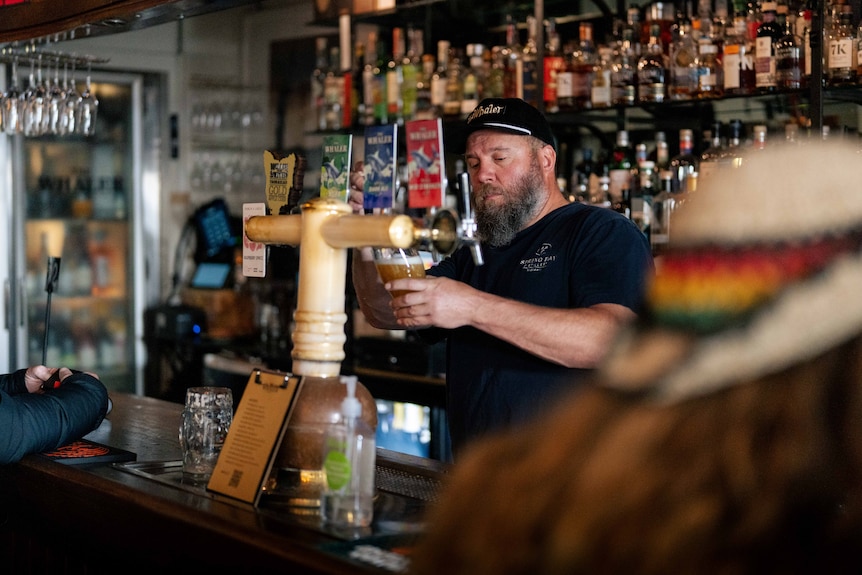 The Whaler Pub in Salamanca Place, Hobart.(ABC News: Ebony ten Broeke)
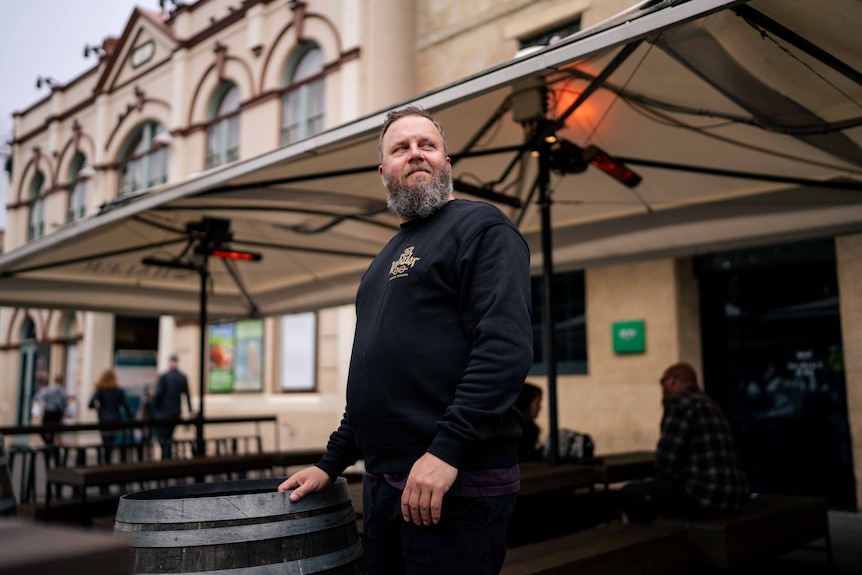 Many hospitality venues are hopeful the stadium will benefit their businesses. (ABC News: Ebony ten Broeke)”You’d be hard pressed to find any hospitality operator that would be against this; it would have such a positive impact.”
Tasmania’s winter arts and music festival Dark Mofo has become one of his busiest times of year, thanks to an influx of interstate visitors.
“I think the football would have a remarkably similar effect on the city, it would really light the city up for those weekends that we have the thousands of people.”
He says he understands the desire to preserve the visage of the city.
“The speed of life in Hobart can be a little slower than the rest of the states, and I understand that people would want to protect that,” he says.
“But we still need positivity to maintain our population and grow our population.”
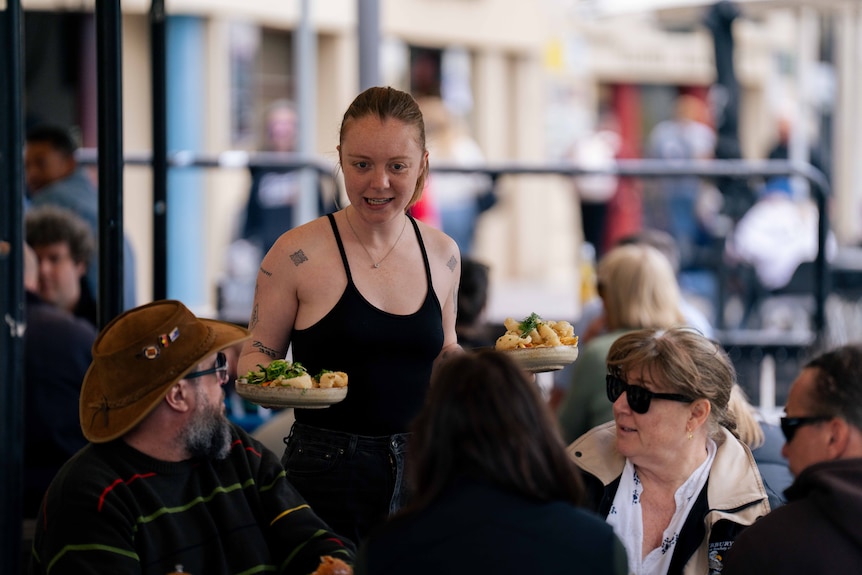 Pubs, restaurants and cafes are popular at Salamanca Place.(ABC News: Ebony ten Broeke)
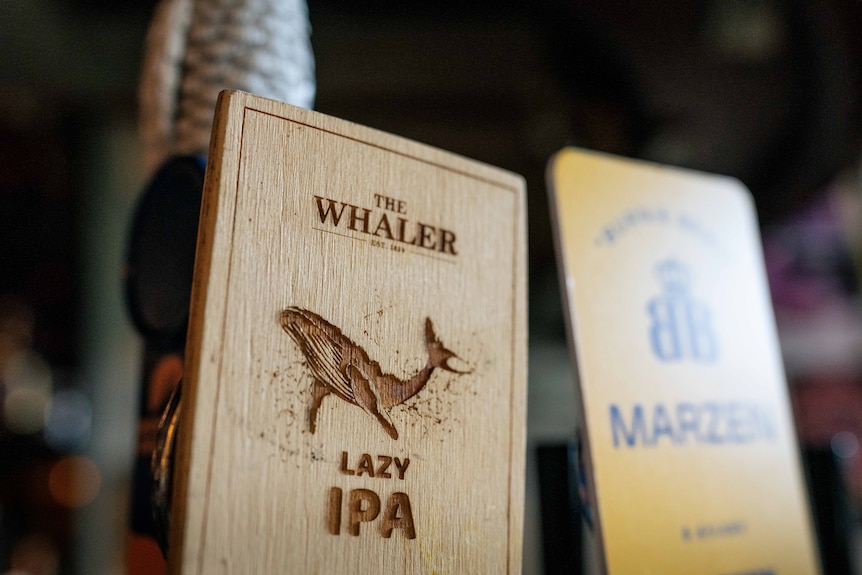 The Whaler Pub.(ABC News: Ebony ten Broeke)
 There are many popular venues on Hobart’s waterfront.(ABC News: Ebony ten Broeke)
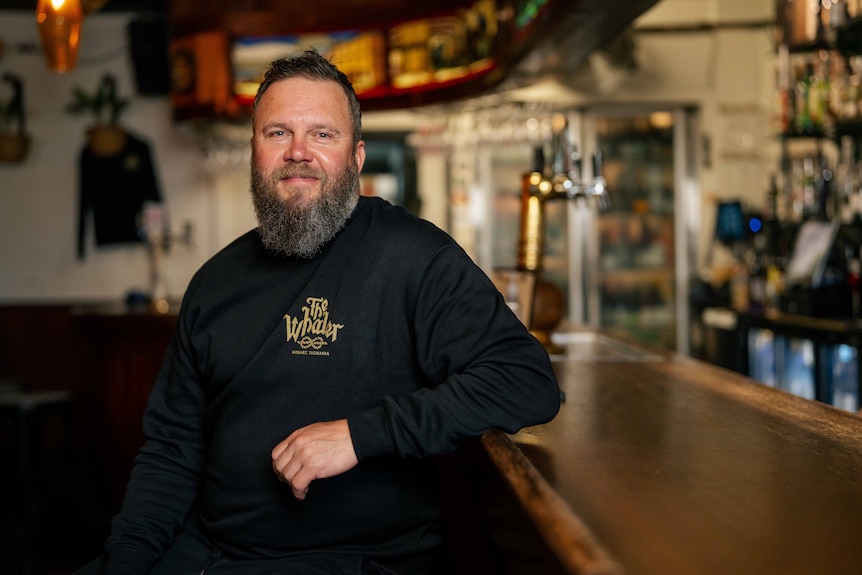 Ben Hickey hopes the stadium will retain staff in Tasmania.(ABC News: Ebony ten Broeke)
But can Tasmania afford that positivity, with the state budget forecasting the state will reach $10.4 billion in debt by 2028-29?
Ben says he is not the state’s accountant.
“I’ve heard this saying a lot, that there’s never a good time to build a stadium, but I honestly think we can’t afford not to build it.”Loading…
The future is of concern for Warwick Oakman. But so is preserving the past.
The architectural historian is passionate about the history of Macquarie Point and its surrounding areas.
The area was used by the Muwinina people for thousands of years.
Since colonisation, the land has undergone many changes — is has been reclaimed from the river, it has become a slaughterhouse, a gas works, a hub for Tasmania’s rail network, and played host to many more industries.
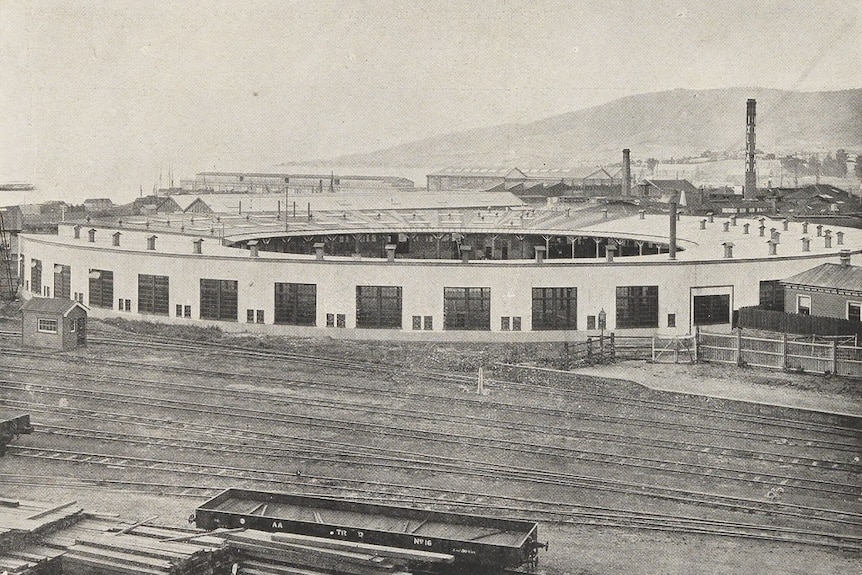 The railway roundhouse at Macquarie Point was built in 1915.(Courtesy: The Weekly Courier)
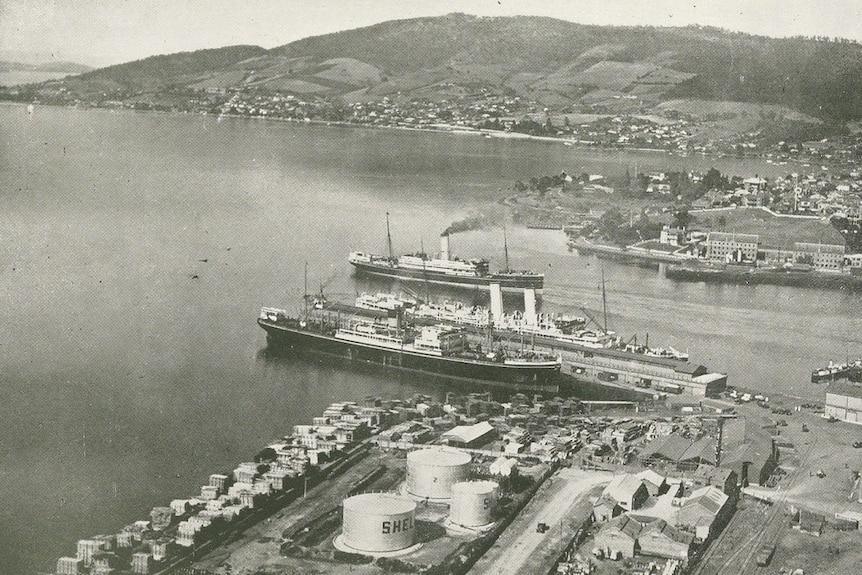 Shipping in the River Derwent, pictured in 1933.(Supplied)
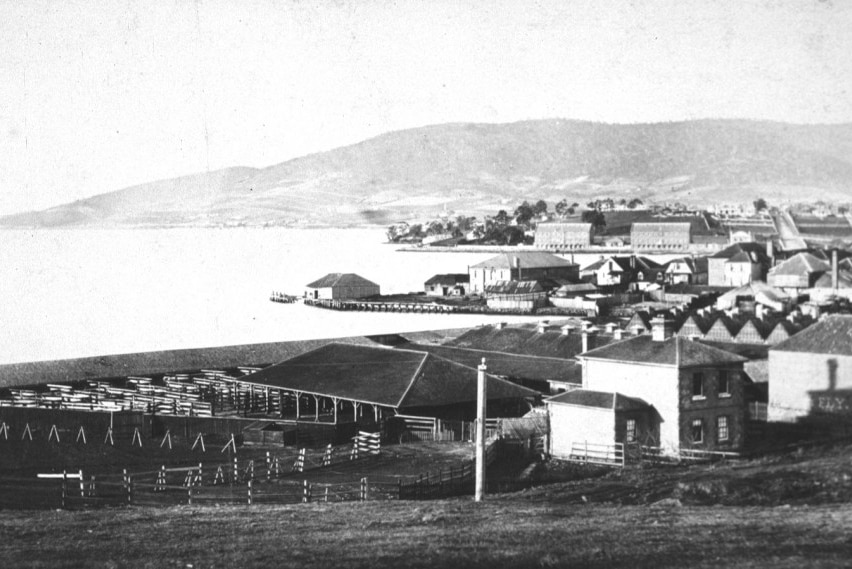 Slaughter house and sale yards at Macquarie Point.(Trove)
Over recent years, industrial waste at the site was cleaned up, preparing the site for a new future beyond big industry.
Next to the area is some of Hobart’s most iconic heritage buildings, including the Henry Jones and Co jam factory.
For Mr Oakman, the proposed stadium is “totally” at odds with the heritage of the area.
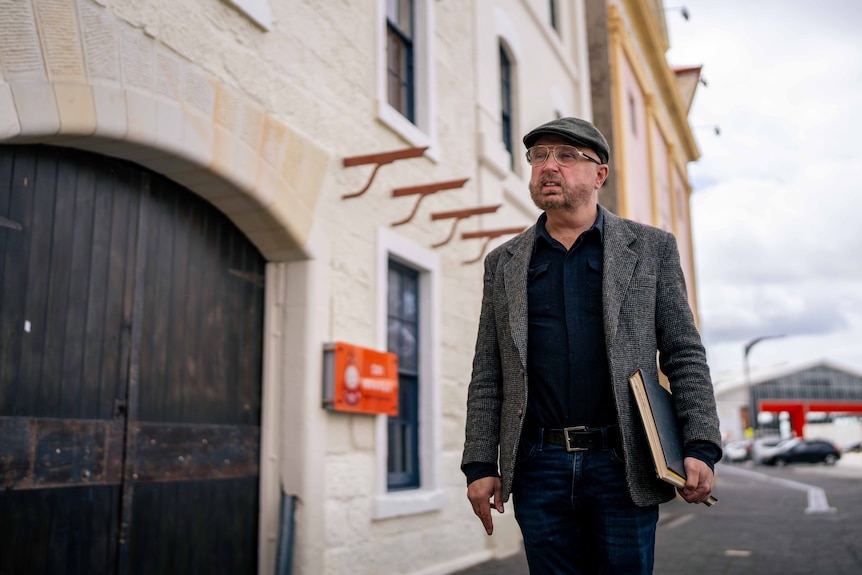 Macquarie Point and its surrounding areas have heritage importance to Mr Oakman.(ABC News: Ebony ten Broeke)
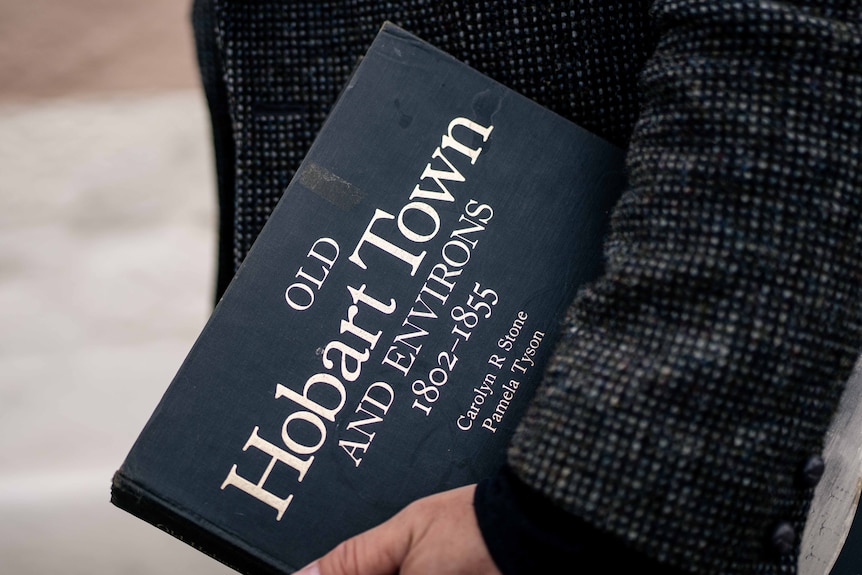 Mr Oakman is an architectural historian.(ABC News: Ebony ten Broeke)
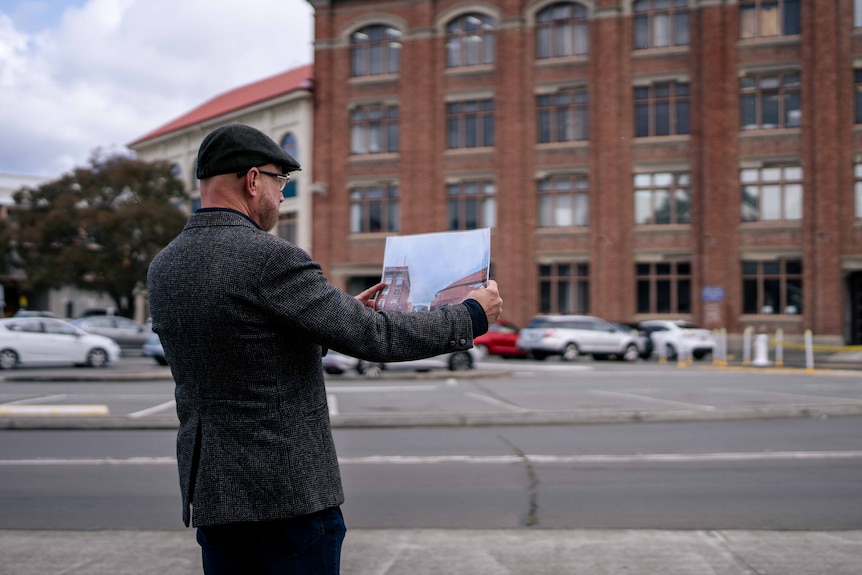 The stadium will be architecturally be a stark contrast to the adjoining heritage buildings. (ABC News: Ebony ten Broeke)
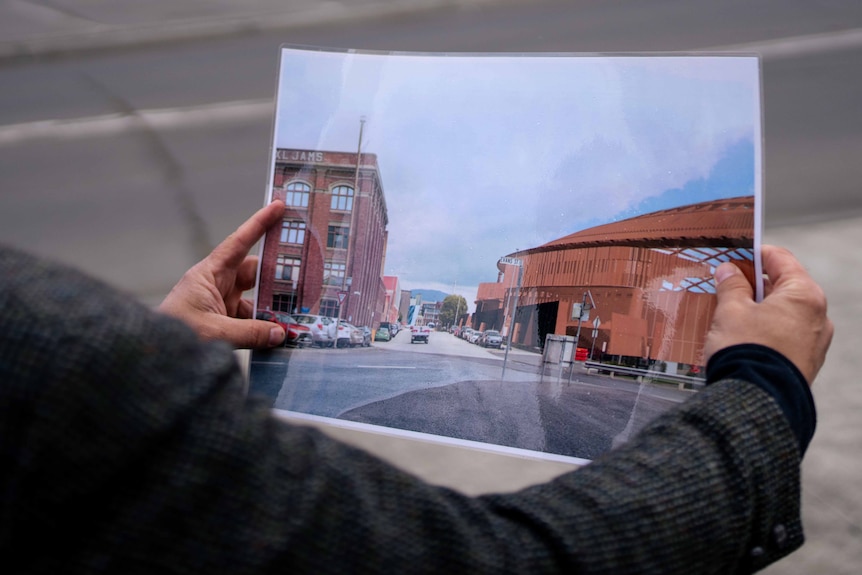 The stadium’s impact next to the Hobart wharf.(ABC News: Ebony ten Broeke)
“The proposal in no way fits this wonderful urban environment,” he says.
“There is no logical development to it, it is too big for the site, it doesn’t fit physically, visually.”
Warwick does not believe this stadium is something the state can afford.
“The costs of it are an open cheque at present.”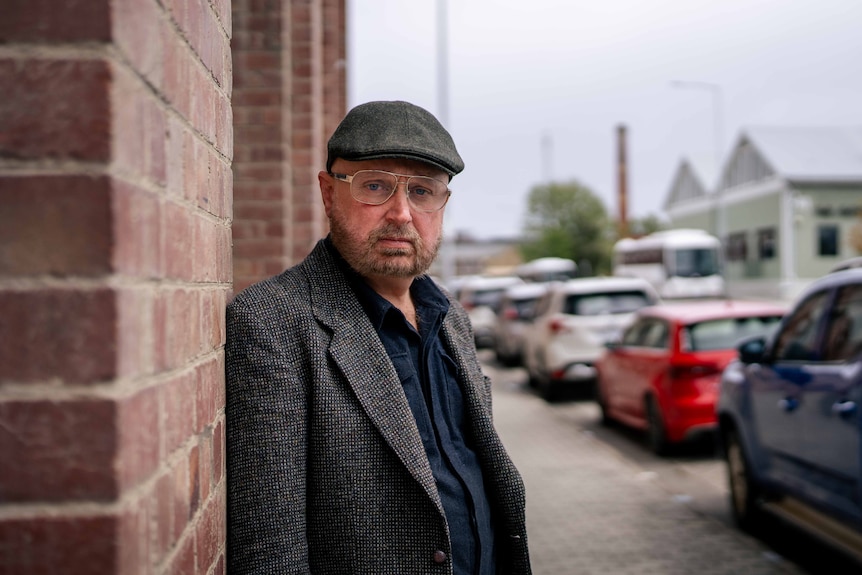 Warwick Oakman spoke to the ABC about his perspective on Tasmania’s proposed AFL stadium. (ABC News: Ebony ten Broeke)
The height and scale of the stadium are also a worry for him.
“When you look at it from vantage points all over Hobart, it will completely dominate this slowly developed and beautiful urban landscape,” he says.
“The visual destruction which would be caused onto Hobart is a disaster.
“Everyone wants a team if we could afford it somewhere else.”Loading…
Simon McDermott feels the weight of this moment.
“The rest of the country is watching us,” he says.
“If we keep saying ‘no, no, no’, people are just not going to want to invest in Tassie, whether that’s big or small.”
Mr McDermott operates a coach company in northern Tasmania, which runs shuttles to tourist hotspots, such as Cradle Mountain.
He sees the potential the stadium could bring to his industry.
 Simon McDermott operates a tourism bus service.(ABC News: Ebony ten Broeke)
“The opportunity to bring people into Launceston and bring them to Hobart for a game of football or a concert and then take them back via the East Coast or back to Cradle Mountain,” he suggests.
“[That will] get them engaged in Tassie then they’ll be bringing their families back and the momentum will grow from there.”
He says the stadium will be a lifeline for tourism businesses, especially during quieter periods.
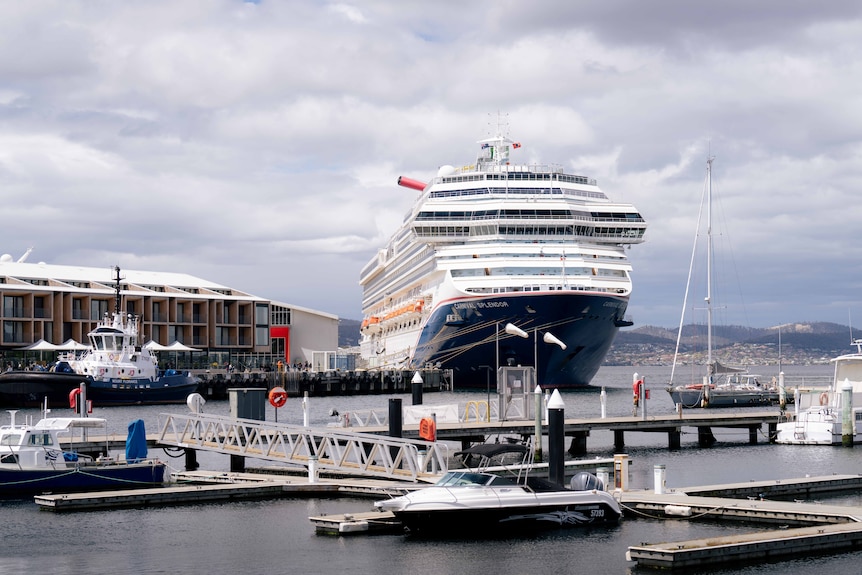 Tourism is an important sector for Tasmania’s economy.(ABC News: Ebony ten Broeke)
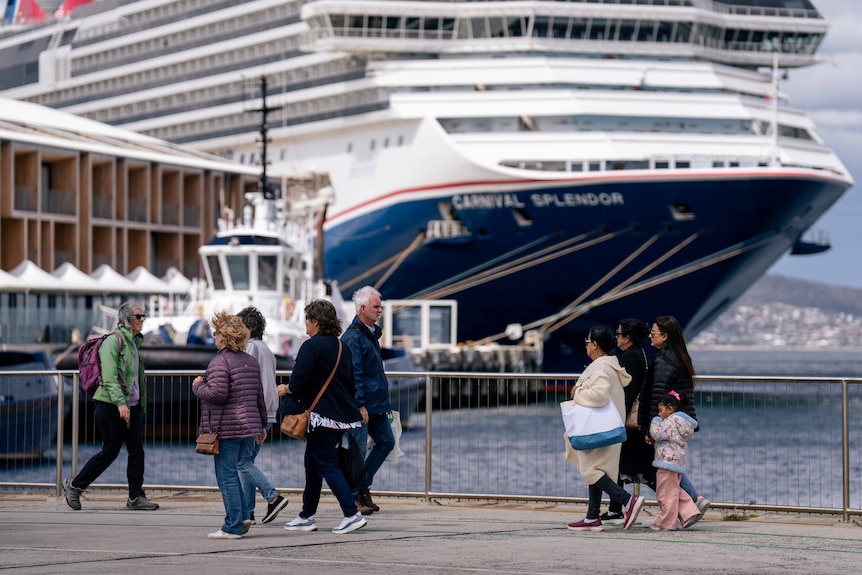 Cruise ships bring in a lot of tourists to Hobart, and dock near Macquarie Point. (ABC News: Ebony ten Broeke)
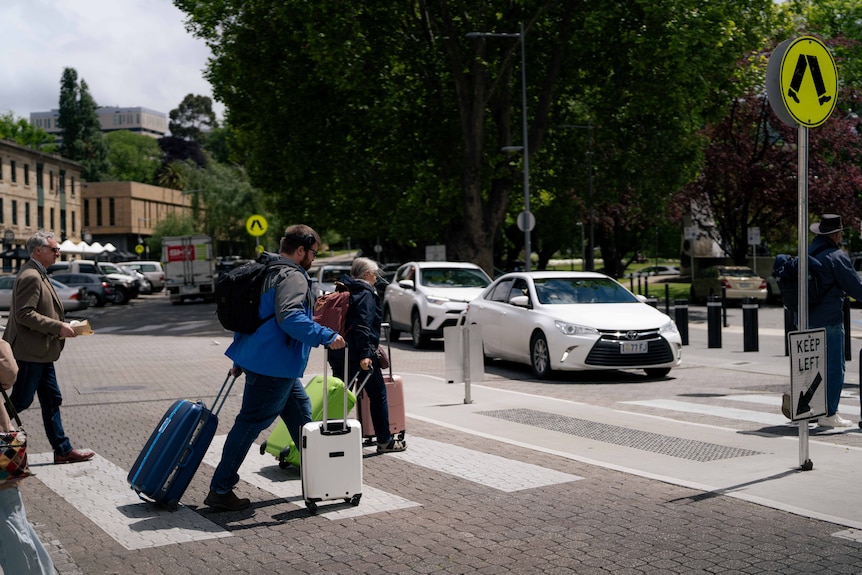 Tourists crossing the road in Salamanca in Hobart.(ABC News: Ebony ten Broeke)
“It will bring year-round business for us all and there’s probably only a handful of businesses in Tasmania that can say they’ve got year-round business.”
Winter is so quiet for his company that he sends some of his coaches to Darwin in the off season, which he says costs about $20,000 a coach.
“We’re a Tasmanian business, we want to be here, we want to be showing off the state, and I think a stadium and the team will do that for us,” Mr McDermott says.
“If we sit still and don’t move on this, we’ve got a lot more to lose than preserving what we have.”Loading…
The main arteries of Hobart’s traffic flow past the Macquarie Point site.
The pressure 23,000 fans pouring out of the stadium after a footy game will put on the transport system is a concern for some.
Loading…
As an avid cyclist, Alison Hetherington gets up close and personal with Hobart’s traffic system.
“At the moment, it’s hard to see how Hobart’s transport system could handle a huge glut of congestion that we’d expect with the stadium,” she says.
“We all know … just one thing has to happen on the road network and everything goes to gridlock.”
Under the precinct plan, cars are predicted to be the most popular mode of transport to get to the stadium — either via parking in the city or drop-offs.
Special buses for event days are set to be the next most popular.
The Macquarie Point Development Corporation wants other planned transportation upgrades like a rapid bus network, a ferry terminal and walking and cycling upgrades to be brought forward to when stadium construction is complete.
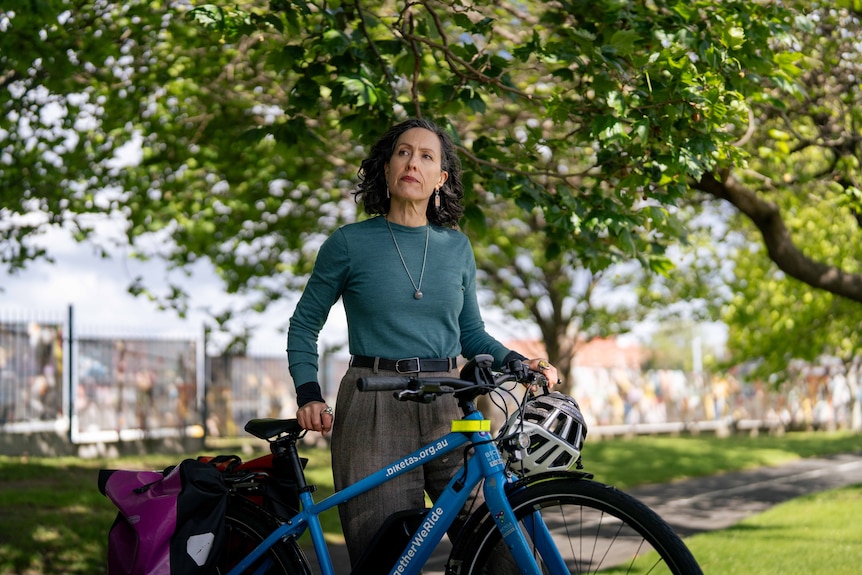 She is neither for or against the stadium.(ABC News: Ebony ten Broeke)
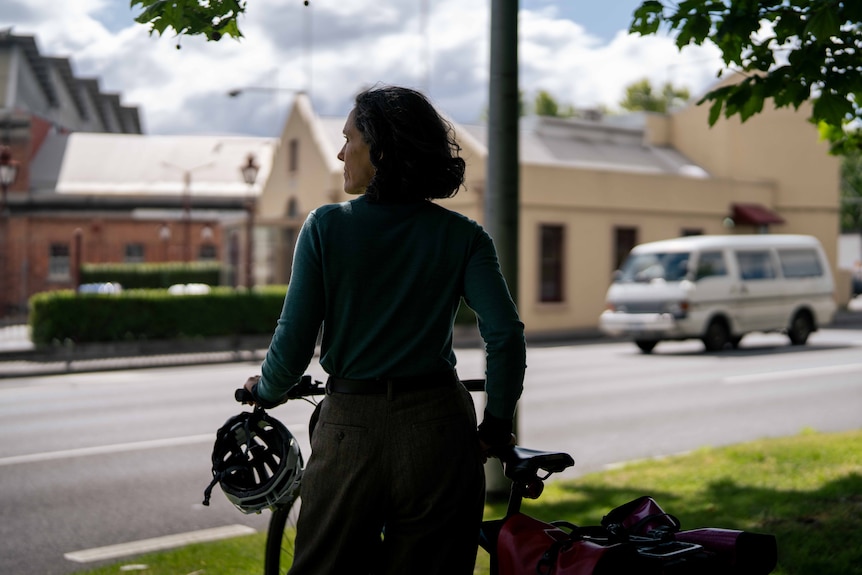 Alison hopes the stadium will force the government to focus more on Hobart’s transport system. (ABC News: Ebony ten Broeke)
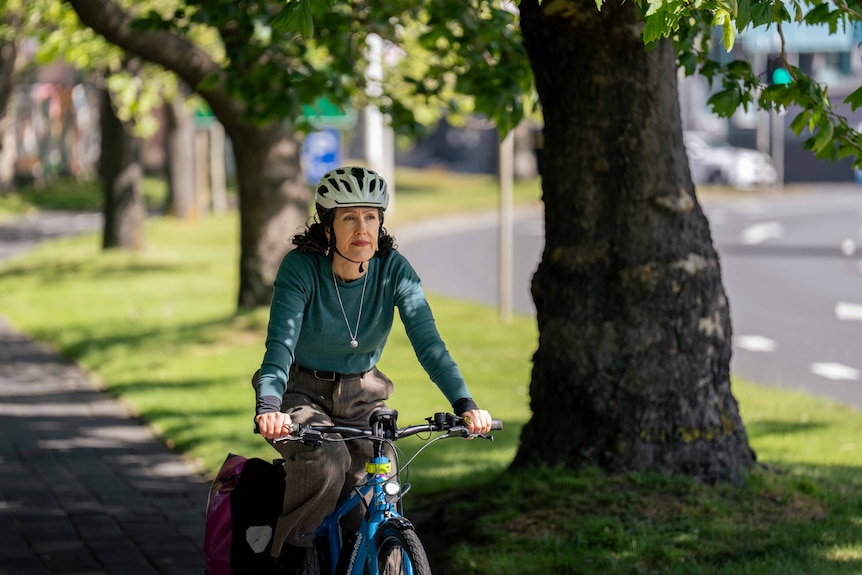 The proposed stadium will put pressure on the city’s transport network. (ABC News: Ebony ten Broeke)
Ms Hetherington is neither for nor against the Macquarie Point stadium but as an advocate for Bicycle Network Australia, she sees transport as a critical point in its success.
“We’ve got plans and strategies acknowledging we need bus lanes, we need cycleways we need connections through ferries and better pathways,” she says.
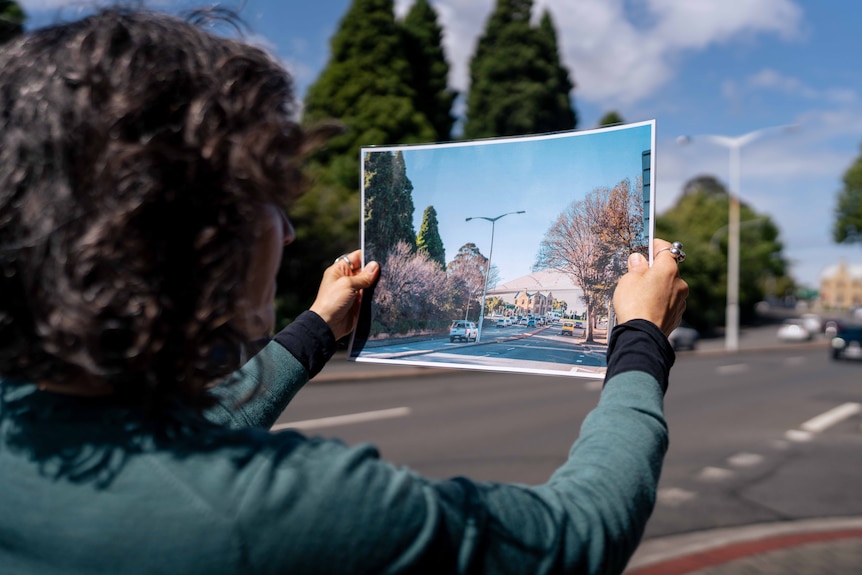 The stadium lies at the apex of major roads in Hobart, which can already become congested during peak hours. (ABC News: Ebony ten Broeke)
With a fresh seal of approval from parliament’s lower house, the stadium order will head to the upper house to be debated on Wednesday.
A vote is expected to follow on Thursday.
That vote will shut the door on one future for the city, and open another.
CreditsReporting: Scout WallenVideography: Kate NickelsPhotography: Ebony ten BroekeVideo production: Paul YeomansDigital production/digital editor: Daniel Miller