
The “Morag corridor” separates the Khan Younis area to the north from the Rafah area to the south. It is a dusty dirt road that begins at the border between Gaza and the southern Israeli communities, and runs all the way to the Muwasi area, which is under Hamas control and where a large part of Gaza’s population is concentrated. Today this road leads west only up to the yellow line that separates Hamas from the IDF. As we drove along it, the Humvees kicked up dust, and the earthen berms on both sides of the road, meant to protect those traveling from sniper fire and anti-tank missiles, hid the waves of destruction on either side.
Raises questions: sacks of flour and canned food strewn across Gaza
(Video: Ron Ben-Yishai)


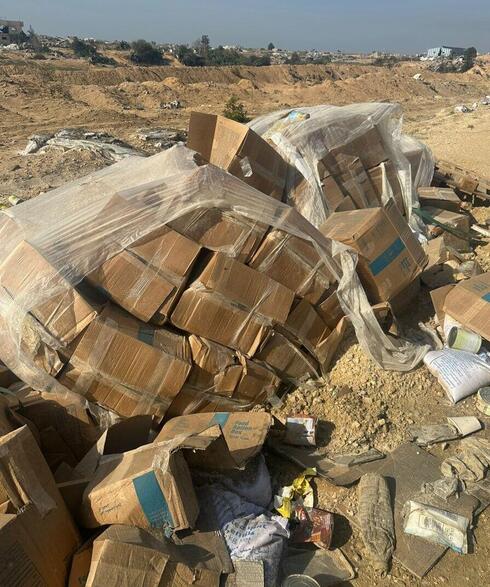
But what surprised me most as we traveled there were piles of white sacks and cardboard cartons scattered along the entire route. A senior officer in the sector, who saw me looking and wondering, explained that they were sacks of flour and food packages that had “fallen off” trucks loaded at the Kerem Shalom cargo crossing to be brought in as humanitarian aid for civilians in Gaza.
The deeper we went into Gaza, the larger the amounts of food thrown along the roadside became. In my estimate there were dozens, perhaps even hundreds, of tons of flour sacks and cartons, containing mostly canned goods. All of them were intact and ready to eat. The peak came when we passed a trailer truck abandoned with its load in the middle of the road, and bulldozers had to clear it after it overturned in order to allow traffic on the route.
9 View gallery
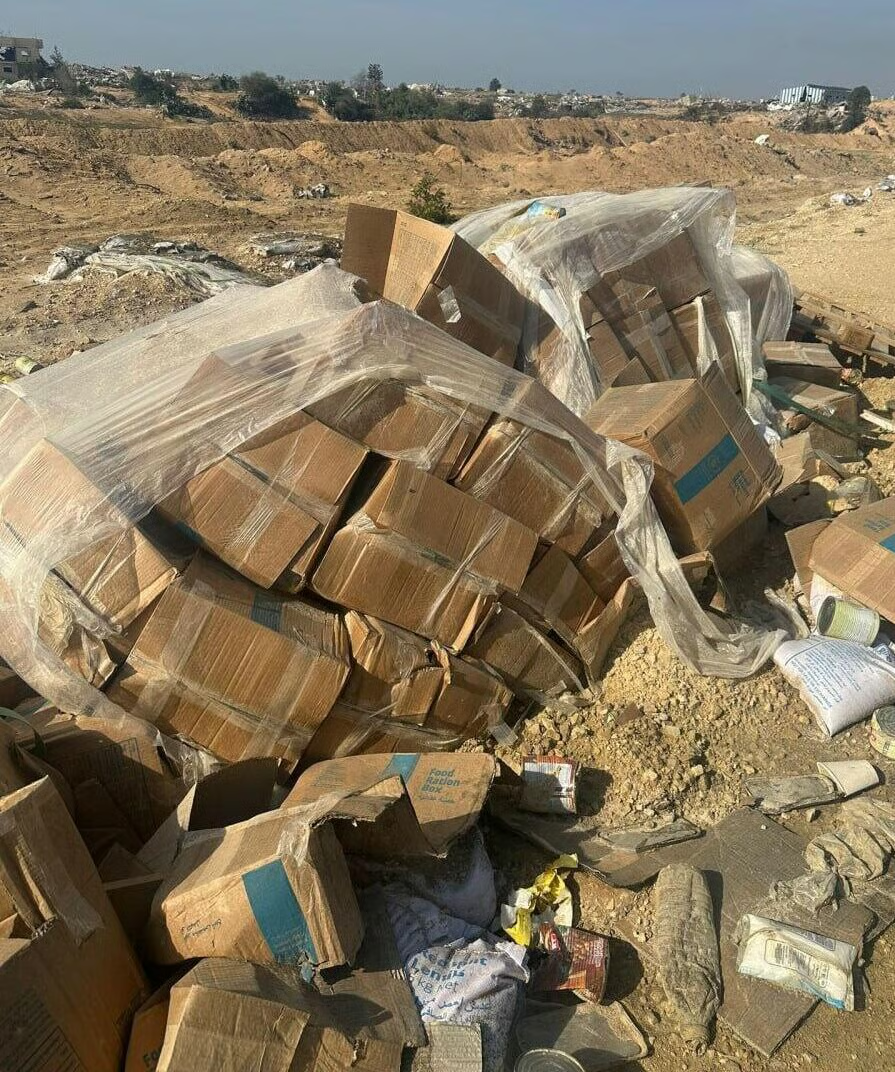
Those funding the aid need to investigate what is happening on the ground; food lies along the sides of the Morag corridor
(Photo: Ron Ben-Yishai)
It is even possible that some of this food was brought in by the organization that operated under IDF sponsorship – the GHF, the Gaza Humanitarian Foundation, which was also in the area and for which the Israeli government provided most of the funding. In any case, it is worth having everyone who financed and organized humanitarian assistance to the southern Strip investigate what happened here. It is entirely plausible that the findings will refute the claim of supposed hunger in Gaza. The image of food tossed along the roadside does not align with the photos of walking skeletons that Hamas has flooded across social media.
After that we climbed an earthen embankment surrounding an IDF strongpoint that overlooks the city of Rafah and the refugee camps around it. The strongpoint sits on a high sand hill with a wide, clear view. From this point it is easy to orient yourself on the ground and understand the operational framework designed by the U.S. command center in Kiryat Gat – the CMCC, the Civil Military Coordination Center, to implement Trump’s 20-point plan.
No one should entertain illusions. This process, with which the IDF is fully cooperating by order of the political leadership, will take a very long time. That is why the IDF is preparing for an extended stay in the Strip, which has been divided into territory controlled by Hamas and territory controlled by Israel, which makes up 57 percent of Gaza’s area
This American framework has been given the ambitious name “New Gaza”. IDF personnel who are trying to help the Americans implement it call the program “Green Gaza”. It is meant to temporarily resettle millions of Gazan civilians who fled their homes, rehabilitate the Strip from its ruins, and through that bring about, at the end of a long process, the isolation of Hamas in a way that will force the organization to disarm and cease to be a dominant military and political force in Gaza.
The plan is intended to be carried out first in the Rafah area east of the yellow line, meaning territory under IDF control. Nothing will happen in territory controlled by Hamas. Even humanitarian aid will not enter there if and when the American framework moves into the on-the-ground implementation phase.
9 View gallery
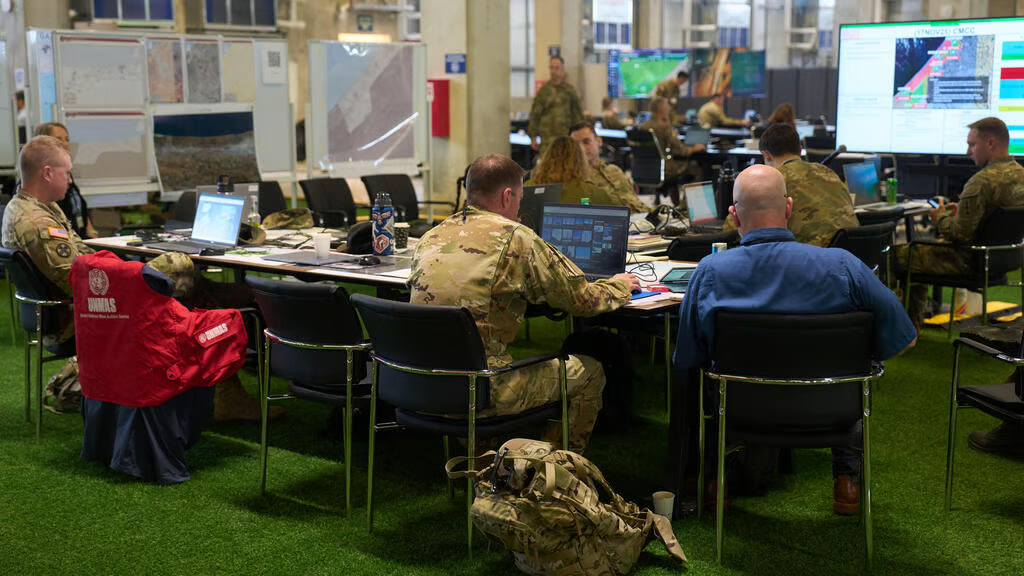
An ambitious framework; the U.S. command center in Kiryat Gat
(Photo: Ariel Schalit/ AP)
In the first stage, an international stabilization force, the ISF, will enter the area under Israeli control east of the yellow line around Rafah. It will monitor and secure, on behalf of the civilian “Peace Council”, the establishment of the “new temporary neighborhoods” where Gazan civilians who are not Hamas members will live, until the clearing of rubble and the building of the new city planned for Rafah are completed.
The “temporary neighborhoods” will be built in open areas on the eastern fringe of Rafah or in dune zones that were empty even before the war and that now have no ruins, unexploded ordnance or mines that could endanger residents of the temporary sites. Hamas tried to build a myth around “heroic underground fighters who do not surrender to the IDF in Rafah”, claiming they would bring “the resistance” victory. The IDF is determined to eliminate not only the remaining pockets of resistance, but also the myth itself.
9 View gallery
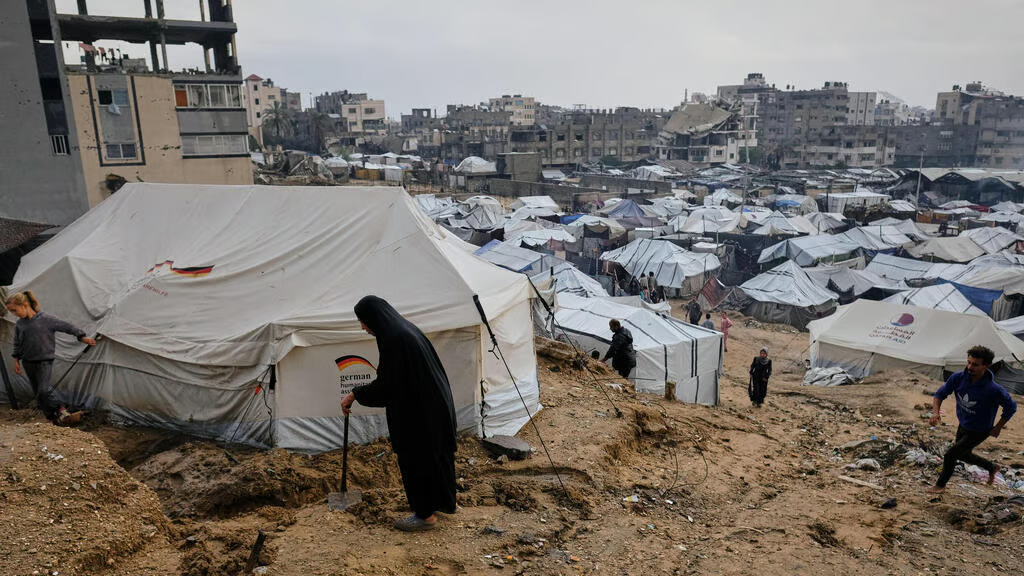
Time for rehabilitation. Gazan tent site
(photo: AP Photo/Jehad Alshrafi)
Seeing the massive amounts of discarded food, I could not help but recall the complaints about hunger in Gaza that have become a mantra among international aid organizations, especially at the United Nations. As I photographed and documented the scene, I tried to find out from the fighters with me how such quantities reached the roadside. No one had a clear explanation, only two theories.
The first is that the drivers, who were paid before leaving, did not secure the cargo properly and it fell from the pallets on the trucks while driving along the bumpy dirt road. But that raises another question: Did the aid organizations that received the shipments inside Gaza, to distribute them to residents, not check whether they received the full amounts sent from the Kerem Shalom terminal? These are food items worth hundreds of thousands of dollars, perhaps millions, that someone, likely wealthy Gulf states, a U.N. aid fund or international organizations, paid for.
The second theory is that looters, Hamas members, or criminal gangs from Gazan clans climbed onto the trucks with the drivers’ consent and threw the cargo off while in motion, so their associates could collect it and sell it on the Gaza black market, where prices have soared. But no one collected this food, perhaps because the IDF was operating in the area and drove away the looters, especially Hamas members.
9 View gallery
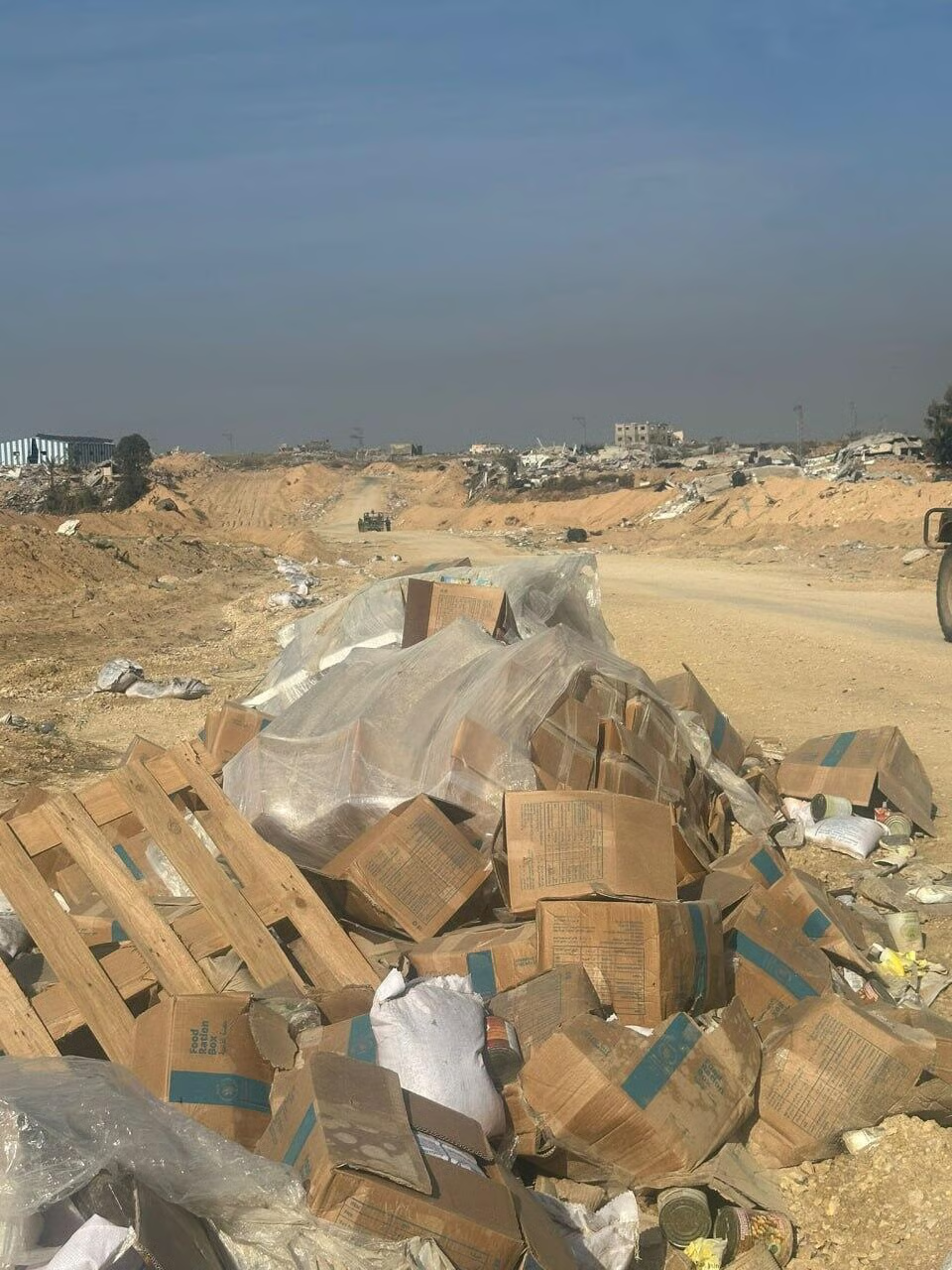
How could this happen? Discarded food in Gaza
(photo: Ron Ben-Yishai)
In the second stage of the “New Gaza” plan, civilians now living in tin shacks and temporary plastic tents in the Muwasi area will be invited to move into the temporary neighborhoods built for them, financed by donor states and the United Nations. Housing there will be in caravans and tents arranged in well-planned compounds. No less important, they will have water, electricity and sewage infrastructure, as well as hospitals, clinics, educational institutions and mosques. Americans estimate that residents now in Hamas-controlled western Gaza and along the coast in near inhuman conditions will be happy to move to the temporary neighborhoods, where they would receive housing and reasonable living conditions, including paid work in rubble-clearing and reconstruction projects that would begin in parallel.
To prevent Hamas members from infiltrating the temporary neighborhoods, the IDF and Shin Bet will establish crossings along the yellow line with screening and inspection points. There, using advanced technological means, for example facial recognition and AI-based magnetometers, they will ensure Hamas members do not slip in, settle there or smuggle weapons into the neighborhoods.
The IDF and Shin Bet have already begun planning these inspection points, which would allow residents of “New Gaza” to live free from Hamas intimidation and receive humanitarian aid at no cost directly from international organizations. The GHF, which operated under Israeli sponsorship and funding, has also ceased operations at the mediators’ demand.
9 View gallery
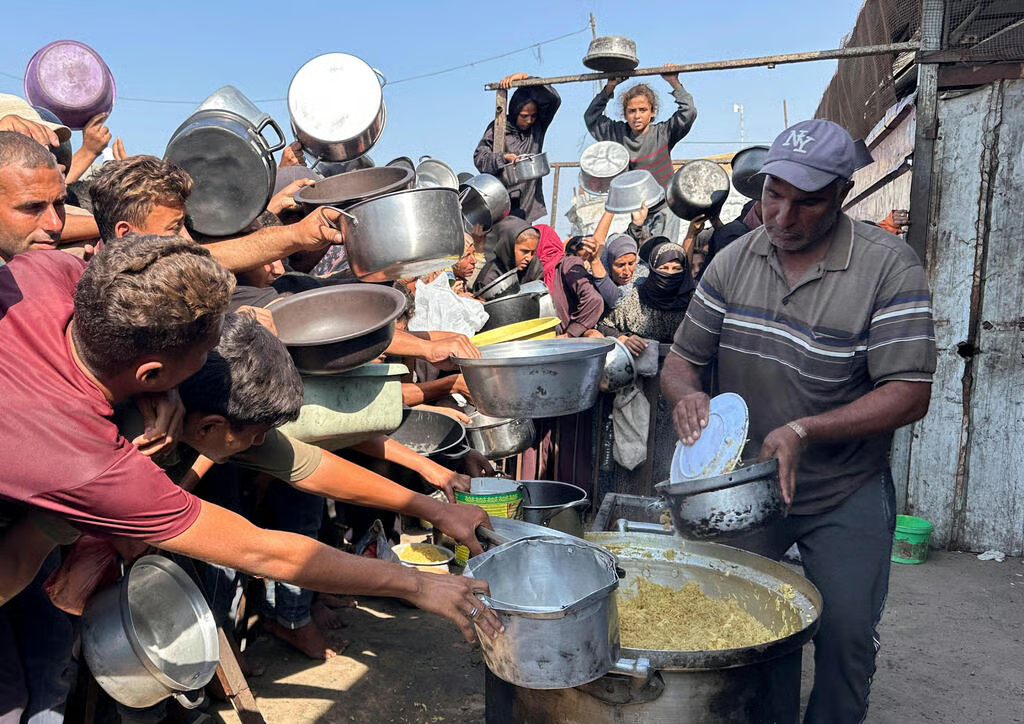
Americans estimate they will be happy to move. Gazans queuing for food
(photo: REUTERS/Haseeb Alwazeer)
A large place is devoted in the American framework and planning efforts to humanitarian aid. The goal is for assistance to reach those in need directly and for Hamas not to seize it for its people, then sell the surplus to fund its activities. Therefore, in the near term, distribution centers will be established in territory under our control very close to the yellow line. International aid groups and the multinational stabilization force will run and oversee them.
Most of the force currently fighting in the Rafah and Khan Younis area is regular army, with the goal of reducing the burden on reservists as much as possible.
The IDF learned from past experience, especially the failures of the GHF, that it must avoid tens of thousands of needy Gazans rushing toward a small number of distribution hubs guarded by the IDF. Such crowds can spiral out of control, endangering Gazans whom Hamas harasses and also endangering IDF soldiers confronted by surging masses. The decision now is to establish many small, local and accessible neighborhood distribution centers protected by the ISF. Hamas may still rob civilians, but it will not have direct access to large stockpiles and will have to expend significant effort.
Alongside the aid centers and temporary neighborhoods, contractors, likely Egyptian, will begin clearing rubble, though it is unclear where it will be taken. After that, they will start building “New Gaza”. The IDF has already started helping American planners by clearing mines and unexploded ordnance in areas where it is already operating. If the temporary neighborhood project succeeds in Rafah, the Americans intend to continue with similar projects, first in the Khan Younis area, then in the central refugee camp region, and finally in the north facing Gaza City and the communities north of it.
The ultimate goal is that about two million Palestinians, most of Gaza’s residents now in Hamas-controlled territory, will first move to the temporary neighborhoods and later to permanent communities the Americans will build for them with Gulf-state funding. It is not impossible that Gazans who want to leave abroad will be able to do so if there are countries willing to take them in. The intention is that at the end of a process lasting many months, perhaps years, the areas under Hamas control, Muwasi, the central camps and Gaza City, will be emptied of most uninvolved Palestinian civilians now there.
9 View gallery
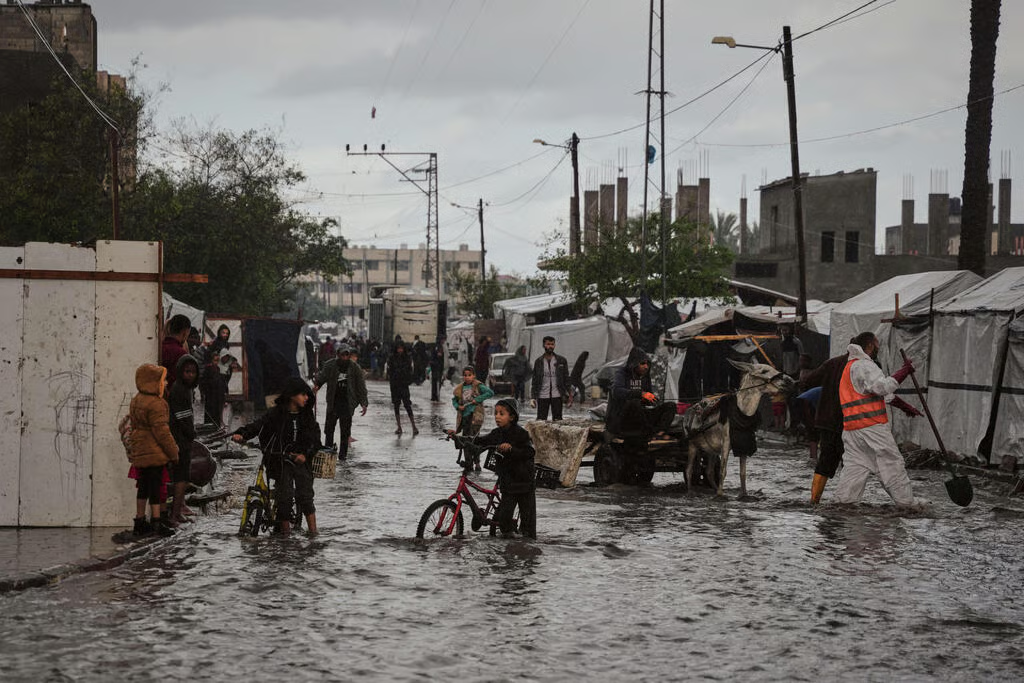
The plan is to separate the population from Hamas. Gaza
(צילום: AP Photo/Abdel Kareem Hana)
In that situation, the remnants of Hamas’ governing and military force, including Islamic Jihad gunmen, would remain in a “red enclave”, encircled by large IDF forces with their backs to the sea and without humanitarian aid. Then, according to U.S. Central Command officers, Hamas commanders and terrorists will be forced to choose between surrender, disarmament and exile or a slow death, or fighting to the end against IDF forces that will grind them down from a distance.
The IDF also has plans to seize western Gaza to bring about the same outcome, depending on agreements between Israel’s political leadership and the Trump administration. The American officers heading the Kiryat Gat command center believe it will not be necessary for the IDF to capture the Hamas-controlled area. Instead, they believe Hamas, with the mediators’ agreement, Qatar, Turkey and Egypt, will agree to lay down its weapons and evacuate Gaza once it realizes it is isolated and cannot even fight properly.
No one should entertain illusions. This process will take a very long time. The multinational stabilization force has not yet been formed, no countries have volunteered to take part, the civilian administration has not been established – and it is still unclear where the funding for Trump’s 20-point plan will come from. But in Jerusalem they assume the U.S. president still sees implementation of his Gaza plan as the crowning achievement that could bring him a Nobel Prize, and also allow more than a few international and American figures linked to him to reap handsome profits.
The process could take more than a year. Therefore the IDF is preparing for a prolonged stay in the Strip, divided between Hamas-controlled territory and Israeli-controlled territory, covering 57 percent of Gaza. The ceasefire allowed a drastic reduction in the number of forces operating inside Gaza. Two division headquarters now operate there with forces, armor, infantry, engineering and logistics, totaling fewer than two standard divisions, compared with five reduced divisions that operated in Gaza during “Gideon’s Chariots B”. Southern Gaza is now under Division 143, commanded by Brig. Gen. Barak Hiram. Northern Gaza is under Division 252. Most forces fighting around Rafah and Khan Younis are regular army, aimed at minimizing the burden on reservists
9 View gallery
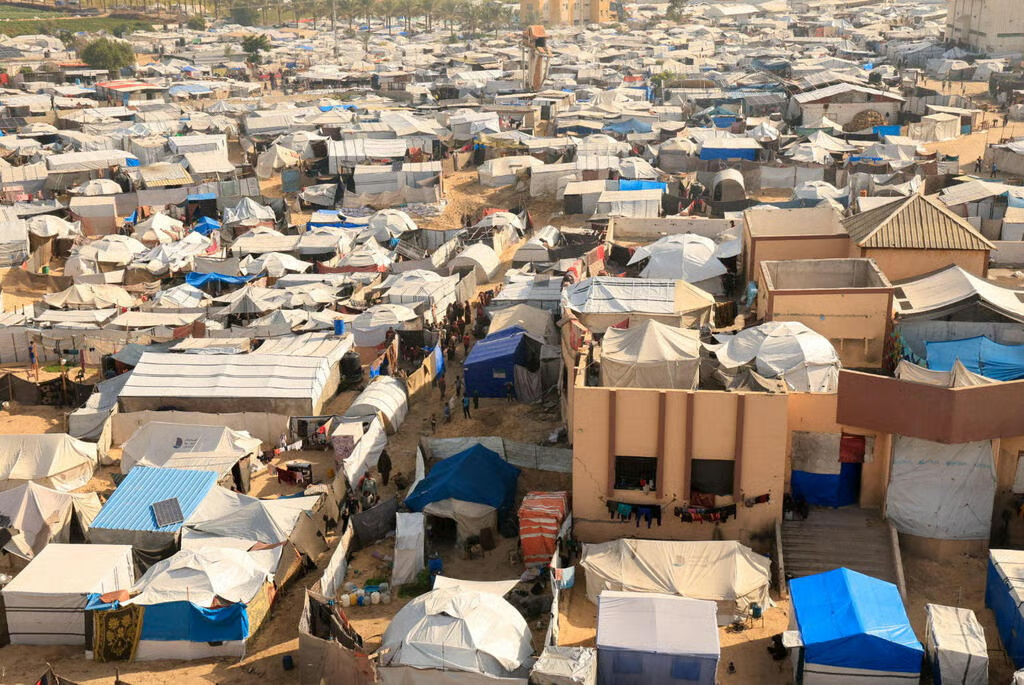
Drastic reduction of forces operating in the city. El Mowasi neighborhood, Gaza
(photo: REUTERS/Haseeb Alwazeer)
Defense preparations in our territory east of the yellow line are based on strongpoints. These are temporary outposts surrounded by high earthen walls topped with concrete positions and several lines of barbed-wire fencing. The strongpoints are placed several hundred meters east of the yellow line so that the open ground in front of them creates a security strip. In this strip, terrorists trying, and who will continue trying, to strike the strongpoints through guerrilla warfare can be detected and stopped.
This setup makes it possible to use technological means and standard surveillance to identify an approaching threat and hit it from the air or ground after it crosses the yellow line separating our area from Hamas territory, but before it reaches the strongpoint. In the field, one can already see the tools that, just last week, allowed dozens of terrorists to be detected and struck as they tried to cross from Hamas-controlled territory to attack these positions.
But inside territory under IDF control there are still pockets of resistance. These are two underground enclaves, one in the Khan Younis area and the other in Rafah, where the IDF is conducting a unique battle above and below ground aimed at forcing terrorists entrenched in tunnels to emerge. The IDF recommended that the political leadership reject compromise proposals by mediators and Americans that would allow terrorists to surface and move into Hamas-controlled territory. Therefore, they will either be killed or surrender. Destroying these underground enclaves is needed not only for military reasons, but also to achieve a psychological defeat of Hamas and its many supporters within the Palestinian population.
Most of the fighting is now focused on a dense tunnel complex under Rafah. The complex was discovered by chance a few weeks ago, when terrorists hiding in it emerged, planted explosives, and set an ambush in which four IDF soldiers were killed. Before it was exposed, about 100 terrorists were inside, trapped after the IDF took control above ground. Fewer than 20 remain alive. The IDF is tightening the ring above and below ground to prevent escape, leaving them one choice: surrender or die.
9 View gallery
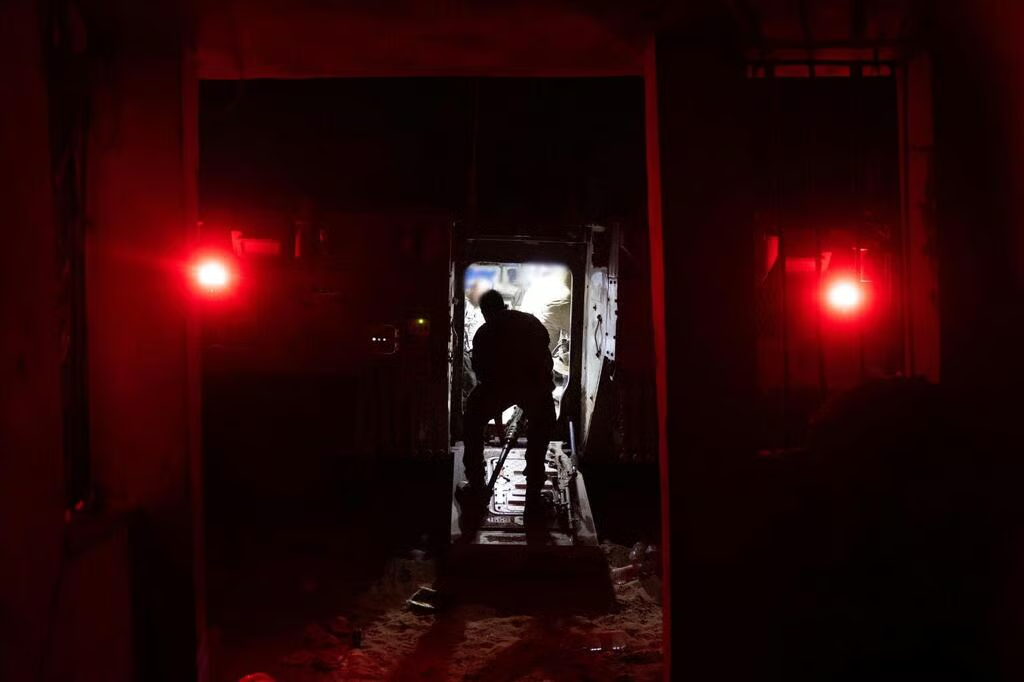
IDF soldier operating in Rafah
(photo: IDF Spokesperson’s unit)
Of the 100 terrorists who were there, about a third were killed by precise airstrikes using penetrating munitions and by explosions set by Yahalom engineers inside the tunnels. A third came to the surface to flee or fight to the last bullet. Most were killed, and a third surrendered. What especially hurt Hamas and embarrassed its leaders was that many of those who surrendered did so voluntarily to members of the Abu Shabab militia operating in the Rafah area.
About five such “family” militias operate in Gaza. They cannot defeat Hamas, but their members and leaders openly rebel, undermine the organization’s rule and endanger its support among the population.
9 View gallery
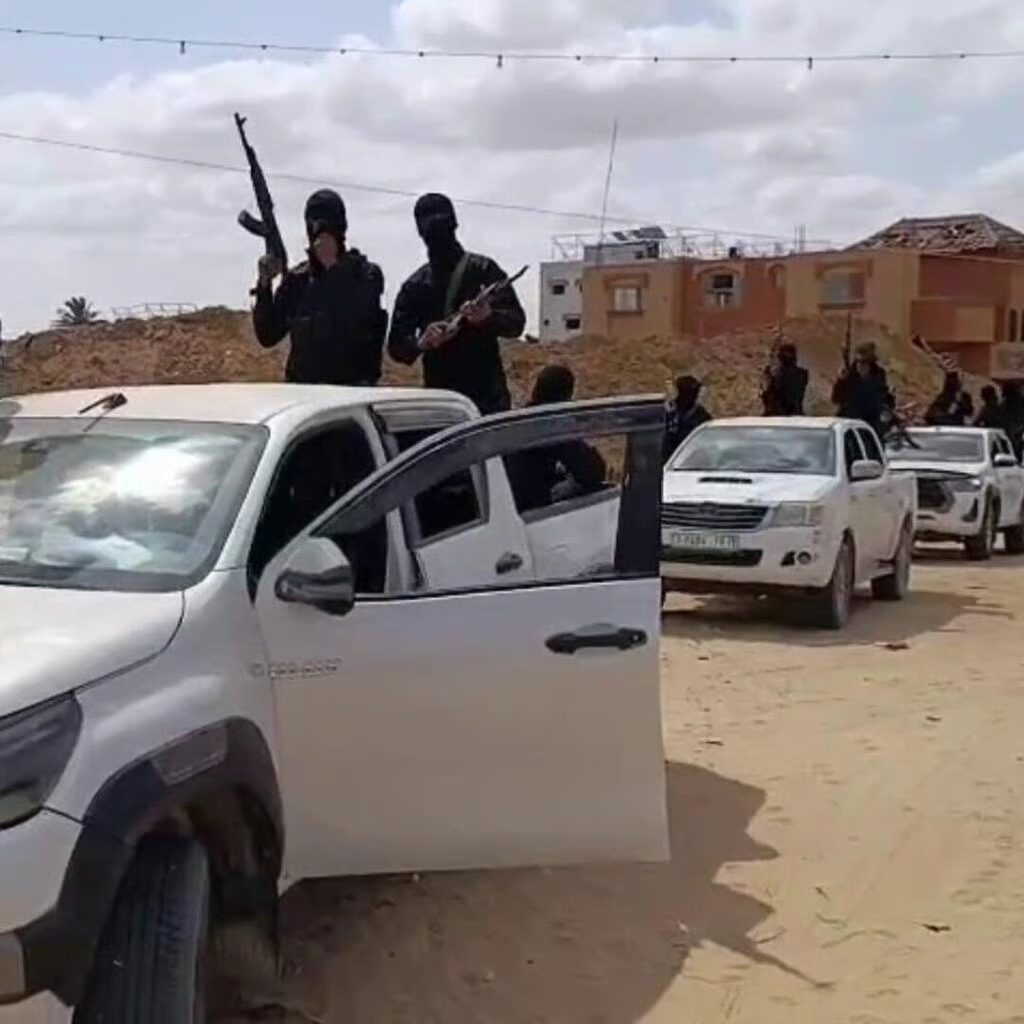
Gazan militia
(Screenshot, Sky News)
In conversations on the ground with IDF commanders and other security officials, one repeatedly hears the claim that Hamas has essentially been defeated militarily, and that Trump’s 20-point plan is in fact a rescue for it, because it allows its people to leave Gaza alive and without weapons. The question is how long this will take, and whether Israel and the Israeli public will have the patience to bear the burden until the heavy American machine begins operating in the field. From tours of Gaza in recent days, the impression is that this will not happen anytime soon.