
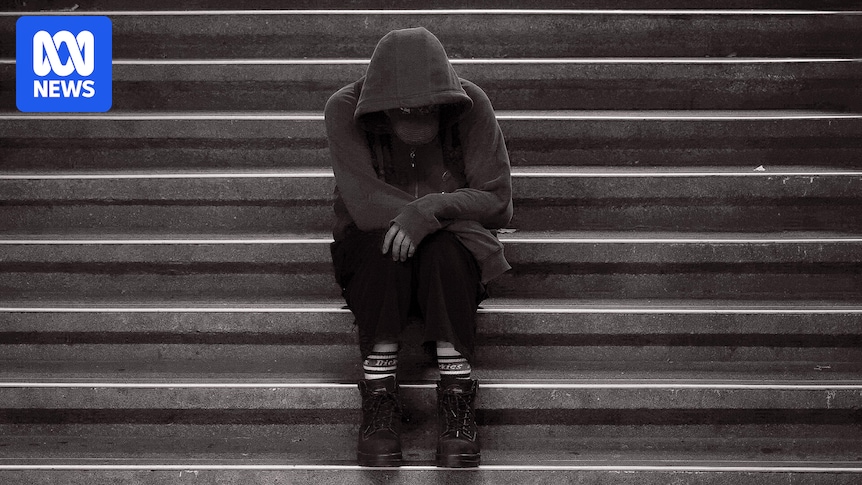
Parker once lived in postcode 2000, but not in a high-rise with Sydney Harbour views.
The 21-year-old spent many nights on a bench in Hyde Park with hard timber digging into his back.
Here, skaters dance around bin chickens and a musty scent rises from the damp earth and decaying leaves.
He puffs on a vape, concealing his face from police on patrol.
“[That] made my heart drop a little bit,” he says, recognising an undercover officer who once caught him stealing food.
“Chicken, mushrooms and a curry packet … I was trying to make a katsu.”
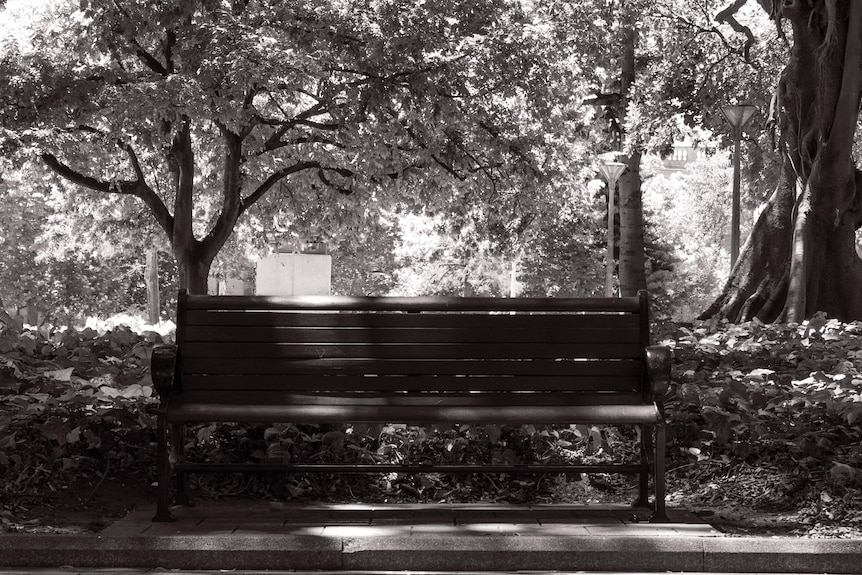
A bench seat under trees in Sydney’s Hyde Park was Parker’s makeshift bed for too many nights. (ABC News: Briana Fiore)
One of Australia’s biggest cities suddenly feels small as he spots another familiar face, with tattoos on his skull and his life on his back.
He remembers giving the man ill-gotten food.
“I thought I was kind of like Robin Hood.”
He says the man has been through a bad divorce and ended up losing his kids.
“That’s the thing about homelessness,” he says, “it can happen to anyone.”
He glances at the shiny office workers in suits nearby.
The sun glistens off their watches and takes Parker back to when time mattered. When he, too, had somewhere to be.
“I got fired from my job,” he admits.
The fumes from his vape drift away as he talks about his childhood — hazy and scattered like the memories themselves.
A challenging childhood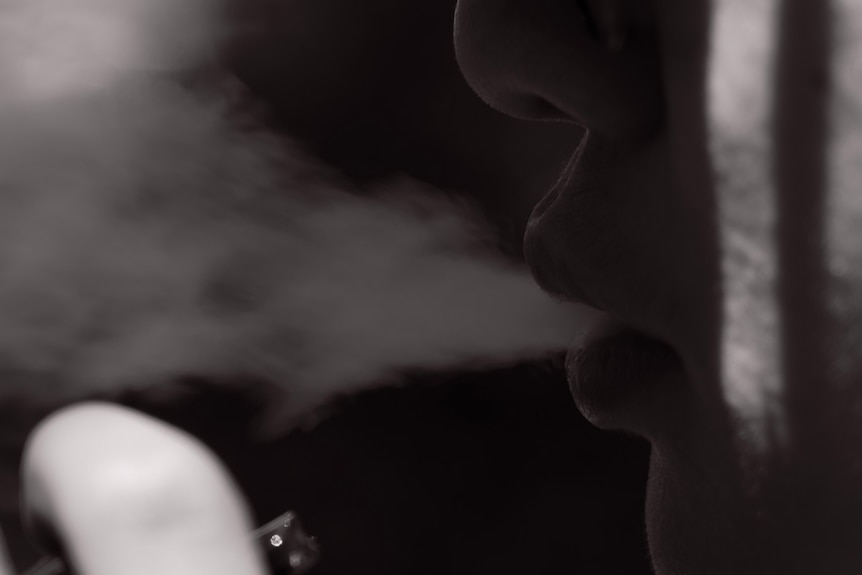
Parker faced challenges growing up in Sydney’s west. (ABC News: Briana Fiore)
Parker has a shy smile, short dark hair and always wears black.
His headphones hang from his neck, and he carries a skateboard like a 90s MTV kid.
Life threw him many lessons before he reached 21.
“I often learn the hard way,” he says.
He was raised by a single father and his grandparents in Sydney’s western suburbs. His mum left when he was six.
If you or anyone you know needs help:Lifeline on 131 114Kids Helpline on 1800 551 800Beyond Blue on 1300 224 63613 YARN on 13 92 76Suicide Call Back Service on 1300 659 467MensLine Australia on 1300 789 978Headspace on 1800 650 890ReachOutSANE on 1800 187 263Call triple-0 if you need immediate care
He says his hometown is flawed, but beautiful.
“It has a bit of history … gangs and drugs. A lot of trouble but I try to stay away from that.”
Parker’s grandparents are refugees from Asia.
He struggles to connect with them because he cannot speak their language.
“I’m kind of like a banana, yellow on the outside, white on the inside,” he jokes.
His father worked long hours to provide for the family and Parker said he was abusive at times.
Eventually, family breakdowns drove him out of home at age 12.
He says he tried to get help from his school, but became fearful when they threatened to take him away from his family.
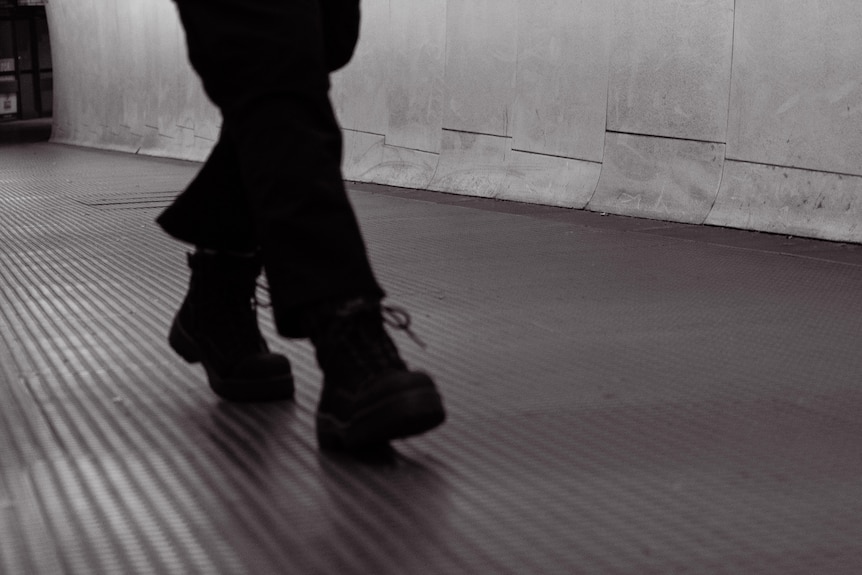
Parker has not had much stability while growing up. (ABC News: Briana Fiore)
He floated in-and-out of home for the next two years.
“I was trying to go back in the house and [sometimes] they wouldn’t let me back in.”
Parker admits to being a troubled kid and having an addiction to cheap cigarettes.
By 14, he was sleeping on park benches and couch-surfing. By 15, self-harming.
He says even now, he cannot afford a psychologist.
“Mental health sucks,” he says.
“But I try not to make that my whole life.”
‘Best sleep I ever had’
Parker has been in and out of refuges and crashed on more couches than he could count over the years.
He received keys to a transitional home in March.
It was a short-to-medium-term housing option for people at risk of homelessness.
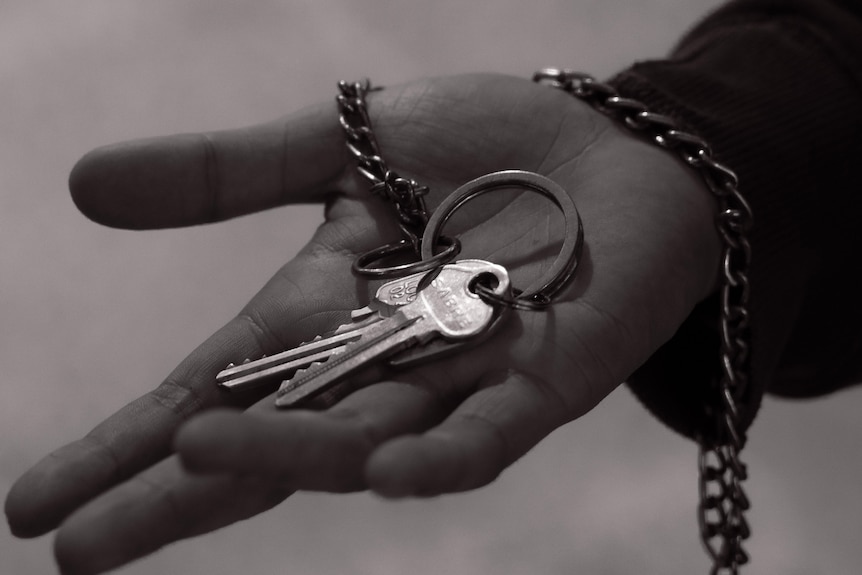
Recieving keys to his own place has been a turning point in Parker’s life. (ABC News: Briana Fiore)
The caseworker asked Parker where he would be sleeping that night, as the place was not furnished.
His voice tailed off as he said the floor.
“I slept for 12 hours. It was the best sleep I ever had,” he later said.
At a community dinner at a PCYC weeks later, Parker got to catch up with old friends.
Laughter mixed with the clanging of cutlery, as people sat at trestles in a rare chance to eat with others.
“I’m pretty much by myself all the time,” Parker said.
A skating accident landed him in hospital a short while later, and he described his recovery from surgery as extremely isolating.
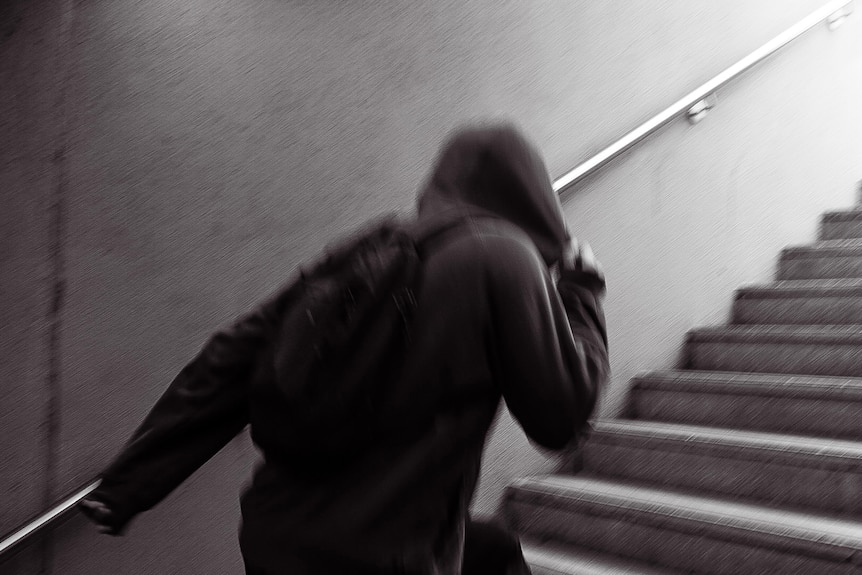
Being active with work helped him be more sociable. (ABC News: Briana Fiore)
For Parker, working as a bartender became an antidote to his loneliness. It gives him both confidence and social interaction.
“I used to be a bit of a mouse, kept to myself,” he says.
“But working at the pub gave me a sense of humour, like being able to banter with customers.”
For a fleeting moment, things looked like they were on the up.
Where is Parker?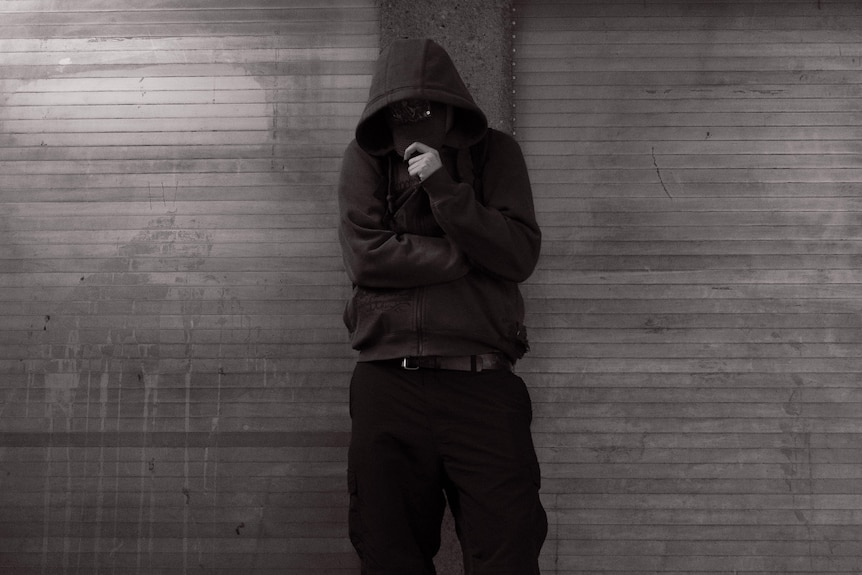
Parker’s found himself with his back against the wall a few times. (ABC News: Briana Fiore)
Months passed but Parker had gone quiet.
His caseworker became concerned — she had a new job and would no longer be supporting him.
She sent the police around for a welfare check.
Was he back on the streets? Was he in hospital? Was he still alive?
Parker had been arrested, his phone confiscated, and he was unable to return calls.
He was charged with a handful of offences, from larceny to graffiti — reoffending while on bail.
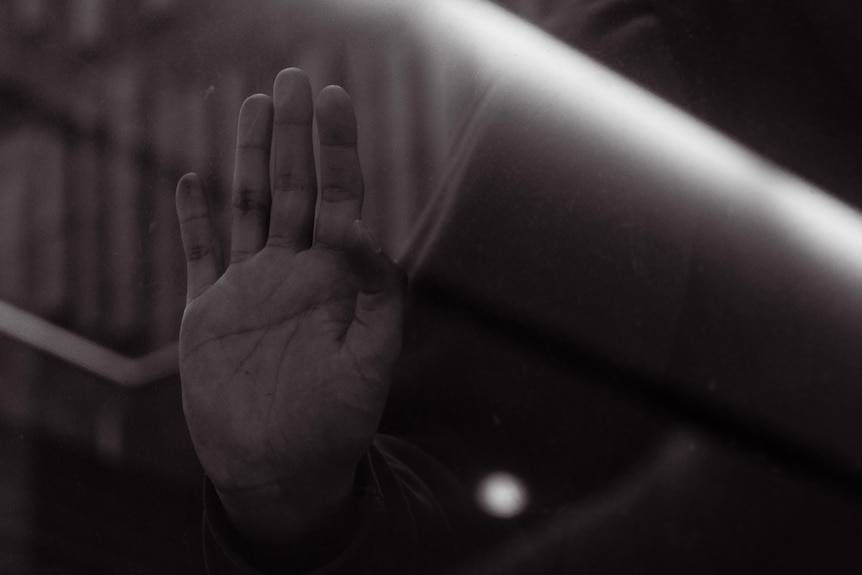
Fresh run-ins with the law have been a setback. (ABC News: Briana Fiore)
Authorities rocked up to his work and he missed a shift. He lost his job as a result.
The next few months were spent in and out of court.
“Oh dude, I was shitting bricks,” he says, apologising for swearing.
“I was really worried, I had a lot of anxiety. A lot of sleepless nights.
“For me, it was mostly about expressing myself, but I do understand the law side of it.”
Parker says he has since stuck to making art at home to avoid more trouble with the law.
His court cases wrapped up late in the year, and he was hit with a few thousand dollars’ worth of fines. Money he did not have.
Parker’s future
Parker says he hopes to get a job in hospitality over the Christmas period.
He also has a new social worker and transitioned into another artistic pursuit to escape “graff culture”.
“Majority of the time, I’m in my book, I’m drawing,” he says.
Parker says he has aspirations to one day become a tattooist.
But transitional housing is a life raft with an expiry.
His lease was extended by three months, but he fears he might be aging out of the system.

Parker sees a future for himself in art. (ABC News: Briana Fiore)
“After I hit a certain age, I won’t get the support I need.”
He says he is in the queue for social housing, but the waitlist is long.
According to the Australian Bureau of Statistics, one in every four people experiencing homelessness are aged between 12 and 24.
Youth homelessness is often hidden and multidimensional.
Parker says he is thankful to be born here, but hesitates when asked if Australia is still a lucky country.
Sunlight speckles his glasses as he sits on the park bench in postcode 2000.
He vowed to never return but knew the system could send him back.
“I just want to get back on my feet.”
* Parker has consented to his story being shared under a pseudonym to preserve his privacy.