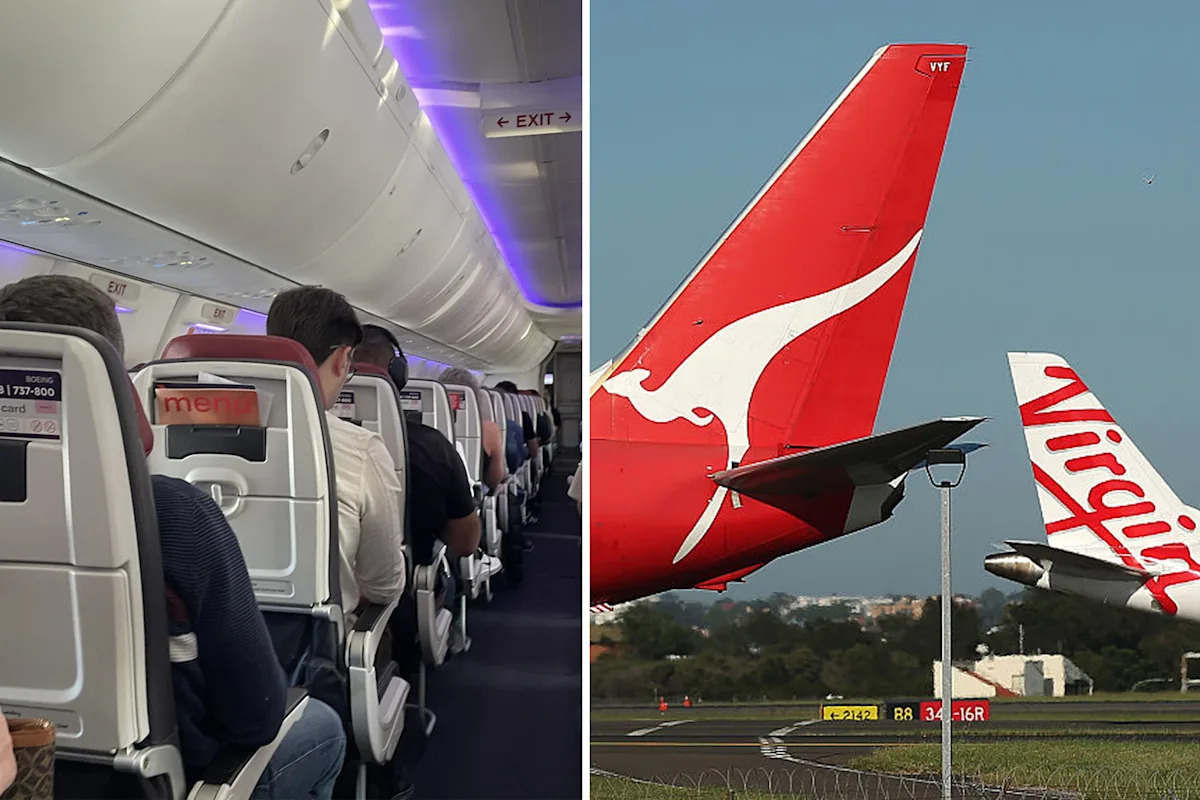
Australian passengers are being urged to take one important item on flights now that powerbanks will be banned as early as tomorrow. Travel expert Quentin Long told Yahoo News it’s vital to take an “old school” USB Type-A cable with them, because, without it, they may have no other way to charge their phones on planes or at airports.
Many Apple and Android phones have transitioned to USB Type-C ports; however, the majority of airlines and airports have yet to catch up, still using USB Type-A inputs on plane seats and in departure lounges.
If travellers take their usual phone charging cables, Long warned that many could find themselves stumped without a powerbank to back them up. Virgin Australia will ban the use of powerbanks from December 1.
“You should be travelling with a USB-A at all times because that’s what most airlines carry, which is the old-style charging cable. Particularly for long-haul flights, you’ll need that,” Long said.
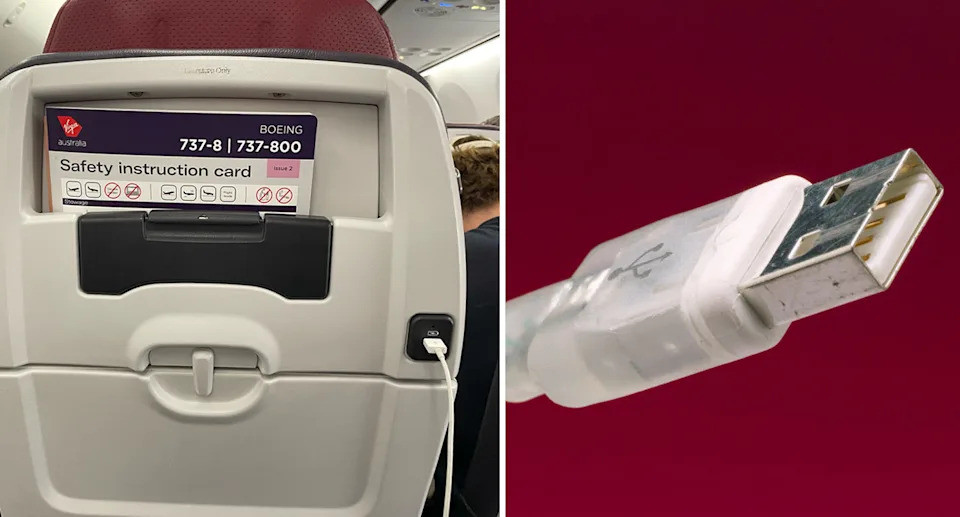
Travel expert Quentin Long is urging Aussies to take USB Type-A cables with them on planes. Source: Yahoo News Australia & Getty
Qantas, Jetstar and Virgin are introducing bans for all Australian passengers due to concerns about fire risks on board.
A fire broke out on a Virgin Australia flight in July, and a Qantas lounge was evacuated in Melbourne in November after a man’s battery ignited. Another incident at the start of the year involved a fire on an Air China plane as a powerbank spontaneously combusted in the overhead locker.
Batteries have been banned in checked baggage for some time, and while passengers can still take them on board, they are strictly prohibited from using them. Powerbanks also must be “within sight at all times,” Long explained.
Other popular devices in firing line of airline bans
Several Asian airlines recently joined New Zealand’s Aviation Authority in a stronger crackdown, banning items like Bluetooth headphones and Airpods from checked luggage.
Thai Airways, Singapore Airlines and Malaysia Airlines — along with Hong Kong’s aviation regulator which takes in Cathay Pacific — have banned in-flight use of lithium batteries.
A charging bank has become a popular item to take on your travels, but Aussies need to be wary of new restrictions. Source: Getty
Earbuds use this same charging device. As they are constantly being charged while they are in their case, experts have raised concerns about the increasing risk they could catch alight.
EVA Air, UNI Air, and Tigerair Taiwan banned wireless earbuds from checked baggage.
But, a spokesperson for Qantas told Yahoo News the ban does not include devices like this.
Air Tags and similar trackers contain a small lithium battery, but Jetstar said they are still allowed in checked baggage.
So what are the changes on Australian airlines?
Can I bring a powerbank on a plane?
Powerbanks cannot be put in your checked luggage and there are restrictions on what types and how they can be used on board.
Qantas and Jetstar
Under the changes for Qantas and Jetstar, passengers need to adhere to the following from December 15:
The use of powerbanks on board is prohibited
Charging of powerbanks onboard is prohibited, including via in-seat power or USB ports (where available)
Customers may carry up to two power banks (each not exceeding a maximum capacity of 160 watt hours) in their cabin baggage
Powerbanks, spare batteries and personal electronic devices (PEDs) should be stored in the seat pocket or under the seat in front. If this is not possible, then in a nearby overhead locker
All power banks must display battery specifications
Lithium batteries that are part of a “smart bag” must be removed from the bag and taken on board as carry-on, and stowed in the same way as power banks
Powerbanks will continue to be prohibited from checked baggage
Virgin
Under the Virgin changes, these will be the following regulations from December 1:
Powerbanks, spare batteries and small portable electronic devices permitted on board must be easily accessible throughout the flight. This means guests should not stow these items in the overhead locker and must store them under the seat in front (in line with our carry-on baggage policy), in the seat pocket, or on their person
Powerbanks cannot be used on board. Guests who wish to charge their small portable electronic devices (such as phones and tablets) can do so using the in-seat power ports available on board
Guests must also observe limits on the carriage of small portable electronic devices, powerbanks, and spare batteries
Each guest may carry a maximum of two powerbanks. Devices over 100 watt-hours and up to 160 watt-hours require Virgin Australia’s approval prior to travel, while powerbanks exceeding 160 watt-hours are prohibited
All Australian airlines are concerned about the “safety risks of damaged or defective lithium battery powered devices
The changes are also informed by planned updates from the International Civil Aviation Organisation (ICAO), which are expected in 2026.
“Keeping powerbanks and portable electronic devices within easy reach during a flight ensures that in the rare event of an issue our crew can identify and respond quickly,” a spokesperson from Qantas and Jetstar told Yahoo News. You can find out more information here.
Virgin said safety is a “number one priority”.
“These updates are part of our ongoing commitment to maintaining the highest levels of safety and compliance with international aviation standards,” Virgin told Yahoo News.
“Globally, more lithium battery-powered devices are now being carried by travellers, and while these items are generally safe when packed and handled appropriately, this move will minimise any potential risks associated with these devices.
“The changes to the policy will be permanent from 1 December and reflect our safety-first approach.”
Do you have a story tip? Email: newsroomau@yahoonews.com.
You can also follow us on Facebook, Instagram, TikTok, Twitter and YouTube.