
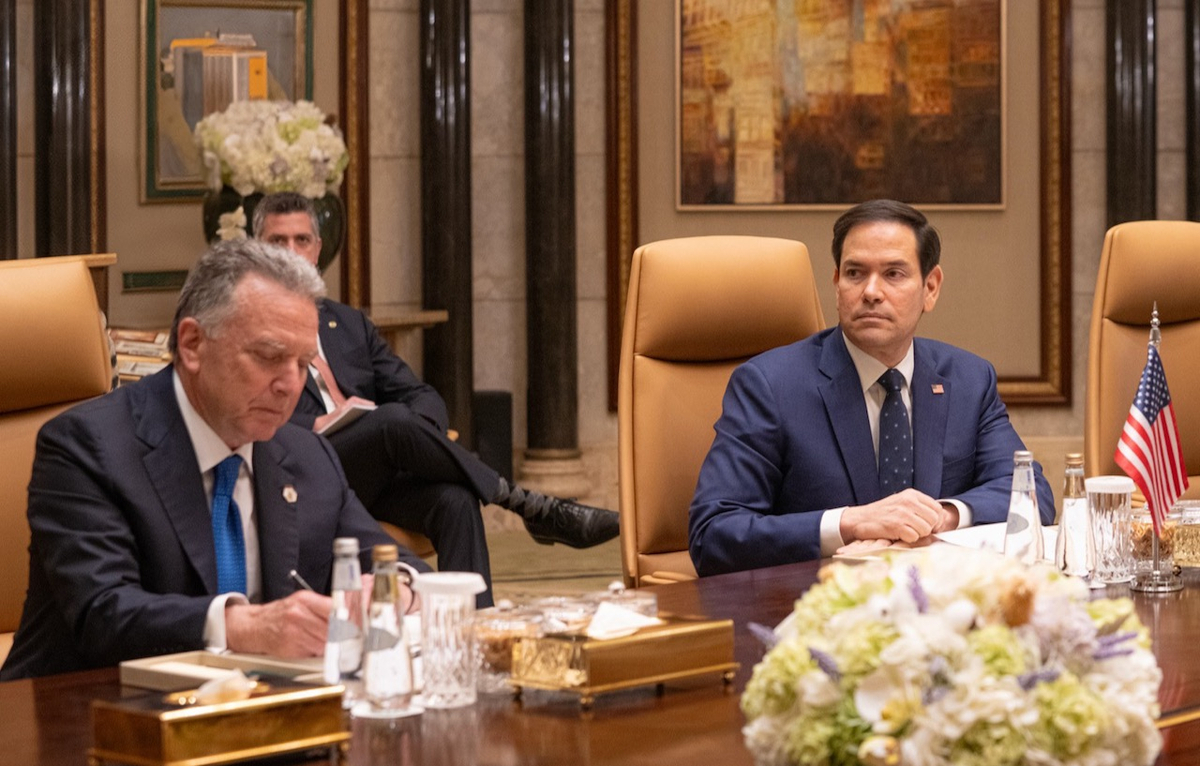
MIAMI, Florida – Top negotiators for US President Donald Trump are set to meet with Ukrainian officials in Florida on Sunday, marking the latest escalation in a rapidly intensifying diplomatic effort to hammer out a peace settlement to halt Russia’s invasion, according to a senior US official.
The American delegation – led by Secretary of State Marco Rubio, special envoy Steve Witkoff, and presidential adviser Jared Kushner – will follow up on foundational talks held last weekend in Geneva.
JOIN US ON TELEGRAM
Follow our coverage of the war on the @Kyivpost_official.
Those discussions reportedly mapped out the broad framework of a potential deal, though major political and territorial disputes remain stubbornly unresolved.
Kyiv arrives amid domestic shockwave
The Florida session comes at a particularly turbulent moment for Kyiv. President Volodymyr Zelensky is managing the political fallout from a corruption investigation that, just Friday, forced the resignation of his chief of staff and key negotiator, Andriy Yermak.
Yermak had been a central participant in the Geneva talks, even briefing reporters alongside Rubio afterward.
Despite the internal upheaval, Zelensky on Saturday sought to project diplomatic momentum. In his nightly address, he stressed that diplomacy “remains active” and credited the US with demonstrating “a constructive approach” to the evolving peace framework.
“In the coming days it is feasible to flesh out the steps to determine how to bring the war to a dignified end,” he said.
Other Topics of Interest
Political Theater of the Absurd: Putin’s Parallel Universe of ‘Peace’
What Russia is doing right now is not negotiation. It’s performance and manipulation. It is the behavior of a power that knows it cannot win militarily and therefore tries to win on paper.
Meanwhile, Witkoff is slated to visit Moscow next week – an itinerary that has heightened anxiety among some analysts in Washington and Kyiv who fear that certain Trump advisers may be drifting too close to Russian preferences. The White House has consistently denied any such bias.
Key questions ahead: Ambassador Herbst’s assessment
To gauge expectations for Sunday’s pivotal meeting, former US Ambassador to Ukraine John Herbst offered a measured, methodical assessment of where negotiations truly stand.
Herbst, now a senior director at the Atlantic Council’s Eurasia Center, pushed back on speculation that Geneva produced little progress.
Instead, he described the talks as productive: “My understanding is that the Geneva negotiations went well right after the difficult negotiation between [Army Secretary Dan] Driscoll and Zelensky and others in Kyiv,” Herbst told Kyiv Post.
He said the talks resulted in “a much better document from Ukraine’s point of view” – a 19-point draft whose details remain only partly known.
The updated document reportedly removed several significant Russian demands, including ceding western Donbas to Russia, unusual provisions concerning frozen Russian assets, explicit mentions of NATO, and the elimination of security guarantees.
Still, Herbst emphasized that the most contentious disputes have now been formally pushed up the ladder: “Both parties have stated that the most difficult issues need to be resolved at the level of presidents,” he said.
Herbst framed Sunday’s Florida meeting as a diagnostic moment. “My expectation would be that the US wants to see if there’s any additional Ukrainian flexibility on these points before Witkoff goes to Moscow,” he explained.
He added that it’s unclear how much communication has taken place between the US and Russia since Geneva, but speculated that Washington may have received “some Russian feedback” that it now wants to test. Ukraine, in turn, “would like to find out if there’s American flexibility on those difficult issues.”
As the talks unfold, Herbst said he will be watching tone as an early indicator of substance: “I’ll be watching closely – first the tone of the meeting, but more importantly, and related to the tone, how these specific issues, which we know are difficult, are discussed.” He cautioned that the talks may ultimately reveal little.
Herbst also offered rare praise for a senior administration figure, saying he is “encouraged by the fact that Rubio is in charge of the US delegation, because he’s clearly the smartest guy at senior levels in the Trump administration regarding American interests in Europe.”
Paving the way to Moscow
For now, Sunday’s session is widely viewed as a pivotal “temperature-taking” moment aimed at determining whether the US and Ukraine can sufficiently align their positions to give Witkoff a clear negotiating mandate for his high-stakes trip to Moscow.
The fact that the toughest issues have now been formally kicked to the presidential level underscores both the opportunity and fragility of this diplomatic moment.
If Florida produces clarity, Trump’s envoys may finally carry a unified, actionable framework into the next round of shuttle diplomacy.
If not, Sunday risks being remembered less as a breakthrough and more as the moment when the peace track began to wobble – just as the world started squinting for signs of daylight.