
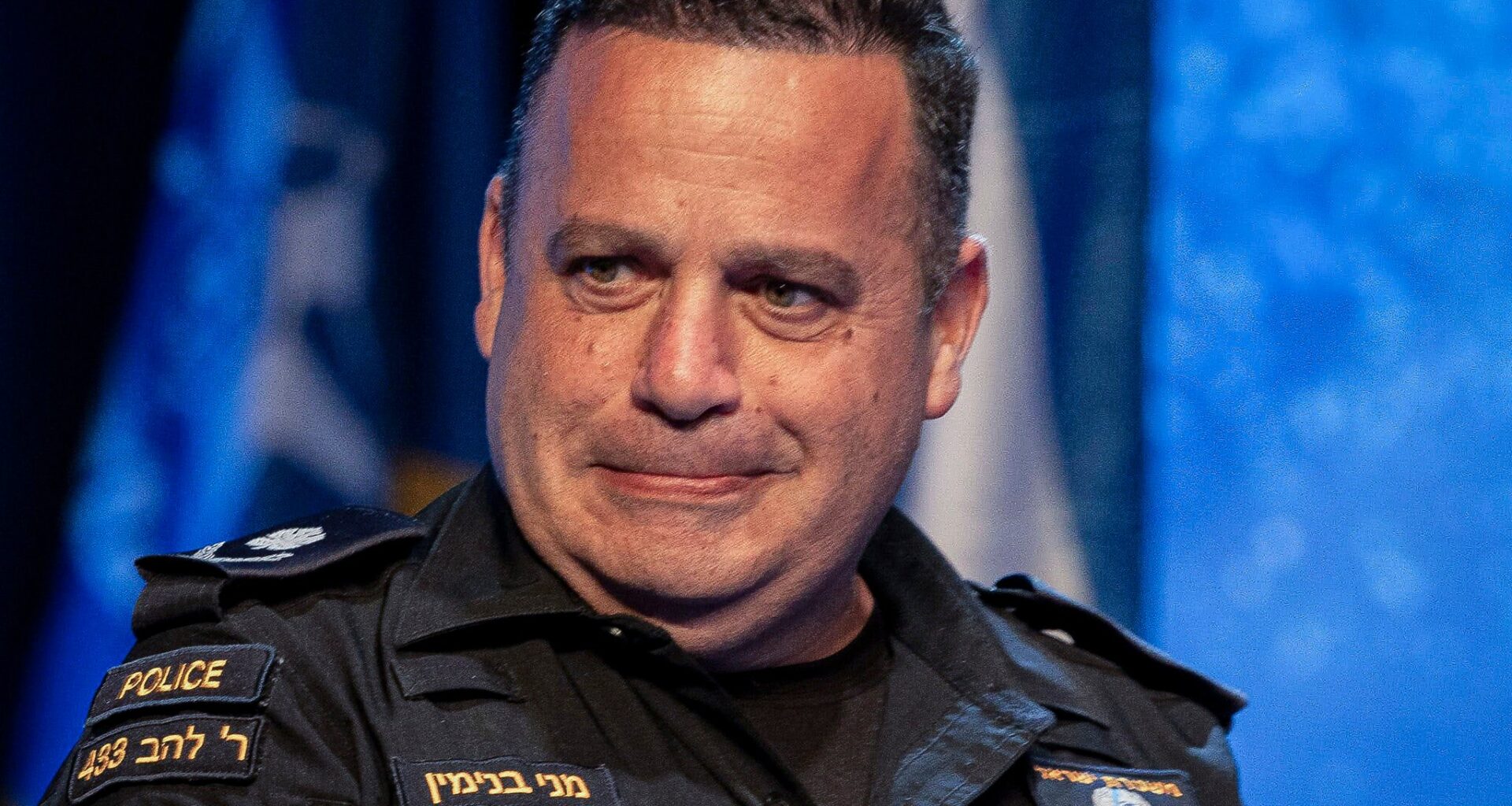
Investigators briefly arrested, then released the chief of police’s Lahav 433 major crimes unit on Sunday after he initially refused to sign off on conditions for his release following a lengthy interrogation, his defense attorney said.
Deputy Commissioner Manny Binyamin was questioned for eight hours by investigators in the Department for Internal Police Investigations, marking the third time he was interrogated as part of an ongoing criminal probe into suspicions he committed several corruption-related offenses.
Binyamin’s lawyer Uri Korb alleged that his client was strong-armed into signing off on release conditions and even assaulted by a DIPI investigator at the end of his interrogation, as he consulted with his attorney over the phone.
The high-profile attorney called the sudden introduction of new release conditions illicit and unwarranted, given the fact that he had been free, subject to no limitations, for ten days.
Binyamin nevertheless signed off on the conditions with the exception of one — a prohibition on him “meeting with a subordinate officer who works with him in the same building.”
Get The Times of Israel’s Daily Edition
by email and never miss our top stories
By signing up, you agree to the terms
Investigators at that moment chose to place Binyamin under arrest, which Korb claimed amounts to abuse of authority and breach of trust — the same offenses that Binyamin is suspected of. Under threat of arrest, Binyamin conceded and signed off on the conditions, the lawyer said.
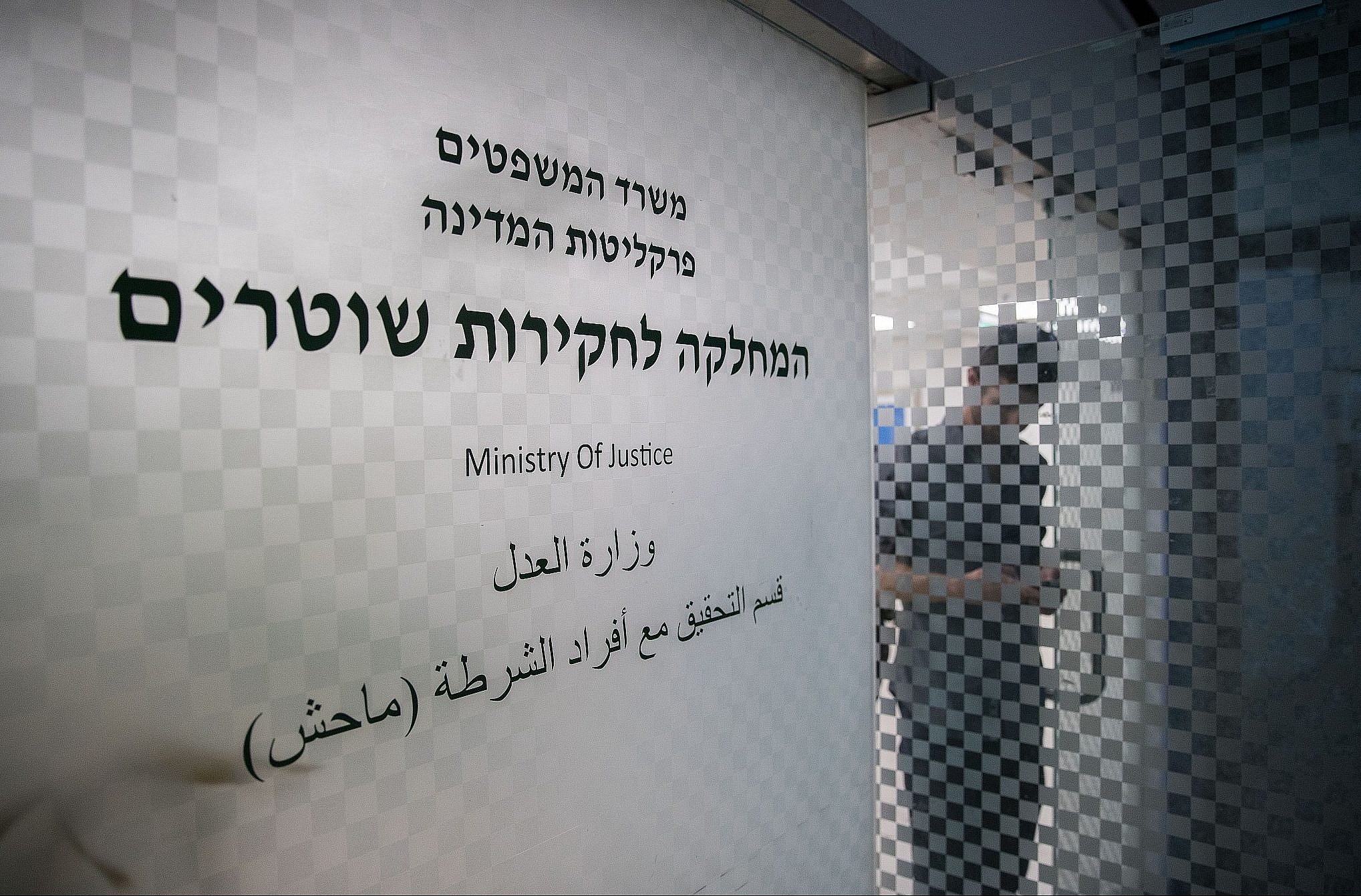
The Police Internal Investigations Department in Jerusalem, photographed on July 8, 2019. (Yonatan Sindel/ Flash90/ File)
The embattled senior officer was questioned earlier this month on suspicion he illicitly interfered in an investigation being conducted by his unit, involving a businessman with whom he maintained close ties. Last week, Hebrew media outlets reported he was also suspected of trying to promote a relative of his to a senior position.
The DIPI rejected Korb’s claims on Sunday in a statement released soon after his, calling the allegation that one of its investigators attacked Binyamin a baseless lie.
“We regret the distortion of facts and the serious allegations published by Deputy Commissioner Binyamin’s legal counsel. The claim of physical assault by a DIPI investigator is entirely unfounded; no violent incident occurred,” the agency said.
The department added that investigators “provided [him] all the necessary conditions throughout the interrogation, including multiple consultations with his attorney.”
According to the statement, Binyamin was released on restrictive conditions, including a prohibition on contacting those involved in the ongoing criminal probe and that he sign a personal guarantee to ensure compliance with this condition.
“The delay in completing the procedure resulted solely from Deputy Commissioner Binyamin’s prolonged refusal to sign the release conditions, and once he agreed, he was released immediately,” the agency continues.
The attorney told Ynet that Binyamin will nevertheless show up to work on Monday at his unit’s offices in Lod, after the officer’s return to his post was granted by police chief Danny Levy on Thursday last week.
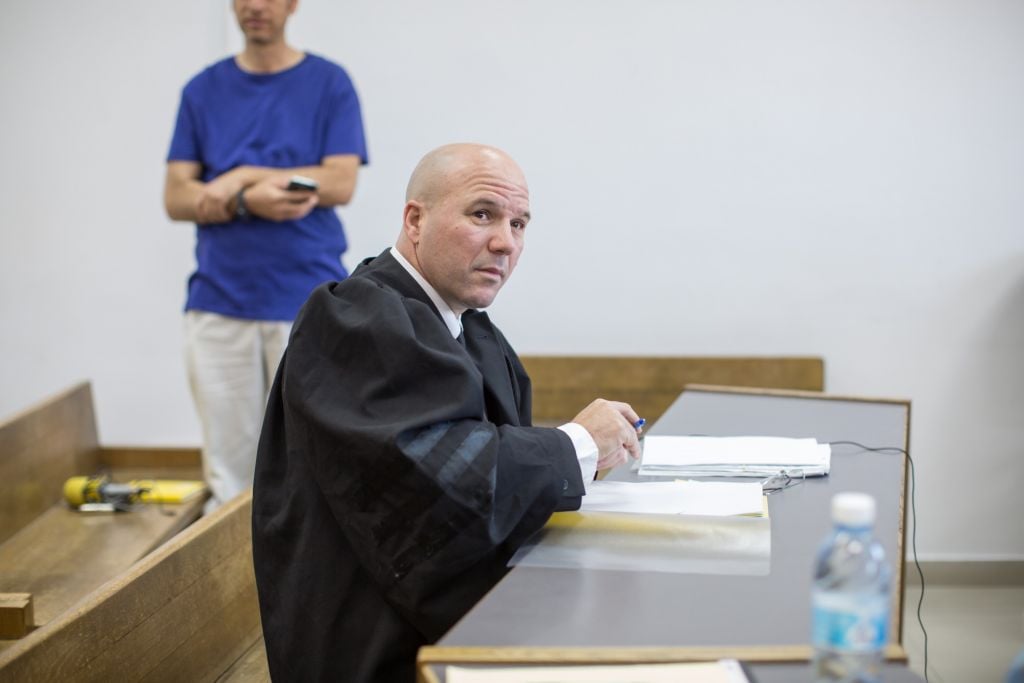
Uri Korb, a senior lawyer at the State Prosecutor’s Office, seen at the Jerusalem District Court, May 05, 2015. (Emil Salman/POOL)
Korb ended his statement by appearing to wade into politics, calling on “external authorities” to rein in the DIPI, which is currently subordinate to the State Attorney’s Office.
“It appears that in its conduct in this case, the DIPI has crossed all boundaries,” Korb said, urging “immediate intervention by external authorities” to set limits on the agency.
Currently under deliberation in the Knesset National Security Committee is a controversial bill to do just that, namely, to place the DIPI under the direct control of the justice minister and give the minister the power to investigate state prosecutors.
Critics see the bill, which passed a preliminary Knesset reading in 2023, as the latest step in a coalition-led campaign to wrest power from professional legal bodies and subjugate them to political interests.
While bill sponsor Likud MK Moshe Saada said the legislation aimed to “protect the State of Israel, to ‘watch the watchmen,’” opposition lawmakers have contended it risks politicizing criminal probes of police, destroying the agency’s independence, and threatening state prosecutors by subjecting them to investigations led by a political appointee.
Watch DocuNation Season 3: The Heart of Israel
when you join the ToI Community
In this season of DocuNation, you can stream five outstanding Israeli documentaries with English subtitles and then join a live online discussion with the filmmakers. The selected films show Israel beyond the conflict: a place of storytellers and musicians, of dreamers, makers, and communities rooted in meaning and trust.

When you watch DocuNation, you’re also supporting Israeli creators at a time when it’s increasingly difficult for them to share their work globally.
To learn more about DocuNation: The Heart of Israel, click here.
Support ToI and get DocuNation
Support ToI and get DocuNation
Already a member? Sign in to stop seeing this
You appreciate our journalism

You clearly find our careful reporting valuable, in a time when facts are often distorted and news coverage often lacks context.
Your support is essential to continue our work. We want to continue delivering the professional journalism you value, even as the demands on our newsroom have grown dramatically since October 7.
So today, please consider joining our reader support group, The Times of Israel Community. For as little as $6 a month you’ll become our partners while enjoying The Times of Israel AD-FREE, as well as accessing exclusive content available only to Times of Israel Community members.
Thank you,
David Horovitz, Founding Editor of The Times of Israel