
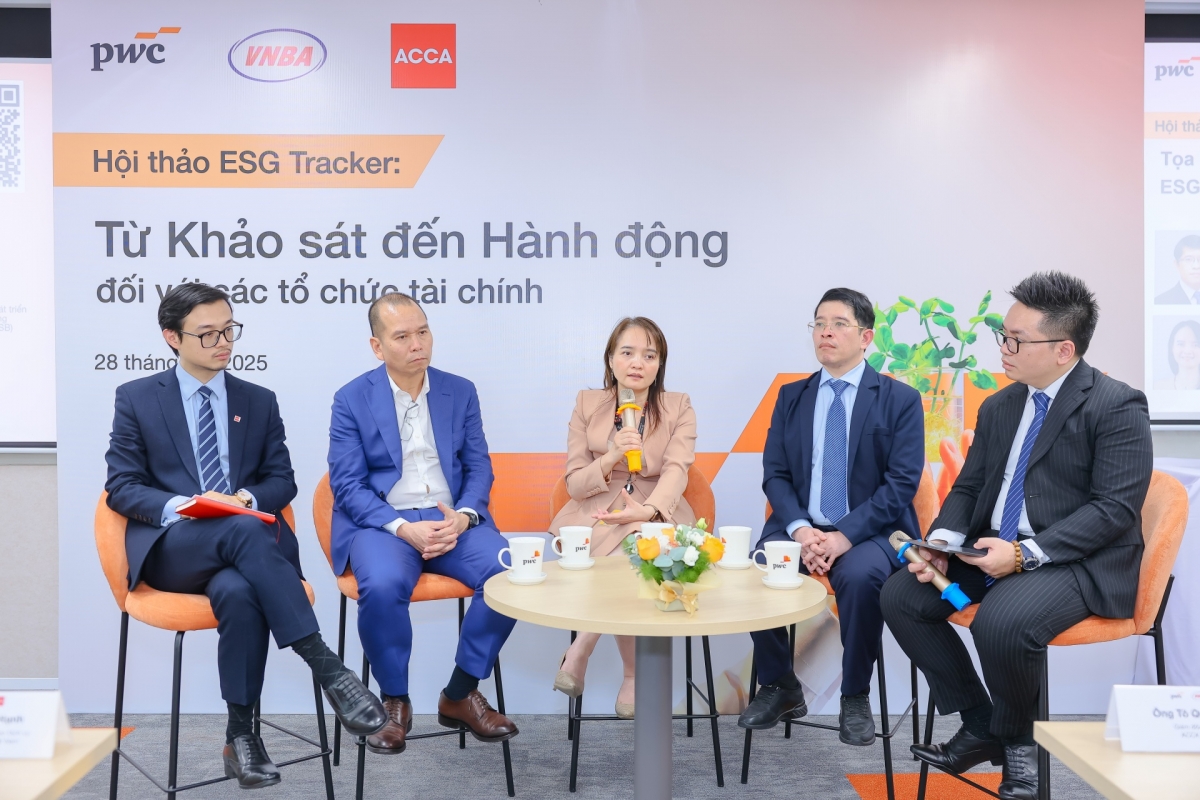
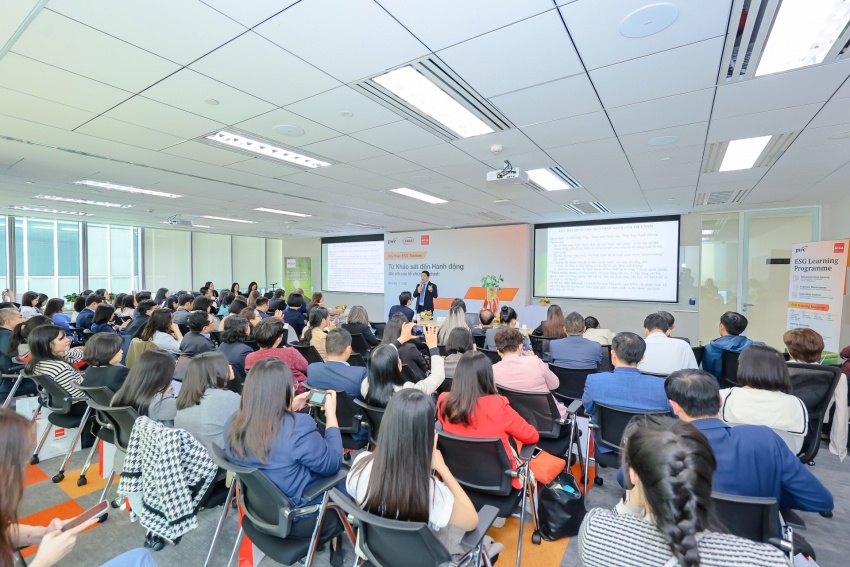
On November 28, the Vietnam Banks Association, ACCA Vietnam, and PwC Vietnam jointly hosted the ESG Tracker Seminar 2025: From Survey To Action For Financial Institutions at PwC Vietnam’s office in Hanoi.
The event gathered more than 100 participants, including regulators, financial institutions, and industry experts, to discuss Vietnam’s ESG journey and share findings from PwC’s 2025 ESG Progress Tracker in Vietnam report.
Globally, ESG integration has shifted from a voluntary practice to a core strategic requirement, driven by regulatory pressure, investor expectations, and the urgent need for transition finance. The financial sector sits at the heart of this shift, as global climate investment needs are estimated at $6.3 trillion annually to meet the 2030 targets.
In Vietnam, the financial services industry is viewed as a key driver of the country’s net-zero ambitions and green growth strategy. Vietnam requires an estimated $368 billion through 2040, equivalent to 6.8 per cent of GDP annually, to meet climate mitigation and adaptation targets. This underscores the crucial role of banks and financial institutions in mobilising capital, directing investment flows towards low-emission projects, and managing ESG-related risks.
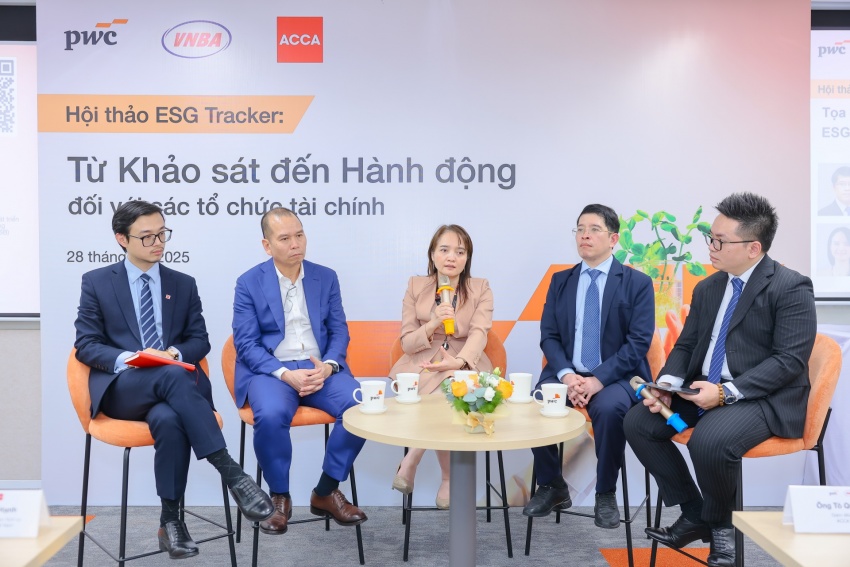 Experts discussed Vietnam’s ESG journey. Photo: ACCA Vietnam
Vietnam has made significant progress in building its sustainable finance framework. Decision 21/2025/QD-TTg establishes the country’s first green taxonomy, defining environmental criteria for 45 sectors, alongside mechanisms for green credit and green bond verification. The State Bank of Vietnam aims to increase green credit to 10 per cent of total outstanding loans this year. These policies, together with Politburo resolutions 57, 59, 66, and 68, reaffirm ESG as a foundation for Vietnam’s economic transition.
Speaking at the seminar, Assoc. Prof. Dr. Nguyen Dinh Tho, vice president of the Institute of Strategy and Policy on Agriculture and Environment, outlined Vietnam’s ESG roadmap and emerging requirements for sustainability reporting aligned with global trends.
He also presented the green taxonomy and pathways for its application in Vietnam, highlighting the implications of these regulations for credit activities, financial operations, reporting transparency, and governance expectations from investors.
 Assoc. Prof. Dr. Nguyen Dinh Tho, vice president of the Institute of Strategy and Policy on Agriculture and Environment. Photo: ACCA Vietnam
PwC’s 2025 ESG Progress Tracker in Vietnam report shows that ESG adoption in Vietnam’s financial sector outperforms the national average across multiple dimensions. About 92 per cent of financial institutions have made or plan to make ESG commitments within the next two to four years, compared with 89 per cent across the wider market.
51 per cent per cent have implemented ESG commitments, while 62 per cent have a formal ESG strategy, though only 19 per cent report having fully developed and integrated ESG strategies.
Governance maturity has markedly improved, with 81 per cent of boards engaging in ESG topics compared with 68 per cent market-wide, and 89 per cent appointing ESG leaders versus 75 per cent market-wide, though nearly half note unclear authority structures.
Data and reporting remain major challenges: 78 per cent collect ESG data, but only 3 per cent use advanced analytics, and just 33 per cent apply independent assurance to ESG reports.
These findings set the foundation for a deep-dive panel discussion featuring experts from ACCA, PwC, MSB, and the Institute of Strategy and Policy on Agriculture and Environment, focusing on how financial institutions can translate ESG commitments into real-world outcomes.
Speakers emphasised international standards, the gap between awareness and execution, and practical steps to embed ESG into banking and financial operations. They also highlighted the need to harmonise Vietnam’s green taxonomy and guidance from the State Bank of Vietnam with global frameworks, while addressing persistent challenges in financing, reporting, and transparency.
Despite progress, data gaps remain a major obstacle, signalling the need for robust management systems and reliable disclosures. ACCA and PwC stressed the importance of structured ESG training courses to strengthen technical capabilities, build leadership confidence, and support ESG integration across strategy and operations.
The seminar concluded with a Q&A session, where delegates exchanged practical approaches to incorporating ESG into credit risk assessment, developing green financial products, and leveraging policy incentives for sustainable finance.
“ESG is no longer optional; it is a strategic imperative,” said Dinh Thi Quynh Van, chairwoman of PwC Vietnam. “Financial institutions must further align purpose with performance and fully recognise the value of embedding ESG into business strategies.”
“Finance professionals are at the centre of this transformation. Training is essential to accelerate ESG adoption and enhance institutional resilience,” added To Quoc Hung, country manager at ACCA Vietnam.
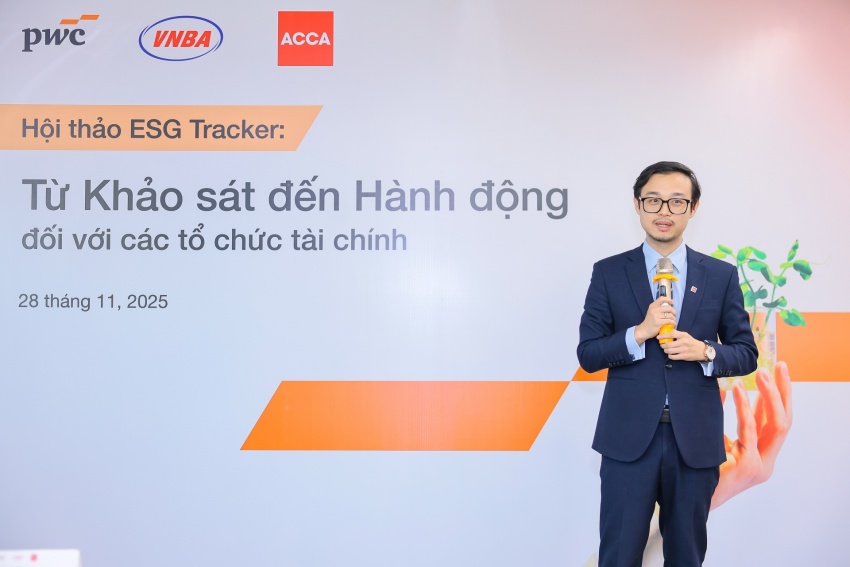 To Quoc Hung, country manager at ACCA Vietnam, speaks at the seminar. Photo: ACCA Vietnam
To support businesses in turning ESG focuses into measurable impact, PwC Vietnam and ACCA Vietnam introduced the ESG Training Programme. The programme combines PwC-led thematic workshops with ACCA’s online modules on sustainable finance and the Sustainability Practitioner Certificate.
It features two learning pathways, which are ESG Navigator with foundational knowledge, and Leadership in Sustainability, providing advanced strategic integration. Participants who complete the courses will receive a joint PwC-ACCA certificate recognising ESG competency.
 From compliance to strategy: ESG criteria gaining ground
Amid intensification global standards, rising stakeholder expectations, and Vietnam’s national climate pledges, environmental, social, and governance considerations are now viewed as a strategic imperative for long-term business resilience.
 ESG as seen key to Vietnam’s business credibility and capital attraction
The future of environmental, social, and governance (ESG) practices in Vietnam promises looks, though challenges remain, according to Nguyen Hoang Nam, ESG Leader and Partner of Assurance Services at PwC Vietnam in an interview with VIR’s Hazy Tran.
 Sustainable Development Conference 2025 recognizes leaders in green growth
Sixty two businesses and organizations were recognized for their contributions to sustainable development at VIR’s Sustainable Development Conference 2025 in Hanoi.