
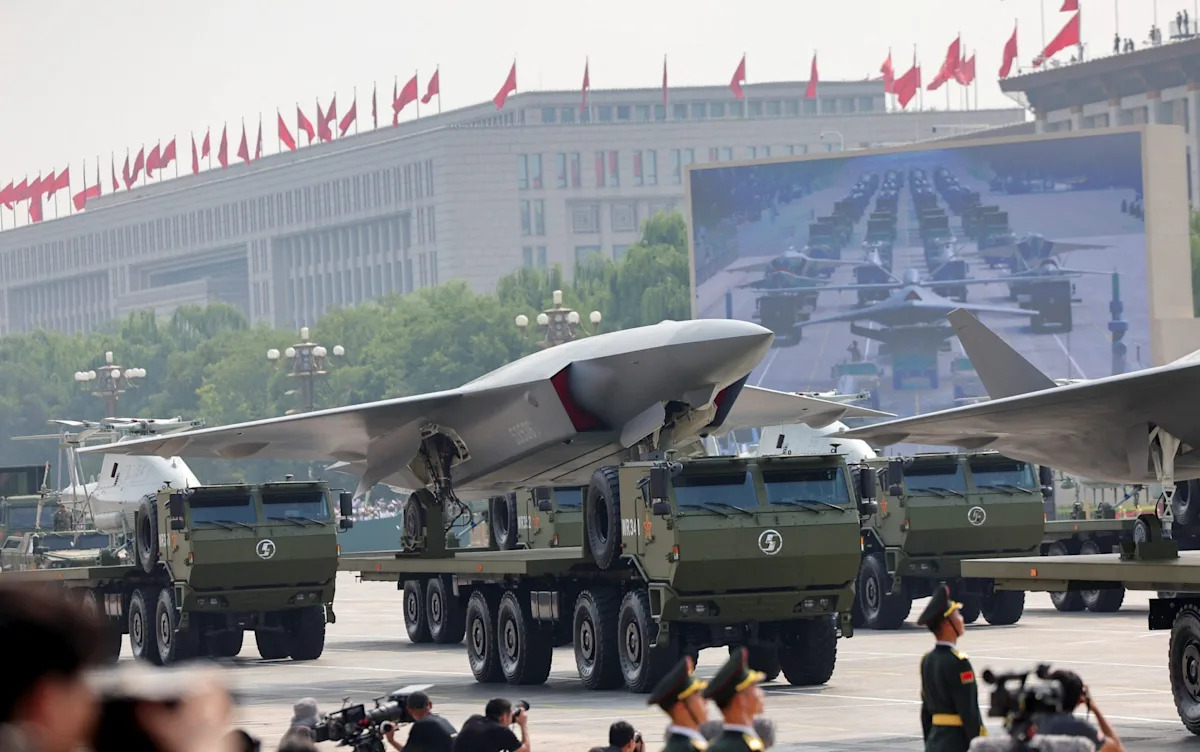
For years, the West has been fretting about China’s military prowess.
Tests of high-tech lethal weapons, bombastic parades and constant sabre-rattling against Taiwan have sown fear that Xi Jinping’s pursuit of dominance in the South China Sea could provoke all-out war.
The global race for supremacy has led rivals Japan and the US to drive increases in their defence spending and grow their domestic arms industries to counter the potential threat from Beijing.
But Mr Xi’s weapons factories are struggling, and he’s the man responsible.
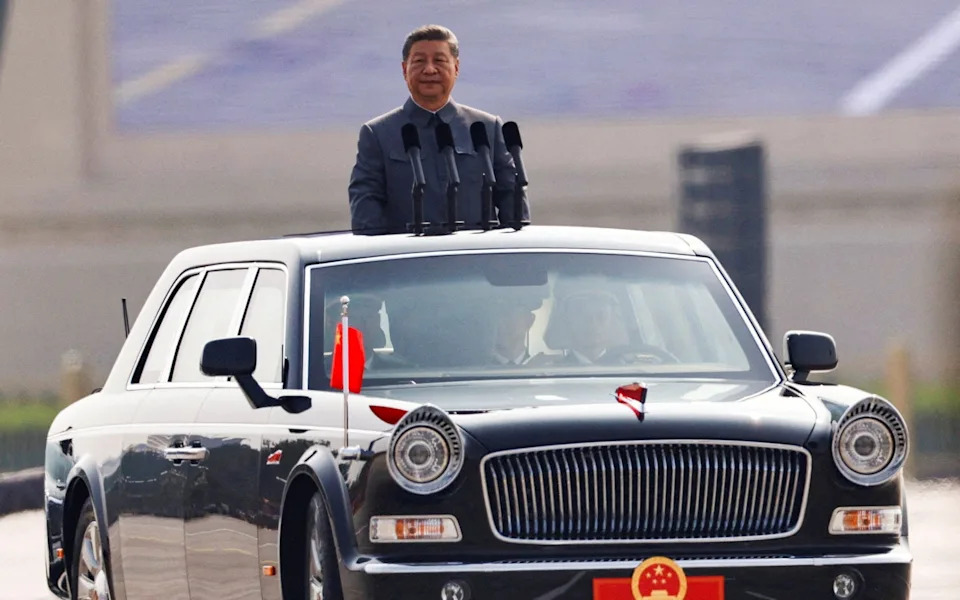
President Xi Jinping’s anti-corruption crusade appears to be hampering China’s defence industry – Tingshu Wang/Reuters
Last year, China’s defence industry shrank by 10 per cent according to a report from the Stockholm International Peace Research Institute (SIPRI).
Over the last 10 years, dozens of individuals have been purged as part of the Chinese leader’s far-reaching anti-corruption campaign, including those in his inner circle.
This has had an impact on China’s preparedness to invade Taiwan – a key objective for Mr Xi – and now it could also be impacting Beijing’s defence industry more broadly.
While China has the largest army in the world, and is increasingly rivalling the US for the title of strongest military, the drop in defence revenue questions whether this trajectory will continue or taper off.
Japanese firms topped the chart, recording a massive 40 per cent increase, followed closely by Germany at 36 per cent and South Korea at 31 per cent.
The US and the UK recorded increases of four and seven per cent respectively.
Overall, revenues at the world’s 100 largest arms firms increased by 5.9 per cent to a record $679bn (£513bn), the SIPRI report said.
However, China’s dip was sufficient for Asia-Oceania to be the only region to experience a decrease in revenue among top arms firms, and this can be directly connected to Mr Xi’s ongoing anti-corruption purges.
“A host of corruption allegations in Chinese arms procurement led to major arms contracts being postponed or cancelled in 2024,” said Dr Nan Tian, the director of SIPRI’s military expenditure and arms production programme.
“This deepens uncertainty around the status of China’s military modernisation efforts and when new capabilities will materialise.”
The anti-corruption campaign has decimated branches of China’s military and political wings.
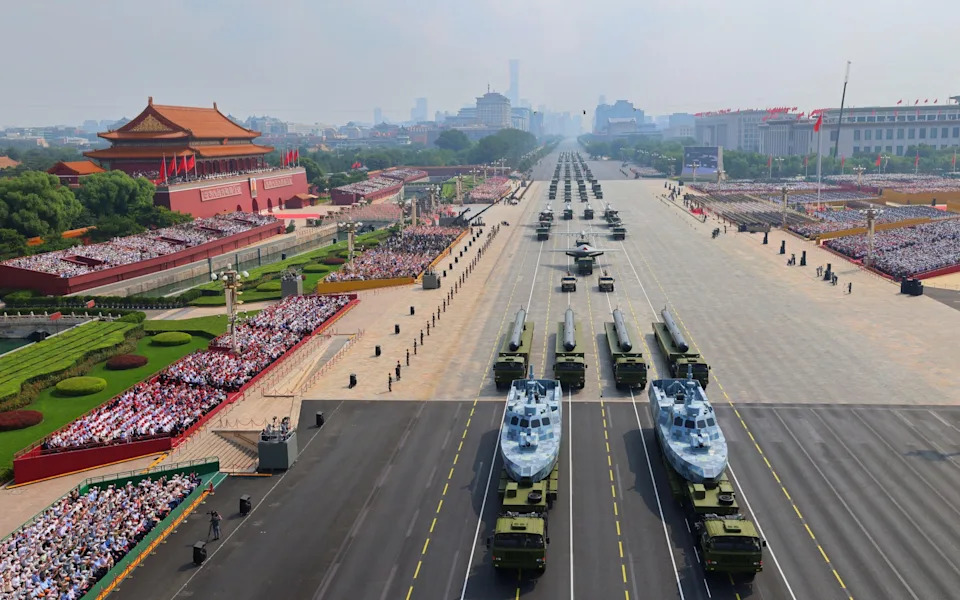
China held a grand military parade commemorating the 80th anniversary of the Second World War in September – Xinhua/Alamy
In 2014 and 2015, two former vice-chairmen of the Central Military Commission, China’s main military organ, were purged.
Then, earlier this year, a sitting vice-chairman of the commission and the second highest ranking official in China’s military was also dismissed, becoming the most senior official targeted to date.
Dozens more officials across the navy, ground force, rocket force and air force have also been fired, along with senior figures in the arms industries.
In 2023, the heads of three leading defence manufacturers were purged, including Liu Shiquan, the chair of the China North Industries Corporation (Norinco), one of China’s top defence firms.
Norinco then recorded a staggering 31 per cent drop in revenue in 2024, according to SIPRI, the largest drop in revenue among any Chinese firm.
Also purged alongside Mr Liu were Wu Yansheng, the chair of China Aerospace Science and Technology Corporation (CASC) and Wang Changqing, the deputy manager of the China Aerospace Science and Industry Corporation.
CASC, which is China’s main aerospace and missile manufacturer, also suffered a 16 per cent drop in revenue, according to the SIPRI report.
The report notes that the drop was “largely due to the postponement of military satellite and launch-vehicle projects” after Mr Wu’s dismissal.
The China Electronics Technology Group Corporation (CETC), another major military firm, experienced a 10 per cent decrease while the country’s top arms supplier, the Aviation Industry Corporation of China, dipped by just over one per cent.
Only two Chinese firms recorded an increase in revenues – the China State Shipbuilding Corporation and the Aero Engine Corporation of China.
These numbers probably have Mr Xi worried.
The Chinese president has made military expansion a key target as he pushes for greater territorial control in the South China Sea and continues to threaten a forceful “reunification” of Taiwan.
SIPRI researcher Xiao Liang said the timeline of advanced systems for the People’s Liberation Army Rocket Force, which handles its growing arsenal of ballistic, hypersonic and cruise missiles, could be exposed, along with aerospace and cyber programmes.
Beijing now also has to contend with growing militarisation in nearby Japan, as tensions between the two countries rise following prime minister Sanae Takaichi’s remark that a Taiwan contingency could prompt a military response.