
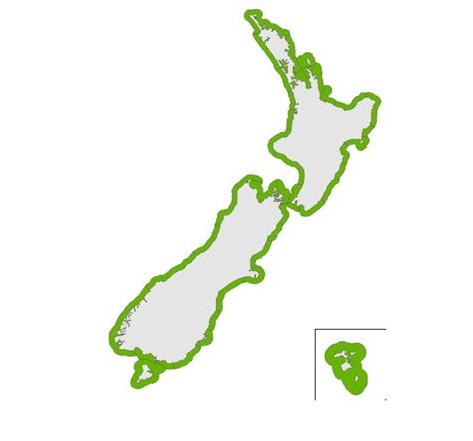
All New Zealand coastal areas are now covered by a warning of tsunami activity following a magnitude 8.8 earthquake near Russia.
The National Emergency Management Agency (Nema) made the announcement about 2pm on Wednesday, saying that strong currents and unpredictable surges were expected to reach the country about midnight.
Otago Civil Defence said the earliest expected surge arrival time for the region’s coast was between 2.30am and 3am on Thursday.
People were warned not to be complacent and to stay away from coastlines until alerts were lifted.
Update 3.33pm | @NZcivildefence has advised that an earthquake near Russia has created tsunami activity.
❗️ We may expect strong and unusual currents and unpredictable surges at the shore from midnight tonight. (1/3) pic.twitter.com/FEm8x3OGwL
— Auckland Emergency Management (AEM) (@AucklandCDEM) July 30, 2025
Nema said the first tsunami activity could reach New Zealand in the areas around Lottin Point, on the North Island’s east coast, about 11.59pm.
“Strong and unusual currents and unpredictable surges will continue for several hours and the threat must be regarded as real until this advisory is cancelled.”
Nema said the surges could “injure and drown people, and there is a danger to swimmers, surfers, people fishing, and anyone in or near the water close to shore”.
The agency is warning people in or near the sea to move out of the water, off beaches and away from harbours, marinas, rivers and estuaries.
The threat of a tsunami was reassessed after the powerful quake was upgraded from magnitude 8 to 8.7. It has since been upgraded again, to 8.8. The quake struck off the eastern coast of Russia before noon on Wednesday (NZ time).
Nema earlier said there was no threat to New Zealand, but after the upgrade to 8.7, the threat had to be checked again.
A Cook Strait ferry company said its evening sailings would take a wider route through the Marlborough Sounds into Picton on Wednesday night.
KiwiRail, which owns Interislander, says it was monitoring the situation closely, and it was likely the two evening sailings would take the wider Northern Entrance in and out of the Queen Charlotte Sound as a precaution, following the surge warning.
Centres open for live-aboard boaties
Auckland Emergency Management has opened Civil Defence Centres for residents who live aboard marine vessels and need alternative shelter overnight on Wednesday.
Auckland Civil Defence and Emergency Management Group Controller Mace Ward said this offered a back-up option for people whose primary residence is on the water and who are unable to shelter with friends or whānau.
“If you live aboard a vessel in the Auckland region, we strongly advise you to find an alternative place to stay this evening. If you can’t shelter with friends or whānau, please make your way to one of our Civil Defence Centres which will be open from early evening, until 8am on Thursday.”
Emergency accommodation was also being set up in Whangaparāoa where people who live aboard boats in the Gulf Harbour Marina have been told to leave the water.
Areas under threat in NZ:
All coastal areas of the North Island, Great Barrier Island, the South Island, Stewart Island and the Chatham Islands.
‘Hazardous tsunami waves’ warning
Warnings of “hazardous tsunami waves” and evacuation orders stretching across the Pacific Ocean were issued on Wednesday.
The shallow quake damaged buildings and injured several people in the remote Russian region, while much of Japan’s eastern seaboard – devastated by a 9.0 magnitude tremor and tsunami in 2011 – was ordered to evacuate.
The first death attributed to Wednesday’s quake has been reported. Broadcaster Asahi TV said 58-year-old woman died when her car fell off a cliff while she was evacuating in central Japan’s Mie prefecture.
In Hawaii, coastal residents were told to get to high ground or the fourth floor or above of buildings, and the United States Coast Guard ordered ships out of harbours as the tsunami approached. Waves of up to 1.7 metres impacted the islands before the Pacific Tsunami Warning Center reduced its warning level for the US state, saying no major tsunami was expected.
Waves reaching more than 3 metres high were possible along some coasts of Russia and Ecuador, while waves of 1 to 3m were possible in Japan, Chile and the Solomon Islands, the US Tsunami Warning System advised.
Smaller waves were possible along coastlines across much of the Pacific, including the US West Coast. The Philippines, Indonesia and Pacific island nations all issued alerts.
“Today’s earthquake was serious and the strongest in decades of tremors,” Kamchatka Governor Vladimir Solodov said in a video posted on the Telegram messaging app.
The Russian Academy of Sciences said it was the strongest quake to hit the region since 1952.
– additional reporting Reuters