
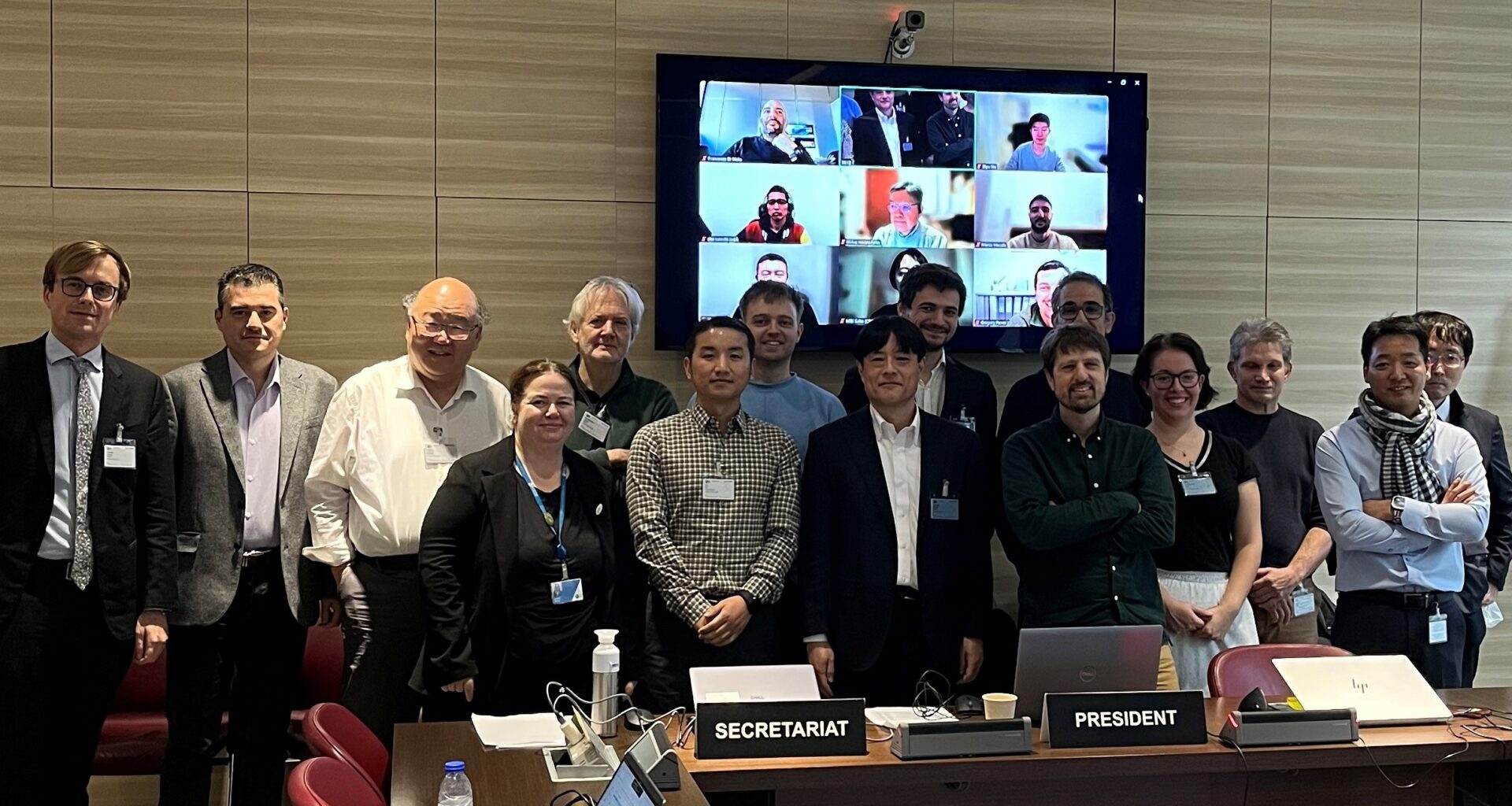
The Nuclear Energy Agency (NEA) hosted the final meeting of the ATRIUM Task Group “Application Tests for Realisation of Inverse Uncertainty Quantification and Validation Methodologies in Thermal-Hydraulics” from 24 to 26 November 2025 at the NEA headquarters in Boulogne-Billancourt, France. The ATRIUM Task Group, operating under the Working Group on the Analysis and Management of Accidents (WGAMA), brings together leading experts from research organisations, regulatory authorities, and industry.
Launched in December 2021, ATRIUM has become one of the major activities focused on inverse uncertainty quantification (IUQ) and aiming to advance robust, reliable safety analysis for nuclear power plants. Over the past four years, the project has convened about 10 task group meetings and resulted in more than 15 scientific publications (including conference and journal articles) by its members, with the final report currently under preparation.
The final meeting provided a platform for sharing the lessons learnt, consolidating recommendations, and planning future activities to further strengthen the international nuclear safety community. It focused on the discussion of the results of the third and final ATRIUM exercise. This exercise addressed the application and validation of IUQ methods using complex experimental data from the Large-Scale Test Facility (LSTF) in Japan relevant to Loss Of Coolant Accident (LOCA) scenarios and provided by the Japan Atomic Energy Agency (JAEA).
Throughout the three-day meeting, participants presented results from the second and third IUQ exercises, highlighting advances in adequacy analysis, validation metrics, and the application of SAPIUM guidelines. The meeting also addressed improvements to the SAPIUM guidelines and outlined the next steps to finalise the ATRIUM activity, including the preparation of the summary report and future scientific publications.
The meeting also featured a special session in memory of Dr Takeshi Takeda (JAEA), honouring his significant contributions to the field.
The ATRIUM project has played a key role in building international consensus on uncertainty quantification and validation methodologies for thermal-hydraulic system codes and the practical application of the SAPIUM guidelines. The outcomes of this collaborative effort will support the continued enhancement of nuclear safety analysis tools and methodologies, ultimately contributing to the safe and reliable operation of nuclear power plants worldwide.
For more information about ATRIUM, visit the ATRIUM project page or contact the NEA Secretariat.