
 The government reports ‘exit rates’ from JobSeeker are falling and the conveyor belt from short to long term unemployment is moving faster.
The ancient enemy is coming back again. Long-term unemployment.
As our economy weakens, more and more people are spending longer and longer looking for jobs. Australia recently passed an unenviable milestone.
The number of long-term unemployed – those looking for a job for over a year – is now higher than the number of short-term unemployed – those out of work for four weeks or less.
RELATED
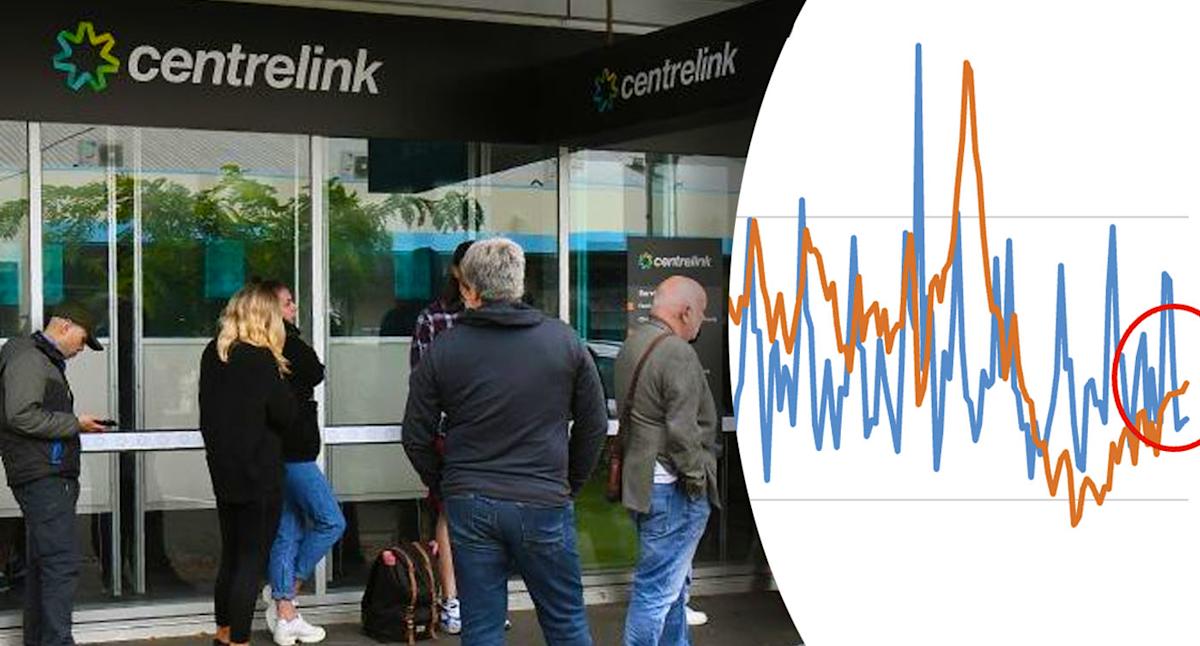
As the next chart shows, long-term unemployment had been below short-term unemployment for the last few years, following the economic surge in the pandemic.
But now the orange line is snaking back above the blue line.
Long-term unemployment has outstripped short term unemployment, sparking a significant warning about Australia’s economy. · Jason Murphy
Do you have a story to tell? Contact yahoo.finance.au@yahooinc.com
Short-term unemployment can be seen as a normal, natural thing.
It is fine for someone to hunt for a job for a few weeks, shaking the great sifter of the job market until it shows a shiny new job to them, one they really want.
If your job is seasonal – events, movie-making, etc – then you might find yourself looking for a job often.
It happens to people who think they have stable employment too.
Your firm can go broke, your project can cancelled, you can be made redundant, etc.
And you need to look for a job. That’s life. While you’re hunting for one, you count as unemployed.
Where unemployment becomes a problem is when you can’t find the next job.
When that period out of work turns from weeks to months to years.
That is when “funemployment” stops being fun.
The effects of long-term unemployment on the person experiencing it are well-known.
It takes years off your life while decimating your mental health.
It is also bad for the economy.
The economy is made up of people and their skills.
When people are out of work for a long time their skills weaken and wither.
Someone who has not had a job for ten years doesn’t know half the new tools people are using in the office, doesn’t know the safety rules on site, etc.
Even if they were once a hotshot they need training now.
This adds up.
If enough people become long-term unemployed our economy grows even weaker, because we lose those skills.
They call this “hysteresis” and it’s a compounding effect in a weakening economy.
Not to mention the fiscal cost.
There are 800,000 Aussies on the Jobseeker payment, about 54 per cent men.
Jobseeker is worth $781.10 a fortnight, with adjustments depending on your circumstances.
Story Continues
It’s important to remember that not all unemployed people are on Centrelink, and not all people on Jobseeker are unemployed.
Some of the people receiving the payment are in work – about 20 per cent earn money – but at levels where their payment is reduced rather than cut off.
Meanwhile there are about 600,000 unemployed people, not all of whom get the payment.
Some are too young to get Jobseeker, others are unemployed too briefly to bother applying, and others would not qualify by virtue of their own or partner’s income, etc.
As the Reserve Bank of Australia (RBA) battles inflation and cools our economy, it is no surprise to see the time people spend on Jobseeker lengthening.
The government reports “exit rates” from Jobseeker and they are falling.
People who got on the payment are now less likely to get off it again fast.
As our economy slows, the conveyor belt from short-run employment to long-run employment is moving faster.