
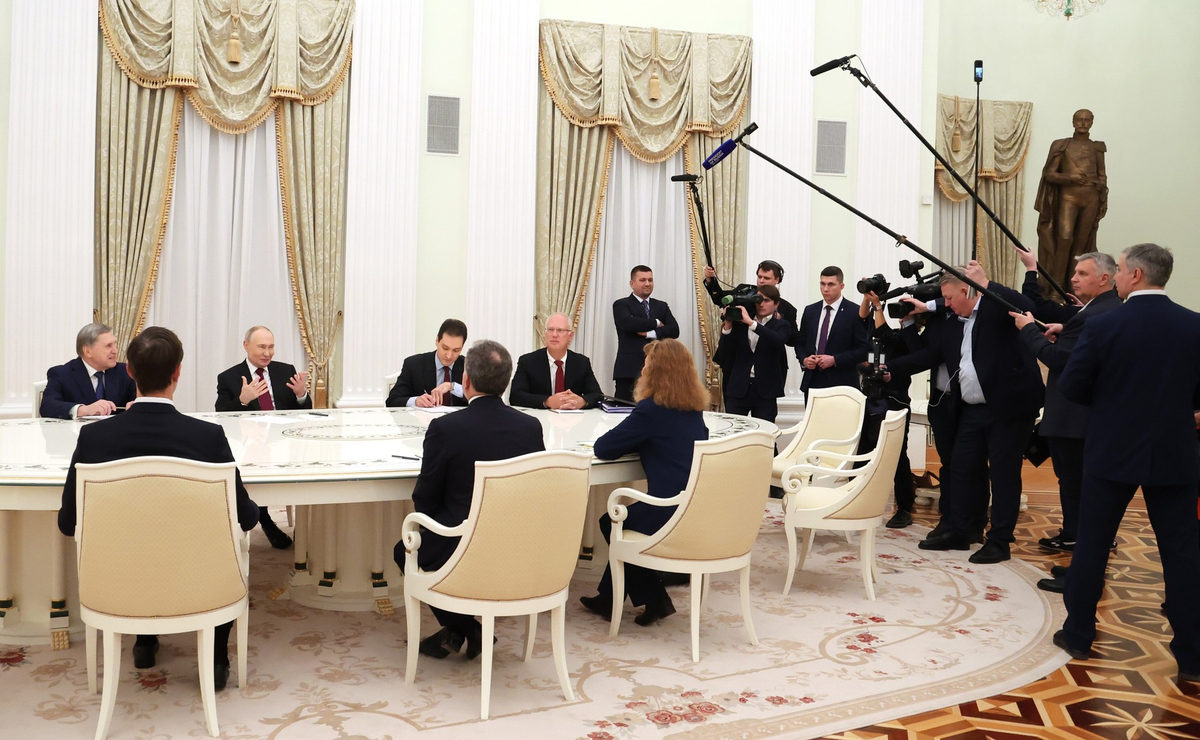
WASHINGTON, DC – Hours of high-stakes diplomacy in Moscow ended Tuesday with the same result they began with: no movement, no agreement, and no sign that Vladimir Putin is prepared to reconsider his maximalist demands in Ukraine.
Steve Witkoff, President Donald Trump’s special envoy and a real-estate executive turned foreign-policy negotiator, and Jared Kushner, Trump’s son-in-law and senior adviser, wrapped up a marathon round of talks with senior Russian officials and the Russian president himself.
JOIN US ON TELEGRAM
Follow our coverage of the war on the @Kyivpost_official.
Kremlin aide Yuri Ushakov delivered the blunt verdict: the two sides are “neither further nor closer to resolving the crisis in Ukraine,” citing a total lack of progress on the core question of territory.
The Russian position is unchanged. Ukraine’s position is unchanged. And Trump’s effort to produce an early diplomatic breakthrough appears stalled before it ever truly began.
Negotiation with built-in contradictions
One of the clearest – and bluntest – assessments came from Ambassador Michael Carpenter, a former Senior Director for Europe at the Biden National Security Council, now speaking for a worried Europe.
Carpenter argued that the talks were structurally incapable of delivering progress, and that Witkoff’s approach itself played directly into Moscow’s hands.
“Steve Witkoff has consistently advanced Russia’s interests in the negotiation process so little wonder that he was well received in Moscow,” Carpenter told Kyiv Post on Tuesday evening.
Other Topics of Interest
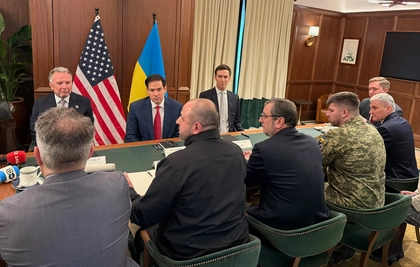
Rubio Signals Cautious Optimism on Peace Talks, Stresses Putin’s Role
US Secretary of State highlights Ukraine’s security, economic future amid complex negotiations.
“But stepping back for a moment, the key to understanding this negotiation process lies in understanding that no matter how one drafts the terms of a potential peace plan, it cannot simultaneously meet with the acceptance of both sides,” he added.
The former NSC official explained the core geopolitical problem: Kyiv’s strategic goal is to survive as a sovereign, democratic state so it can pursue EU integration. Putin, however, considers that outcome a strategic defeat for Russia.
“So no matter where the line of contact gets frozen,” Carpenter said, adding, “the contradiction between Ukraine’s goal of surviving as a sovereign democracy and Russia’s goal of imperial domination will never be resolved. The only factor that will change this situation is if one side or the other suffers economic or military collapse.”
Carpenter’s view echoes concerns widely shared across Europe: that the structural objectives of the two sides simply do not overlap, and that any negotiation risks becoming a theater of illusion rather than a pathway to peace.
According to the Kremlin, the five-hour Moscow session produced zero convergence on territorial issues – a sign that Russia’s leaked 28-point “wish list,” widely viewed by European governments as a de facto capitulation demand, remains Moscow’s starting point.
Diplomacy meets pageantry – and propaganda
Even amid the stalemate, the Kremlin sought to shape the optics. A controlled video feed showed Putin asking Witkoff about a sightseeing tour of Moscow, with Witkoff calling the Russian capital a “magnificent city.” Moments later, the feed abruptly cut.
The Kremlin’s preferred narrative stood in contrast to reality: Kirill Dmitriev, a prominent Moscow envoy, posted a single word – “productive” – despite Ushakov’s own downbeat readout saying that no tangible progress had been achieved.
Witkoff departed Moscow on Tuesday night, with Russian outlets reporting he had arrived at the US Embassy. Ushakov appeared to suggest that the American delegation “promised that they would return home to Washington.”
American officials have not confirmed whether Witkoff would travel to Ukraine, though two individuals familiar with the planning told Kyiv Post that a meeting with President Volodymyr Zelensky in Brussels was considered earlier in the day.
By evening, that plan appeared to be shelved as Zelensky opted to return to Ukraine without stopping in Belgium.
Zelensky worries the US may waver
In Dublin earlier Tuesday, Zelensky publicly expressed concern that the United States – and particularly the Trump White House – may lose interest in delivering the guarantees Ukraine needs for any viable peace.
“If somebody from our allies is tired, I’m afraid,” Zelensky said. “It’s the goal of Russia to withdraw the interest of America from this situation.”
The Ukrainian president said he was awaiting “signals” from the US delegation and stood ready to meet Trump “depending on today’s discussions.”
European diplomats privately echoed Zelensky’s concerns.
A senior Western official told Kyiv Post the US team appeared “out of sync with itself,” adding that “Moscow is exploiting that disjointedness.”
Another diplomat was more direct: “If Washington blinks, even for a moment, Putin will push the line forward. Europe has seen this pattern for a decade.”
Putin raises the temperature – again
Putin, meanwhile, used the talks to broaden his warnings toward Europe, accusing EU governments – without evidence – of blocking an emerging US-Russia understanding. He added that Russia was “ready” for war with Europe if provoked.
“Russia does not intend to fight Europe,” Putin said. “But if Europe starts, we are ready right now.”
European officials dismissed the remarks as a mixture of bluster and strategic messaging. A senior EU diplomat responded tersely: “This is Kremlin theater. Europe will not be intimidated out of supporting Ukraine.”
Russia Wants Surrender, Not Compromise
In Washington, analysts called the stalemate predictable. George Barros, a Russia analyst at the Institute for the Study of War, wrote in a social media post that Moscow’s refusal to consider the US–Ukraine counter-proposal was entirely in line with past behavior.
“Russia doesn’t want to negotiate anything other than the terms of Ukraine’s – and the West’s – surrender,” Barros noted. “We should not permit Putin to keep stringing the US along in perpetuity.”
Steven Pifer, former US Ambassador to Ukraine, echoed the sentiment: “Putin still believes Russia can achieve his goals on the battlefield. He thus sees no need to compromise.”
Pifer added: “The West needs to help Ukraine persuade Putin that Russia will fail on the battlefield and must negotiate in a serious way to end the war.”
Two weeks of diplomatic sprinting have yielded no substantive movement.
For Trump’s foreign-policy team, the episode raises a difficult question: will the administration shift US policy closer to what Moscow is demanding, or will Trump find himself constrained by Congress, NATO allies, and the fundamental realities shaping the war?
For Ukraine, the stakes remain existential.
For Putin, the war is central to his vision of Russian power.
And for US negotiators, this opening round underscores a stubborn truth: peace in Ukraine cannot be produced by dealmaking alone. Not yet, anyway.