
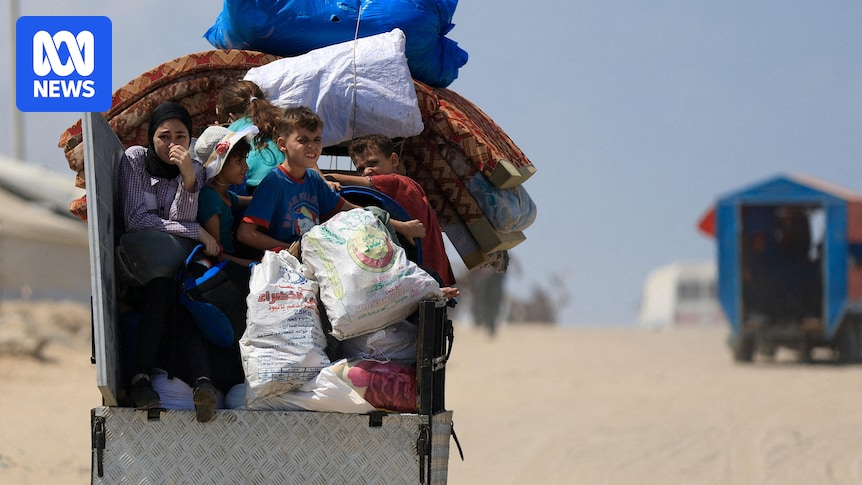
Israeli authorities have announced the Rafah border crossing from Gaza into Egypt will open “in coming days,” but only for Palestinians wanting to leave the war-ravaged strip.
The Israeli agency responsible for coordinating services in Gaza, COGAT, made the announcement a short time ago, but the specific details of the reopening are still unclear.
COGAT says people wanting to leave will have to go through Israeli security checks and the operation will be supervised by representatives from the European Union.
The ceasefire deal between Israel and Hamas specified the reopening of crossings such as the one at Rafah in both directions, and Hamas has criticised Israel for refusing to allow aid in through the area.
Humanitarian agencies have welcomed the increased volume of aid entering Gaza since the truce began, but have said it still falls well short of what is needed to tackle the crisis in the strip.
In recent weeks poor weather has highlighted the dire situation for displaced Palestinians, with massive tent camps flooded by heavy rains.
Hamas is yet to respond to the announcement.
Israel controls Rafah crossing
The Rafah crossing has been closed for much of the Gaza war, with only brief periods allowing some humanitarian aid into Gaza through the area.
Israel has controlled the crossing and the area beyond it for many months, all but razing the former city of Rafah during its military offensive in the strip.
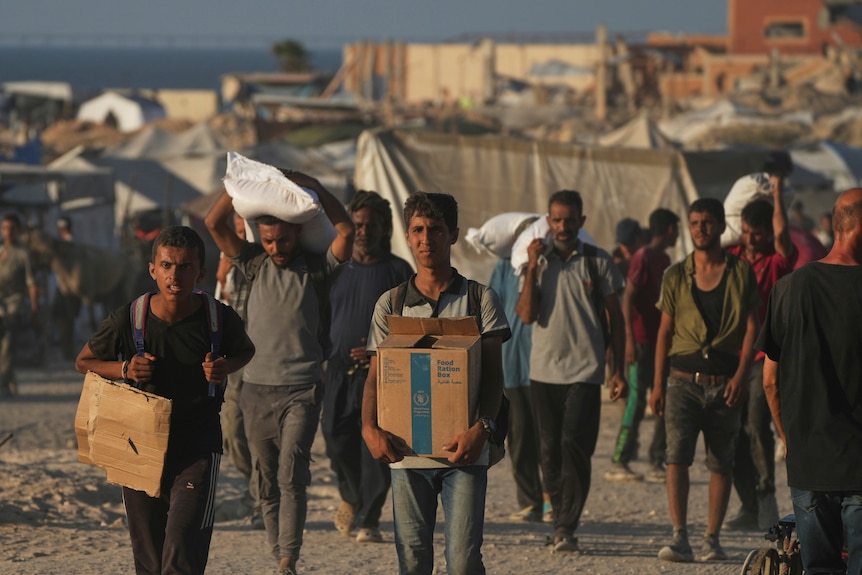
The Rafah crossing has been closed for much of the Gaza war. (AP: Abdel Kareem Hana)
Some trucks were reported crossing into Gaza through Rafah shortly after the ceasefire deal was agreed to in October, but Israel again closed the crossing in protest over Hamas’s delays in returning the bodies of Israeli hostages.
Hamas had said the recovery of the remains could take some time, given the scale of destruction across Gaza and the fact that Israeli authorities controlled more than half of the territory, including areas where some bodies would be buried.
Heavy machinery from Egypt used to recover the remains entered the strip in recent weeks.
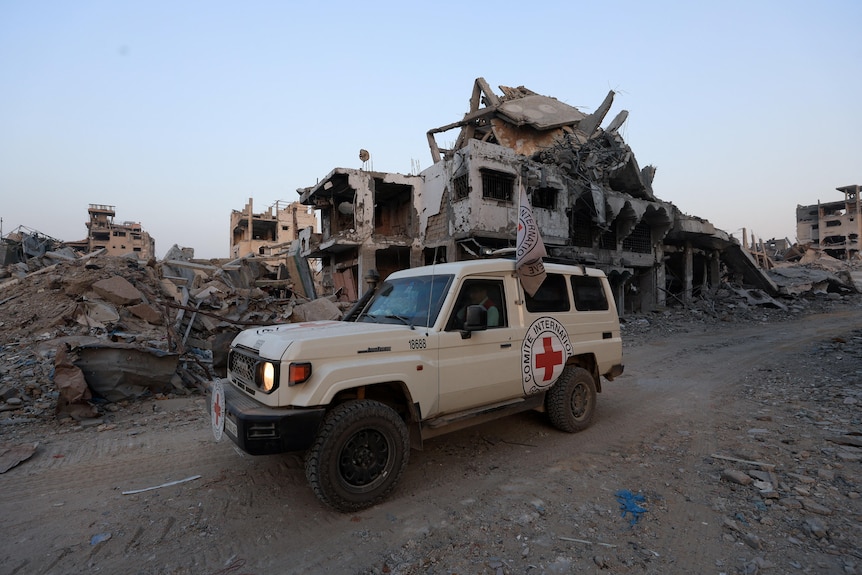
The Red Cross has been tasked with entering Gaza and retrieving the hostages’ remains. (Reuters: Dawoud Abu Alkas)
Twenty-six of the 28 dead captives have since been returned. One Israeli and one Thai national are still in Gaza.
Remains handed over to Israeli authorities on Tuesday were found to not belong to either of the hostages yet to be brought out of Gaza, according to an announcement from Israeli Prime Minister Benjamin Netanyahu’s office.
Main transit point for Palestinians
Most aid has been entering Gaza through the Kerem Shalom crossing between Israel and Gaza, near the Egypt border.
That has also been the main transit point for Palestinians being evacuated from the strip for medical treatment in other countries such as Jordan.
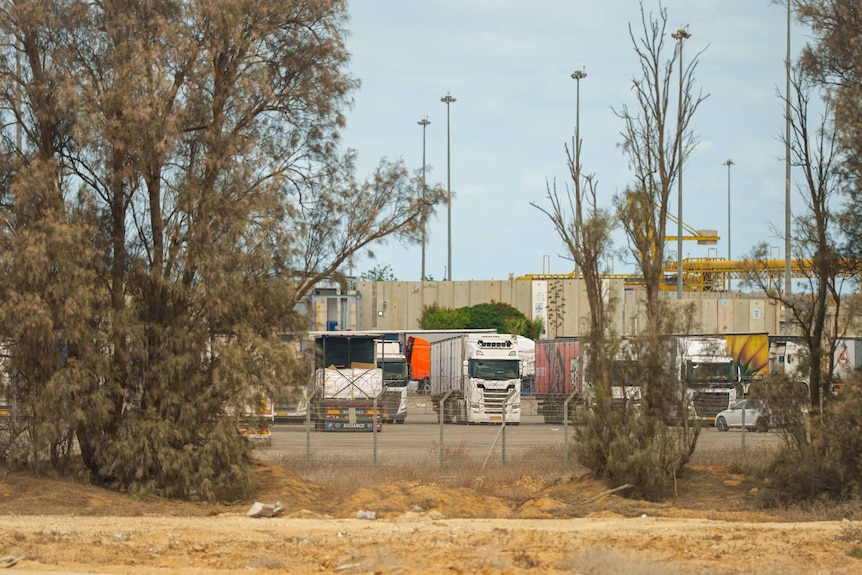
Aid trucks lined up outside the Kerem Shalom crossing into Gaza. (ABC News: Haidarr Jones)
The European Union first established a civilian mission to monitor movement at the Rafah crossing in 2005, but it was suspended two years later as Hamas took control of Gaza.
In January 2025, it restarted after Israel and Hamas agreed to a ceasefire — only to be halted once more as Israel resumed its bombardment of the strip two months later.
The truce between Israel and Hamas has cut the number of Israeli strikes across Gaza by a significant number, but they are still continuing.
Palestinian health authorities have reported that more than 350 people have been killed and more than 900 injured as a result of Israeli attacks since the ceasefire began.
Many of those attacks have focused on what Israel describes as its enforcement of the Yellow Line — the boundary of the territory it still holds.
But Palestinians insist civilians, particularly women and children, are bearing the brunt of the attacks, rather than the Hamas fighters Israel claim to target.