
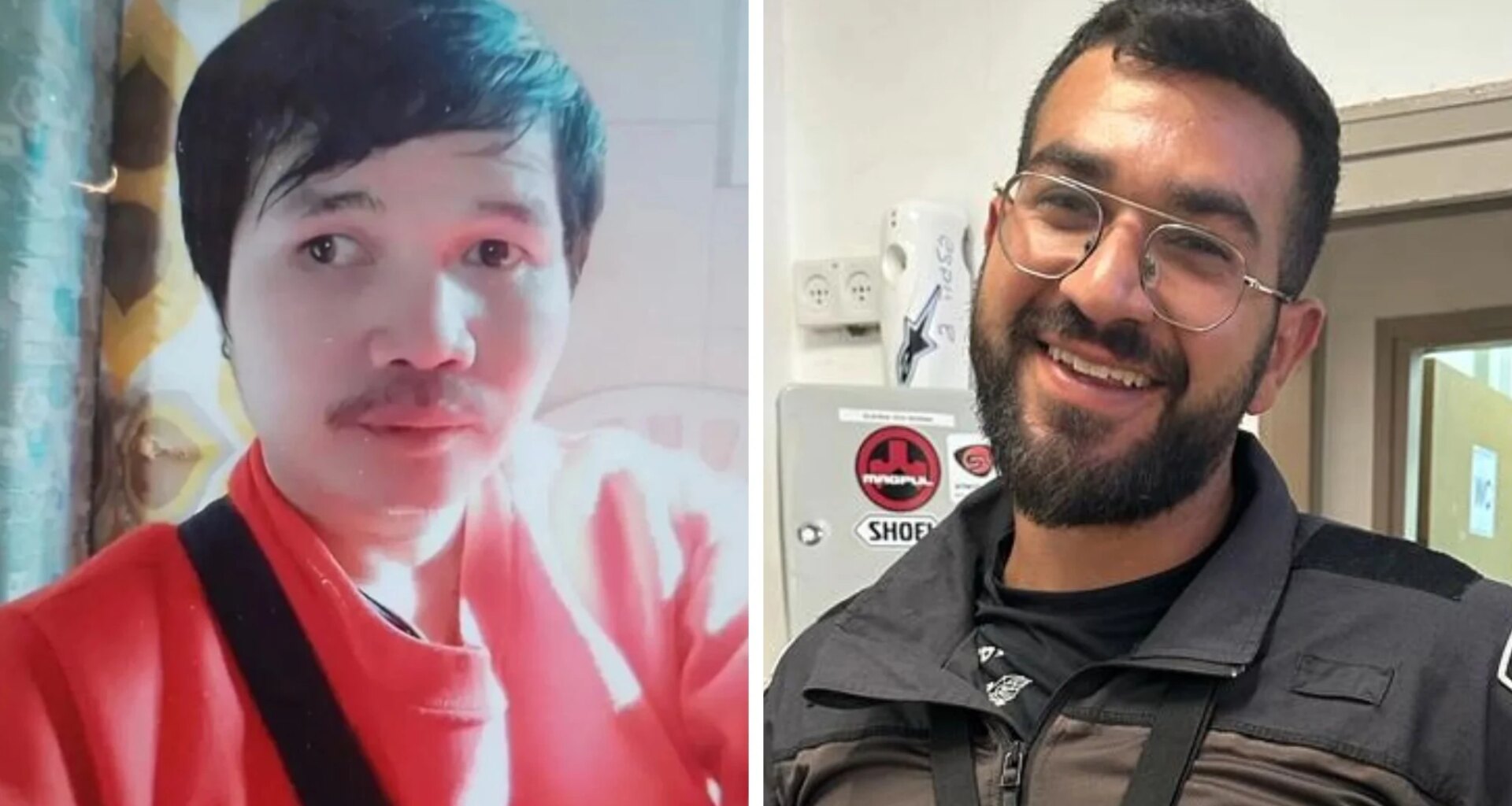
Israel said Wednesday that the forensic remains handed over a day earlier by Hamas belong to neither of the two remaining hostages whose bodies are held in the Gaza Strip.
The Prime Minister’s Office said in a statement that testing was completed by the Abu Kabir forensic institute in Tel Aviv and the families of the two remaining hostages — Israeli police officer Master Sgt. Ran Gvili and Thai national Sudthisak Rinthalak — were informed of the update.
“The efforts to bring them home will not stop until the mission is complete — returning them for a proper burial in their country,” the PMO added.
Searches by Hamas and the Red Cross to locate the remains of Gvili and Rinthalak are expected to continue in the coming days, the Kan public broadcaster reported.
Additionally, the armed wing of the Palestinian Islamic Jihad terror group, the Al Quds Brigades, said Wednesday that it was searching for the body of a hostage in northern Gaza with a team from the Red Cross.
Get The Times of Israel’s Daily Edition
by email and never miss our top stories
By signing up, you agree to the terms
A senior Red Cross official told The Times of Israel on Tuesday that the findings it handed over to the IDF from Hamas included “small remains, pieces” of a body.
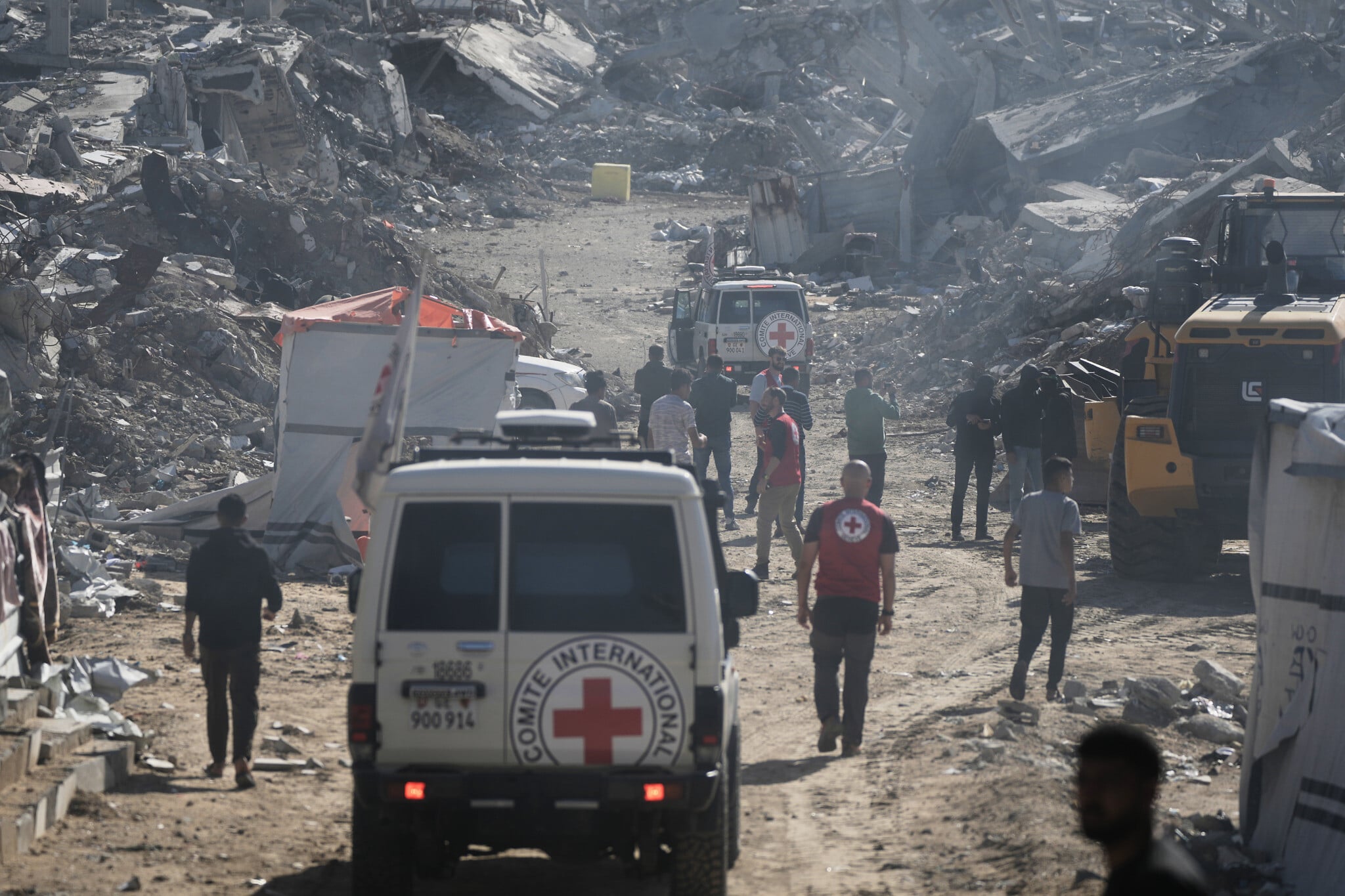
Members of the International Committee of the Red Cross (ICRC) arrive at the site where Hamas is allegedly searching for the remains of hostages in Jabalia, northern Gaza Strip, Dec. 1, 2025. (AP Photo/Jehad Alshrafi)
The terror group did not officially announce that it intended to return any hostages on Tuesday, as it has previously done when it returned remains.
After receiving them from the Red Cross, the Israel Defense Forces inspected the remains and held a short ceremony led by a military rabbi. The police then escorted them to the Abu Kabir forensic institute for identification.
Palestinian media said they were found in Gaza’s northern town of Beit Lahiya.
Since the beginning of the week, various media reports claimed that Hamas had located the remains of a hostage but was dallying over returning them to Israel. Defense officials on Monday first said there was an expectation that some remains could be handed back the same day, but then later declared there would not be.
Gvili and Rinthalak were among the 251 hostages taken on October 7, 2023, when Hamas-led terrorists rampaged through southern communities, murdering some 1,200 people, mostly civilians.
The bodies of 26 deceased hostages have been returned to Israel gradually, without any assurances or fixed timeline, over the course of the past seven weeks, as part of the US-brokered ceasefire that halted the war.
The first phase of the deal, delineated in the October 9 ceasefire agreement, includes the return of all hostages, living and dead. The rest of the US-backed plan, which has not been formally agreed on, would see Israeli troops withdraw further from Gaza as Hamas disarms and hands control over to a transitional governing body and multinational peacekeeping force.
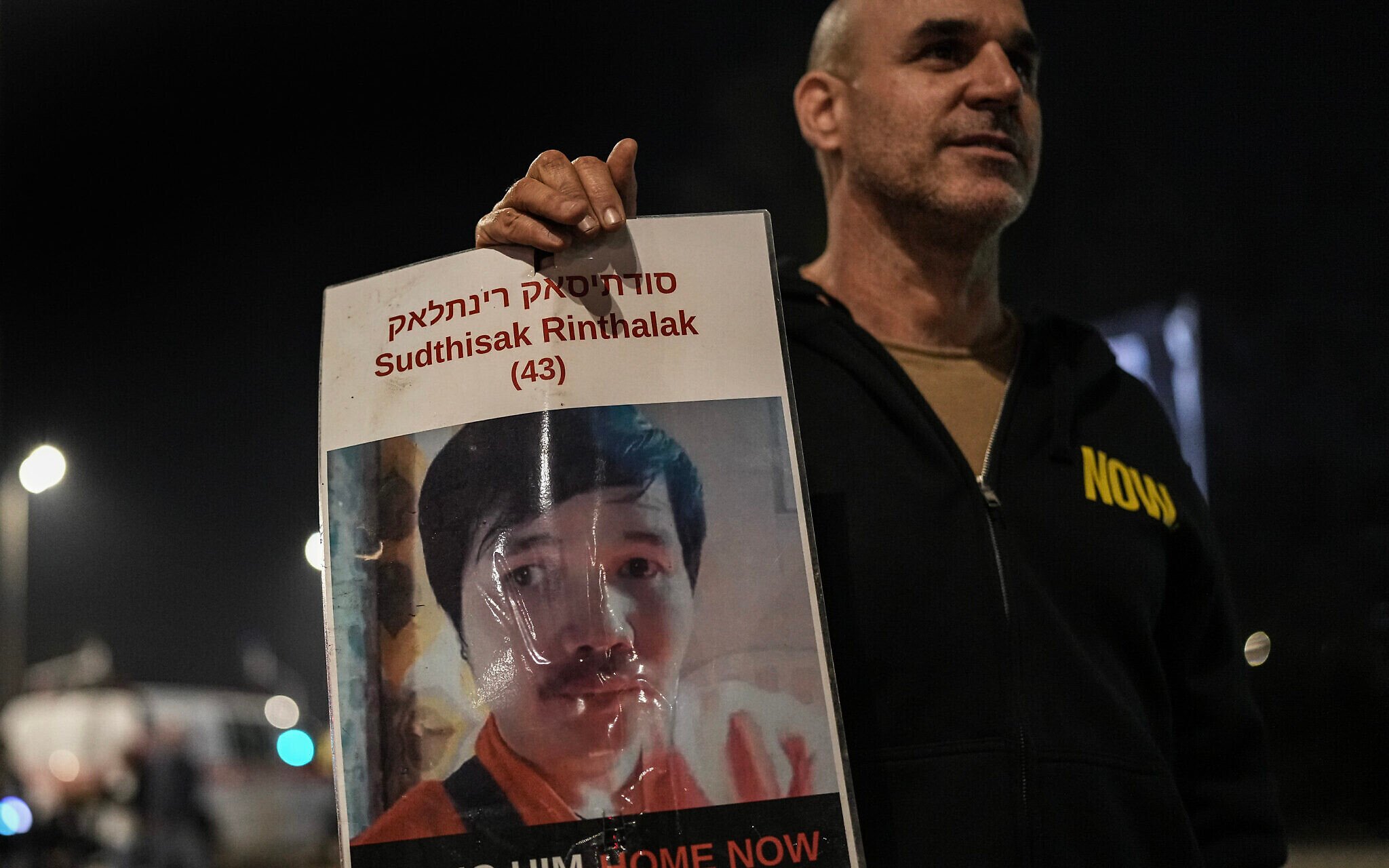
A man holds a photo of Sudthisak Rinthalak at a rally near Sderot calling for the release of the final two hostages whose bodies are held in Gaza, November 29, 2025 (Tsafrir Abayov/Flash90)
Hamas has so far refused to agree on the matter of demilitarization, and few countries have volunteered for the multinational force meant to oversee the Strip’s security.
Qatar, which has mediated talks between Israel and Hamas, said Tuesday that it hopes the two sides can be brought to a new phase of negotiations for a peace deal in Gaza.
The Hostages and Missing Families Forum said Sunday that Doha should be focusing its efforts on ensuring the remains are released, as per the deal’s first phase.
“We remind the mediators, primarily Qatar’s Foreign Ministry, that the return of the hostages is the core of this agreement,” said the forum, which has represented most of the captives’ families. “Instead of pressuring Israel not to ‘use delays as an excuse,’ the mediators should direct their full efforts and leverage all available pressure toward Hamas, the terrorist organization that has failed to meet its commitments under the agreement.”
Emanuel Fabian and agencies contributed to this report.
Watch DocuNation Season 3: The Heart of Israel
when you join the ToI Community
In this season of DocuNation, you can stream five outstanding Israeli documentaries with English subtitles and then join a live online discussion with the filmmakers. The selected films show Israel beyond the conflict: a place of storytellers and musicians, of dreamers, makers, and communities rooted in meaning and trust.

When you watch DocuNation, you’re also supporting Israeli creators at a time when it’s increasingly difficult for them to share their work globally.
To learn more about DocuNation: The Heart of Israel, click here.
Support ToI and get DocuNation
Support ToI and get DocuNation
Already a member? Sign in to stop seeing this
You appreciate our journalism

You clearly find our careful reporting valuable, in a time when facts are often distorted and news coverage often lacks context.
Your support is essential to continue our work. We want to continue delivering the professional journalism you value, even as the demands on our newsroom have grown dramatically since October 7.
So today, please consider joining our reader support group, The Times of Israel Community. For as little as $6 a month you’ll become our partners while enjoying The Times of Israel AD-FREE, as well as accessing exclusive content available only to Times of Israel Community members.
Thank you,
David Horovitz, Founding Editor of The Times of Israel