
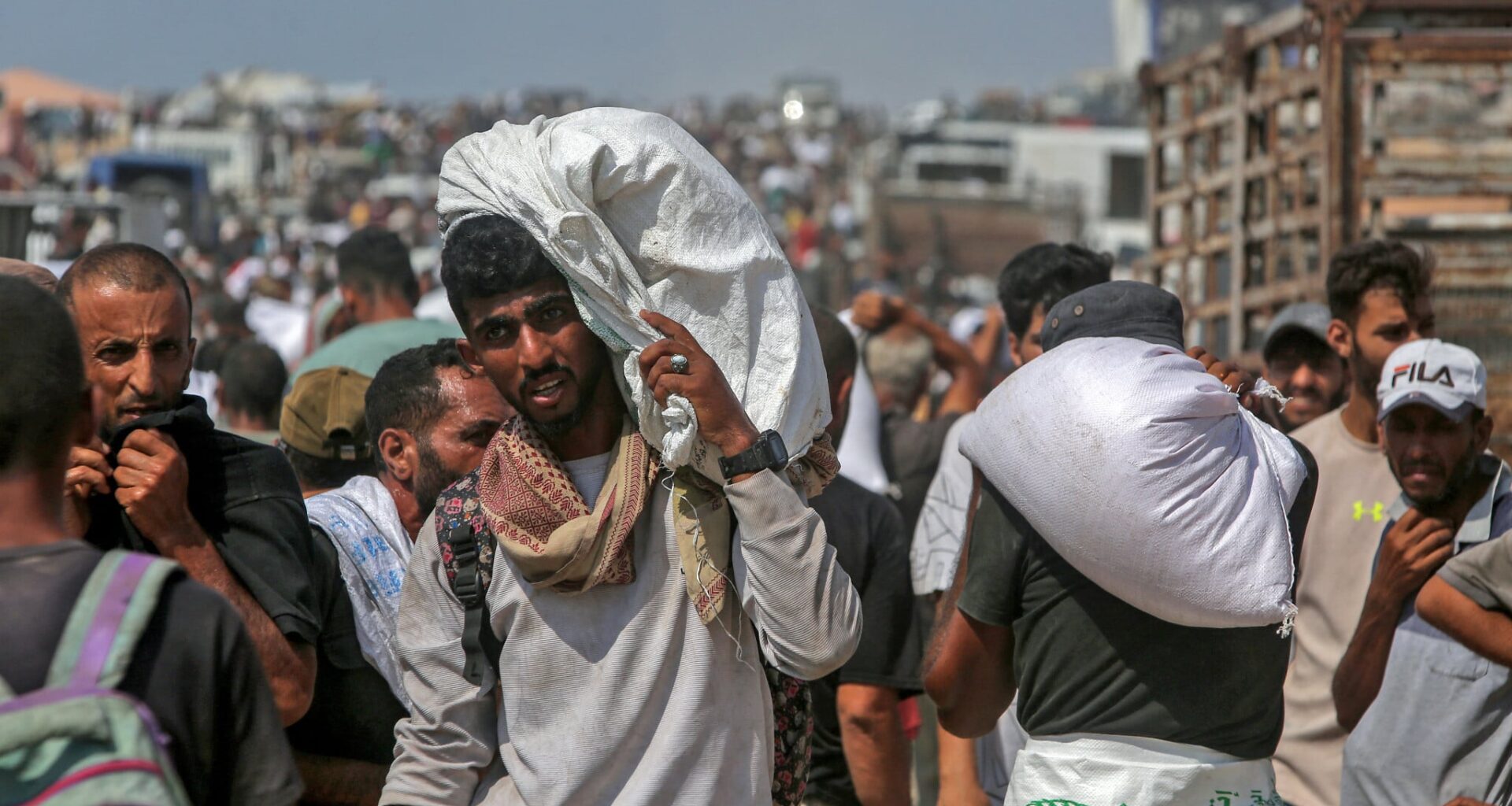
Hamas surveilled the staff of foreign nonprofits in Gaza and designated local “guarantors” approved by the terrorist group to manipulate them, according to a report released on Wednesday.
The report from the pro-Israel watchdog NGO Monitor showed how Hamas kept detailed notes on the staff of NGOs, or nongovernment organizations, in Gaza, including their finances, their family relationships, their piety level, and whether they were sympathetic or connected to the terror group.
The report was based on internal Hamas documents from 2018 to 2022 — before the latest war in Gaza — which the IDF obtained in the Strip and declassified, NGO Monitor said.
The documents came from the Gaza Interior Security Mechanism, part of Hamas’s Interior Ministry, which oversees the Gaza police and other internal security bodies.
The documents indicate that foreign aid organizations in Gaza “do not operate independently or neutrally,” the report said.
Get The Times of Israel’s Daily Edition
by email and never miss our top stories
By signing up, you agree to the terms
“They are embedded in an institutional framework of coercion, intimidation and surveillance that serves Hamas’ terror objectives,” NGO Monitor said.
International organizations in Gaza must adhere to Hamas security arrangements and can only work with the terror group’s approval, the report said.
To facilitate that control over the international groups, Hamas designates “guarantors” — Gazans approved by the Gaza Interior Ministry who serve in senior roles at the organizations and act as liaisons between them and the terror group. The guarantors were mostly existing employees in the organizations who Hamas appointed, but some were appointed to their positions from outside the groups, NGO Monitor said.
The guarantors provide a layer between the nonprofits and the terrorist group, thus allowing Western aid groups to operate in Gaza despite sanctions against the terror organization that rules the Strip. The guarantors also allow Hamas to monitor the aid groups’ activities and influence their decisions, the report said.
The liaisons helped create lists of aid beneficiaries in Gaza, which were approved by Hamas and used by the UN and aid organizations to distribute assistance, including cash, the report said.
Some of the international organizations used guarantors who were Hamas members or who were described in Hamas documents as “affiliated” with the terror group, the report said, citing a 2022 Hamas document.
Several groups named in the report — CIVITAS, International Medical Corps, MAP-UK and Human Appeal — denied dealing with Hamas as alleged by NGO Monitor. The aid group Mercy Corps said it was aware of incidents described in the report, including Hamas threatening a staffer, but said it “rejects the report’s portrayal,” adding that the group does not coordinate with Hamas.
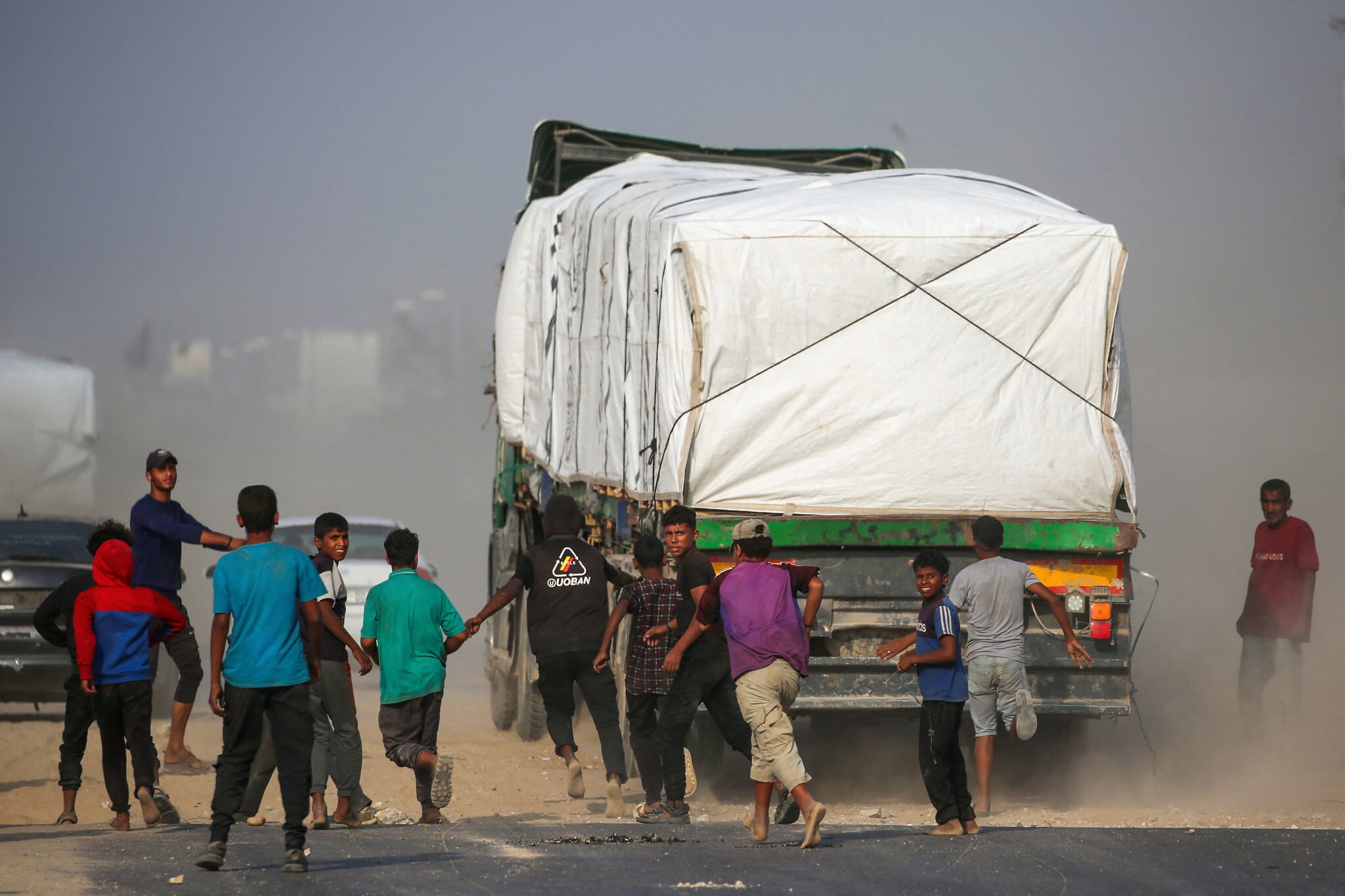
Displaced Palestinians chase after trucks traveling along Salah al-Din road in the central Gaza Strip, near Deir al-Balah, as they attempt to obtain humanitarian aid on November 9, 2025. (Eyad Baba/AFP)
Hamas monitored employees at the aid groups as potential threats. A Hamas Ministry of Interior and National Security document from 2020 showed that the terror group viewed some local and international nonprofits as “security dangers.”
Hamas directed its internal security personnel to classify guarantors at the international organizations in order “to make use of them,” create security reports on the guarantors, put the organizations under “constant technological surveillance,” and “infiltrate international organizations’ headquarters,” the report alleged.
Hamas collated personal information on the guarantors, according to documents that NGO Monitor shared with The Times of Israel. The documents, from 2022, included Arabic-language records from Gaza’s Interior Ministry along with English translations, with the names of the guarantors redacted.
The documents showed notes on 55 guarantors from 48 international nonprofits. The guarantors all held administrative positions in the aid groups, with some serving as directors. Hamas allowed the guarantors to fill out requests for inviting a foreign visitor to the Strip, granting Hamas sway over who was allowed into Gaza.
The list included the guarantors’ names, identification numbers, addresses, the group they worked for, a ranking for their “security category” and how cooperative the group was. There were also personal details on the guarantors’ piety, familial relationships, employment, personalities, the color and make of their vehicles, and personal finances, including the precise amounts of foreign money transfers they received.
The details showed that many of the guarantors were highly educated, teaching courses and completing degrees at foreign universities. They had degrees in English literature, civil engineering, accounting, chemistry, architecture and political science.
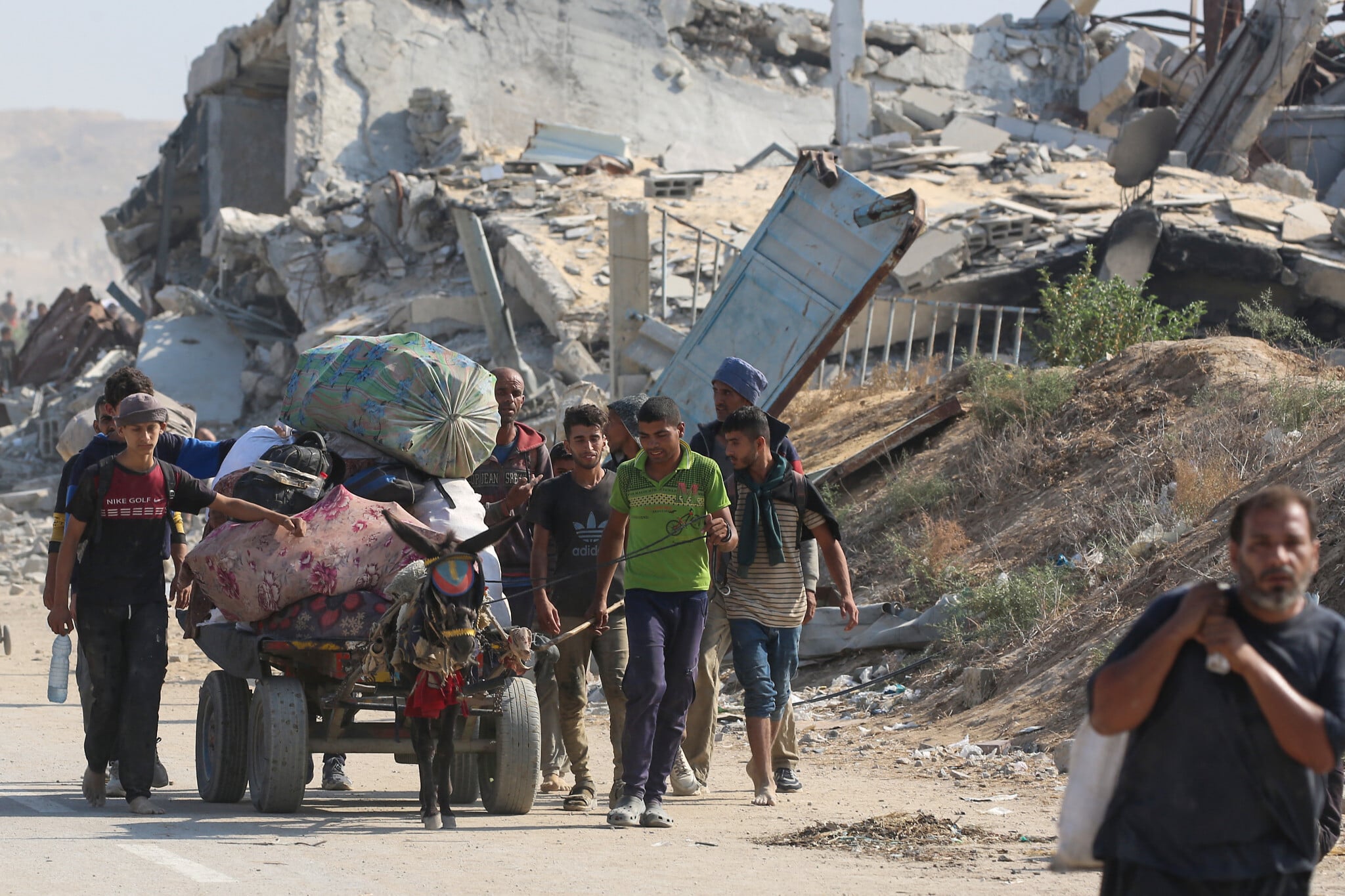
Palestinians transport humanitarian aid they received in Nuseirat in the central Gaza Strip, on September 26, 2025. (Eyad BABA / AFP)
Many had connections abroad, traveling to other countries for work, studies and recreation.
The guarantors worked for some of the most prominent aid organizations in Gaza, most of which were classified as “neutral” or not cooperative with Hamas.
Some were marked as “cooperating,” though, including El Baraka, Rahma Worldwide, Aisha, Culture and Free Thought Society, Palestine Association for Education and Environment Protection and the Society of Women Graduates. The groups did not respond to requests for comment.
Some of the women were monitored for their dress or modesty, the documents showed. A journalist’s file had the note, “She wears clothes in line with fashion due to her work.” Another was marked for “embarrassing photos” found on her phone. One woman’s file had the note, “She leaves her house in exposed clothing that transgresses sharia law,” while another was commended for wearing “sharia-compliant clothing.”
Hamas also reviewed the guarantors’ social media, writing about one administrator, “She does not have hostile activity on Facebook.”
Other details included the strength of the guarantors’ “social ties,” their financial status and political affiliations.
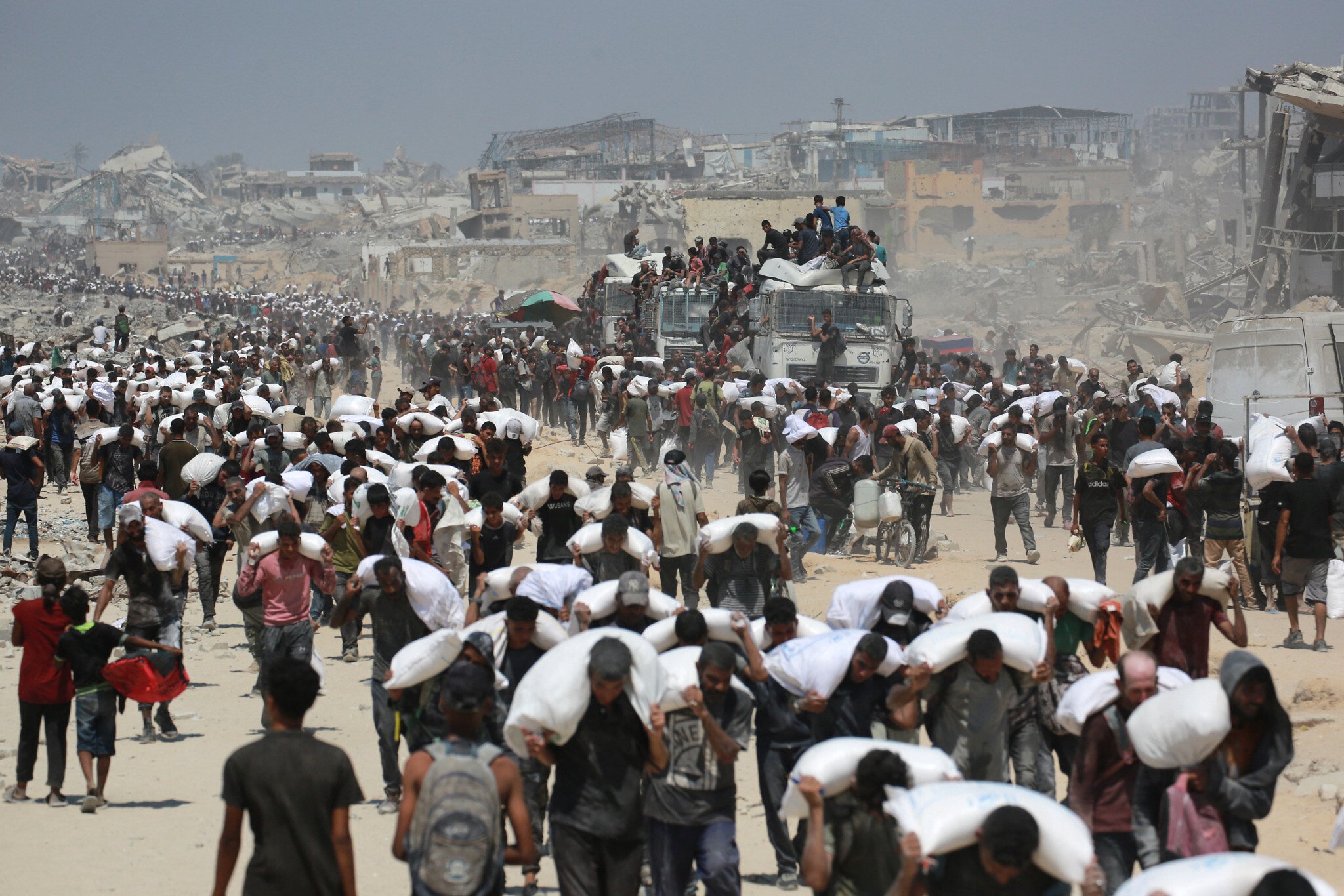
Palestinians walk carrying sacks of flour near Jabalia, in the northern Gaza Strip, on July 27, 2025, after trucks carrying humanitarian aid entered northern Gaza from the Zikim border crossing. (BASHAR TALEB / AFP)
Some of the groups were viewed as a challenge to the regime. The Hamas Interior Ministry in a 2021 memo said American organizations posed a threat by resisting cooperation with Hamas and bemoaned a “lack of intelligence grip over American associations.”
“The funding is directed to renewing and strengthening associations with views that oppose the ideology of the resistance,” the memo said, instructing Hamas officials to build intelligence sources in the American groups.
A 2022 memo said “infiltration” by the guarantors would be “an outstanding security-intelligence accomplishment,” NGO Monitor said.
Other documents showed Hamas pressuring the groups to share their finances, the report said. In 2019, Hamas’s internal security service wrote that Save the Children “does not yield” to financial inspections and instructed Hamas officials to “impose restrictions” on the group in response.
Hamas also took steps to influence the aid groups’ projects in Gaza.
Oxfam worked with a Hamas-affiliated local partner on a project to irrigate fruit trees near the border with Israel, according to a 2021 Hamas document that said the trees were “a cover for resistance activities.” There was no indication that Oxfam was aware that the project was connected to Hamas.
Oxfam said in response that it was “an impartial organization with rigorous controls in place.”
“We follow strict due diligence and vetting procedures for all contractors including comprehensive screening, including through the internationally recognized LSEG World-Check system,” an Oxfam spokesperson said.
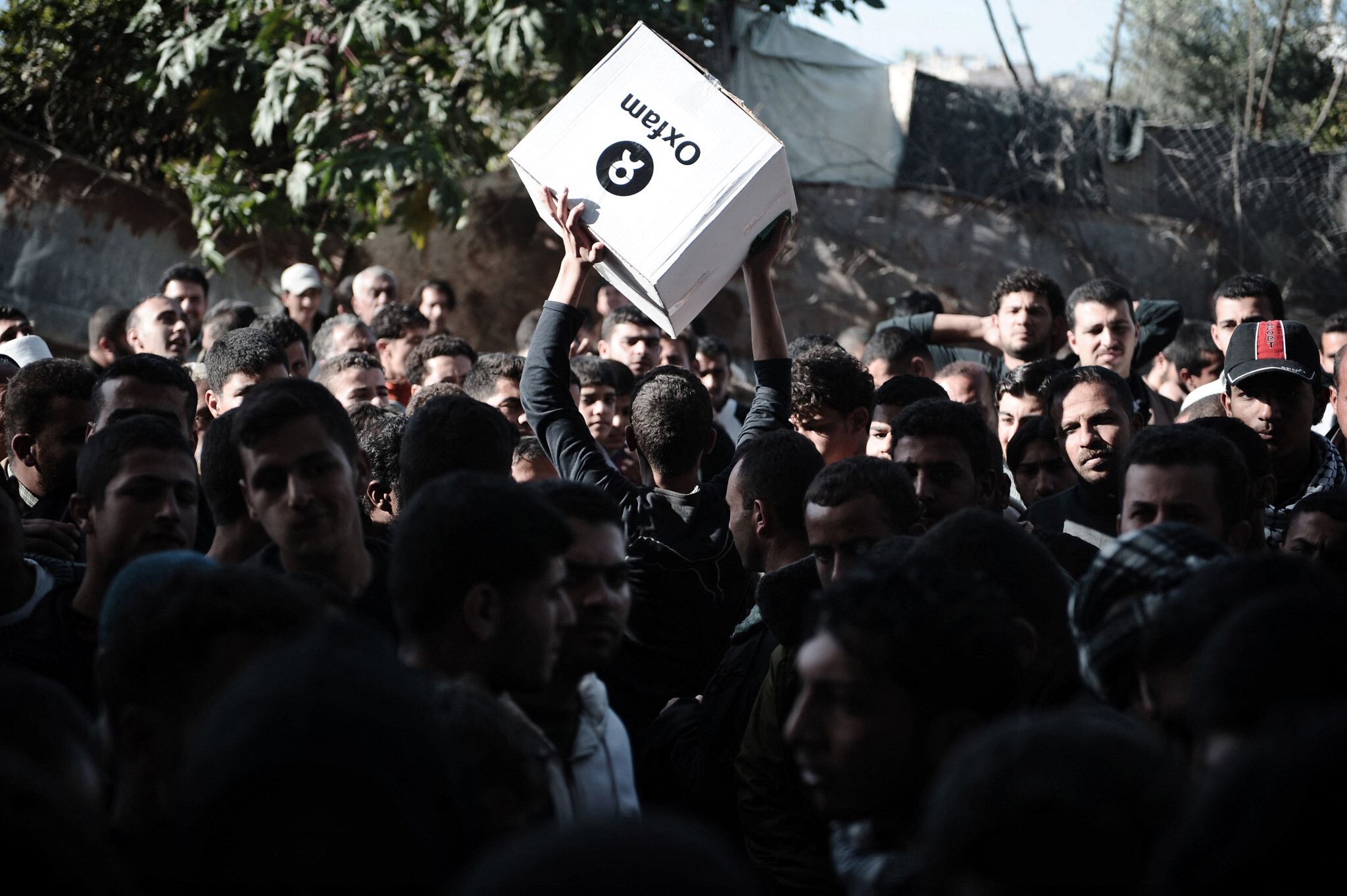
A Palestinian man carries a box of hygiene supplies outside the Oxfam (Oxford Committee for Famine Relief) warehouse in Gaza City on January 29, 2009 during a hygiene supplies distribution operation. (OLIVIER LABAN-MATTEI / AFP)
Hamas also ordered two aid groups to remove questions from surveys that the groups administered to Gazans because the responses could expose terrorist activities, including by identifying Hamas members.
The international organizations listed in the report are largely funded by donors in the US, Europe and the United Nations.
Hamas also flagged Jewish staff at aid groups, writing in a 2020 memo that a Jewish media relations staffer at Oxfam was a “threat.”
NGO Monitor in September released a report based on a separate trove of documents that detailed how Hamas exploited medical facilities in Gaza for military purposes.
The report claimed that the aid organizations often keep quiet about Hamas activities, while condemning Israel, creating a one-sided media narrative that benefits the terror group.