
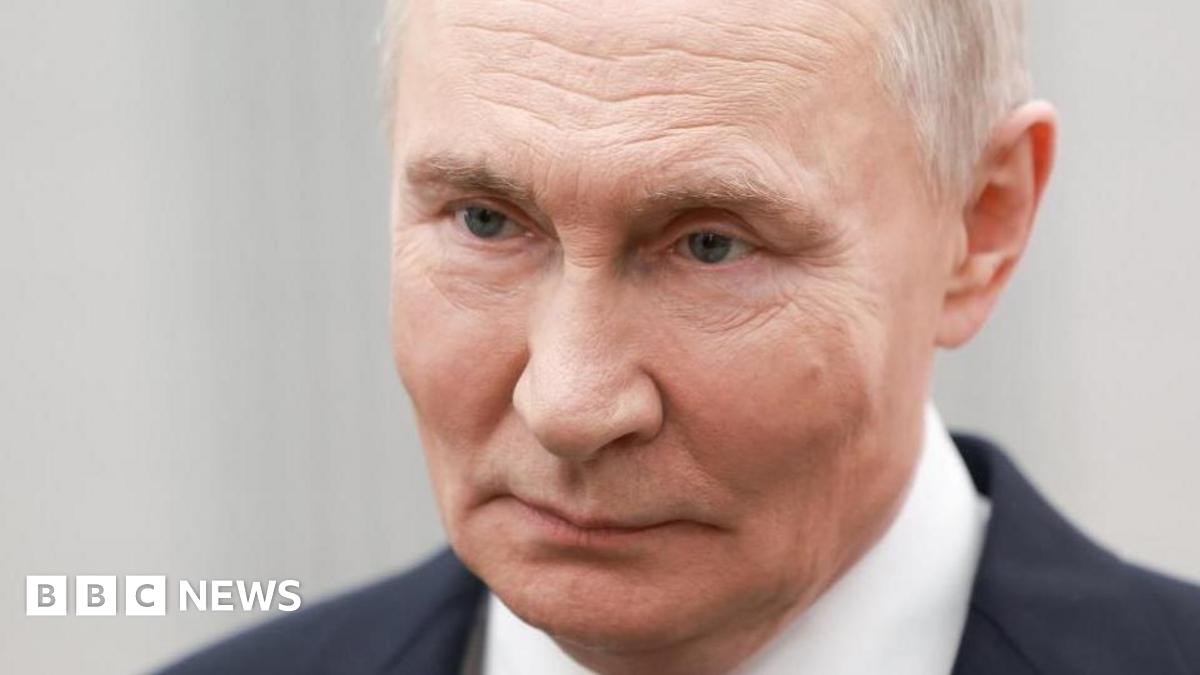
UK government officials rejected Putin’s message as “yet more Kremlin claptrap from a president who isn’t serious about peace”.
Nato foreign ministers met in Brussels on Wednesday and Secretary-General Mark Rutte said that it was positive that peace talks were taking place but Ukraine had to be put in “the strongest position to keep the fight going”.
Meanwhile, EU member states have reached a deal with members of the European Parliament to make Europe fully independent of Russian gas before the end of 2027.
European Commission chief Ursula von der Leyen hailed “the dawn of a new era”, under a deal that means long-term gas pipeline contracts with Russia will be banned from September 2027 and long-term contracts for liquefied natural gas will be banned from January 2027.
“We’ve chosen energy security and independence for Europe. No more blackmail. No more market manipulation by Putin. We stand strong with Ukraine,” EU Energy Commissioner Dan Jorgensen said on Wednesday.
The Commission is also proposing to raise €90bn for Ukraine to fund its military and basic services while Russia’s war continues.
The plan would either require Belgium to agree to a “reparations loan” using frozen Russian assets held in a financial institution in Brussels, or the money would be funded by international borrowing.
Ukrainian Prime Minister Yulia Svyrydenko has welcomed the proposal, which would cover two-thirds of Ukraine’s financing needs for the next two years.
Belgium has resisted the plan to use frozen assets held on its territory, over concerns about legal repercussions from Moscow. The European Central Bank (ECB) has also opposed the idea, saying it would not act as a backstop for a reparations loan.
The proposed loan is smaller than the planned €140bn loan initially planned and German Foreign Minister Johann Wadephul said “we support this and, of course, take Belgium’s concerns seriously”.