
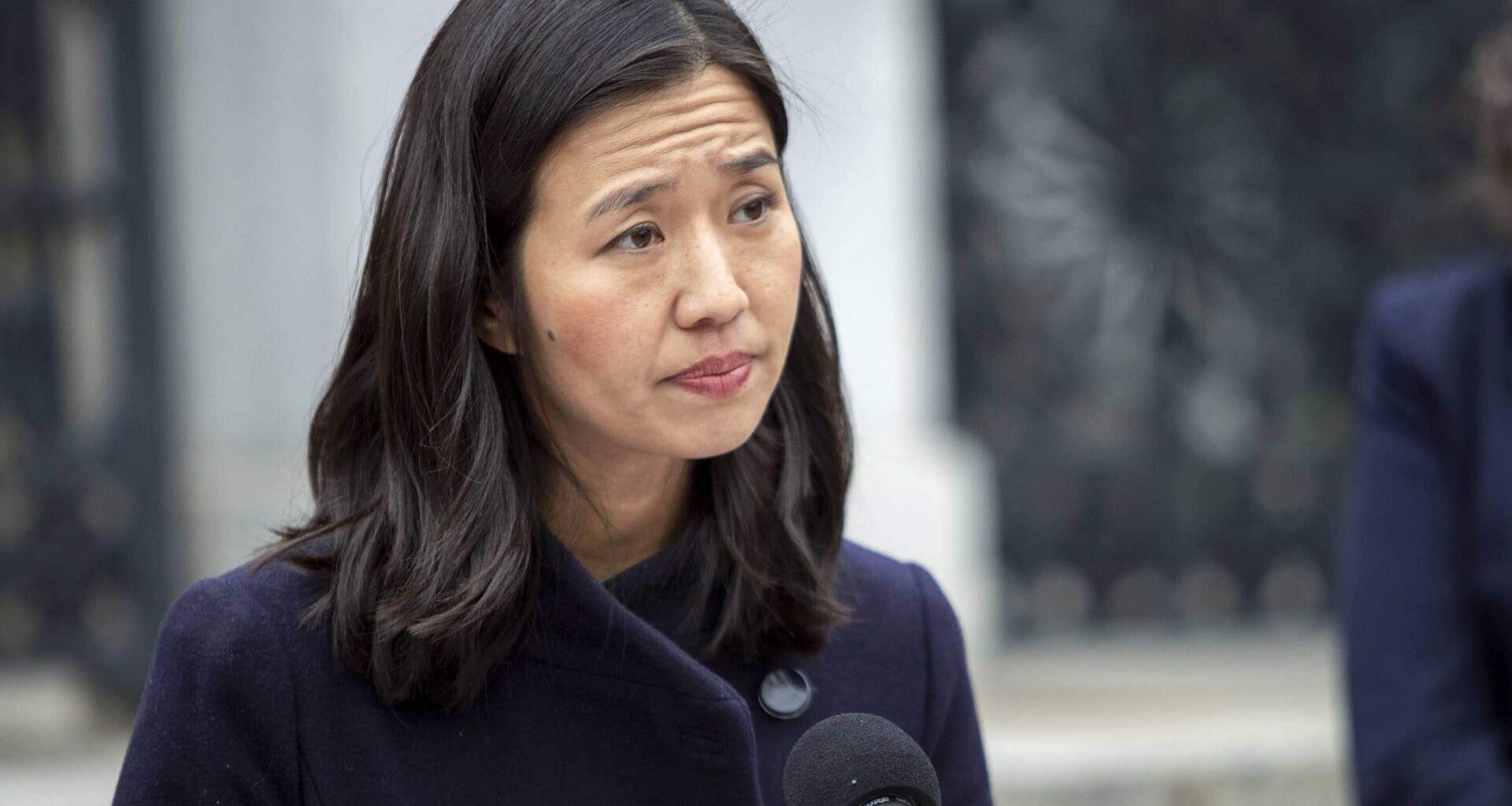
Boston Mayor Michelle Wu says homeowners in the city will likely see a 13% increase in property taxes beginning in January, as the mayor continues her long fight with Beacon Hill lawmakers to shift more of the city’s tax burden to commercial property owners.
At a media briefing Tuesday, Wu said rising residential property values alongside dropping commercial property values “will continue to put pressure” on residents in an “unsustainable” way. Next year’s tax increase will translate to $780 for the average homeowner, she said.
City officials said they are still awaiting final confirmation of the rates, which will come when the Massachusetts Department of Revenue approves submitted property values.
The increase is driven largely by the decline in commercial property taxes, as the value of commercial buildings has dropped since the pandemic. This year, commercial property values declined by 6%, while residential values rose by 2%, Wu told reporters. Last year, commercial property values declined 5%, as residential property values went up 3%.
The Wu administration has tried to combat the rise, in part by moving to convert vacant office buildings to housing and recruiting businesses to the city. But the problem persists.
Now, Wu said commercial real estate taxpayers in Boston will see a 4.4% decrease in their property tax bills, representing an average $210,000 savings. In the financial district, a typical “trophy skyscraper” is projected to see fiscal 2026 taxes decrease by over $350,000, according to the mayor.
State law limits how much the city can raise commercial property tax rates compared to the residential property tax rate. Larger increases in property taxes need to be approved by the state Legislature.
Early last year, Wu proposed a home rule petition for property tax relief that was passed by the Boston City Council and Massachusetts House of Representatives. But the measure never made it through the state Senate.
She re-crafted the bill last fall with input from business groups and lawmakers, to deliver a compromise version that lessened the impact on commercial property owners and set a 9% annual increase on residents. But again, it was stymied by the Senate.
In Wu’s telling, the effort was “blocked by a single state senator from receiving a vote before the state Senate.”
The senator is Nick Collins, a Democrat who represents South Boston, and parts of Seaport and Dorchester. Collins has said he initially opposed Wu’s tax bill because he wanted more information from the city on property valuations. The tax increase ended up being less than what the city originally projected, though still represented hundreds of additional dollars for property taxpayers.
On Tuesday, Wu again called for “immediate passage” on Beacon Hill of her revamped property tax plan, though legislators are currently on break until the new year.
“It was passed by the Boston City Council for the third time months ago and has been stalled up at the State House awaiting action,” she said.
When asked about Collins, Wu did not refer to him by name but told reporters her team has reached out to members of the Boston delegation, and have “not received any specific requests of what needs to happen.”
In a statement to WBUR, Collins alleged that “crucial financial data was manipulated and hidden from policymakers” by the Wu administration in its first effort to shift the property tax burden. He accused the mayor of once again attempting to hide information from the Senate.
“The city is again concealing fiscal data this year, and to make matters worse, the Mayor wants to take away people’s right to vote on property tax increases. That is wrong and I will fight any effort to take away residents’ right to vote,” he said. “The city needs to start being honest with taxpayers, trim its budget and exercise fiscal responsibility.”
In the backdrop of the tax battle is the financial pressure Boston is facing from the Trump administration. As federal cuts loom, Wu is facing a significant crunch. More than 70% of the city’s $4.6 billion budget is funded by property taxes — the vast majority of which come from commercial real estate.
Last year, the city’s budget increased by 4.4%, which Wu said was in line with inflation. But her administration is tightening its belt. In a letter to the Boston City Council dated Dec. 3, the mayor said she is instructing the city’s personnel review committee to delay hiring. Departments should propose budgets for fiscal 2027 that are 2% below this year, she wrote.
There are just a few weeks until the first tax bills of the new year are mailed out to homeowners. Wu warned that the January bill will be extra high because it applies the new tax rate retroactively to the previous quarter.
“With a 13% annual increase, the January bill will be felt as a 26% increase over the last quarter’s bill,” she said. “That’s a lot of money to come up with suddenly, particularly for our seniors and residents on fixed incomes, particularly for everyone who’s seeing energy bills go up as the weather gets colder and heating systems are turned on.”