
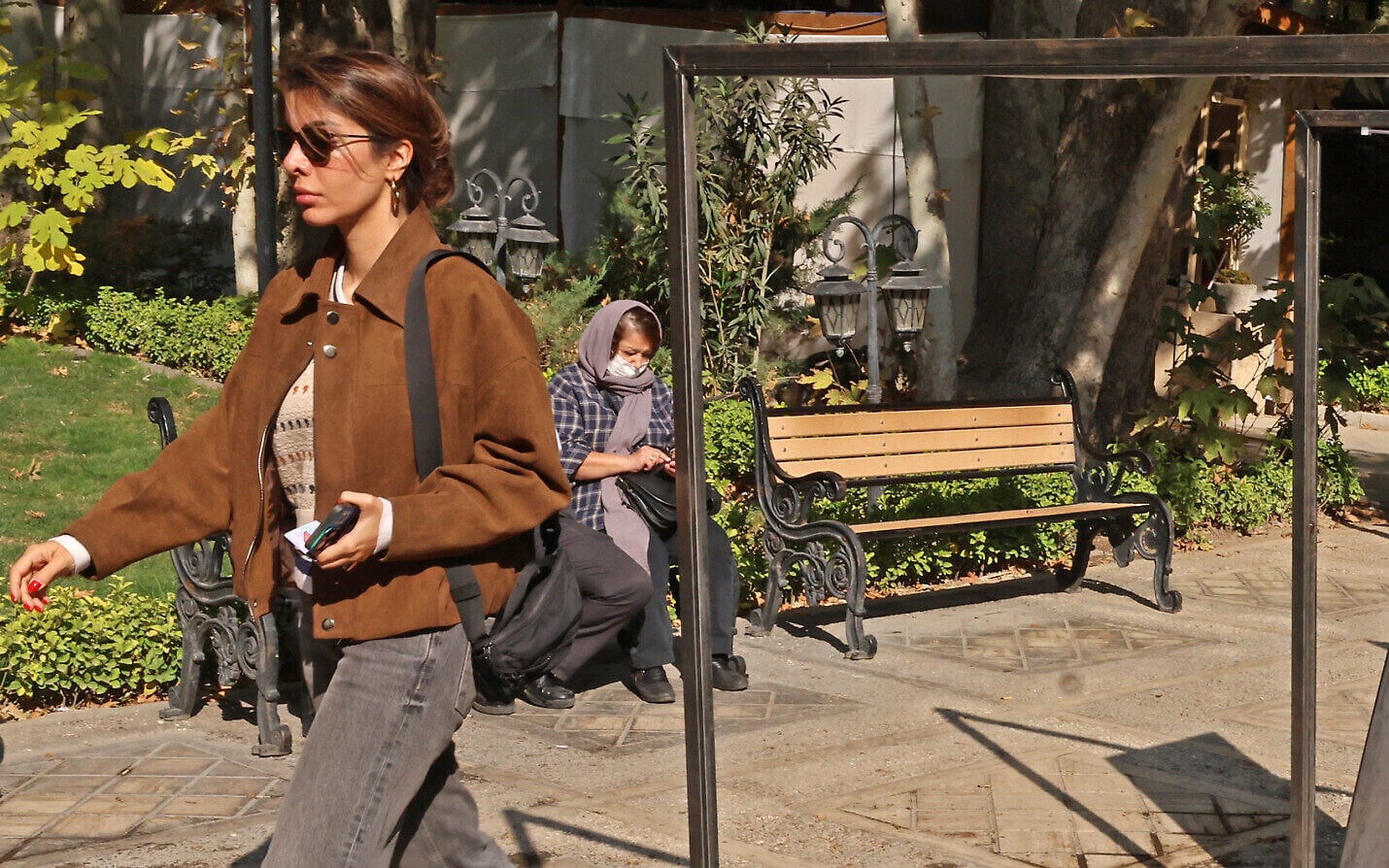
TEHRAN, Iran — More than half the members of Iran’s parliament have accused the judiciary of failing to properly enforce the law on mandatory headscarves, state media reported Tuesday, with some Iranian women now refusing to wear the hijab.
Under rules imposed after the 1979 Islamic Revolution, all women in Iran are required to cover their hair completely and wear modest, loose-fitting clothing when in public.
But in major cities, particularly Tehran, many women are now going out without headscarves, sometimes sporting dyed hair along with jeans and sneakers.
“The judiciary cannot remain passive,” 155 of Iran’s 290 lawmakers wrote in a letter to judiciary chief Gholamhossein Mohseni Ejei.
“The lack of will to promulgate a law approved by the parliament and the failure to implement the Islamic Penal Code have paved the ground for nudity, not observing hijab and other abnormal behaviors,” the parliamentarians were quoted as saying by the body’s official news agency ICANA.
Get The Times of Israel’s Daily Edition
by email and never miss our top stories
By signing up, you agree to the terms
In Iran, the term “nudity” generally refers to clothing deemed inappropriate.
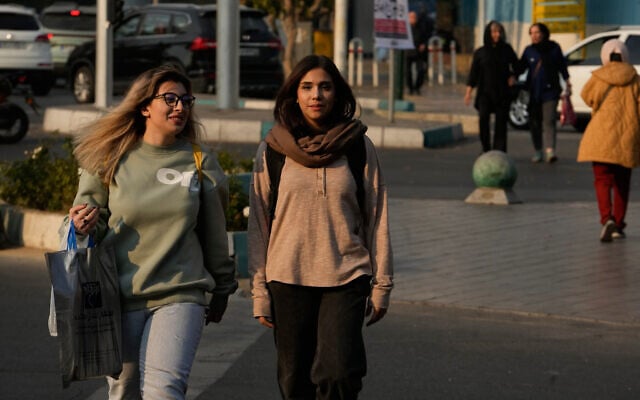
Women cross an intersection in downtown Tehran, Iran, November 20, 2025. (AP Photo/Vahid Salemi)
The administration of President Masoud Pezeshkian refused last year to promulgate a law passed by the parliament that would have drastically increased penalties for women who do not wear the hijab or wear it improperly.
“The issue of promulgating the hijab law in the way it is being pursued indicates that it is a political issue, and has nothing to do with the principle of hijab,” Iran’s conservative parliament speaker Mohammad Bagher Ghalibaf said Tuesday at a press conference attended by AFP.
Since coming to power in July 2024, Pezeshkian has maintained that women cannot be forced to wear the hijab.
The issue has been a flashpoint of contention in Iran since the mass protests that followed the death in custody of Mahsa Amini in 2022. The morality police had arrested the young woman in Tehran for allegedly flouting the strict Islamic dress code for women.
Hundreds of people, including dozens of members of the security forces, were killed during protests across the country, and thousands of demonstrators were arrested and several of them executed.
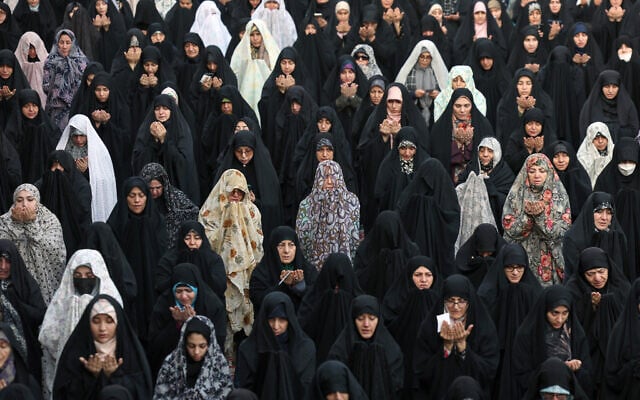
Iranian women perform a prayer for rainfall at the Saleh Shrine in Tehran on November 14, 2025, as the country suffers from severe water shortages. (AFP)
Some clergy members and conservative officials are vehemently opposed to what they consider to be widespread “nudity” and a surge of Western influence, perceived as a threat.
In recent months, authorities have closed several cafes and restaurants for failing to enforce the hijab rules or for serving alcohol, which is prohibited in Iran.
According to a 2014 religious decree, or fatwa, issued by supreme leader Ayatollah Ali Khamenei, women must dress in such a way as to leave only the face and hands visible.
The office of the supreme leader came under fire last week from some ultraconservatives after it published in its newspaper a photo of an unveiled Iranian woman killed in the June war against Israel. In the picture, the young woman appears with a simple cap on her head with her hair visible.
“The hijab is the first bastion of Iranian women’s Islamic identity. If this bastion collapses, other cultural and heritage elements will gradually collapse in turn,” the ultraconservative Kayhan daily warned last month.
Watch DocuNation Season 3: The Heart of Israel
when you join the ToI Community
In this season of DocuNation, you can stream five outstanding Israeli documentaries with English subtitles and then join a live online discussion with the filmmakers. The selected films show Israel beyond the conflict: a place of storytellers and musicians, of dreamers, makers, and communities rooted in meaning and trust.
When you watch DocuNation, you’re also supporting Israeli creators at a time when it’s increasingly difficult for them to share their work globally.
To learn more about DocuNation: The Heart of Israel, click here.
Support ToI and get DocuNation
Support ToI and get DocuNation
Already a member? Sign in to stop seeing this
You appreciate our journalism

You clearly find our careful reporting valuable, in a time when facts are often distorted and news coverage often lacks context.
Your support is essential to continue our work. We want to continue delivering the professional journalism you value, even as the demands on our newsroom have grown dramatically since October 7.
So today, please consider joining our reader support group, The Times of Israel Community. For as little as $6 a month you’ll become our partners while enjoying The Times of Israel AD-FREE, as well as accessing exclusive content available only to Times of Israel Community members.
Thank you,
David Horovitz, Founding Editor of The Times of Israel