

Changes to the ways in which the Food and Drug Administration plans to regulate vaccines represent a threat to effective and available vaccines and public health, 12 former commissioners wrote Wednesday in the New England Journal of Medicine.
The changes, as described in a leaked memo by Vinay Prasad, the agency’s top regulator of vaccines, “will upend core policies governing vaccine development and updates,” the former commissioners wrote in the piece, a striking show of unanimity among those who have served in both Republican and Democratic administrations.
“If the goal is to rebuild confidence, the answer is not to toss aside the basic rules of science, stifle argument and oversight, or supplant expert scientific inquiry for the unilateral decision making of a few individuals,” the former commissioners wrote. “It is to insist on open deliberation, solid evidence, and procedures the public can see and trust.”
The article was co-written by almost every FDA commissioner who has served in the role since 1990, during the administration of George H. W. Bush.
On Nov. 28, Prasad, who is head of the FDA’s Center for Biologics Evaluation and Research, which oversees vaccines, blood products, and gene therapies, sent a memo to the entire staff of his center saying that agency scientists had identified 10 cases in which the deaths of children were tied to the Covid vaccines made by Pfizer and Moderna. In the same memo, he stated that the FDA would be making sweeping changes to vaccine policy more broadly.
In NEJM, the former commissioners wrote that the FDA staff had previously “carefully reviewed” many if not all cases and drew different conclusions. “The memo offered no explanation of the process and analyses that were used to reach the new retrospective judgment, nor did it indicate why that assessment should justify wholesale rewriting of vaccine regulation,” the commissioners said.
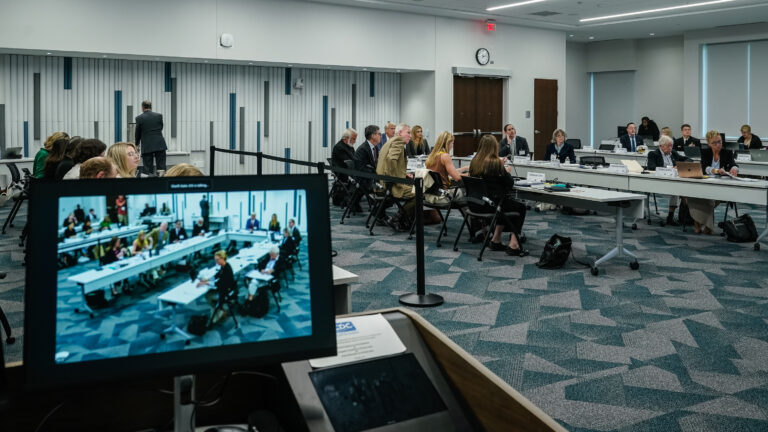
As vaccine panel prepares hepatitis B review, CDC and industry experts are excluded
They wrote that the Vaccine Adverse Event Reporting System (VAERS), from which the 10 cases are drawn, passively collects reports of problems after vaccination and “cannot be used to determine whether a vaccine caused a particular event.” They also wrote that “substantial evidence shows that vaccination can reduce the risk of severe disease and hospitalization in many children and adolescents.”
But their bigger point was that the Covid experience should not change the way the FDA handles the regulation of other vaccines that are safe and well-characterized.
The former commissioners pointed to one change outlined by Prasad in the memo that they think is particularly misguided and that relates to how vaccines are updated to deal with mutations in pathogens, or changes in exactly what infectious variant is circulating. (These are key for influenza vaccines, which must be updated annually, but also for pneumococcal and, of course, Covid shots.)
Prasad seems to want to cease the practice of using antibody levels generated by a new version of an existing vaccine to determine whether the vaccine is effective. This change, the commissioners write, “would impede the ability to update vaccines to keep up with the natural evolution of respiratory viruses or changes in the prevalence of bacterial serotypes.”


Sign up for Daily Recap
All the health and medical news you need today, in one email
Separately, the former FDA commissioners expressed concerns about the agency’s current thinking on the use of outside advisers in reaching its decisions. Previous FDA officials frequently turned to expert committees of outside advisers in the past, particularly in cases seen as controversial, but the agency has more recently suggested it will break with that practice.
“FDA Commissioner Martin Makary’s leadership team has said they intend to forgo advisory committee meetings for many major decisions, since they view these committees, which were established by bipartisan agreement in Congress decades ago, as a needlessly costly and burdensome check on their decision making,” the former commissioners wrote.
That, they said, would be to the detriment of public transparency, since the meetings of outside advisers are open to the public, and eliminate an important venue for any disagreements.
The commissioners also disagreed strongly with Prasad’s assertion in his memo that FDA staff who do not believe in his “core principles” should submit their resignations.
“Americans’ safety depends on a culture in which evidence is reviewed openly and staff can surface concerns, challenge leadership, and engage with external scientists without fear of reprisal,” they wrote.
The co-authors include commissioners who were confirmed by the Senate and acting commissioners who were not. Among them were Mark McClellan and Andrew von Eschenbach, who served in the administration of Republican George W. Bush, and Brett Giroir, who served a brief term as acting FDA commissioner and in several other roles during the first Trump administration, including as a key point person on Covid.
The other authors were: Robert Califf, FDA commissioner under Presidents Barack Obama and Joe Biden; Michael Friedman, an acting commissioner under Bill Clinton; Scott Gottlieb, an FDA commissioner in the first Trump administration who has raised alarms about the new Trump administration’s vaccine policy; Margaret Hamburg, who served six years under Obama; Jane Henney, who served under Clinton; David Kessler, who served under the first President Bush and Clinton; Stephen Ostroff, who was an acting commissioner under Obama and Trump; and Norman Sharpless and Janet Woodcock, who were acting commissioners during the first Trump administration.
Stephen Hahn, who was FDA commissioner at the end of the first Trump administration, did not sign the article.