

Spooking the horses
According to several of those close to the discussions, the reparations loan proposal started to hit trouble when tension began to build between De Wever and his neighbor, the new German chancellor, Friedrich Merz.
A Flemish nationalist, De Wever came to power just this past February after months of tortuous coalition negotiations — a classic scenario in Belgian politics. Three weeks later, Germany voted in a national election to hand Merz, a center-right conservative, the leadership of Europe’s most powerful economy.
Like De Wever, Merz can be impulsive in a way that is liable to unsettle allies. “He shoots from the hip,” one Western diplomat said. On the night he won, he called on Europe to work for full “independence” from the United States and warned NATO it may soon be history.
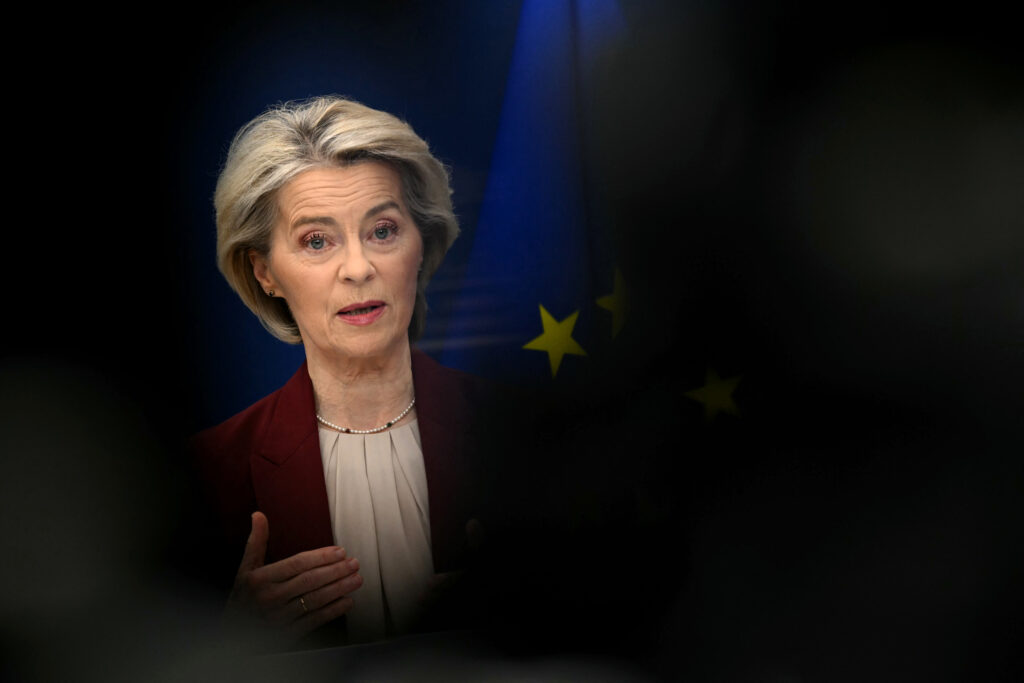 Amid delays and continuing failure to agree on a way forward, bad-tempered briefings have been aimed at Bart De Wever, and increasingly at Ursula von der Leyen, too, in recent weeks. | Nicolas Tucat/Getty Images
In September, the German chancellor stuck his neck out again. It was time, he said, for Europe to raid its bank vaults in order to exploit immobilized Russian assets to help Ukraine. With his outburst, Merz apparently spooked the Belgians, who were at the time in sensitive private talks with EU officials trying to iron out their worries.
Several officials said Merz went rogue in putting the policy into the public domain so forcefully and so early — before De Wever had signed up.
Five days later, von der Leyen discussed it herself, though she was careful to try to reassure anyone who might have concerns: “There is no seizing of the assets.” Instead, she argued, the assets would just be used to provide a sort of advance payment from Moscow for war reparations it would inevitably owe. The money would only be returned to Russia in the unlikely event that the Kremlin agreed to compensate Kyiv for the destruction in Ukraine.