
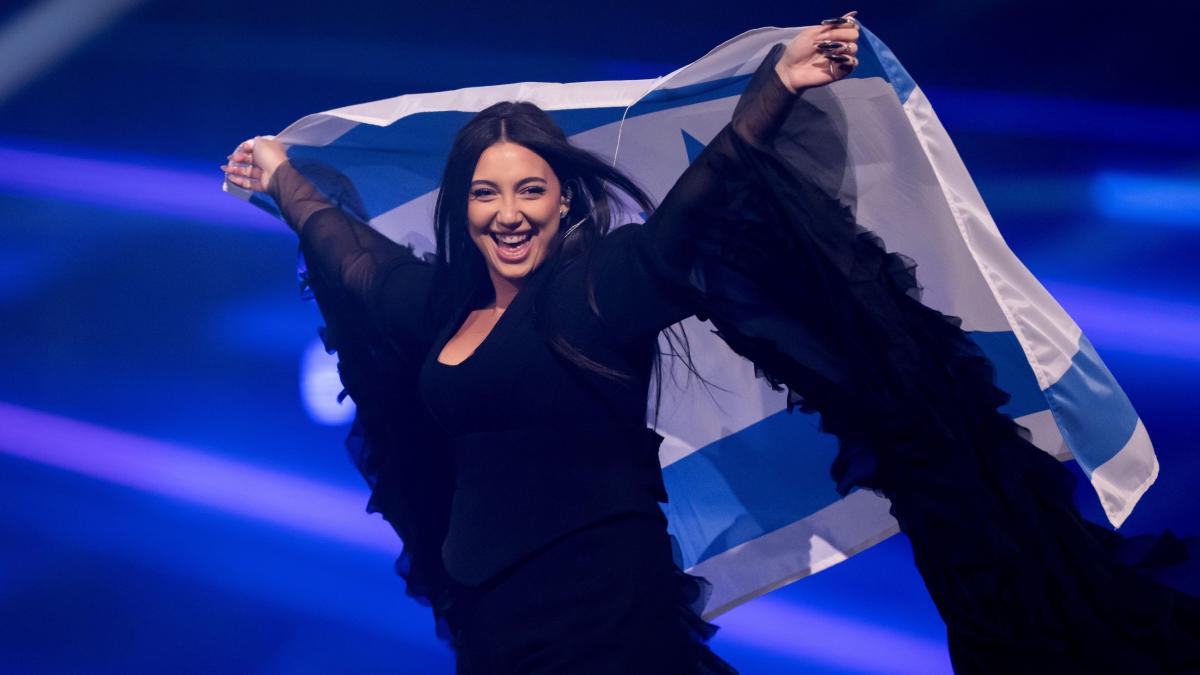
For a competition which views itself as non-political, the Eurovision Song Contest manages to regularly get itself involved in diplomatic rows.
In 2022 it banned Russia after the country’s invasion of Ukraine. In 2009, Georgia was reprimanded by the body which organises the annual singing marathon, the European Broadcasting Union (EBU), for its suspiciously anti-Russian song title, We Don’t Wanna Put In.
Armenia and Ukraine have also fallen foul of the rules over politics, and Austria was said to have refused to take part when it was hosted by General Franco’s Spain in 1969. And, in 1974, when the contest was held in Brighton and introduced the world to Abba, Portugal’s ballad E Depois do Adeus was revealed as a song to trigger the “Carnation Revolution” back home. The revolution was successful but the song finished joint last with just trois points.
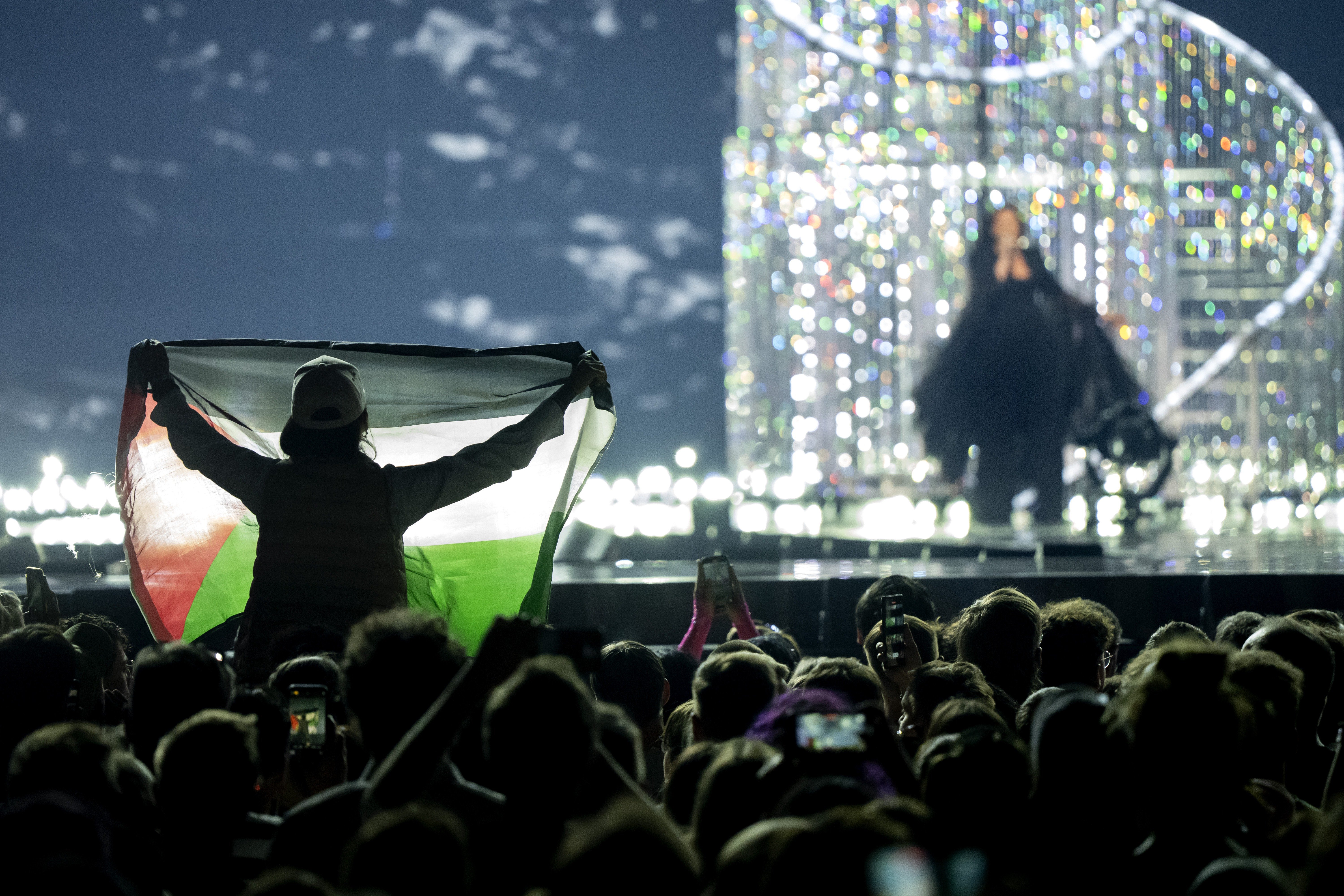
Protesters demonstrated against Israel’s inclusion in the competition during Raphael’s performance
HOLLANDSE HOOGTE/SHUTTERSTOCK
Now, the world’s largest music event faces arguably its biggest political decision: whether or not Israel should be allowed to take part in next year’s competition due to its actions in Gaza and alleged interference in voting.
On Thursday, public broadcasters from 56 countries began a two-day meeting in Geneva. Before the meeting, José Pablo López, chair of the Spanish broadcaster RTVE, said the issue was causing his organisation the “greatest internal tension in its history”.
The Israeli issue has sharply divided countries taking part, with Spain, Ireland, Slovenia and the Netherlands saying they will refuse to take part in the 2026 edition if Israel is not excluded. Other countries, including Belgium, Finland and Sweden, have indicated they could join the boycott.
Israel also faces accusations it attempted to rig the public vote at this year’s contest. Yuval Raphael came 14th in the vote by the national juries for her ballad New Day Will Rise, but after the public vote she finished second, behind only Austria.

Protests in Basel before the grand final in May
SEBASTIEN BOZON/AFP
That led the Dutch broadcaster Avrotros to claim there had been “proven interference”. It also accused Israel of a “serious violation of press freedom” in Gaza. Broadcasters have requested an audit and a review of the voting system.
Currently, the public can vote up to 20 times each by phone, text or app. Under proposed new rules being considered at the meeting, that will be reduced to ten. There will also be an expanded professional jury reintroduced at the semi-final stage that will have about 50 per cent of the vote.
The EBU has said it will discuss the rules preventing governments and third parties from disproportionately promoting songs to influence voters, and if they are found insufficient, there will be a vote on participation. If the proposed rules are considered adequate, a vote on Israeli participation could be avoided.
The 2026 event will be held in May in Vienna, Austria, and the host nation has appealed to countries not to boycott next year’s event. Israel has received support from Germany. Wolfram Weimer, its culture minister, said Germany should not participate in Eurovision if Israel were excluded.

Protests in Malmo, Sweden, before the 2024 event
TIMES PHOTOGRAPHER JACK HILL
“Israel belongs in the Eurovision Song Contest (ESC),” he said. “There must be no ESC without Israel.”
Representatives of Kan, Israel’s public broadcaster, a member of the EBU, are in the Swiss capital. The broadcaster said in a statement it would “present Kan’s position regarding attempts to disqualify Israel from the competition”.
Before the meeting, Martin Green, the Eurovision director, said neutrality of the event was “of paramount importance” so that the contest remained “a neutral space and must not be instrumentalised”.
Frederik Delaplace, chairman of the Belgian broadcaster VRT, called the the issue “a rift within the 70-year-old Eurovision family”.
The BBC has been approached by The Times for comment.
A decision to vote on Israel’s participation was initially due to be held in October but was postponed after the announcement of the ceasefire in Gaza. As the broadcasters were set to meet, Israel’s army said the remains of the second-to-last Gaza hostage, a Thai citizen, to be handed over had been identified. There were also reports that as many as five members of one Palestinian family were killed in Israeli military attacks on Khan Yunis.
The competition has been increasingly overshadowed by tensions and protests amid the rising death toll in the Gaza war, which has surpassed 70,000 according to the Hamas run health ministry.
During 2024’s competition in the Swedish city of Malmo, thousands of people took to the streets in protest of Israel’s participation, leading the country’s representative, Eden Golan, to hunker down in her hotel room over fears for her safety.
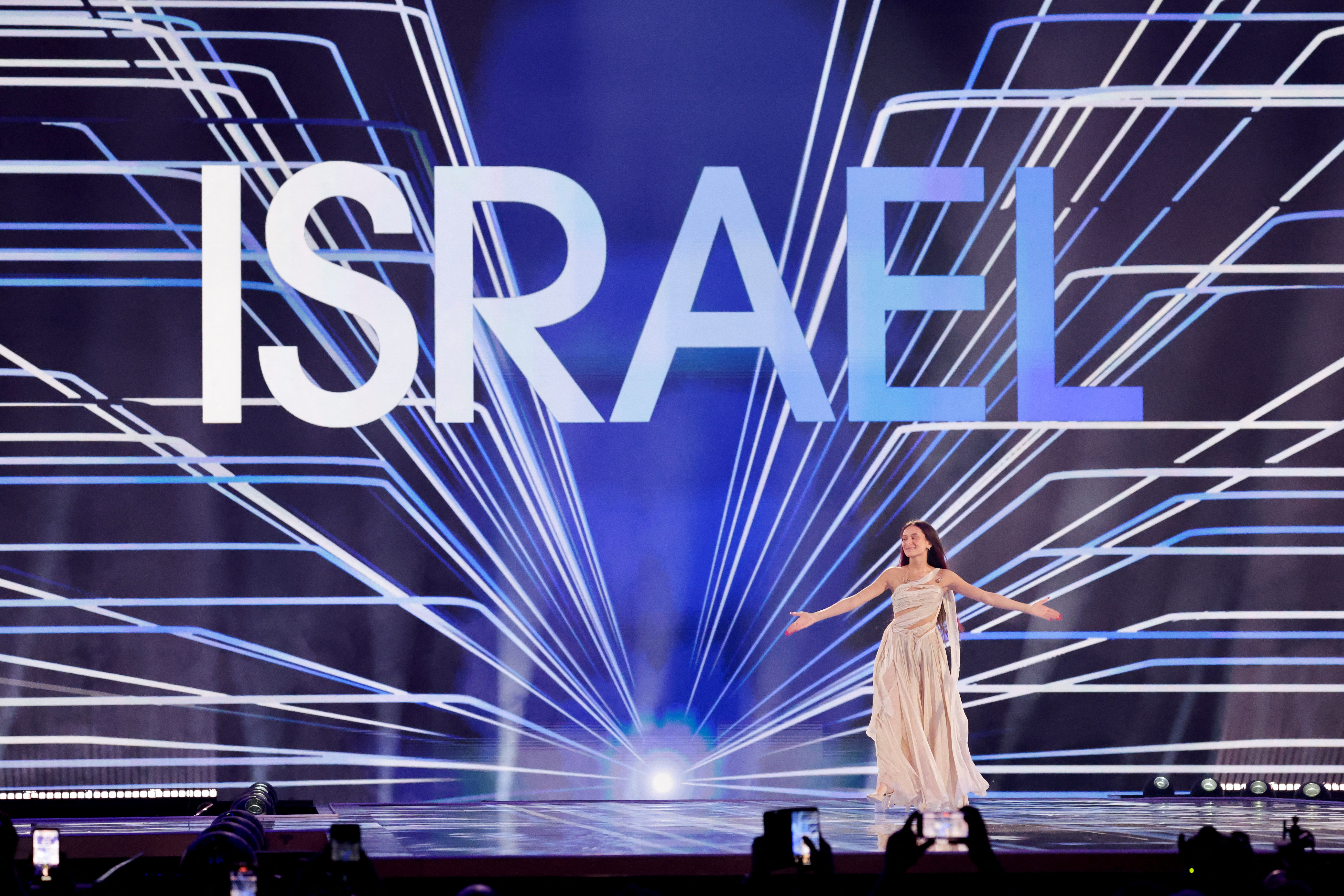
Eden Golan during rehearsals for the grand final of the 2024 contest in Malmo
LEONHARD FOEGER/REUTERS
Raphael, a survivor of the October 7 attacks, was booed and cheered during the grand final in Basel, Switzerland. Two people attempted to storm the stage and throw paint over her. Israeli fans were warned not to wear Jewish symbols while attending Eurovision events by Israel’s national security council. Israel has been part of the Eurovision Song Contest since 1973, winning four times.
The event has an audience of around 160 million viewers, according to the EBU.