
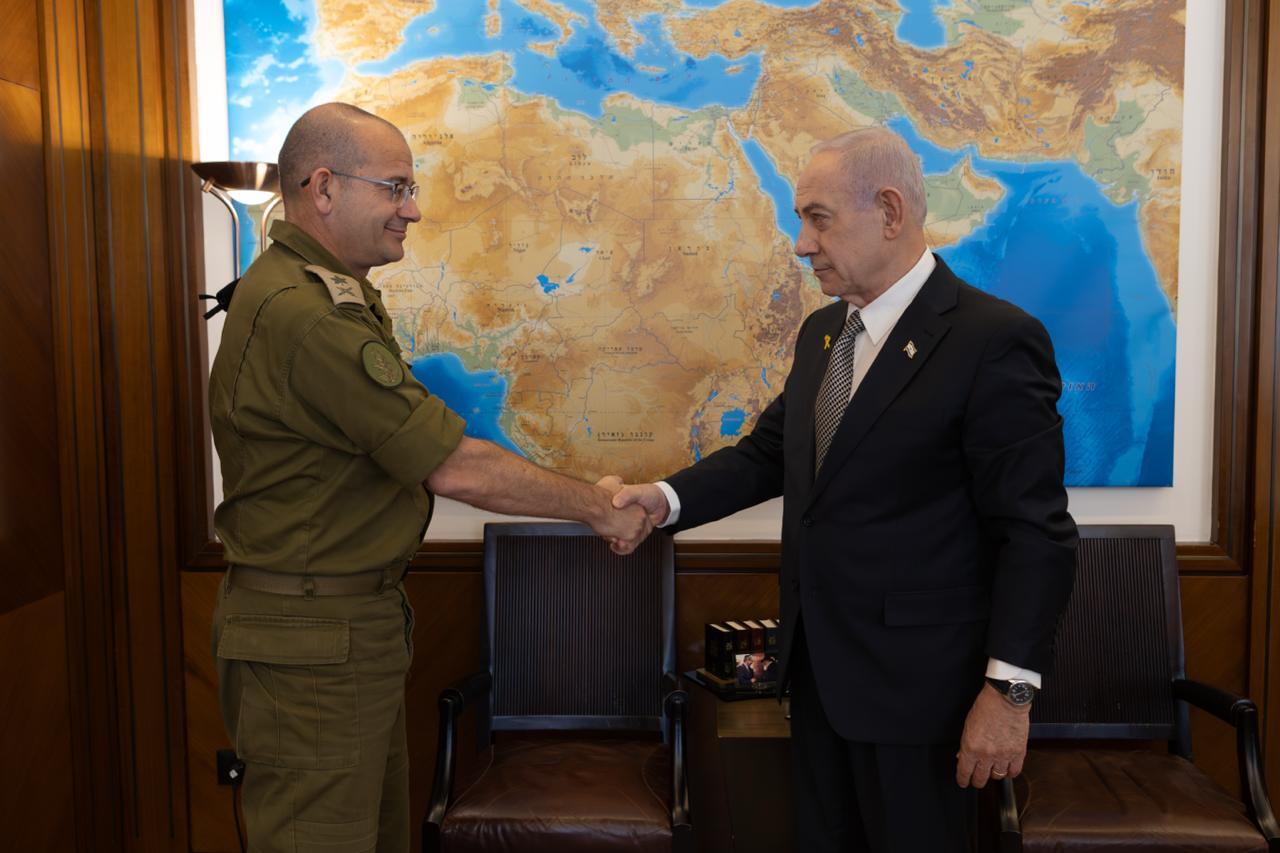
Prime Minister Benjamin Netanyahu on Thursday tapped his military secretary Maj. Gen. Roman Gofman as the next Mossad director.
The current chief of the spy agency, David Barnea, will end his five-year term in June 2026. According to Channel 12, Netanyahu’s selection of Gofman — a Mossad outsider — means that he passed over the two candidates suggested by Barnea.
The appointment was submitted to the Advisory Committee for Senior Appointments for review.
Gofman’s appointment is not expected to face much opposition, unlike the more controversial appointment of former IDF general David Zini to lead the Shin Bet domestic security agency, which faced weeks of court petitions and appeals. Zini was eventually sworn in to the post in October.
Born in Belarus, Gofman moved to Israel in 1990 at age 14. During his military career, he rose through the IDF Armored Corps, becoming a division commander before moving out of combat roles.
Get The Times of Israel’s Daily Edition
by email and never miss our top stories
By signing up, you agree to the terms
“Gofman is a highly distinguished officer,” said Netanyahu’s office in a statement. “His appointment as the prime minister’s military secretary in the midst of the war… proved that he possesses exceptional professional capabilities, from his rapid entry into the role to his immediate and significant involvement in the seven arenas of the war.”
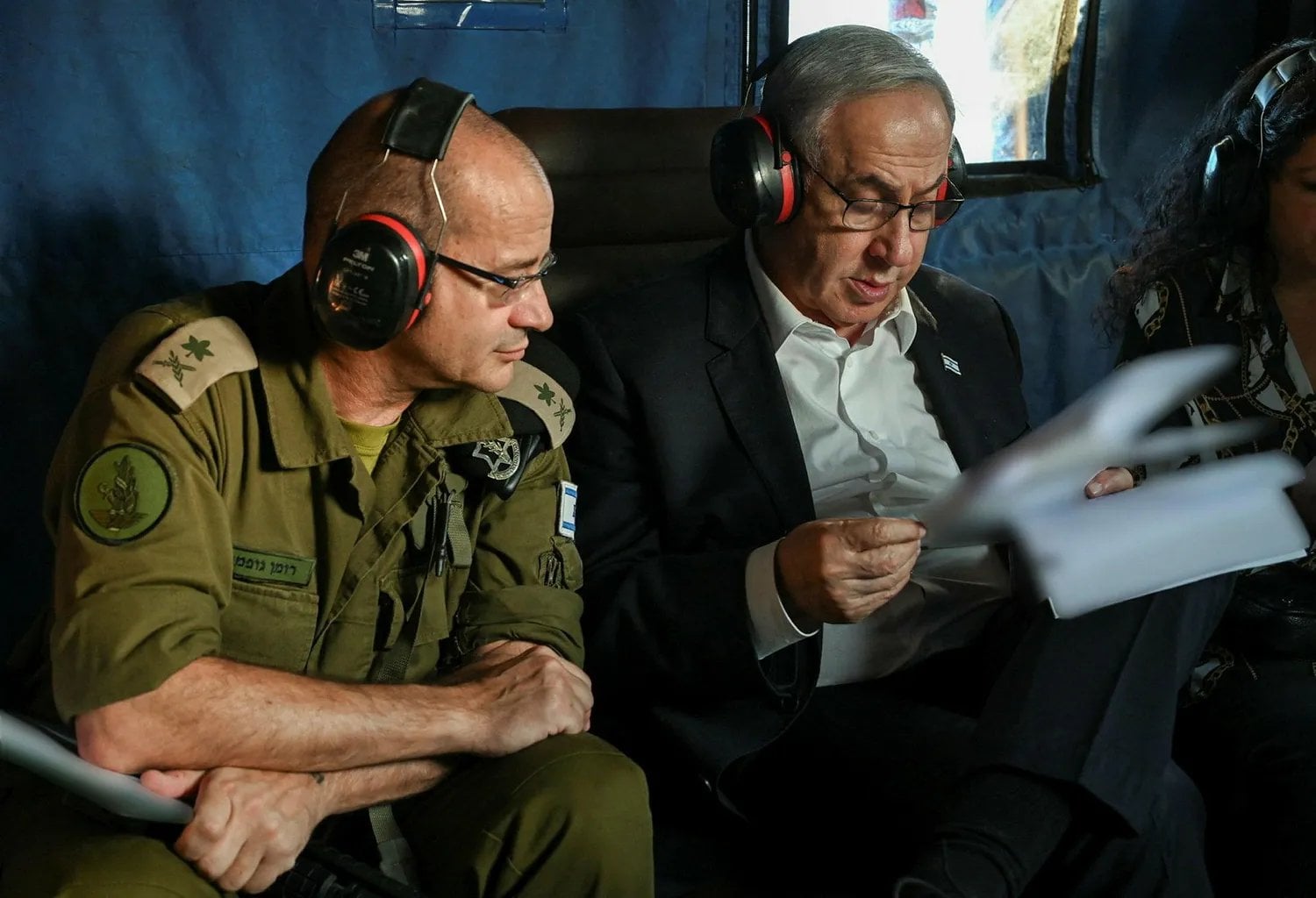
Prime Minister Benjamin Netanyahu (right) and his military secretary, Maj. Gen. Roman Gofman, are seen in a helicopter on June 30, 2024. (Maayan Toaf/GPO)
The PMO said that Gofman “maintained continuous coordination with all intelligence and security agencies, especially the Mossad.”
Netanyahu’s office lauded Gofman’s “creativity, initiative, ingenuity, deep knowledge of the enemy, complete discretion, and strict confidentiality.”
“The prime minister believes that Maj. Gen. Gofman is the most qualified and suitable candidate to serve as Mossad director and wishes him great success in this important role,” said the PMO.
Speaking ahead of a cabinet meeting on the budget on Thursday, Netanyahu stressed that Gofman worked closely with the Mossad throughout the war, praising him for his “initiative and willingness to engage.”
IDF Chief of Staff Lt. Gen. Eyal Zamir, meanwhile, met with Gofman on Thursday to congratulate him on being appointed as the next director of the Mossad, the military said.
In their meeting, the IDF said that Zamir “emphasized that cooperation between the organizations is important for the security of the state, and that the IDF will stand behind him and assist as needed in order for him to succeed in his role.”
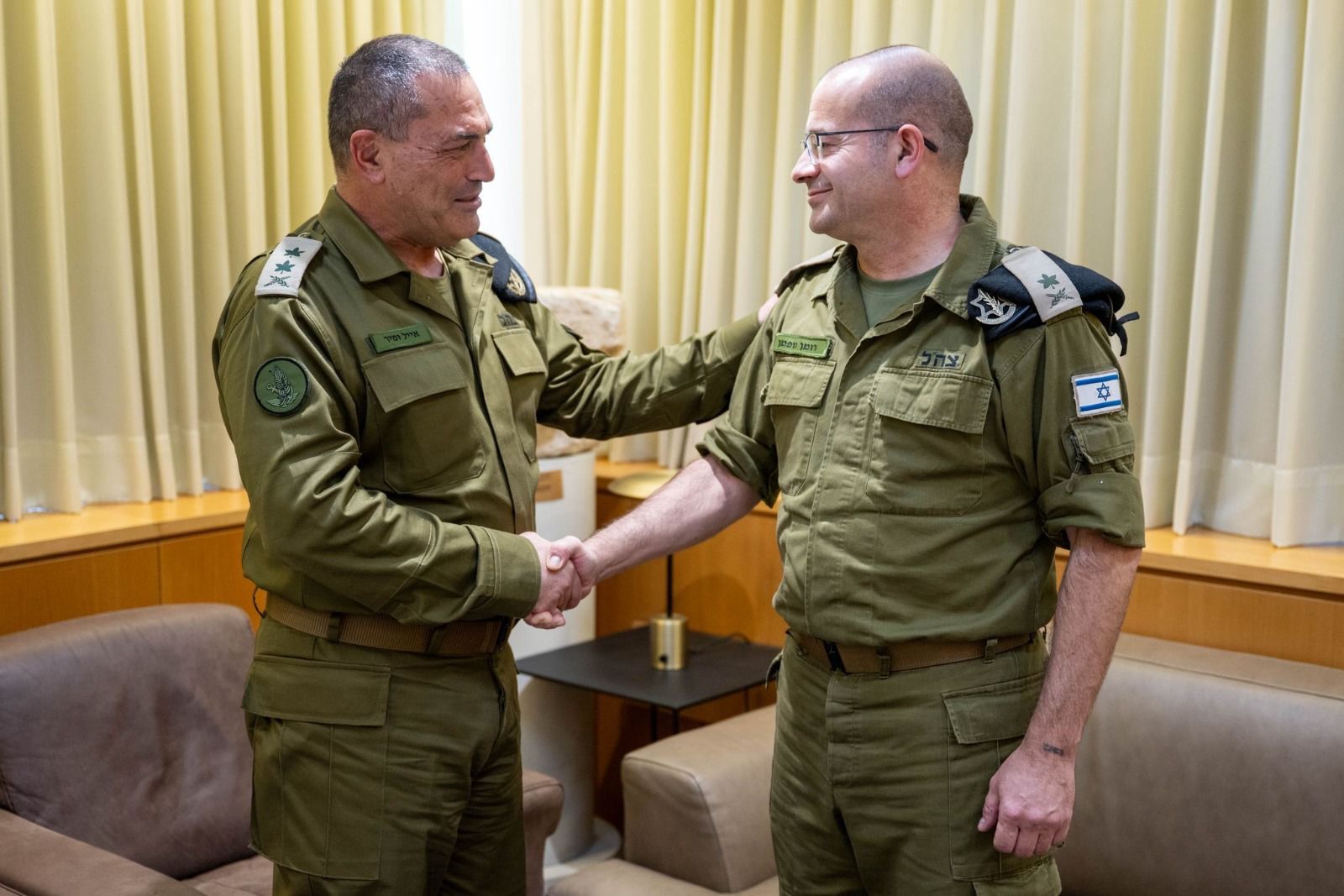
IDF Chief of Staff Lt. Gen. Eyal Zamir (left) meets with the military secretary to the prime minister and designated Mossad director Maj. Gen. Roman Gofman, December 4, 2025. (Israel Defense Forces)
Gofman is considered close to Netanyahu, having served as his military secretary for nearly two years. During that time, he traveled on the premier’s behalf for various tasks and oversaw the implementation of the prime minister’s directives in the IDF.
He began his service in the IDF’s Armored Corps in 1995, later serving as a tank commander in the 188th Armored Brigade. In 2011, he commanded the 7th Armored Brigade’s 75th Battalion, and in 2013 served as the operations officer of the 36th Division.
In 2015, Gofman headed the Etzion Regional Brigade in the West Bank, and in 2017 returned to the Armored Corps to head the 7th Armored Brigade.
In an infamous 2018 speech in front of the IDF’s top brass, Gofman argued: “There is one problem, you’re not deploying us. Over time, a very troubling pattern is developing here, and at its core is avoiding the use of ground forces.”
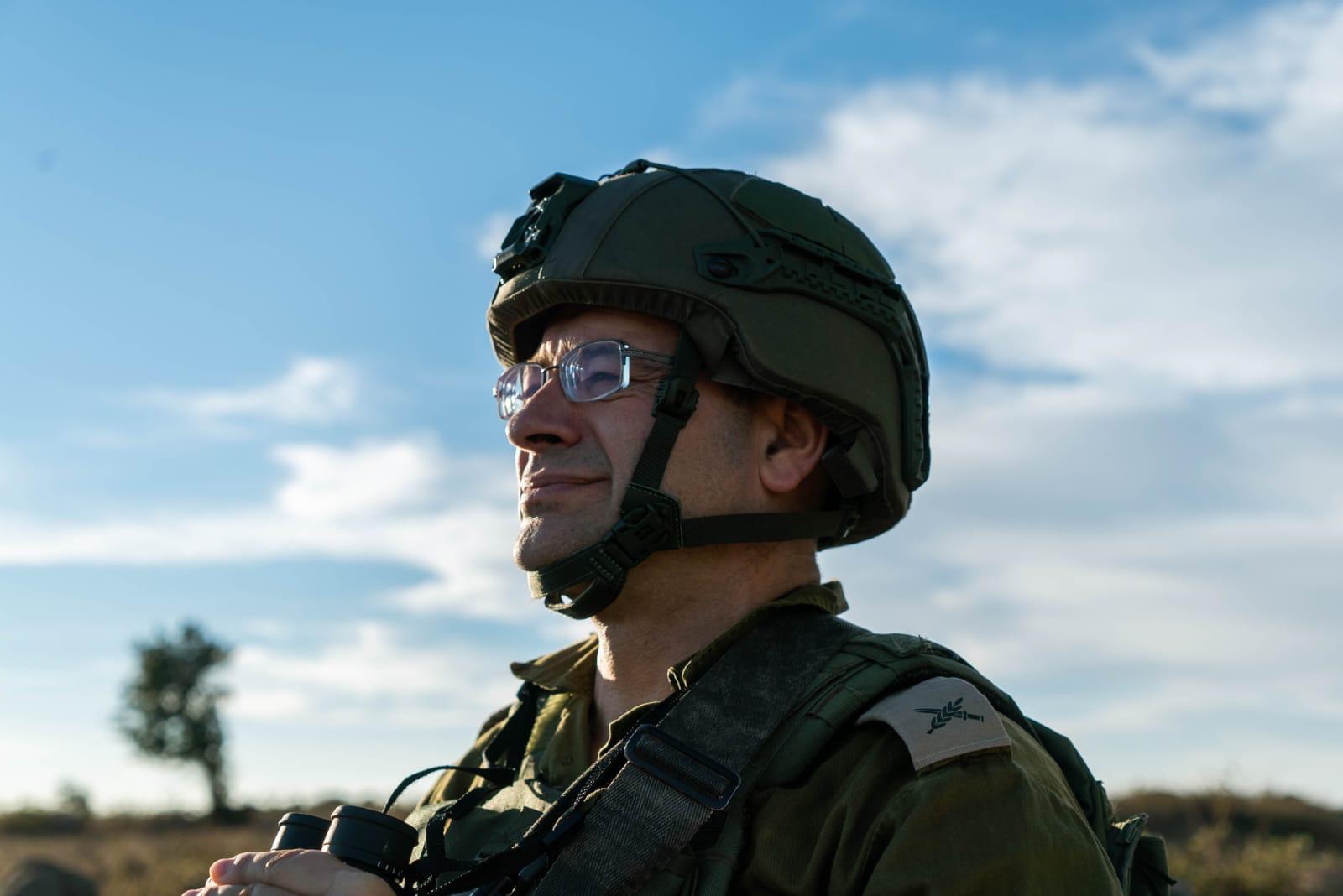
Brig. Gen. Roman Gofman in an undated photo (Israel Defense Forces)
Gofman in 2020 was appointed as the commander of the 210th “Bashan” Regional Division, responsible for the border with Syria.
During that time, Gofman oversaw the controversial use of an Israeli teenager to publish classified information online as part of an unauthorized social media influence campaign. The information had been fed to Ori Elmakayes by intelligence officers in the IDF, with Gofman’s approval.
Gofman has claimed he did not know how old the teenager was, adding that he had ordered that only non-classified information be given to him for publication on social media. Elmakayes was held in detention for 18 months before the charges were dropped.
In 2022, Gofman headed the Tzeelim training base in southern Israel. During the October 7, 2023, onslaught, he rushed to the Gaza border and was seriously wounded while battling the Hamas-led terrorists in a firefight at Sha’ar Hanegev Junction just outside of Sderot.
“He was wounded there, recovered, and has been doing tremendous work for Israel’s security,” said Netanyahu. “I am confident that he will continue to do so even more strongly in his next role in the Mossad.”
After recovering from his injury, he left the role as head of the training facility and briefly moved to another position — chief of staff at the Defense Ministry’s Coordinator of Government Activities in the Territories (COGAT).
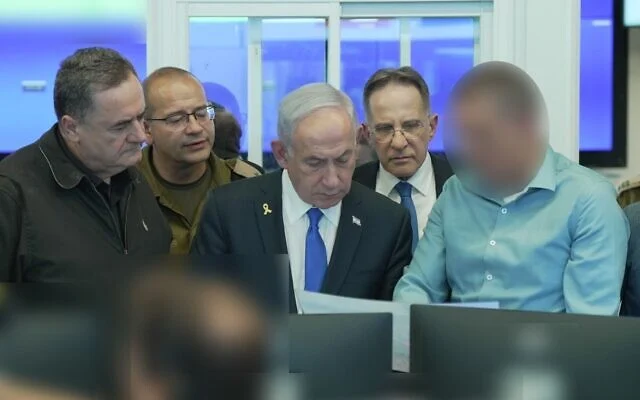
L-R: Defense Minister Israel Katz, Military Secretary to the Prime Minister Maj. Gen. Roman Gofman, Prime Minister Benjamin Netanyahu, Netanyahu’s chief of staff Tzachi Braverman, and acting Shin Bet head “Mem” are seen at the agency’s command center during strikes on Hamas in Qatar, September 9, 2025. (Shin Bet)
In 2024, he was appointed as Netanyahu’s military secretary.
Before entering the role, Gofman wrote a controversial document recommending Israel retain military control over the Gaza Strip after defeating Hamas in the war. The IDF said in response that “this is an internal and classified document that presents the position of the officer only, and does not represent the official position of the IDF.”
Gofman is the latest senior officer to be appointed to a top position outside of the military, after Zini — who headed the IDF’s training command — took over the Shin Bet. Similarly, retired senior police officer Yoram Halevi was appointed to head COGAT.
The appointment of a military general to head the Mossad is rare but not unprecedented.
Meir Dagan, a major general who served in the military between 1963 and 1996, was appointed in 2002 to head the spy agency, where he served until 2011. Danny Yatom, who also served in the IDF between 1963 and 1996 and was a military secretary to the prime minister, became Mossad chief immediately after the end of his army service, heading the intelligence agency until 1998.
You appreciate our journalism

You clearly find our careful reporting valuable, in a time when facts are often distorted and news coverage often lacks context.
Your support is essential to continue our work. We want to continue delivering the professional journalism you value, even as the demands on our newsroom have grown dramatically since October 7.
So today, please consider joining our reader support group, The Times of Israel Community. For as little as $6 a month you’ll become our partners while enjoying The Times of Israel AD-FREE, as well as accessing exclusive content available only to Times of Israel Community members.
Thank you,
David Horovitz, Founding Editor of The Times of Israel