
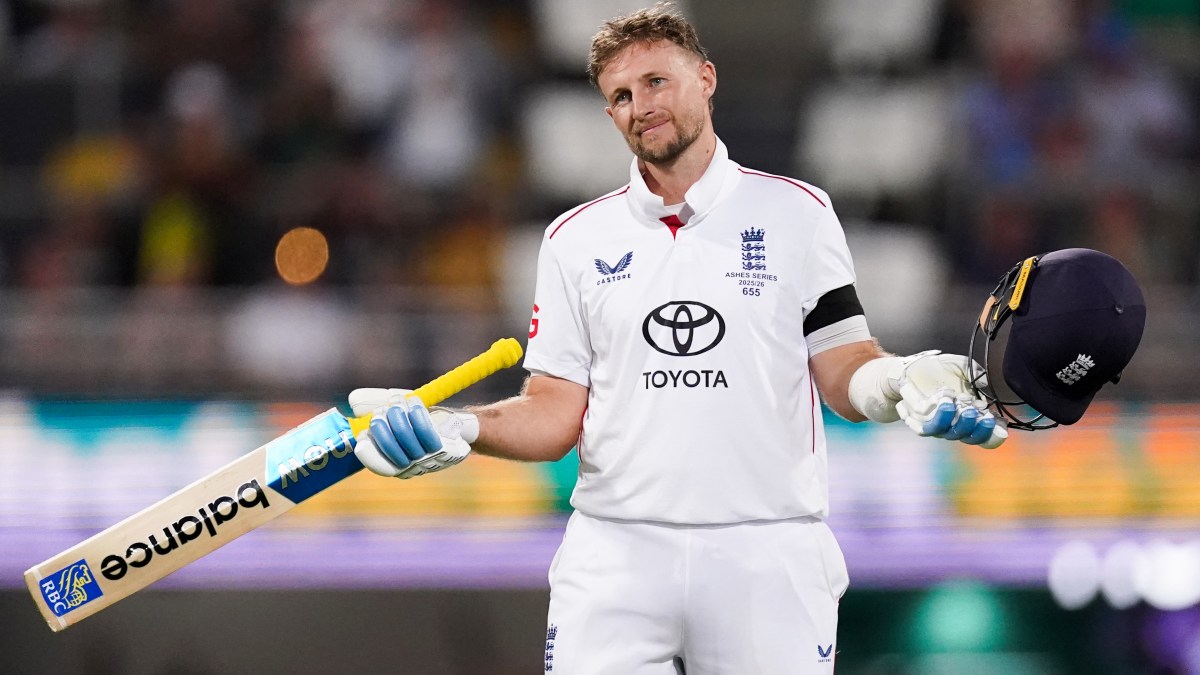
Did you doubt him? Did you really doubt him? And so it came to pass, after more than a decade of frustration, disappointment and heartbreak, that Joe Root, England’s greatest Test match run-getter, made his first hundred on Australian soil. It was his 40th Test hundred all told — repeat after me, and very slowly, 40 Test hundreds! — and there cannot have been a more significant one, nor one that will have given him more pleasure or pride.
We were deep into the final session of the day, the lights on full beam and the crowd gripped following a tense, nip-and-tuck few hours, when Root, after a period of attritional cricket either side of tea, moved into the 90s with consecutive pulled boundaries off Brendan Doggett. Aware of the game within the game, there cannot have been many in the ground, of whatever persuasion, who were not willing him on.
If you doubt me, then the reaction, when he glanced to fine-leg for the runs that brought him the moment he so yearned for, said everything: the whole ground rose to him, England supporters as well as Australians, who are fair-minded when it comes to excellence and achievement. Root raised both arms in triumph, kissed the badge of his helmet and then spread his arms, almost apologetically, as if to say: sorry it took so long in coming, lads.
Thank goodness it arrived now. He was at the crease for the 16th ball of the innings with his team already in crisis, and memories of the collapses in Perth brought sharply to mind, and was there when the last man Jofra Archer walked in to throw the bat to tremendous effect. Root joined in at this point, reverse-ramping Scott Boland for six. Having held things together, through daylight, twilight and darkness he deserved a little fun.
Everything is on the line here in Brisbane, something Stokes acknowledged at the toss, and so much came to rest on Root after Mitchell Starc dismissed Ben Duckett and Ollie Pope for ducks with the new ball. There was a brain fade from Harry Brook, when well set; two sensational pieces of fielding from Josh Inglis and Alex Carey to collar Ben Stokes and Gus Atkinson, and soft dismissals from Zak Crawley and Will Jacks all of which threatened to undermine the opportunity created by the absence of Pat Cummins, Josh Hazlewood and Nathan Lyon.
The most egregious of these dismissals was Brook’s. His frenetic innings came to careless end when he aimed a wild drive at Starc, who, after two spells in the morning, had been held back deliberately by Steve Smith, so that he could be fresh for when twilight arrived. Brook seemed to be unaware of the situation, which demanded he show some respect to the only threatening bowler Australia possessed, just at the most crucial time of the day. Instead, flaying at the first ball he faced from Starc, he exposed Stokes to Australia’s best bowler at dusk and must learn from Root’s game awareness if he is to exploit his talent to the full.
As much as Root was the fulcrum upon which England’s hopes were balanced, so Australia were dangerously reliant on Starc, who was of a different class to the rest of the attack in Perth and widened that gulf here. He took six more wickets to add to his haul in the first Test, passing Wasim Akram to become the most successful left-arm pace bowler in Test history, and it was a completely different game when he was in action, firstly with the new ball and then when brought back at the witching hour when the lights came into effect.
Remarkably, Australia had opted to leave Lyon out of the attack, the first time the off-spinner had been missing in a home Test since 2012. Was this a reflection on the amount of cricket expected here under lights or, possibly, the spinner’s declining powers? Whatever the case, it presented a wonderful opportunity: if, three months ago, you had offered England’s batsmen a day out at the Gabba without Cummins, Hazlewood and Lyon they would have snapped your hand off.
But Starc’s threat with the pink ball had been flagged up by all and sundry, and England’s supporters must have feared the worst when he found Duckett’s outside edge with a late-swinging ball, his sixth of the match. Duckett had spotted his father, Graham, in the crowd just before the anthems and had waved enthusiastically at him; now he walked off disconsolately, followed quickly by Pope, who dragged a short ball onto his stumps.
There was some uncertainty from Root initially, as he began his quest. He played and missed second ball, drawn into a loose drive, and edged his third just fell short of the diving Smith at second slip. Root’s soft hands, the foundation of his genius, of his defence and ability to work the ball around, were the difference on this occasion between another early dismissal and the boundary that eventuated.
Zak Crawley, sporting a sharp buzz cut, showed lots of character after his pair in Perth. He got off the mark for the first time in the series with a crunching drive to the boundary in the first over, to a great cheer, and the early dismissals of Duckett and Pope did not deter him. He continued to drive aggressively, although he was prepared to leave more judiciously outside off-stump as well, when the length of the ball demanded it.
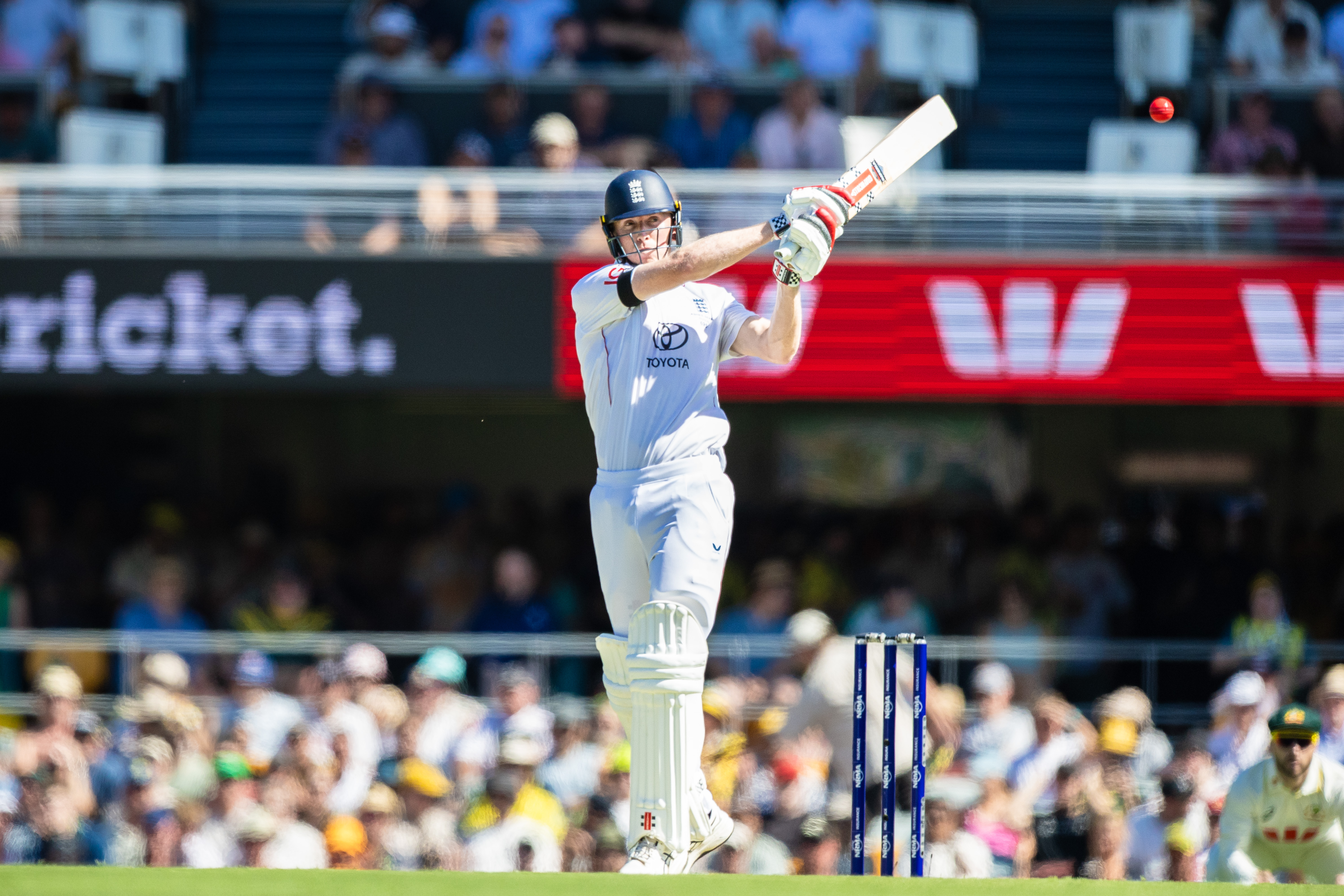
Crawley failed to score a run in the first Test but helped steady the ship for England in Brisbane, scoring 76
SANTANU BANIK/MB MEDIA/GETTY IMAGES
England’s supporters must have feared the worst at 5-2, but Crawley and Root began to exert some control. Smith was quick to push the field back to Crawley, setting sweepers on either side as soon as the seventh over, allowing the strike to turn the strike over as a result. As Australia played the waiting game, hanging the ball outside off-stump, Crawley moved his guard over, happy in the knowledge that an lbw was unlikely given the Gabba bounce.
The signs were ominous for Australia after lunch. Smith began with an arc of fielders on the leg-side boundary, signalling a short-ball ploy — often a sign of desperation although he could simply have been offering England some rope to hang themselves, as they did at Lord’s two years ago. Carey moved up to the stumps to Michael Neser — an indignity for any opening bowler — but was back to his usual position when Crawley offered an under-edge to a short ball, a disappointing end.
After Brook followed, Root battened down the hatches responsibly until tea, adding only seven runs in the hour. At one point after tea, Smith allowed Root singles off Starc, so that the left-armer could bowl at Stokes, although it was a sensational run-out from Inglis at cover that brought the captain’s end. Swooping from cover after Stokes had been sent back by Root, Inglis had one stump to aim at and did not miss, a run-out made more brilliant when Jamie Smith was bowled second ball by Boland. Later on, sprinting back towards the boundary, Carey took a superlative diving catch to match Inglis’s excellence. Australia’s attack looked ordinary at times, but their out-cricket rarely disappoints.
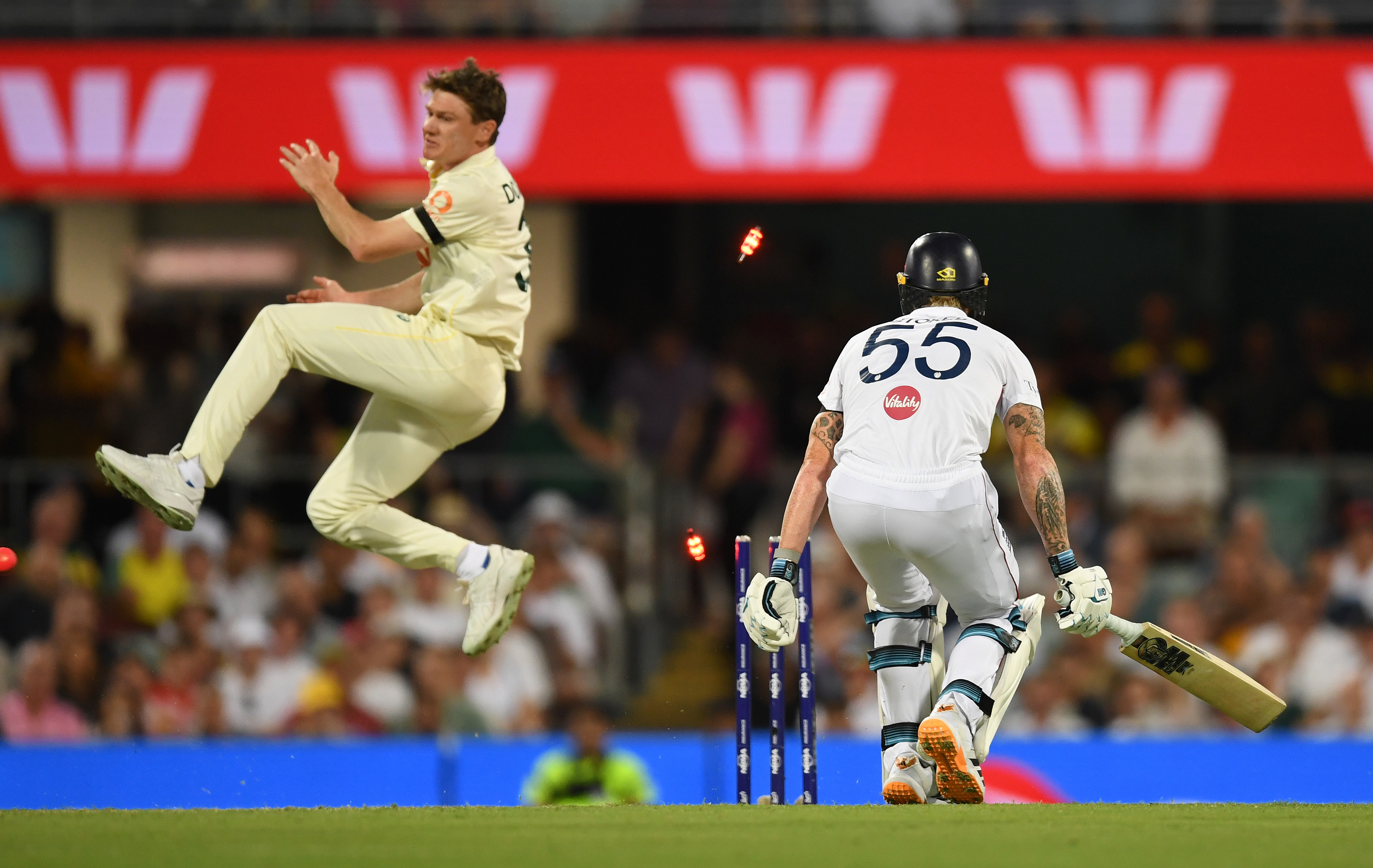
Doggett, left, takes evasive action as Stokes, the England captain, is run out by Inglis
PHILIP BROWN/GETTY IMAGES
Starc completed another fine day’s work, picking up Jacks, driving loosely, Atkinson, top-edging, and Carse, driving again and he now has 16 wickets already for the series. But, on this day of days, he could not upstage Root, who added 61 in the final seven overs of the day with Archer, as Australia tried to run down the clock. Having arrived in the country to headlines of “Average Joe” he walked off to a standing ovation. Finally, he showed the locals what all the fuss has been about. What a player.