
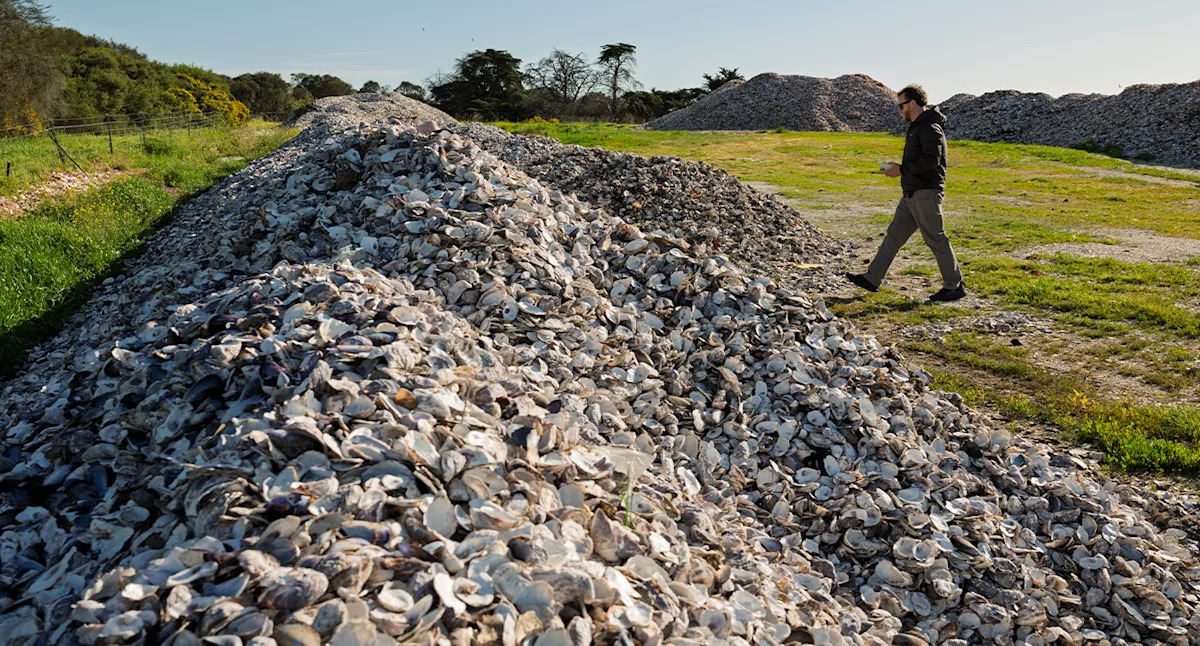
In the early 20th century, when the Tasmanian tiger was on the brink of extinction, an entire ecosystem was quietly vanishing underwater. There are only a few overt signs of Australia’s southern shellfish reefs left, as around 98 per cent were plundered, but now there is a plan underway to restore them.
The native oysters on the reef were a resource so plentiful it was thought they’d never run out, but just like the giant fish that once swam in the ocean, they’re all but gone.
The flesh was harvested as a cheap food, and the shells were crushed to create building materials for roads and grout for major buildings like St Paul’s Cathedral in Melbourne.
Earlier this decade, an extraordinary plan was hatched by Australia to rebuild these lost reefs, and it is now being recognised by the United Nations.
It’s been deemed one of three new World Restoration Flagships — a global plan to rehabilitate more than 1 billion hectares of land.
To put the scale of this mission into perspective, Australia and New Zealand combined are just 797 million hectares, the United States is 983 million hectares, and China is 970 million hectares.
Destroying the shellfish was like removing the ocean’s kidneys
Australia’s $20 million Reef Builder project, a partnership between the federal government and The Nature Conservancy-Australia, is a small but important component of the program.
Delivered between 2021 and 2023, to help boost the economy after the Covid-19 pandemic, it has restored more than 40 hectares of reefs across 13 southern locations using 98 tonnes of recycled shells.
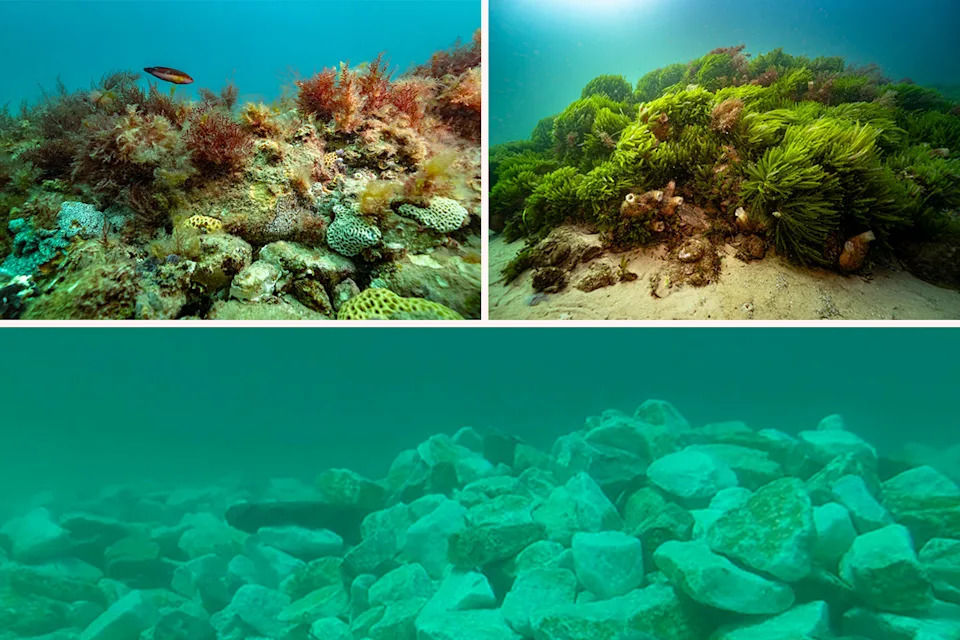
A restored shellfish reef off the coast of Adelaide, shown immediately after construction and again four years later. Source: Anita Thomas
Australia’s environment minister Murray Watt said recognition by the UN’s World Restoration Flagship program “highlights Australia’s leadership” in the restoration of marine ecosystems.
The plan is ongoing, and its ultimate mission is huge.
The Nature Conservancy-Australia is now working to restore 30 per cent of reefs in locations where they could still be viable, amounting to hundreds of hectares.
The non-profit’s Seascapes Director, Dr Michaela Dommisse, told Yahoo News the removal of the shellfish has had a widespread impact because they are no longer cleaning impurities from the water.
“They’ve had the same issue all around the world. It’s like we’ve removed the kidneys from its body,” she told Yahoo News.
There were once shellfish reefs across 800km of southern Australian coastal waters, but today only eight per cent of Sydney rock oyster reefs and one per cent of Australian flat oyster reefs remain.
“How bad the problem is we will never know, because we’ve never lived in a lifetime, or our parents’ lifetime, when those oysters were around,” she said.
But, with 30 million new shellfish now seeded back into the ocean, improvement is already being noticed.
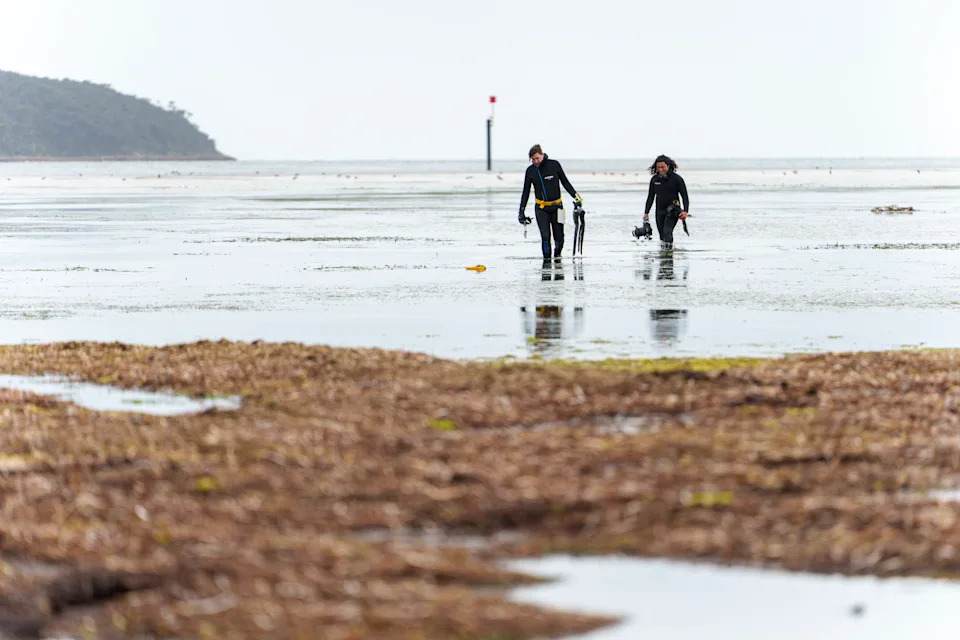
A partnership between The Nature Conservancy and the Australian Government to restore southern shellfish reefs has been honoured by the UN Environment Programme (UNEP). Source: Todd Brown/UNEP
UN describes Australia’s achievement as a ‘model for the world’
Next week, a gala event in Nairobi will honour Australia’s achievement, alongside a project from South Africa that restored thickets, and one from Canada that repaired coastlines to benefit salmon.
Inger Andersen, Executive Director of the UN Environment Programme (UNEP), said by combining lessons from Indigenous Peoples with modern science, “we are restoring damaged ecosystems one hectare at a time”.
Its Director of the Ecosystem Division, Susan Gardner, said the Australian project was chosen because it demonstrates a “model for the world” for creating long-term restoration of a damaged environment.
The plan has created 425 jobs, and it brings together Indigenous experts, fishers, restaurateurs, scientists, and volunteers to create what she described as “common sense solutions” to rebuild the reef.
One major component involves encouraging restaurants to donate shucked shells to the program for use as an underwater foundation for the reef to regenerate, a measure that has the added benefit of diverting them from landfill.
“It’s that combination of good for the environment, people and communities, and it brings together people towards the solution,” Gardener said.
She said regenerating what was destroyed sends a hopeful message to the next generation.
“You’re not necessarily going to inherit something worse than what we inherited from our parents, and that we can leave you with something better,” she said.
“I think an inspiring message that the world needs now is that we can actually improve some of what was lost, because we’ve learned not only how to do restoration correctly, and bring back the benefits we get from ecosystems, but also how to hand over those successes to the next generation, to your grandchildren, to the kids you’re putting to sleep tonight.”
Love Australia’s weird and wonderful environment? 🐊🦘😳 Get our new newsletter showcasing the week’s best stories.
