
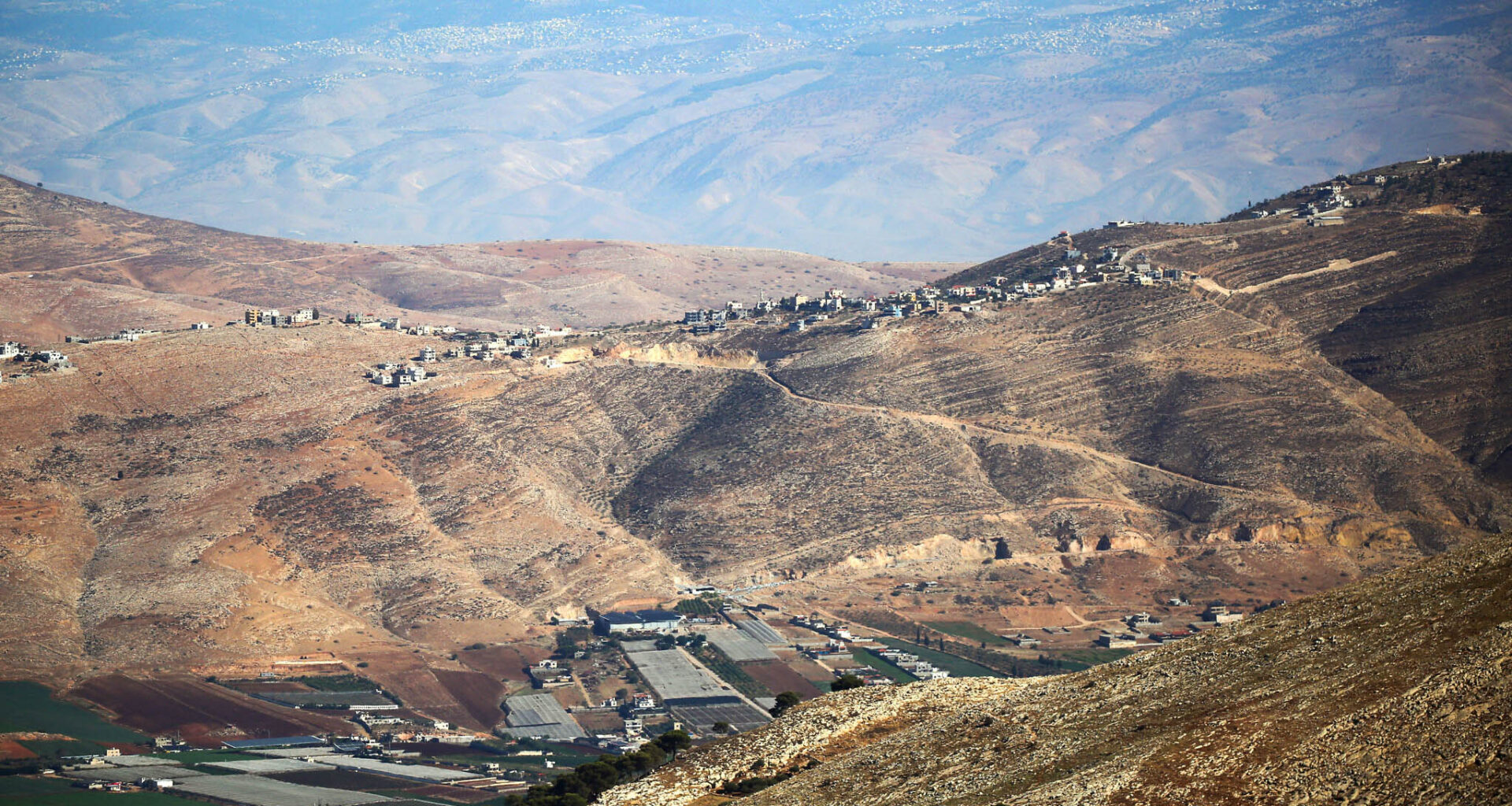
The Israel Defense Forces has issued seizure orders against hundreds of dunams of private Palestinian land in the northern Jordan Valley region of the West Bank for the purpose of building a security barrier within the territory, designed, the army says, to prevent weapons smuggling and terror attacks
The barrier will be comprised of a paved patrol road, a “natural obstacle” adjacent to the road, as well as ditches and embankments where necessary, the army has said.
The land belongs to residents of the Palestinian city of Tubas and the town of Tammun, and 85 percent of it is privately owned, according to veteran civil rights activist Dror Etkes,
The IDF invited land owners to accompany them on Wednesday for a tour of the land that would be seized, and the land owners will have the right to file objections to the land seizure orders within seven days.
The IDF told The Times of Israel that the barrier project, called “Scarlet Thread,” was based on a “clear military need” to thwart arms smuggling and the commission of terror attacks.
Get The Times of Israel’s Daily Edition
by email and never miss our top stories
By signing up, you agree to the terms
The project was conceived after a terror attack in the nearby Mehola Junction in August 2024 in which 23-year-old Yonatan Deutsch was shot dead by Palestinian terrorists.
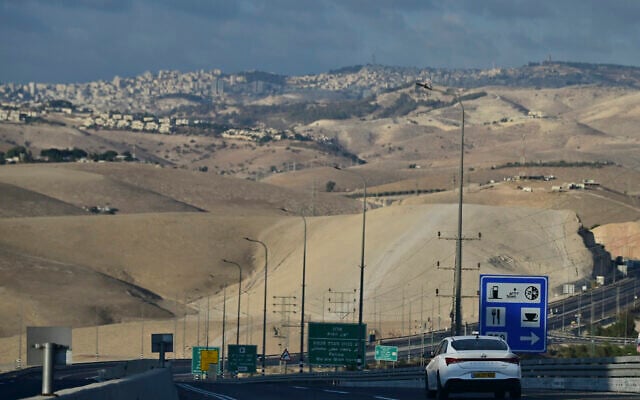
Route 90, Jordan Valley, October 18, 2025. (Michael Giladi/Flash90)
Etges charged, however, that the barrier’s purpose was to “ethnically cleanse” the land between the new barrier and the Allon Road, which lies to the east, alleging that the residents of that area would eventually be forced into the urban Palestinian areas to the west in Areas A and B of the West Bank.
He pointed to a similar development north of the Scarlet Thread project, which was carried out by the IDF in 2024, when an 8km-long barrier was established east of the Palestinian villages of Bardalah and Kardala, which are some 12km north-east of the proposed project.
Residents of those villages have said the barrier has cut them off from over 25,000 dunams of pasture and arable land, leaving many without a source of income.
After the barrier was erected, an illegal farming outpost settlement was established just meters from Bardalah, with its residents harassing the residents and damaging their property.
The Times of Israel understands that the Scarlet Thread project is one section of a three-barrier system being erected in the region, of which the barrier east of Bardalah and Kardalah is the northern-most section.
The land seizure orders were signed by the commander of the IDF’s Central Command Maj. Gen. Avi Bluth on August 28, but notice of them was issued to residents of the region on November 21.
In the order, Bluth said that the barrier is designed to thwart arms smuggling from the eastern border with Jordan, and “thwart terror threats towards residents of the region.” Bluth added that the barrier would prevent “uncontrolled passage” from the northern Samaria region of the West Bank to the Jordan Valley and vice versa.
In total, nine land seizure orders have been issued by the IDF for the Scarlet Thread barrier project.
1. מאז אתמול הגיעו אלי עוד פרטים שמהם התמונה הולכת ומתבהרת לגבי מה שאלוף פיקוד האפרטהייד אבי בלוט + חבורת העבריינים/גזענים/פונדמנטליסטים (רובם שייכים לכל שלושת הקטגוריות) שמקיפה אותו, מתכוונים לעשות וזה הרבה יותר גרוע ממה שחשבתי. בשרשור הקצר הבא, אנסה להסביר. שימו לב למפה הזו. https://t.co/WgqsPBVptJ pic.twitter.com/XpaL4cihtA
— Dror Etkes (@dror_etkes) November 23, 2025
They cover some 1,160 dunams (286 acres) of land, all of which is privately owned apart from 171 dunams (42 acres), according to Etkes.
The barrier will measure some 20 meters in width and will extend for some 20km in length. Any buildings 20 meters to the east or west of the proposed barrier will be destroyed so that they do not pose a security threat to the barrier and military personnel manning it, Bluth said.
One section of the proposed barrier encircles an entire Palestinian hamlet called Khirbet Yarza. The IDF did not address questions as to the military necessity of the ring road around the hamlet.
Besides Khirbet Yarza, another hamlet, Raas al-Ahmar, and part of the hamlet of Khirbet Atuf, also lie between the proposed barrier and the Allon Road.
In total, the area between the barrier and the Allon Road is some 45,000 dunams (11,100 acres).
“The clear purpose of the barrier is to squeeze Palestinian communities further to the west, and to force them to move toward Tubas and Tammun, and to leave a large area inaccessible, or hardly accessible to the Palestinian residents of the region,” alleged Etkes.
Numerous Palestinian communities in the Jordan Valley have suffered from repeated and ongoing violence and harassment from extremist settler activists, who have on numerous occasions established illegal settlement outposts very close to such dwellings to harass and threaten the residents. Hundreds of residents of these hamlets have abandoned their homes in fear.
Etkes conjectured that any objections filed to the military against the seizures would be rejected, and that petitions would ultimately be filed to the High Court of Justice against the land seizures.
“Based on previous, similar projects that Israel carried out in the West Bank in the last two decades, it’s safe to say that the real purpose behind this new ‘barrier’ is to accelerate the ethnic cleansing of the Jordan Valley,” Etkes said.
The IDF insisted, however, that the project was for security purposes only.
“The Scarlet Thread project is based on a clear military need to regulate and monitor the vehicular traffic between the [Jordan] Valley and the five villages and the rest of Judea and Samaria,” the IDF told The Times of Israel.
The “Five Villages” refers to a cluster of Palestinian population centers in the region, including Tubas and Tammun.
“This is to prevent the smuggling of weapons and to thwart the carrying out of attacks while the perpetrators escape deep into the various sectors after carrying them out.”
You appreciate our journalism

You clearly find our careful reporting valuable, in a time when facts are often distorted and news coverage often lacks context.
Your support is essential to continue our work. We want to continue delivering the professional journalism you value, even as the demands on our newsroom have grown dramatically since October 7.
So today, please consider joining our reader support group, The Times of Israel Community. For as little as $6 a month you’ll become our partners while enjoying The Times of Israel AD-FREE, as well as accessing exclusive content available only to Times of Israel Community members.
Thank you,
David Horovitz, Founding Editor of The Times of Israel