

Israel will be able to enter the 2026 Eurovision Song Contest after European Broadcasting Union members on Thursday decided not to call a vote on its participation, despite boycott threats from some countries.
The decision prompted immediate decisions from Ireland, the Netherlands and Spain to boycott the 2026 edition of the competition.
Members of the European Broadcasting Union (EBU) met behind closed doors and under tight security in Geneva, following threats of mass withdrawals from the annual show if Israel takes part next year.
Voting arrangements were also on the agenda, after Israel’s Yuval Raphael – a survivor of Hamas‘s October 7, 2023 attack – was propelled into second place overall after the public vote, prompting suspicions about manipulation.
Similar concerns were raised the previous year after Israel’s Eden Golan was catapulted into fifth place despite lacklustre scoring from national juries.
Members overwhelmingly voted to back new rules intended to discourage governments and third parties from disproportionately promoting songs to sway voters, sources said.
Eurovision entries are scored first by professional juries, then the public by phone, text or online, which often radically alters the leader board.
Before the decision was announced, Iceland, Ireland, Spain and the Netherlands had all threatened to pull out of Eurovision next year if Israel takes part, while others, including Belgium, Finland and Sweden, have indicated they were considering a boycott over the situation in Gaza.
The head of Spanish public broadcaster RVTE, Jose Pablo Lopez, on Thursday said that by not acting sooner, the EBU had subjected itself to “the greatest internal tension in its history”.
“The sanctions against Israel for its repeated breaches at Eurovision should have been adopted at the executive level and not by shifting the conflict to the [general] assembly”, he wrote on X.
Dutch broadcaster AVROTROS justified its threat to withdraw because of what it said was Israel’s “serious violation of press freedom” in Gaza.
Countries cannot vote for their own entry, but AVROTROS accused Israel of “proven interference” at the last event this year by lobbying the public overseas to vote for it.
‘Political ends’
The EBU had planned to convene member broadcasters in November for a vote on the issue.
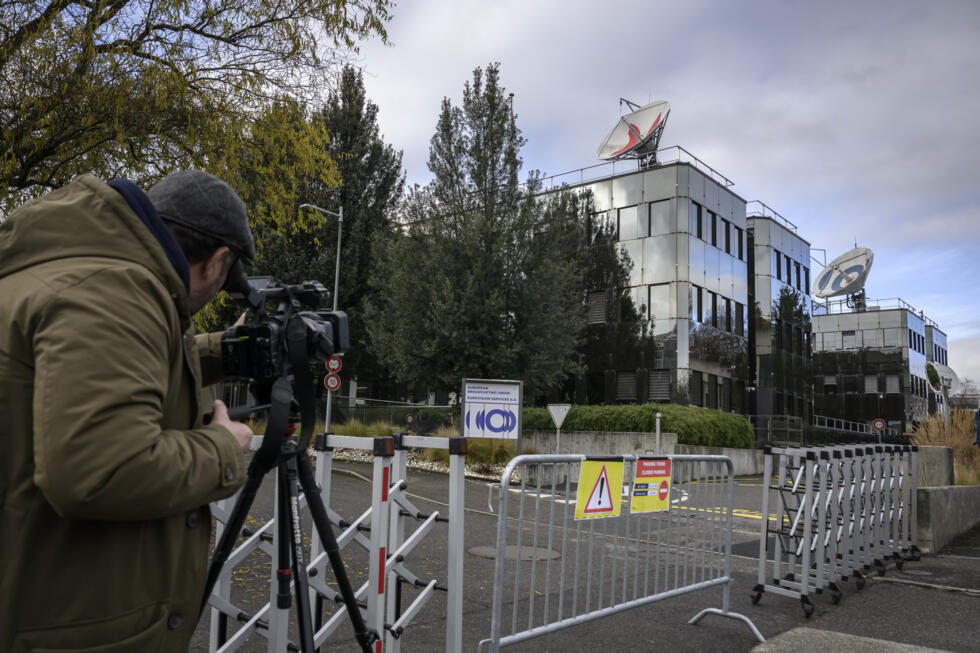
European Broadcasting Union members met behind closed doors in Geneva. © Fabrice Cofferini, AFP
But a few days after the October 10 announcement of a ceasefire agreement between Israel and Hamas, the EBU postponed a decision until its ordinary general assembly on December 4 and 5.
Last month, in an apparent bid to avoid a contentious vote, the EBU announced that it had changed Eurovision voting rules to address members’ concerns and to strengthen “trust and transparency”.
Read moreAustria’s JJ triumphs at Eurovision 2025 amid anti-Israel protests
Broadcasters were set to be asked to consider whether the new measures were sufficient or whether they still wished to see a vote on Israel’s participation.
“The plan is to discuss and vote on these changes during the EBU General Assembly meeting later today,” Finland’s public broadcaster Yle said on Thursday.
“Yle will make its decision on participating in Eurovision based on the outcome of the discussion and vote at the meeting.
Austria’s public broadcaster ORF, which will host the 2026 contest, has expressed hope that a consensus could be reached so that it could host “as many participants as possible”.
Russia was barred from taking part following its 2022 invasion of Ukraine, and Belarus was excluded a year earlier after the contested re-election of President Alexander Lukashenko.
(FRANCE 24 with AFP)