
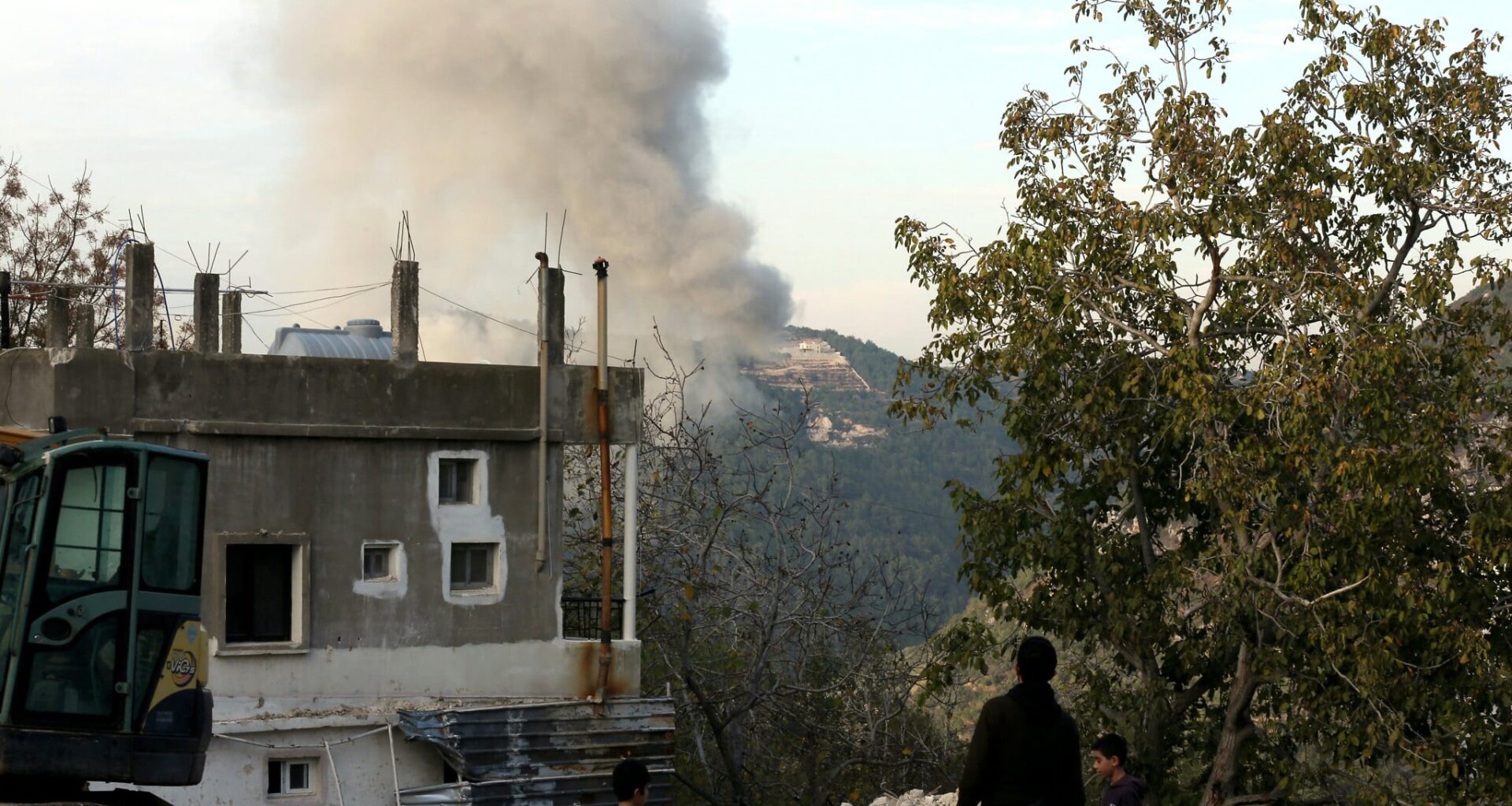
The Israel Defense Forces carried out a wave of airstrikes against what it said were Hezbollah weapons depots in southern Lebanon on Thursday, just one day after Israeli officials held their first direct meeting with counterparts from the Lebanese government in decades.
While Lebanon may have hoped that engaging in the contacts would help dissuade Israel from continuing such strikes in southern Lebanon, Jerusalem has shown no indication that it is prepared to hold back amid its frustration with the pace of Beirut’s efforts to disarm Hezbollah.
The strikes were carried out after the IDF issued evacuation warnings for residents of the southern Lebanon villages of Jbaa, Mahrouna, Mjadel, and Baraachit.
The IDF said the weapon depots were placed “in the heart of the civilian population,” and they “constituted a violation of the understandings between Israel and Lebanon.”
“This is yet another example of Hezbollah’s cynical use of Lebanese civilians as human shields, and continued operations from within civilian areas,” the military added.
Get The Times of Israel’s Daily Edition
by email and never miss our top stories
By signing up, you agree to the terms
On Wednesday, Israel and Lebanon sent civilian envoys to a committee overseeing a fragile ceasefire agreed a year ago that both sides have accused the other of breaking.
צה”ל תקף מחסני אמצעי לחימה של ארגון הטרור חיזבאללה בדרום לבנון
צה”ל תקף לפני זמן קצר מספר מחסני אמצעי לחימה של ארגון הטרור חיזבאללה בדרום לבנון.
המחסנים שהותקפו מוקמו בלב אוכלוסייה אזרחית, זוהי דוגמה נוספת לשימוש הציני של ארגון הטרור חיזבאללה באזרחי לבנון כמגן אנושי ולפעילות… pic.twitter.com/RV5xKokXft
— צבא ההגנה לישראל (@idfonline) December 4, 2025
Channel 12 reported on Thursday that Israeli and Lebanese representatives agreed to hold another meeting later this month to continue exploring economic cooperation, after the two neighbors held their first direct talks in decades yesterday.
Citing unnamed Israeli officials, the network said that Wednesday’s meeting lasted over an hour and was productive, with representatives of both countries agreeing to come to the follow-up sit-down with proposals for promoting economic cooperation in areas such as agriculture, technology, transportation and infrastructure.
Prime Minister Benjamin Netanyahu’s office said Wednesday that the meeting was held “in a positive spirit,” and that Israel emphasized that “the disarmament of Hezbollah is mandatory, regardless of progress in economic cooperation.” Israel and the United States have pushed Lebanon to disarm the terror group in accordance with the terms of a ceasefire agreement signed a year ago that ended the 2023-2024 conflict between Israel and Hezbollah.
An Israeli official told Channel 12, “We are prepared to move forward together with the Lebanese government, but it must deal with Hezbollah.”
Lebanese Prime Minister Nawaf Salam, following the meeting, said economic cooperation would only follow a peace agreement between the sides.
“Economic [talks] will be a part of normalization, normalization will follow peace. It cannot precede peace,” Salam said, when asked about Israel’s statements that it was hoping to build ties and economic cooperation with Lebanon.
#عاجل ‼️ إنذار عاجل إلى سكان جنوب لبنان
????سيهاجم جيش الدفاع على المدى الزمني القريب بنى تحتية عسكرية تابعة لحزب الله الإرهابي في أنحاء جنوب لبنان وذلك للتعامل مع المحاولات المحظورة التي يقوم بها حزب الله لإعادة إعمار أنشطته في المنطقة
????نحث سكان المباني المحددة بالأحمر في… pic.twitter.com/PLgduIorls
— افيخاي ادرعي (@AvichayAdraee) December 4, 2025
“We are far from being there,” he told reporters at his office.
The Wednesday meeting organized by the US was part of the “Cessation of Hostilities Implementation Mechanism” — made up of US, UNIFIL, Israeli, French, and Lebanese officials — which is aimed at pushing forward with the ceasefire reached just over a year ago with Israel.
Jerusalem and Beirut last held indirect talks in Naqoura to finalize a maritime boundary in 2022 — an agreement brokered by the US.
Wednesday’s meeting also came as Israeli and US officials have warned that the IDF could embark on a major operation if the Lebanese government does not make progress in disarming the Hezbollah terror group.
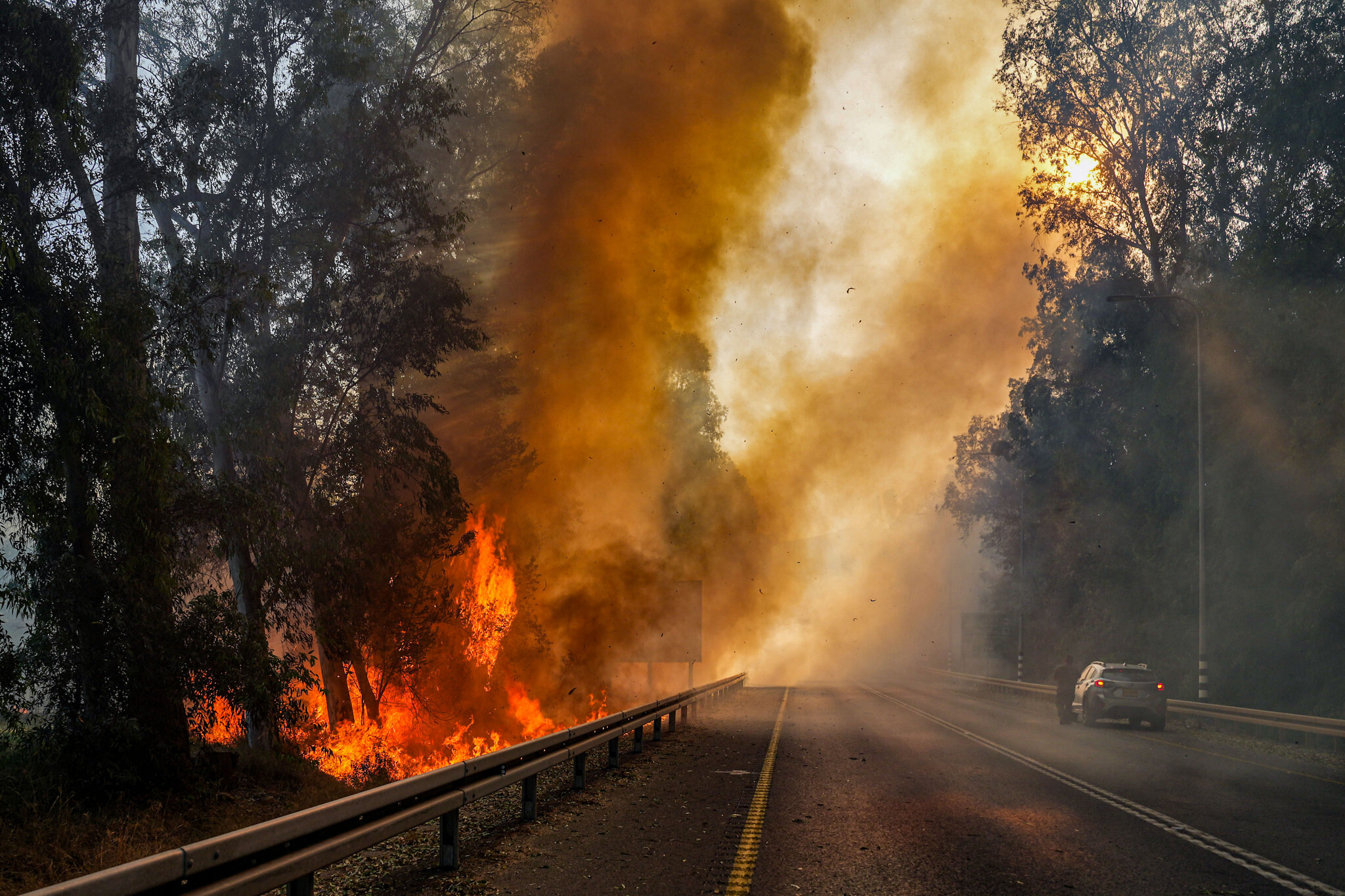
A forest fire caused from rockets fired from Lebanon, near the northern Israeli town of Kiryat Shmona, June 4, 2024. (Ayal Margolin/Flash90)
Tensions in Lebanon have ratcheted up in recent weeks. The IDF accuses Hezbollah of violating the November 2024 ceasefire and has intensified its strikes against terror group targets, including killing its chief of staff in a rare strike in Beirut last month.
Under the terms of the ceasefire, Hezbollah was required to vacate southern Lebanon, while Israel was given 60 days to do so. The IDF later withdrew from all but five posts along the border with Lebanon, citing the incomplete dismantling of Hezbollah’s infrastructure in the country’s south.
In addition to hundreds of airstrikes amid the ceasefire, the military said, ground troops have conducted over 1,200 raids and other small operations in southern Lebanon, mostly in areas surrounding the five “strategic” border posts, to prevent Hezbollah from restoring its capabilities.
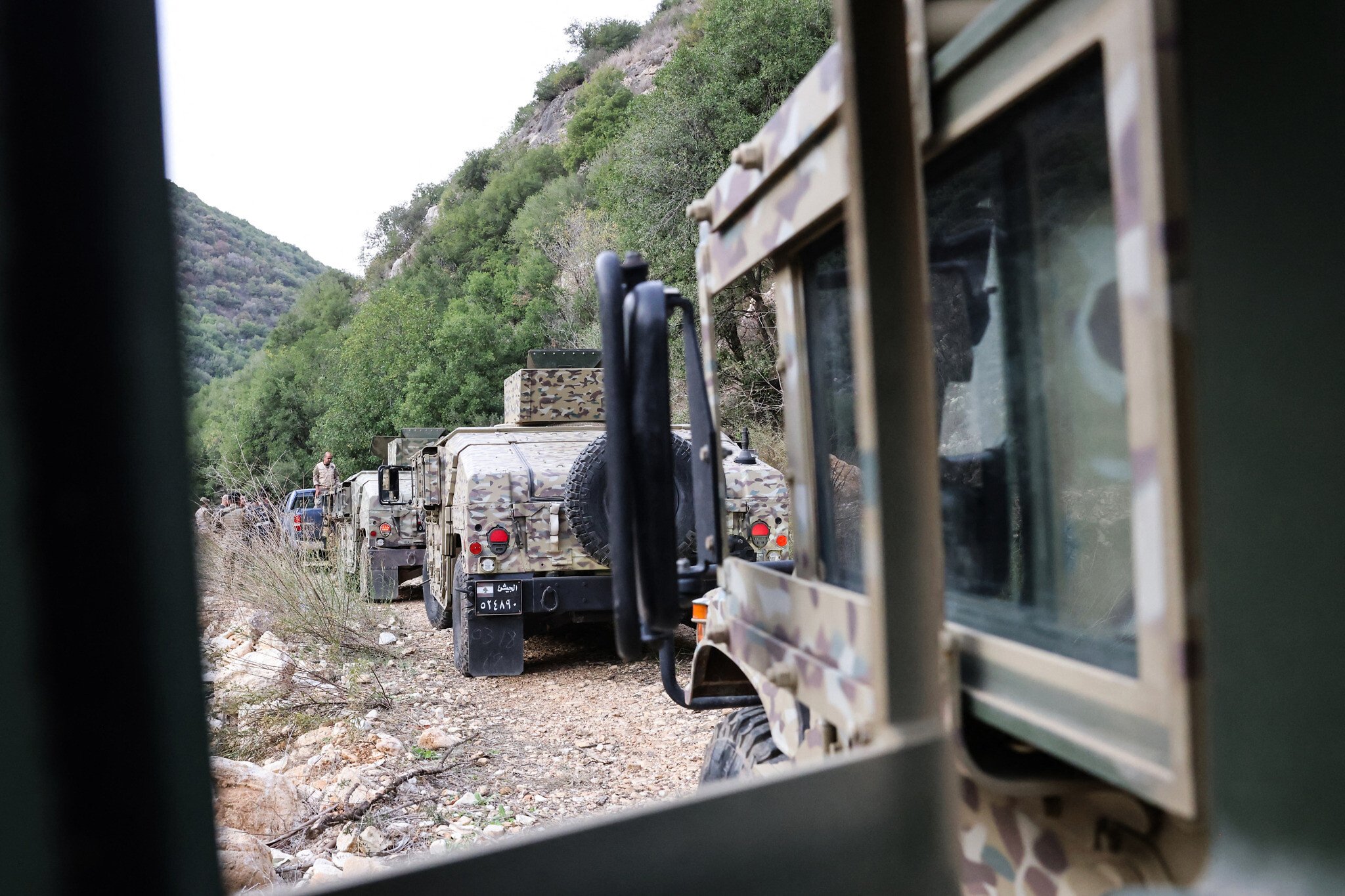
This photograph taken during a press tour organized by the Lebanese army shows a military convoy heading to an abandoned tunnel said to have been used by Hezbollah, in a mountainous valley on the outskirts of the southern village of Zibqin, on November 28, 2025 (Anwar AMRO / AFP)
The operations included demolishing terror infrastructure, thwarting Hezbollah intelligence collection efforts, and other activities to damage the terror group’s capabilities, the army said. During the raids, troops located numerous weapons, rocket-launching sites, and other buildings used by Hezbollah, the army added.
Israel invaded Lebanon in September 2024 in a bid to secure the return home of some 60,000 residents displaced by Hezbollah’s near-daily attacks on northern Israel starting October 8, 2023 — a day after fellow Iran-backed group Hamas invaded southern Israel, sparking the war in Gaza.
Times of Israel staff contributed to this report.
You appreciate our journalism

You clearly find our careful reporting valuable, in a time when facts are often distorted and news coverage often lacks context.
Your support is essential to continue our work. We want to continue delivering the professional journalism you value, even as the demands on our newsroom have grown dramatically since October 7.
So today, please consider joining our reader support group, The Times of Israel Community. For as little as $6 a month you’ll become our partners while enjoying The Times of Israel AD-FREE, as well as accessing exclusive content available only to Times of Israel Community members.
Thank you,
David Horovitz, Founding Editor of The Times of Israel