

Supreme Court President Isaac Amit launched an unprecedented broadside against Justice Minister Yariv Levin on Thursday, accusing the right-wing minister of trying to dismantle Israel’s judiciary.
In a speech at a conference of the Israeli Association of Public Law in Haifa, Amit tore into the justice minister for his 18-month refusal to meet with him, saying that by doing so, he was boycotting “the Israeli public” at large.
The denunciation sparked a sharp response from Levin, who accused Amit of sitting in a “fortress of lies,” which the justice minister bragged of “dismantling brick by brick.”
Levin’s boycott of Amit has been part of a wider judicial overhaul that has seen the government attempt to wrest power away from the courts in moves that have sparked large-scale public protests, with critics saying they are an attempt to break down the system of checks and balances and undermine democracy.
According to Amit, Levin’s boycott of him and his predecessor, Uzi Vogelman, meant that key positions within the judiciary that need the cooperation of the justice minister and the Supreme Court president cannot be filled, including a president for the Lod-Central District Court, and deputy-presidents for 19 other courts.
Get The Times of Israel’s Daily Edition
by email and never miss our top stories
By signing up, you agree to the terms
“What reason is there to refrain from appointing a vice president to the Jerusalem Family Court? Why refrain from appointing a vice president to the Krayot Magistrate’s Court? Why harm all the litigants in the Central District by preventing the appointment of a president to the [Lod] District Court?” Amit asked in his speech.
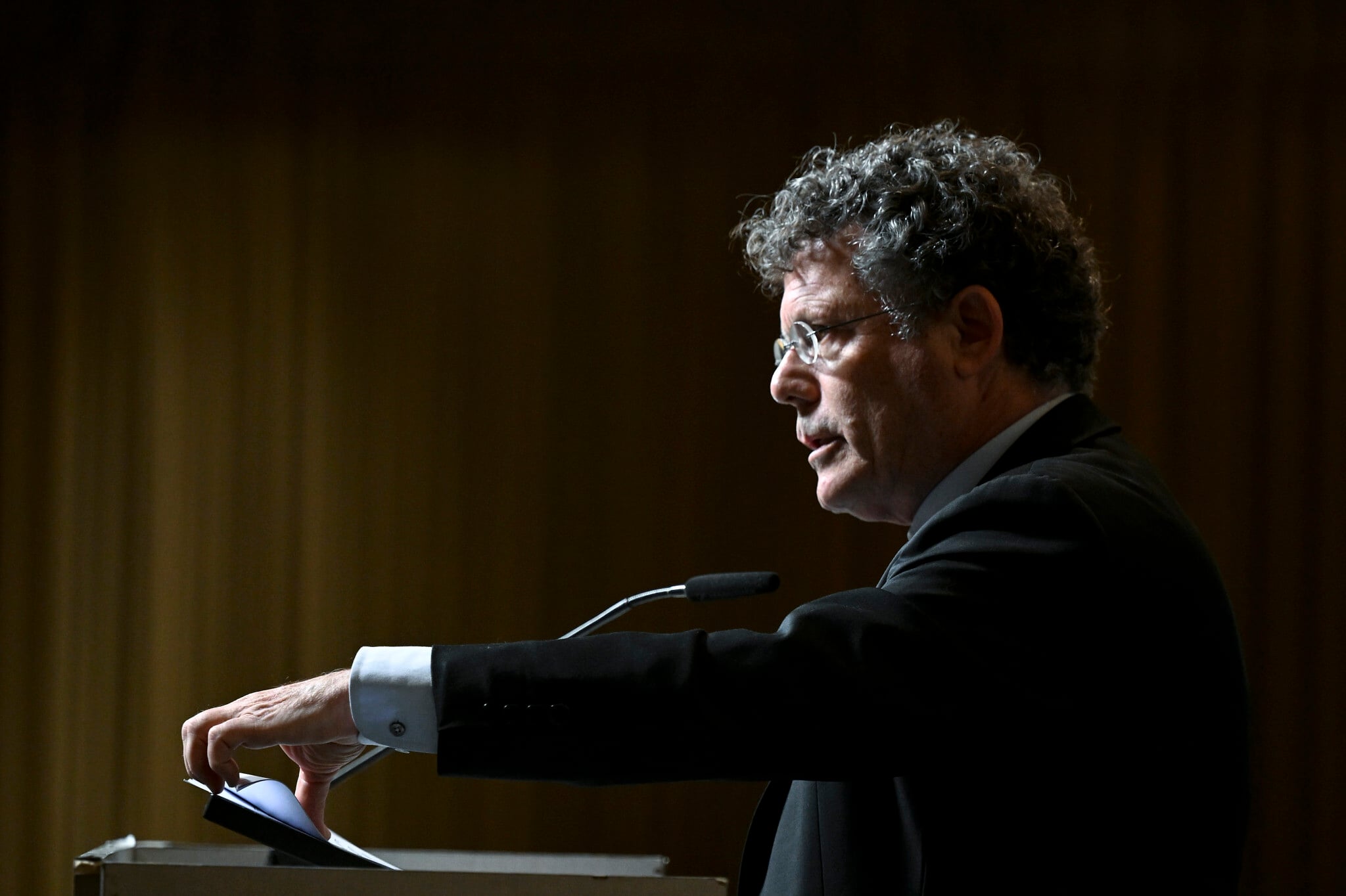
Supreme Court President Isaac Amit attends a conference of the Israeli Association of Public Law (IAPL) in Haifa, December 4, 2025. (Flash90)
He said he has repeatedly reached out to Levin to restart cooperation, but that his requests have been ignored. “For about a year and a half, the justice minister has been boycotting the judicial system, thereby boycotting the Israeli public who turn to the courts,” said Amit.
“The justice minister’s conduct has one clear purpose, which he himself said last April: ‘What was built here over decades takes time to dismantle, it doesn’t end in one day.’ These words speak for themselves,” he added.
Levin stopped meeting with Vogelman in mid-2024, when Vogelman refused to accede to a demand from the justice minister to ditch the seniority system for appointing a president, whereby the Supreme Court justice with the most years on the court becomes the sole candidate for the position. The system is intended to prevent politicization of the selection process.
The justice minister then refused to call a vote in the Judicial Selection Committee for appointing a new president, since he did not have enough votes to appoint his preferred pick, Yosef Elron. This led the High Court of Justice to eventually order Levin to hold a vote in January this year after 16 months in which he had refused to do so.

(R-L) Incoming Supreme Court President Isaac Amit, President Isaac Herzog and former acting chief justice Uzi Vogelman at Amit’s inauguration ceremony at the President’s Residence in Jerusalem, February 13, 2025. (Yonatan SIndel/FLASH90)
Levin has boycotted Amit ever since, refuses to meet with him or address him as president, and has even failed to publish his appointment as president in the state gazette, as required by law.
Amit: Courtroom disruptions ‘unprecedented,’ unacceptable
In his speech, Amit also expressed concern for harsh rhetoric directed against the judiciary as well as repeated, severe disturbances by members of the public inside courtrooms, and said further that in recent years “Israel’s ‘airplane’ of democracy has fallen into a turbulent vortex from which we have not yet emerged.”
Addressing the courtroom disorder, Amit said: “Criticism is legitimate, but we cannot accept the exploitation of the principle of public discussion in order to undermine the discussion itself,” calling the phenomenon of disruptions “unprecedented” and “organized.”
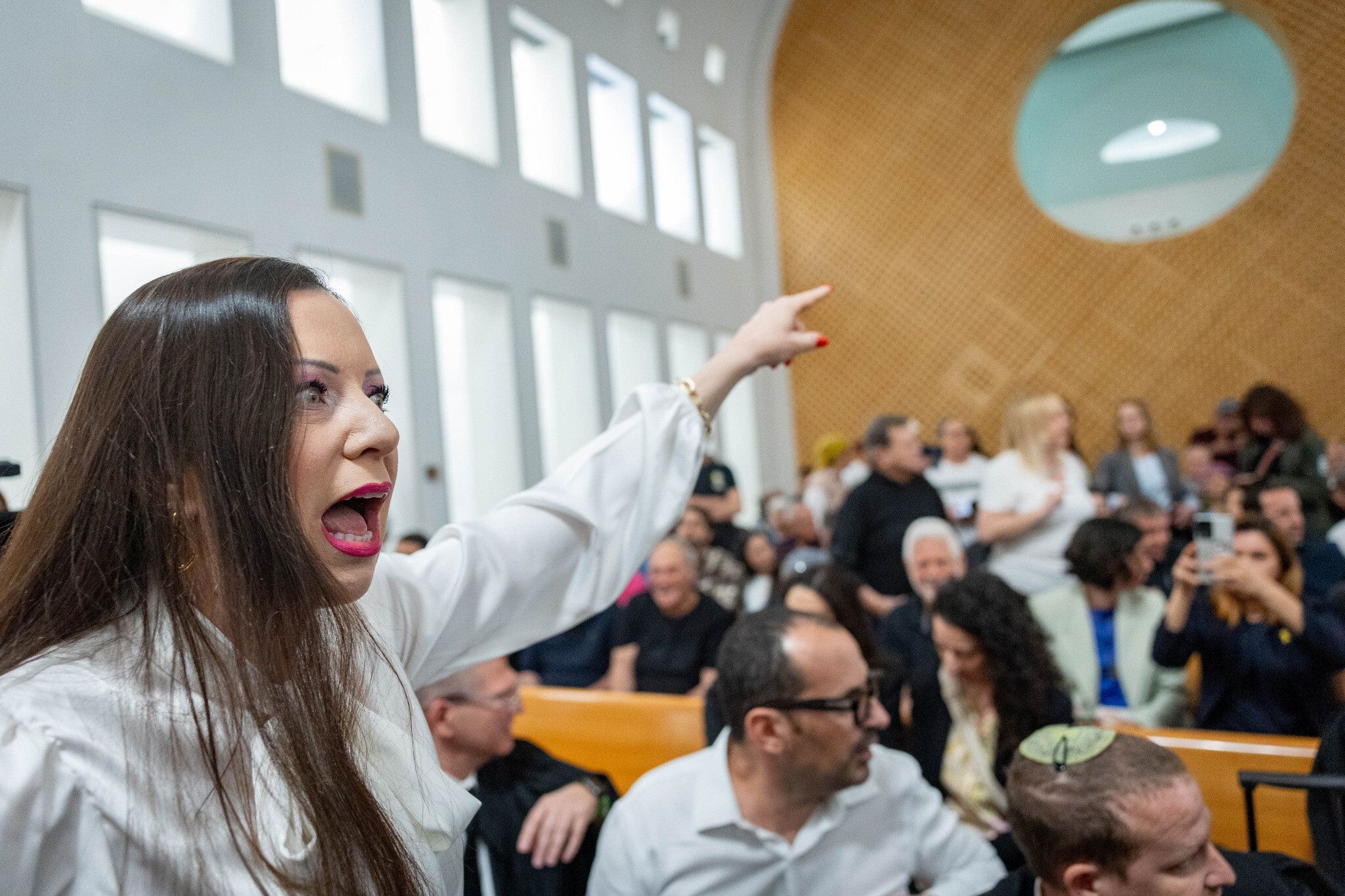
Likud MK Tally Gotliv disrupts a court hearing on petitions against the firing of Shin Bet chief Ronen Bar at the Supreme Court in Jerusalem, April 8, 2025. (Yonatan Sindel/Flash90)
“In a democratic regime, it is fitting for justice to be done, and to be seen. But we cannot accept attempts to prevent the courts from doing their job,” he said. “This illegitimate phenomenon is not seen in any democratic regime in the world.”
Levin: Amit sits in ‘fortress of lies,’ I’m dismantling it
Responding to Amit’s speech, Levin accused the Supreme Court president of refusing to respect democracy and went through a litany of complaints against the head of the judiciary.
“What did you think would happen when you and your friends took over the Judicial Selection Committee with an illegal order?” said Levin, in reference to the High Court’s order in January for Levin to hold a vote in the Judicial Selection Committee on appointing a new Supreme Court president after he refused to do so for 16 months.
“What did you imagine when you forced a ‘president’ of the court on the citizens of Israel who tramples on the majority of the public again and again?” Levin demanded.
He also criticized Amit and the Supreme Court for their decisions regarding a government commission of inquiry into the use of spyware by law enforcement agencies, and its decisions over who may supervise an investigation into the Sde Teiman leak affair.
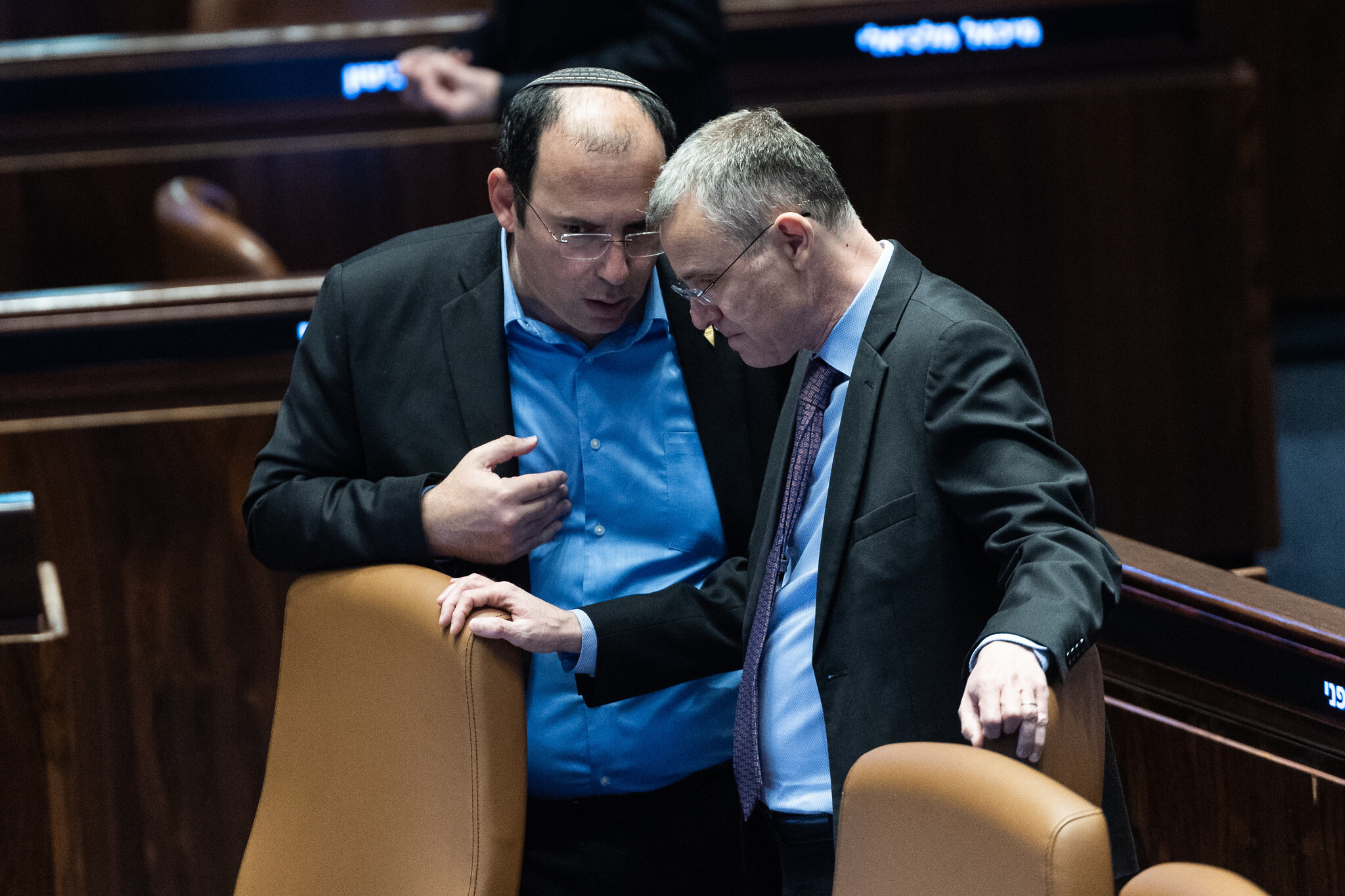
Justice Minister Yariv Levin (R) speaks with MK Simcha Rotman during a plenum session at the Knesset in Jerusalem, November 26, 2025. (Yonatan Sindel/Flash90)
Levin continued, saying he is “dismantling brick by brick the fortress of lies in which you and your friends sit,” and is “building the legal system anew as it was in its days of greatness under presidents such as [Moshe] Landau and [Meir] Shamgar.”
Ex-justice Barak: ‘We’re no longer citizens, but subjects’
Also speaking at the conference Thursday was former Supreme Court president Aharon Barak, who similarly decried Levin’s approach to the judiciary and questioned whether Israel is still a democracy.
Barak called Levin’s boycott of Amit “damage to the entire judicial system.”
Speaking more generally, Barak cited “the two phenomena of the government’s control over the Knesset, and the prime minister’s control over the government,” saying they place Israel on a trajectory toward autocracy.

Supreme Court President Isaac Amit speaks with Aharon Barak during a conference of the Israeli Association of Public Law (IAPL) in Haifa, December 4, 2025. (Flash90)
Additionally, he said, “the approach to protesters is like that toward criminals. I think we’re no longer citizens, but rather subjects.”
The famed jurist added that “Israeli statesmanship is seen by the prime minister as a ‘deep state’ that must be fought against,” and slammed the coalition for its efforts to entrench broad exemptions for the ultra-Orthodox community from mandatory military service.
Times of Israel staff contributed to this report.
You appreciate our journalism

You clearly find our careful reporting valuable, in a time when facts are often distorted and news coverage often lacks context.
Your support is essential to continue our work. We want to continue delivering the professional journalism you value, even as the demands on our newsroom have grown dramatically since October 7.
So today, please consider joining our reader support group, The Times of Israel Community. For as little as $6 a month you’ll become our partners while enjoying The Times of Israel AD-FREE, as well as accessing exclusive content available only to Times of Israel Community members.
Thank you,
David Horovitz, Founding Editor of The Times of Israel