
Since its 1956 beginnings in a Swiss theatre, the Eurovision Song Contest has brought escapism and elation to billions of people across the globe. Yesterday, however, it divided a continent.
The contest is dealing with its greatest political crisis after countries including Ireland and Spain announced they would boycott next year’s competition because of Israel’s participation.
The media organisations behind the contest, including the BBC, effectively approved Israel’s participation in a secret ballot against a backdrop of boycott threats over the war in Gaza.
The Netherlands and Slovenia also pulled out of the planned event in Austria with other national broadcasters in Belgium, Finland, Sweden and Iceland yet to confirm their involvement.

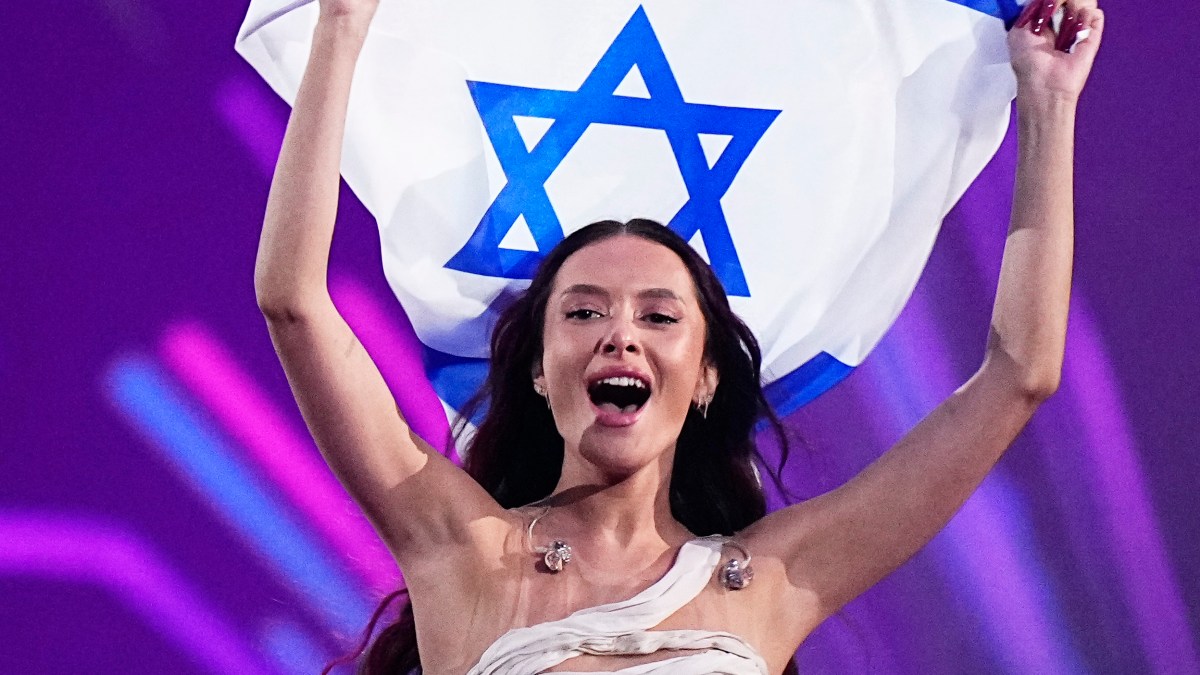
Protesters demonstrated against Israel’s inclusion in the competition during a performance this year by Yuval Raphael, the country’s entry
HOLLANDSE HOOGTE/SHUTTERSTOCK
The BBC, whose coverage over the decades has been presented by Terry Wogan and his fellow Irishman Graham Norton, said on Thursday that it supported the “collective decision” made by members of the European Broadcasting Union (EBU) and said that it was about “being inclusive”.
The continental split comes only six years after Tel Aviv hosted the 2019 contest. The run-up to yesterday’s meeting of the EBU in Geneva was dominated by Israel over its actions in Gaza.
There were also allegations that it had interfered in voting for this year’s contest when its entrant Yuval Raphael came 14th in the jury vote but after the public vote, which allows the public to pay to vote up to 20 times each, finished second.
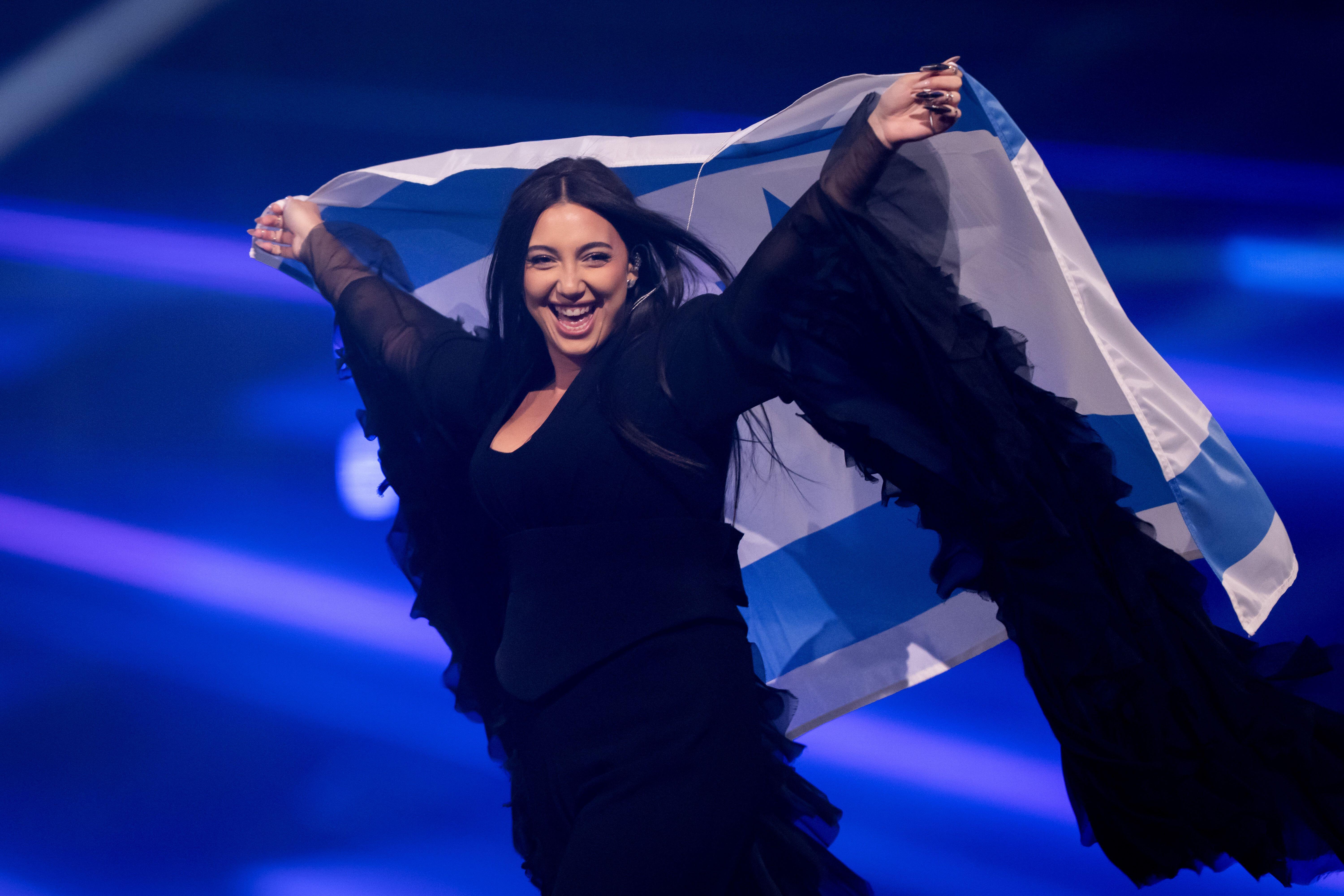
Raphael at this year’s competition in Basel, Switzerland
SANDER KONING/ANP/ALAMY
The Dutch broadcaster Avrotros claimed that there had been “proven interference” and, as part of its boycott threat, accused Israel of a “serious violation of press freedom” in Gaza. Israel has said it faces a global smear campaign.
Martin Green, the British director of Eurovision, said after Thursday’s ballot that he was “pleased” the media organisations had been given an “opportunity to debate” Israel’s place in the contest. Green said the “emphatic result” of the vote showed “a belief that the Eurovision Song Contest shouldn’t be used as a political theatre”. He added: “It must retain some sense of neutrality.”
The ballot was not a direct vote on Israel’s participation, but would have led to one if a majority had voted against the measures on how to “reinforce trust” in the event.
The Irish broadcaster RTÉ said that Ireland’s participation “remains unconscionable given the appalling loss of lives in Gaza and humanitarian crisis”.

Destruction in Khan Yunis, Gaza
JEHAD ALSHRAFI/ANADOLU/GETTY IMAGES
Avrotros said its “participation under the current circumstances is incompatible with the public values that are essential to us”. The Spanish broadcaster RTVE said its board of directors had agreed in September that “Spain would withdraw from Eurovision if Israel was part of it”. The Slovenian broadcaster RTV said that it was pulling out of the competition “on behalf of the 20,000 children who died in Gaza”.
It is not the first diplomatic row to engulf the supposedly non-political contest although is arguably its biggest. Three years ago, members of the EBU voted to ban Russia after its invasion of Ukraine. In 2009, Georgia was reprimanded by the EBU for its suspiciously anti-Russian song title We Don’t Wanna Put In. Last year, Israel had to change the lyrics of its song, originally called October Rain, over suggestions that it referenced the Hamas attack of October 7, 2023.
Before yesterday’s vote, the Austrian hosts of the contest in Vienna in May appealed to countries not to boycott.

Protests in Malmo, Sweden, before the 2024 event
TIMES PHOTOGRAPHER JACK HILL
They were supported by Wolfram Weimer, the German culture minister, who said Germany would not participate if Israel was excluded. “Israel belongs in the Eurovision Song Contest,” he said.
Frederik Delaplace, the chairman of the Belgian broadcaster VRT, said afterwards that it was “a rift within the 70-year-old Eurovision family”.
Isaac Herzog, the president of Israel, said, however, that he was “pleased” Israel would “once again participate”, adding that he hoped “the competition will remain one that champions culture, music, friendship between nations and cross-border cultural understanding”.
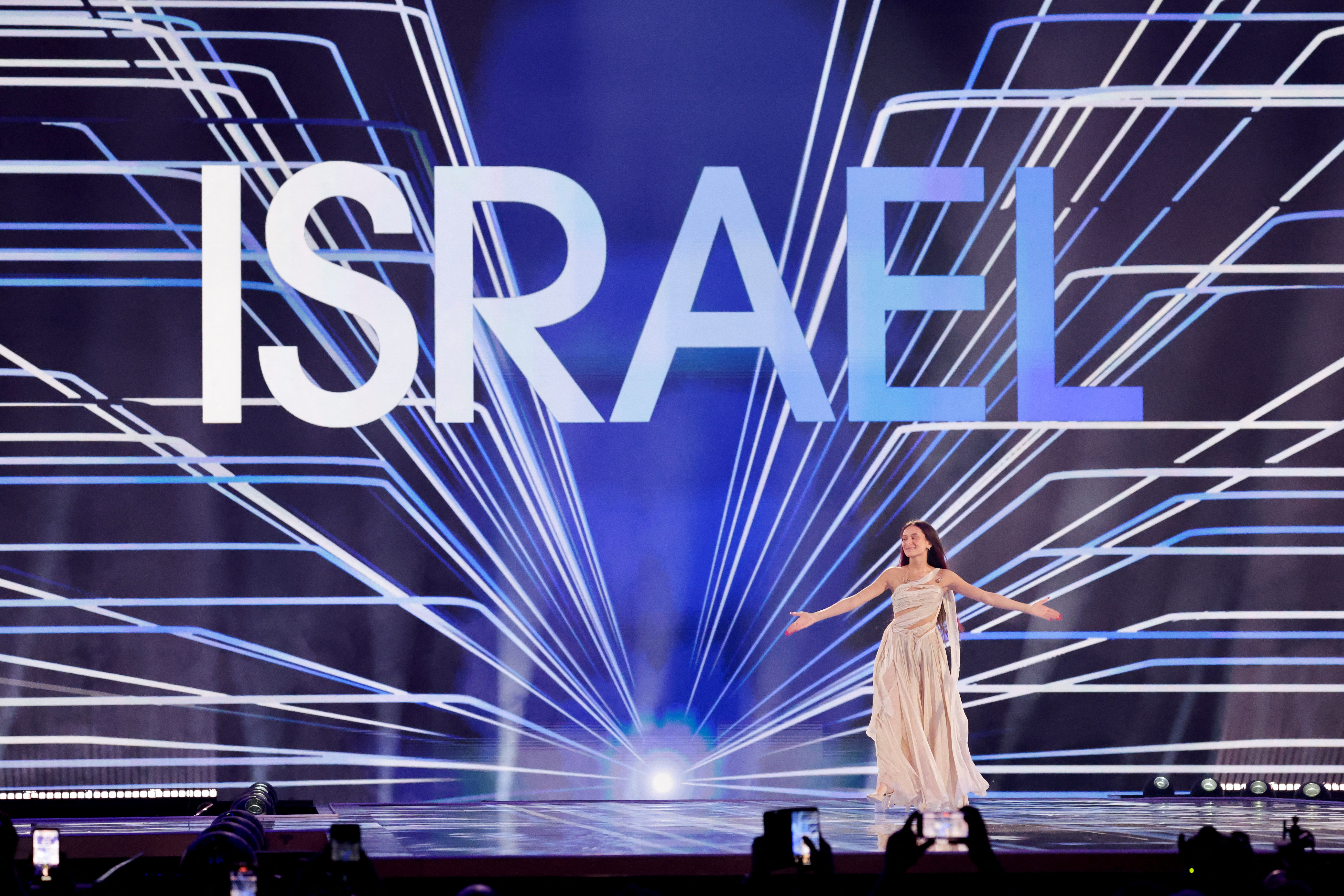
Golan during rehearsals for the grand final in 2024
LEONHARD FOEGER/REUTERS
Politics has always played a part in Eurovision
Eurovision has always been a strange beast as the coverage in this country has amply demonstrated. The BBC has long felt it was safest to regard it as a camp confection that shouldn’t be taken too seriously (writes Ben Dowell).
For many years, Terry Wogan and then Graham Norton have guided us through its highs and terrible lows. Often having fun at its expense. But behind the sequins and smiles, Norton, Wogan and the BBC knew that politics had always played a part in Eurovision. As they have observed, some countries just tend not to vote for each other and some vote for each other all the time, Greece and Cyprus, for instance.
British acts have often felt aggrieved and rats have been smelt, although Sam Ryder was a jolly outlier in 2022, coming second to the Ukrainian entry that clearly benefited from international sympathy.
Politics has always bubbled under the surface, which has always slightly tarnished its innocence. And with news that Spain, Netherlands, Slovenia and Ireland will boycott next year’s contest after it was decided Israel could compete, international tensions have reached boiling point.
Even if Eurovision survives, it would be hard to imagine the competition will be the same again.