
“It’s always important to remember that when the world does have a big cough or a big sneeze, we feel the ripples dramatically,” says Willis. “That’s why I have maintained in our fiscal strategy a prudent debt position, because we know from previous shocks that we need to be able to borrow to get ourselves through those periods.”
Her opponents — which include the NZ Taxpayers’ Union — argue she has yet to actually reduce debt. They say she has yet to build prudent fiscal buffers.
They are not in her shoes.
“The biggest shock that we’ve all had to endure over these past 12 months is the Liberation Day tariffs and the ensuring trade uncertainty,” she said in a recent Beehive interview. “Some of the dire predictions that the IMF and others were making about what that would do to global growth haven’t yet transpired.
“I still would always argue, we actually need to keep preserving the free flow of trade, because in absence of that, we will see the slowdown next year or the year after — that will be what happens.
“So whatever we can do to push that cause, we should.”
Willis took quite a pasting in this year’s Mood of the Boardroom Herald CEOs survey. Like her boss Christopher Luxon, she did not rank in the Cabinet’s Top 10 in the view of survey respondents.
CEOs sent a clear message to the Finance Minister: Hold the pro-growth line, sharpen delivery, and set out a long-term vision that brings investors back onside.
To her credit, Willis heard that message. She is operating an open door approach and a new hire in her office is actively working on a business engagement strategy. Feedback from my own business contacts suggests this is valued.
Here’s what Open AI deduced from our talk when it comes to assessing a more targeted operating mode:
Open-Door Policy: The Government actively encourages business leaders to share insight, criticism and suggestions — emphasising informal, candid conversations to surface real issues
Regular and Varied Engagement: Engagement occurs in both formal and informal settings, including one-on-ones, roundtables, and delegated outreach via colleagues, to gather a wide range of perspectives and not just “filtered” or staged input.
Listening Mode: Emphasis is placed on “listening mode” — genuinely taking in business and stakeholder feedback, rather than simply presenting government views. This feedback loop is used to refine and adjust reforms in real time
Building Trust Through Responsiveness: By being accessible and visibly taking on board feedback, the Government aims to build trust, reduce opposition, and foster a collaborative atmosphere supportive of reform.
That’s Otter AI for you. Bland.
Willis’ direct comments are telling.
“Being able to speak with the business community is something I’ve always valued throughout my career,” she told me. “When you’re one-on-one in a casual setting, you’re going to get much blunter feedback than you will in a more formal setting.
“So I’ve certainly made time for those interactions, and have asked some of the colleagues that I have in the business community to provide some of those opportunities for me, and I’ll be doing quite a lot of that over the next few months, in terms of making myself available.”
On the Mood of the Boardroom criticism: “My reflection was just, this is just a really key message from ‘spend more time turning up and hearing and less time turning up and telling’.
“I take it as ‘use listening mode’.”
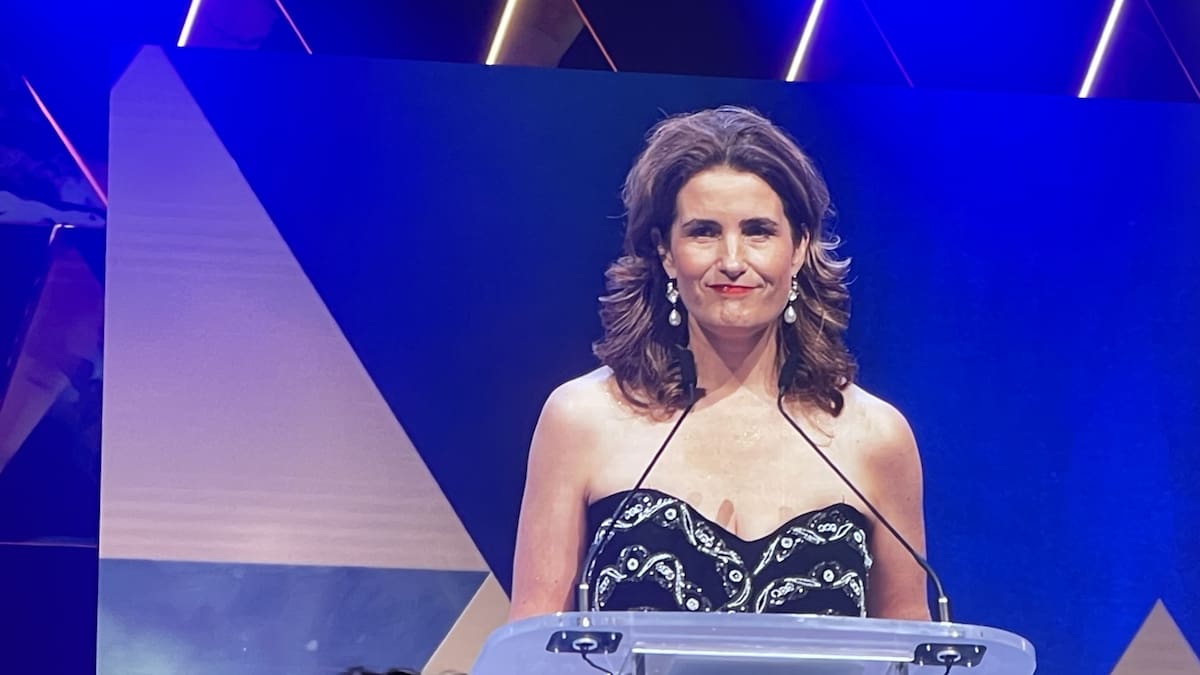
At the International Business Awards last week, Willis gave an upbeat address honouring the dynamism of the many entrepreneurs who figured as winners or finalists.
She was well received.
She concedes the economic recovery has been slower than she had hoped. This raises questions about whether the current reforms will deliver tangible improvements quickly enough in jobs, confidence, and investment. Particularly, with a general election looming in 2026.
Longstanding issues with productivity, low capital intensity and complex regulations require sustained, multi-year effort. There is a risk that progress could stall without persistent focus or that the reforms won’t go far or fast enough to address root causes.
She is sanguine. The reforms are long overdue in her opinion.
Willis has faced intense business pushback and resistance from CEOs in some sectors she endeavouring to introduce increased competition such as banking and supermarkets. She says maintaining a collaborative and balanced approach is critical but also challenging when facing resistance from established interests.
When it comes to cost efficiency, she notes the public service — particularly the back office — has grown at a disproportionate rate to the frontline services that need to be delivered — and at a disproportionate rate to New Zealand’s overall population and workforce.
Willis says the public service is rising to the challenge. “They say to me, ‘We should be more digitised. We should be using more AI. We need to be more efficient.
“’We want to be a leaner, better machine’; and we need to use fiscal levers to keep that progress going.”
Communicating the Government’s fiscal strategy is no easy matter. Particularly heading into an election year where some opposition parties will argue the Government should take on more debt to boost economic growth.
“I don’t have much time for politicians to pretend that debt is free,” say Willis. “You know, the interest bill on our debt currently is $9.5 billion.”
She notes that is roughly equivalent to the $9 billion of new spending the Government has committed to make over the next four years as part of its $12b Defence Capability Plan.
The plan will raise New Zealand’s defence spending from just over 1% of GDP to more than 2% in the next eight years.
The Government’s reforms aren’t easily reduced to the type of bumper stickers which galvanise voter opinion.
For instance, proposals to introduce more asset recycling are commonly translated by National’s opponents as “selling the family silver”, conveniently leaving out the other side of the coin: proposals to reinvest the proceeds.
We should be using more AI. We need to be more efficient. We want to be a leaner, better machine, and we need to use fiscal levers to keep that progress going.
Nicola Willis
Willis says the Government also has to be clear about what New Zealanders are getting when changes are made to the spending or savings profile. “That was actually part of our message on tax relief.
“We put tax relief into New Zealanders’ bank accounts, but we’re also really transparent about the trade-offs we made in terms of cost reductions.”
Current polls suggest that communication effort needs to be stepped up.
Disclosure: This report has a focus on AI, a tool I have embraced wholeheartedly since an Uber accident ripped both my shoulders, and I used when I sat down with Nicola Willis at the Beehive a fortnight ago.