
This story has been updated with discussion at the ACIP meeting and to note that the panel’s planned votes were postponed until Friday.
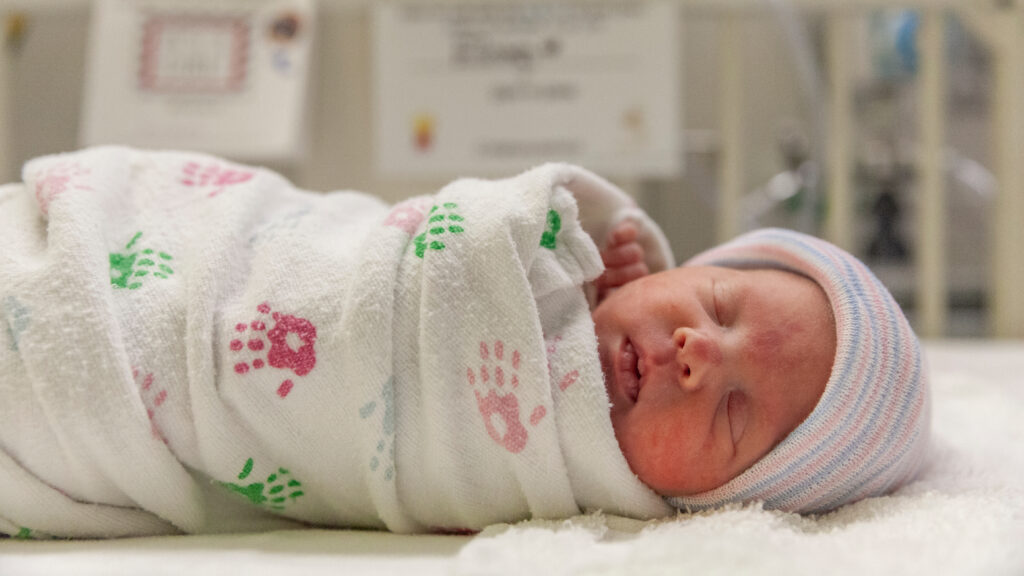
A panel that advises the federal government on vaccination policy appears poised to overturn a 30-year-old recommendation that all babies born in the U.S. be vaccinated at birth against hepatitis B, delivering on a goal of the anti-vaccine movement that is a font of support for health secretary Robert F. Kennedy Jr.
Infectious diseases experts warn the move will result in more than a thousand babies contracting the highly infectious virus each year, which can lead to premature death.
Votes on the changes were delayed until Friday after some members of the Advisory Committee on Immunization Practices expressed confusion about the language they were voting on — the votes changed in composition and in number over the course of the day — and asked for the text to be sent to them ahead of time. It was originally scheduled for Thursday afternoon.
It is the second time the committee has delayed voting on this topic. Votes were scheduled for ACIP’s September meeting, but committee members asked for more time to review the data on the hepatitis B birth dose before voting on the issue.
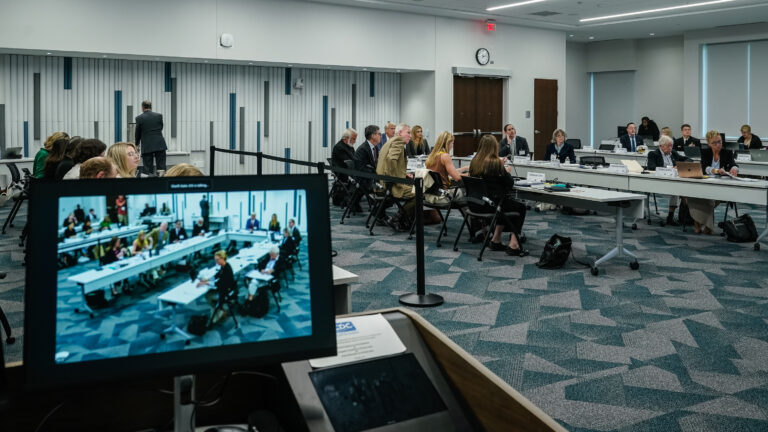
The meeting bore little resemblance to ACIP meetings of the past, with subject matter experts from the Centers for Disease Control and Prevention effectively sidelined or silenced, and data presentations being made by people with ties to the anti-vaccine community but little expertise in the assessment of vaccine data.
“I missed the old days when professional epidemiologists gave the presentations,” John Grabenstein, managing editor for Immunize.org and a former senior scientist and director for the U.S. Department of Defense Military Vaccine Agency, told reporters after the day-long session concluded.
José Romero, a former ACIP chair and a member of the American Academy of Pediatrics’ infectious diseases committee, said the likely change to the recommendation for use of hepatitis B vaccine in infants will leave babies unprotected at a dangerous time in their lives. The AAP has been boycotting ACIP meetings since Kennedy reformulated the group last spring.
“Rather than advance sound vaccine policy, this ACIP sowed doubt in the vaccines themselves,” Romero said during a press briefing. “They spoke without evidence and in most cases they were just downright wrong.”
Romero called the meeting “an historic departure from the role ACIP has played in shaping vaccine policy in the United States, when we could expect science to inform decisions, experts to debate evidence, and consensus to drive shared, clear recommendations.”
Indeed, the meeting appeared to be a collision of two camps — the vaccine-skeptic voting members of the committee appointed earlier this year by Kennedy, and the non-voting liaison members who represent groups like the American College of Physicians and the Society for Adolescent Health and Medicine. There were a number of heated exchanges between those two groups. Two members of the committee were clearly siding with the liaison members — pediatrician Cody Meissner and James Hibbeln, a psychiatrist and neuroscientist, both of whom did not attend in person.
“There is evidence of benefit … and no evidence of harm,” Meissner said of the birth dose.New committee chair Kirk Milhoan was unavailable to vote on the motion to delay, as he was boarding a flight to Asia.
Moments before the start of the meeting, Senate health leader Bill Cassidy (R-La.) called the panel “totally discredited,” upon seeing that Aaron Siri, once Kennedy’s personal attorney who has made a living challenging vaccines in court, would be testifying before the panel on Friday.
Since 1991, the CDC has recommended that all babies receive a dose of hepatitis B vaccine within 24 hours of birth — 12 hours, if they are born to hepatitis B-infected mothers — to protect them from the virus. There is no cure for hepatitis B, but most people who are infected in adulthood clear the infection.
That’s not the case, though, if the infection occurs early in life, when the immune system is just developing. About 90% of newborns develop chronic infection if they contract the virus and about a quarter of these chronically infected children will die prematurely from liver disease. After the policy of recommending a birth dose of hepatitis B vaccine was implemented, the numbers of children infected in early childhood plunged.
The presentations at the meeting had set up a series of votes that recommend a delay in when most babies get the shot. The text of the votes was changed over the course of the morning and could change further before votes are taken.
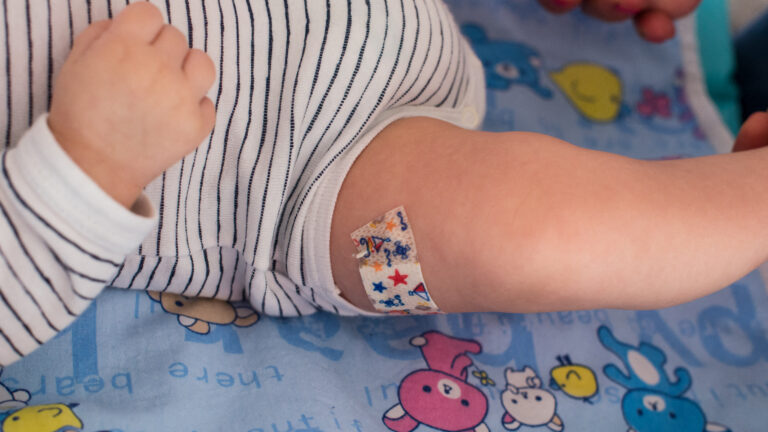
One vote recommends that parents discuss with their doctors whether to give the hepatitis B vaccine at birth, or at all, and that those who choose to do so wait to begin the three-dose series until their baby is at least 2 months old. That recommendation would apply to mothers who test negative for hepatitis B during their pregnancy.
As vaccine panel prepares hepatitis B review, CDC and industry experts are excluded
Babies born to mothers who tested positive for hepatitis B during pregnancy or whose status is unknown would continue to receive a dose of vaccine at birth as well as a dose of hepatitis B immune globulin.
All pregnant people are supposed to be tested for hepatitis B during pregnancy. But not all pregnant people are tested, some test results are faulty, and some pregnant people become infected later in pregnancy, after being tested, resulting in babies slipping through the safety net meant to protect them against infection at birth.
The committee’s recommendations must be endorsed by Jim O’Neill, the acting director of the CDC, or by Kennedy before they become part of the CDC vaccination schedule.
Manufacturers of hepatitis B vaccines — GSK, Merck, and Sanofi — made presentations to the meeting, urging evidence-based decision-making and calling for a continuation of the current approach for hepatitis B vaccinations.The manufacturers noted that the shots have been given for decades and that there is no sign they are unsafe.
Amy Middleman, the representative for the Society for Adolescent Health and Medicine, noted that a study she led had been misinterpreted by one of the presenters, Cynthia Nevison, a climate scientist and vaccine skeptic with an interest in autism studies who has been hired as a contractor by the CDC.
Nevison suggested Middleman’s study showed that delaying the start of vaccination led to longer-term protection from the vaccine; Middleman said there was actually no difference in the immune response based on whether the first dose was given at birth or later.
“It is very challenging to hear this discussion today,” Flor Muñoz, the Infectious Diseases Society of America’s representative on ACIP, said, asking how the committee could justify jettisoning a successful hepatitis B control strategy
The first three presenters have all been associated with anti-vaccine efforts. Vicky Pebsworth, an ACIP member and chair of the work group that studied the hepatitis B question, is director of research and patient safety for the anti-vaccine group National Vaccine Information Center. Mark Blaxill, who was recently hired to the CDC, has wrongly linked vaccines to the rise in cases of autism. Nevison has links to Children’s Health Defense, the anti-vaccine group founded by Kennedy.
Those presenters suggested, despite the current body of evidence and expert support of the current recommendations, that the birth dose of the vaccine may reduce immunity over time (researchers say it doesn’t) or may present risks that aren’t currently captured in research (vaccine injury experts said this claim was unfounded).
Food and Drug Administration representative Tracy Beth Høeg continued a line of argument presented during ACIP’s September meeting that there isn’t enough data on hepatitis B vaccines to come to any conclusions on safety.
Høeg, who on Wednesday was appointed acting director of FDA’s Center for Drug Evaluation and Research, said that there haven’t been any long-term, large-scale randomized placebo trials.
Infectious disease experts were concerned by how the discussion of the risks and benefits of hepatitis B vaccination was not grounded in the reams of evidence on the vaccine.
“This isn’t a balanced scientific discussion — it is a hijacked conversation, full of coordinated narratives, speculation presented as evidence, and rhetoric designed to alarm rather than inform,” Katelyn Jetelina, an epidemiologist and health care communicator, told STAT in a text message. “This is exactly the kind of rhetoric that does little to help parents make informed, evidence-based decisions for their children.”
A modeling study posted online late last month estimates that delaying the start of hepatitis B vaccination by two months could lead to more than 1,400 babies becoming chronically infected with hepatitis B in the first year of the change, which could result in 304 cases of liver cancer and 482 hepatitis B-related deaths among those children as they age. The study is a preprint; it has not yet been published in a peer-reviewed journal.
A third proposed vote, if passed, would recommend that parents who do vaccinate their babies against hepatitis B should consider asking for a test of the baby’s antibody levels after dose one, to determine whether additional doses are needed. The vaccine is intended to be used as a three- or four-dose regimen to generate decades of protection. The vote suggests that insurance companies should cover the cost of these antibody tests, a matter that is beyond the panel’s authority.
Vaccine policy under the Trump administration, overseen by Kennedy (previously an anti-vaccine activist), has been mired by accusations of political interference and unscientific decision-making.
And the health secretary, less than a month after praising and swearing in a new CDC director, pushed her out over her refusal to rubber-stamp ACIP recommendations, she told Congress. (Kennedy disputed her testimony.)
Several other high-ranking officials at the CDC have resigned this year, accusing Kennedy of putting political goals and his personal beliefs above research-based decision making, in turn threatening the public’s health.
“We now seem to have entered a dangerous new phase in Secretary Kennedy’s campaign to shut down scientific expertise, silence the best available evidence, and replace it with his own personal agenda,” Sean O’Leary, a doctor who chairs the American Academy of Pediatrics’ Committee on Infectious Diseases, told reporters Tuesday. “The last few meetings have been deeply alarming, riddled with falsehoods, and I think unfortunately we can expect the same with this meeting this week.”