
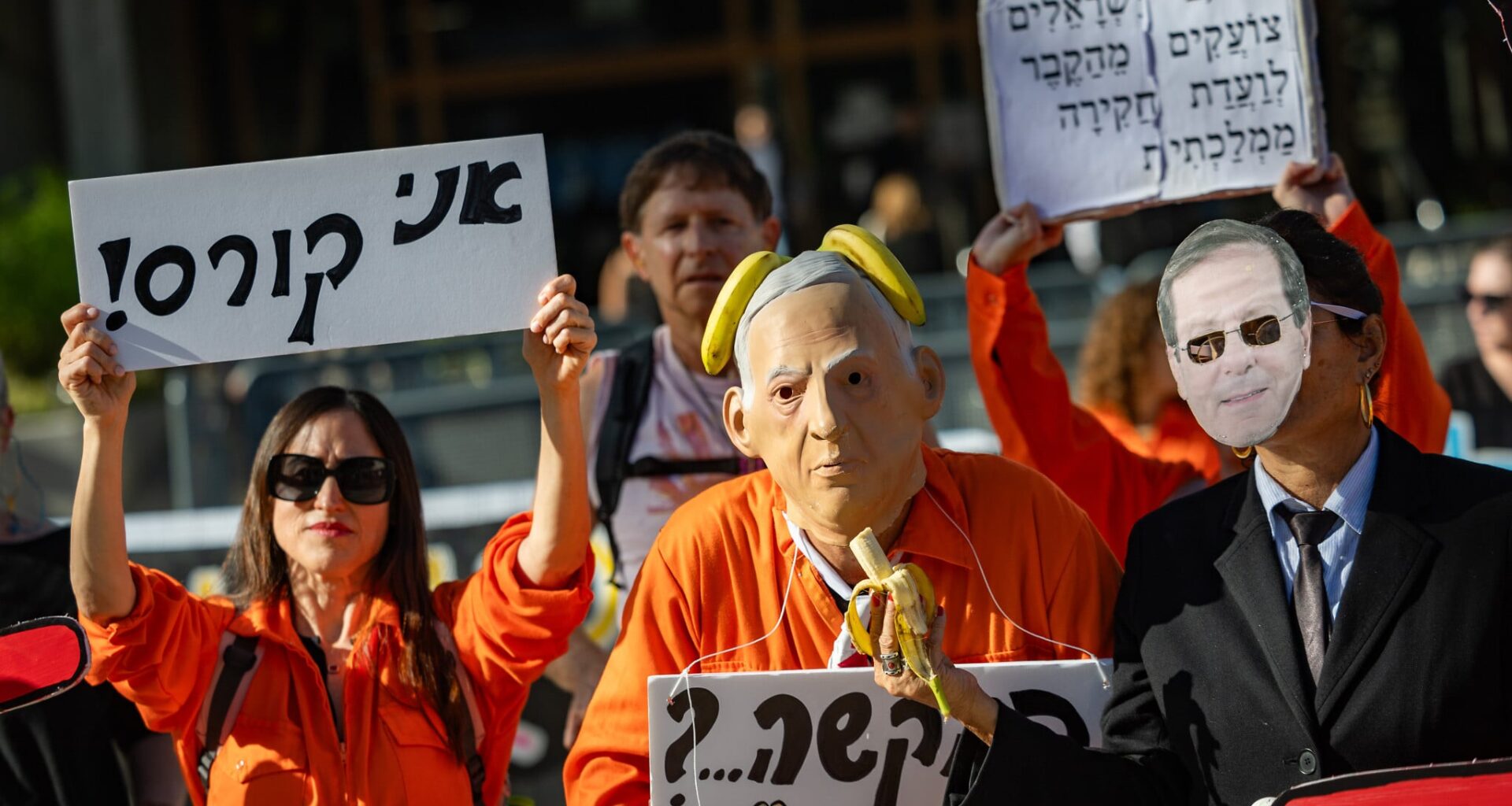
Majorities of Israelis oppose granting Prime Minister Benjamin Netanyahu a presidential pardon in his criminal trial and oppose the Haredi draft-exemption bill pushed by his government, according to a new survey conducted this week.
Meanwhile, a TV poll published Thursday showed the opposition ticking up in popularity for the first time in over a month, although no bloc would be able to form a government if elections were held today, without including at least one Arab party.
In response to the question, “Do you support or oppose Netanyahu’s request for a presidential pardon without admitting guilt or expressing remorse?” 53.2 percent of respondents said they oppose it, while 42.4% said they support it, and 4.4% said they don’t know.
On the issue of ultra-Orthodox draft exemptions, the respondents were asked if they support or oppose the law proposed by MK Boaz Bismuth: 53.8% said they oppose the law in any case, 24.8% said they support it in any case, 13.8% said they would support it only if changes were made, and 7.6% said they don’t know.
That survey — conducted for Zman Yisrael, The Times of Israel’s Hebrew-language sister site — was conducted on December 3-4, 2025, by Tatika Research and Media in collaboration with the Adgenda panel, and included 500 Jewish and Arab respondents. The margin of error is 4.4%.
Get The Times of Israel’s Daily Edition
by email and never miss our top stories
By signing up, you agree to the terms
Meanwhile, a weekly poll from Channel 12 had the current opposition at 69 Knesset seats, including Arab parties, with 10 seats; the coalition, meanwhile, came in at 51 seats.
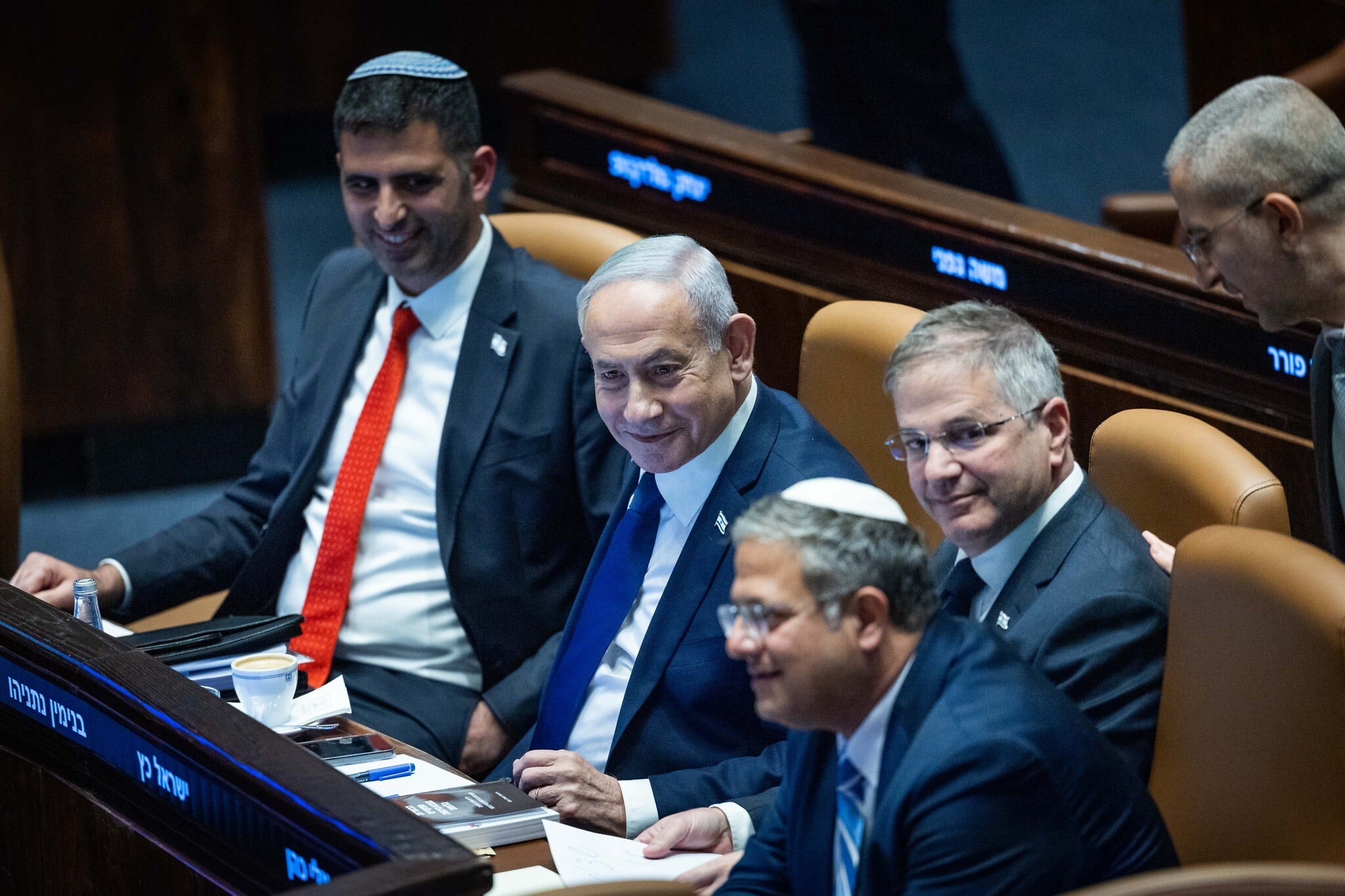
Prime Minister Benjamin Netanyahu (second from left), ministers and MKs at a debate, in the plenum hall of the Knesset in Jerusalem, on November 10, 2025. (Yonatan Sindel/Flash90)
The TV network noted that the anti-Netanyahu bloc gained one seat and the pro-Netanyahu bloc lost one seat, the first such change in several weeks.
Based on the poll, however, the anti-Netanyahu bloc would need to partner with at least one Arab party to form a government.
In the survey, Likud was still in the lead with 25 seats, though it was down two seats from last week’s poll; former prime minister Naftali Bennett’s unnamed party got 21, down from 22 the week before; The Democrats 12; Yesh Atid 9; Yisrael Beiteinu 9; Shas 9; Gadi Eisenkot’s Yashar! came in at 8 mandates, down from 9; United Torah Judaism 7; Otzma Yehudit 6, down from 9; Hadash–Ta’al 5; Ra’am 5; and, unlike last week, Religious Zionism managed to pass the electoral threshold in this poll, earning 4 mandates.
Below the threshold were Benny Gantz’s Blue and White, Yoaz Hendel’s Reservists, and the Arab nationalist party, Balad.
Voters prefer PM to Bennett, but ‘neither’ gains ground
The Channel 12 poll asked voters who they thought was more suited to be prime minister, Netanyahu or Bennett.
The current premier received 38% of the vote, to Bennett’s 34%, with 23% saying “none of the above” and 5% saying “I don’t know.”
The results represented a decline for both candidates, with Netanyahu having won 40% and Bennett 36% last week. The 4% lost by the two men went entirely to “none of the above,” which earned 19% last week, alongside 5% who said they didn’t know.
Asked to choose in the same way between Netanyahu and Opposition Leader Yair Lapid, the premier came in at 40%, down from 42% last week, while Lapid bumped up from 24% to 25%, with 30% saying “none of the above” (up from 29% last week) and a stable 5% saying “I don’t know.”

Left: Prime Minister Benjamin Netanyahu, October 22, 2025; right: Former prime minister Naftali Bennett, October 15, 2025. (Marc Israel Sellem/POOL; Chaim Goldberg/Flash90)
Between Netanyahu and Eisenkot, 41% chose the premier – the same as last week – while Eisenkot went from 24% to 26%. Meanwhile, 29% said “none of the above” (up from 28% last week) and 4% said “I don’t know” (down from 7%.)
Respondents were also asked, “Which government do you think would do a better job managing state affairs, setting aside your political opinion?” Of the respondents, 43% said that a Bennett-Lapid government would do a better job, while 37% said the current government would, and 20% said they didn’t know.
Asked, “What do you think Israel should do about the escalation in the north?” – referring to tensions with the Hezbollah terror group, a year after a ceasefire was reached on that front that has nevertheless seen daily airstrikes against terror operatives – 45% of respondents called for a broad operation against the Iran-backed group, while 38% said Israel should try to calm things down diplomatically. The remaining 17% said they didn’t know.
The poll was conducted by phone and online on December 4 by Manu Geva’s Midgam firm. It surveyed 500 people, representative of Israel’s above-18 population. The margin of error is 4.4%.
You appreciate our journalism

You clearly find our careful reporting valuable, in a time when facts are often distorted and news coverage often lacks context.
Your support is essential to continue our work. We want to continue delivering the professional journalism you value, even as the demands on our newsroom have grown dramatically since October 7.
So today, please consider joining our reader support group, The Times of Israel Community. For as little as $6 a month you’ll become our partners while enjoying The Times of Israel AD-FREE, as well as accessing exclusive content available only to Times of Israel Community members.
Thank you,
David Horovitz, Founding Editor of The Times of Israel