
Audio recording is automated for accessibility. Humans wrote and edited the story. See our AI policy, and give us feedback.
Texas can use its new, GOP friendly congressional map while a legal challenge plays out, the U.S. Supreme Court ruled, temporarily pausing a lower court ruling that had blocked the map from going into effect.
With the Dec. 8 candidate filing deadline fast approaching, the high court’s decision likely means Texas’ new map will be used for the 2026 midterm elections.
Justice Samuel Alito ruled that it was “indisputable” that Texas’ motivation for redistricting was “pure and simple” partisan advantage, which the court has previously ruled is permissible. Alito rejected the argument that Texas had engaged in racial gerrymandering.
The ruling is a major win for Republicans in Texas and nationally. President Donald Trump had pushed Texas to redraw its map over the summer, hoping to secure five additional GOP seats to shore up the party’s narrow majority in the U.S. House through the midterms.
On Nov. 18, two federal judges barred Texas from using the new map for 2026, saying there was evidence state lawmakers had racially gerrymandered in redrawing the lines. Galveston District Judge Jeffrey Brown, a Trump appointee, authored the opinion ordering Texas to return to its 2021 map, while 5th U.S. Circuit Court of Appeals Judge Jerry Smith vociferously dissented.
The state asked the Supreme Court to overturn Brown’s ruling entirely, but that could take weeks or months to proceed through the court system, especially if the justices decide they want to hear arguments in Washington, D.C. With Thursday’s ruling, the justices have temporarily paused Brown’s ruling while that longer legal process can play out.
The ruling said the lower court, under Brown, “improperly inserted itself into an active primary campaign, causing much confusion and upsetting the delicate federal-state balance in elections.”
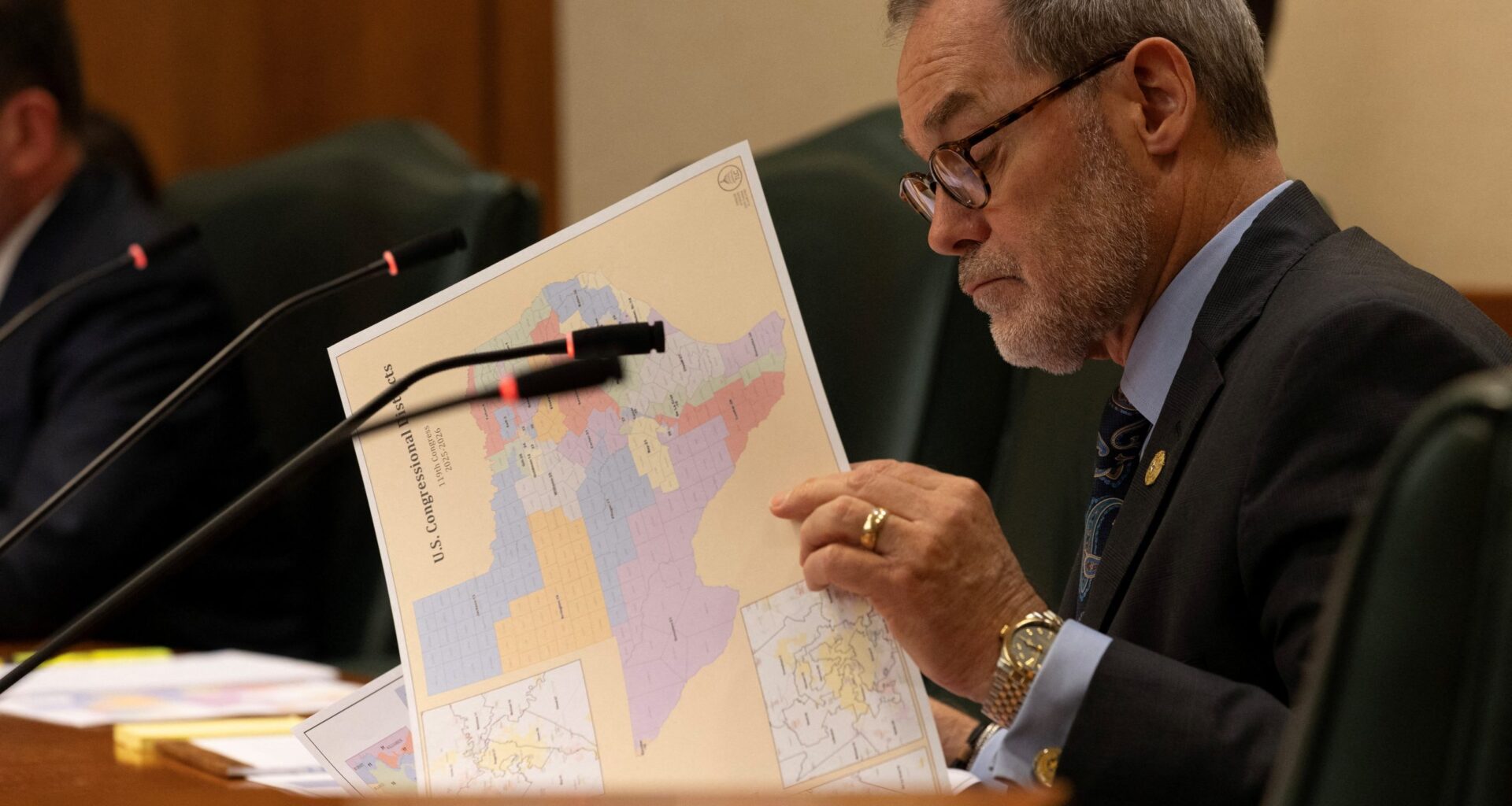
The new map, approved by the Texas Legislature and signed by Gov. Greg Abbott in August, is engineered to give Republicans control of 30 of the state’s 38 congressional districts, up from the 25 they currently hold under the 2021 map. Numerous Republican candidates have stepped forward to run in the newly favorable districts, while several Democratic incumbents were pushed into nearby districts already occupied by another Democrat, forcing them to contemplate primaries or retire.
Brown’s ruling upended those calculations. But in restoring the new map, the Supreme Court likely ensured that Republicans running for redrawn districts will get to campaign under the new lines in 2026.
Attorney General Ken Paxton celebrated the ruling, saying it was a win for Texas and every conservative who is tired of watching the left try to upend the political system with bogus lawsuits.”
Texas Democrats, meanwhile, condemned the outcome, with House Democratic Caucus Chair Rep. Gene Wu of Houston saying the high court had “failed” Texans.
“This is what the end of the Voting Rights Act looks like: courts that won’t protect minority communities even when the evidence is staring them in the face,” Wu said.
In her dissent, Supreme Court Justice Elena Kagan criticized the court for reversing Brown’s 160-page ruling “based on its perusal, over a holiday weekend, of a cold paper record.”
“Today’s order disrespects the work of a District Court that did everything one could ask to carry out its charge,” Kagan wrote on behalf of the liberal justices. “Today’s order disserves the millions of Texans whom the District Court found were assigned to their new districts based on their race.”