
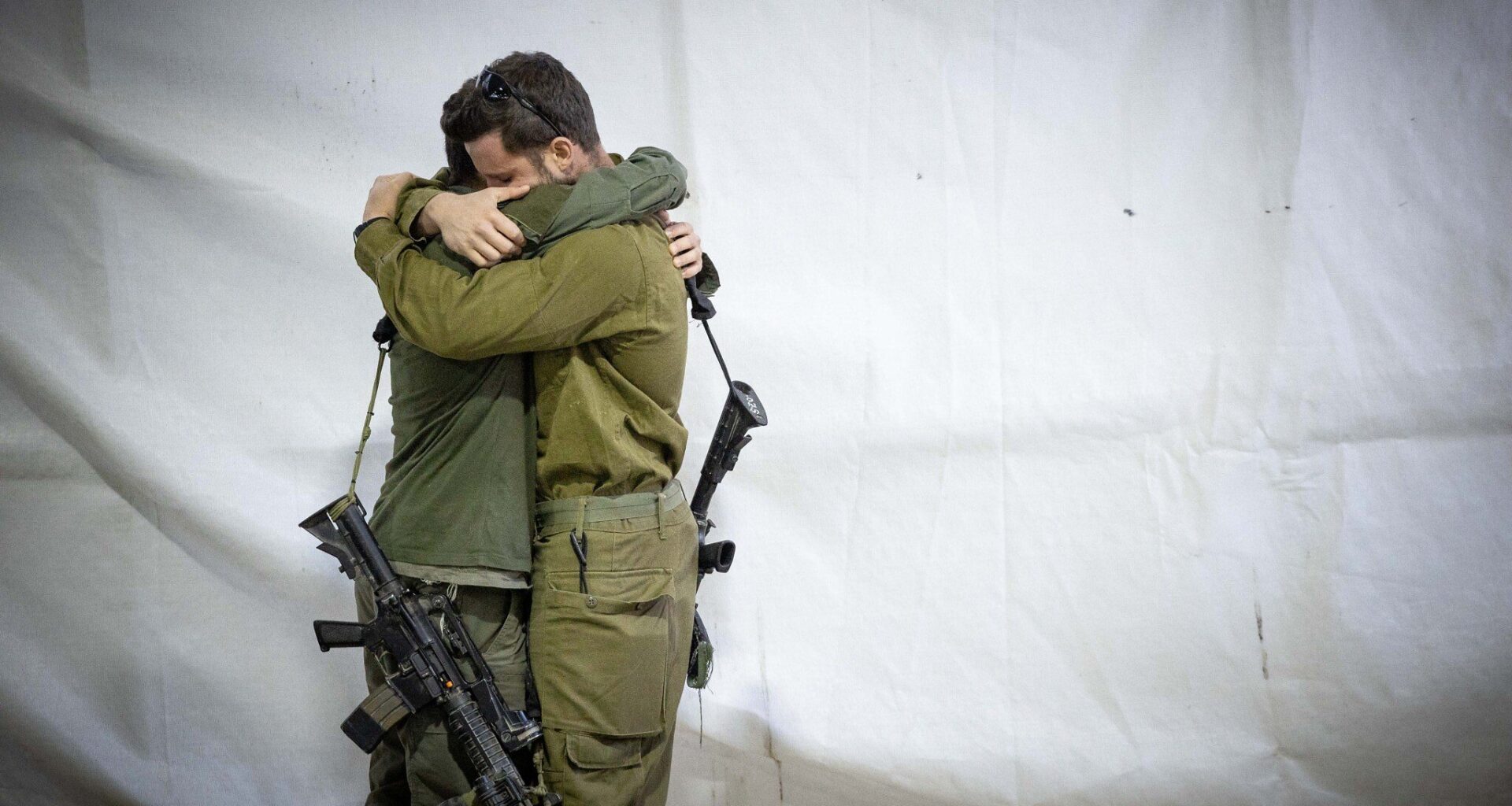
The Israel Defense Forces has begun reviewing the eligibility of reservists suffering from severe psychological injuries, including post-traumatic stress disorder, amid growing scrutiny over the army’s mental health system and support for traumatized soldiers.
The policy, quietly implemented late last week, applies to reservists whom the Defense Ministry’s Rehabilitation Department — responsible for reintegrating injured IDF veterans and security personnel into civilian life by providing them with social services and financial support — formally recognizes as having a 30% or greater mental health disability.
In Israel’s system, disability ratings are issued by the state to wounded soldiers, with 30% indicating a moderate but significant long-term psychiatric impairment — often including diagnosed PTSD that impacts daily functioning and employability.
Those affected will be required to meet with a military mental health officer, who will assess whether they are fit to continue serving in the reserves or should be discharged.
The decision to begin the reviews was finalized approximately three weeks ago, following a months-long internal review process in coordination with the Defense Ministry. Sources familiar with the matter have emphasized that the move is not a response to a recent spike in soldier suicides but rather part of a long-delayed effort to address gaps in data-sharing between the two bodies.
Get The Times of Israel’s Daily Edition
by email and never miss our top stories
By signing up, you agree to the terms
Still, the timing of the rollout has raised eyebrows, as it follows a string of highly publicized suicides this month — including the case of Daniel Edri, a reservist and veteran of the ongoing war in Gaza, who died by suicide on July 5.
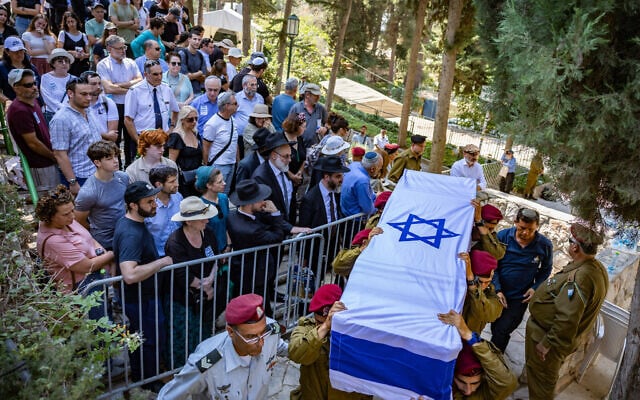
Family, friends and fellow soldiers attend the funeral of Cpl. Dan Phillipson, a lone soldier from Norway, at Mount Herzl Military Cemetery in Jerusalem, July 20, 2025. (Noam Revkin Fenton/Flash90)
In the days that followed, two more soldiers were found dead in separate incidents of suspected suicide: one on July 9 at a southern base and another on July 14 in the north. On July 15, Cpl. Dan Phillipson, a lone soldier from Norway serving in the Paratroopers Brigade, attempted to end his life at a training base in southern Israel. He later succumbed to his injuries.
The IDF’s new review process was preempted by revelations earlier this year that hundreds of psychologically injured veterans were being called up for reserve duty without the military knowing their condition.
In a report published by Haaretz in May, officials from the IDF and the Defense Ministry admitted that the military lacked access to complete data on mental health-related disability cases, including severe PTSD. Without explicit self-reporting by soldiers, the army’s system had no record of their diagnoses.
Due to the military’s lack of records, a significant number of traumatized soldiers may have been sent back into combat zones unknowingly — some despite being classified by the state as having long-term mental disabilities. In the absence of real-time data sharing, decisions about fitness for duty were made without crucial medical context.
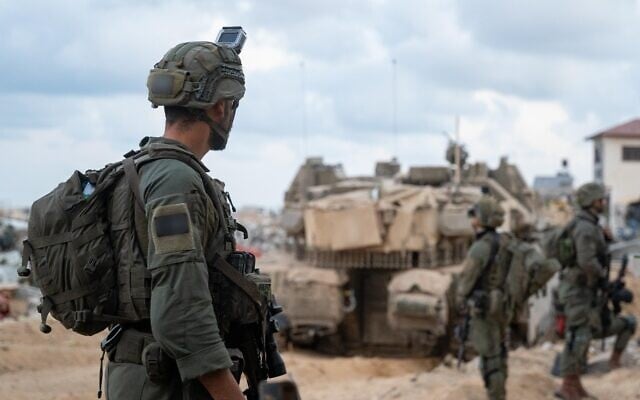
IDF troops operating in Gaza in a picture released on June 9, 2025. (Israel Defense Forces)
Military sources acknowledged to Haaretz in May that the IDF had avoided tackling the issue head-on, fearing that a broad review would open a “Pandora’s box” and result in the removal of large numbers of reservists at a time when manpower is already stretched thin.
Mental health professionals have raised alarms over the dangers of deploying traumatized soldiers into active combat.
In the same report, Prof. Eyal Fruchter, former head of the IDF’s Mental Health Department and chair of the National Council for PTSD, told Haaretz that for those already struggling with PTSD, further exposure to traumatic events dramatically increases the risk of developing chronic post-traumatic stress disorder.
“It’s a particularly bad idea to take people who are already at high risk and send them back into battle,” Fruchter said. “But it seems that because of the terrible personnel shortage, the system prefers to ignore the risk, which is a cause for grave concern.”
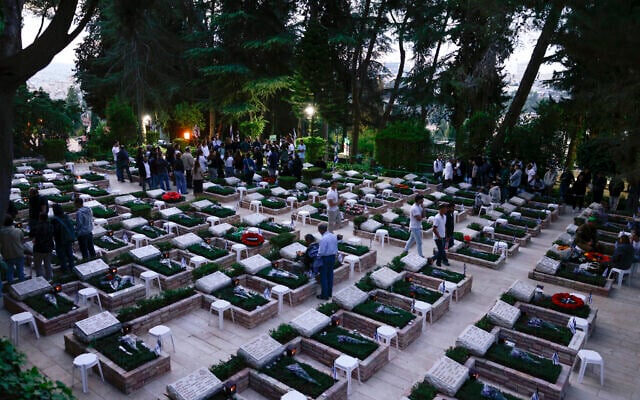
Israelis mourn at the graves of fallen soldiers, at the Mount Herzl military cemetery in Jerusalem on April 29, 2025.(Menahem Kahana / AFP)
According to official IDF figures, seven active-duty soldiers died by suicide between October 7, 2023, and the end of that year. In 2024, 21 additional soldiers took their own lives. While the military has yet to release official numbers for 2025, Haaretz reported that at least 17 more active-duty suicides have occurred so far this year. These figures do not include soldiers who died by suicide while off duty.
The newly introduced policy will require reservists currently under emergency call-up orders to undergo a mental health assessment within three days of being notified. Those not under active orders will be evaluated by a designated professional as part of the review process. Soldiers will have the right to appeal any decisions, which will then undergo further examination before a final ruling is issued.
As of now, no final discharges have officially been made under the new guidelines. However, one unnamed reservist told Ynet he was abruptly informed by phone that his service was terminated while en route to Gaza in what the IDF called an “isolated case.”
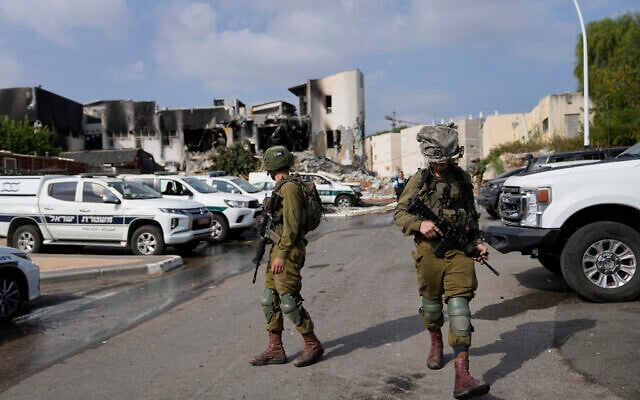
Israeli soldiers walk near Sderot’s police station that was overrun by Hamas terrorists during the October 7 onslaught, on October 8, 2023. (AP Photo/Ohad Zwigenberg)
He described the call as lacking “explanation or preparation” and having “zero sensitivity,” saying, “They forget that on October 7, we jumped out of bed straight into the battlefield… As far as they’re concerned, we’ve done our part, and now they can just throw us away.”
Since the war began, the man has served over 400 days in reserve duty and acknowledged that release might be necessary due to his deteriorating mental state. But he criticized how the situation was handled.
“In hindsight, I realize I had reached a point where I had to be released,” he said. “I would never have raised a red flag myself, saying I couldn’t show up. As painful as it is, this is what’s right for me. But this isn’t the way to do it. We gave and did so much. Someone else could have taken that phone call much harder.”
Is The Times of Israel important to you?
If so, we have a request.
Every day, even during war, our journalists keep you abreast of the most important developments that merit your attention. Millions of people rely on ToI for fast, fair and free coverage of Israel and the Jewish world.
We care about Israel – and we know you do too. So today, we have an ask: show your appreciation for our work by joining The Times of Israel Community, an exclusive group for readers like you who appreciate and financially support our work.
Already a member? Sign in to stop seeing this
You appreciate our journalism

You clearly find our careful reporting valuable, in a time when facts are often distorted and news coverage often lacks context.
Your support is essential to continue our work. We want to continue delivering the professional journalism you value, even as the demands on our newsroom have grown dramatically since October 7.
So today, please consider joining our reader support group, The Times of Israel Community. For as little as $6 a month you’ll become our partners while enjoying The Times of Israel AD-FREE, as well as accessing exclusive content available only to Times of Israel Community members.
Thank you,
David Horovitz, Founding Editor of The Times of Israel