
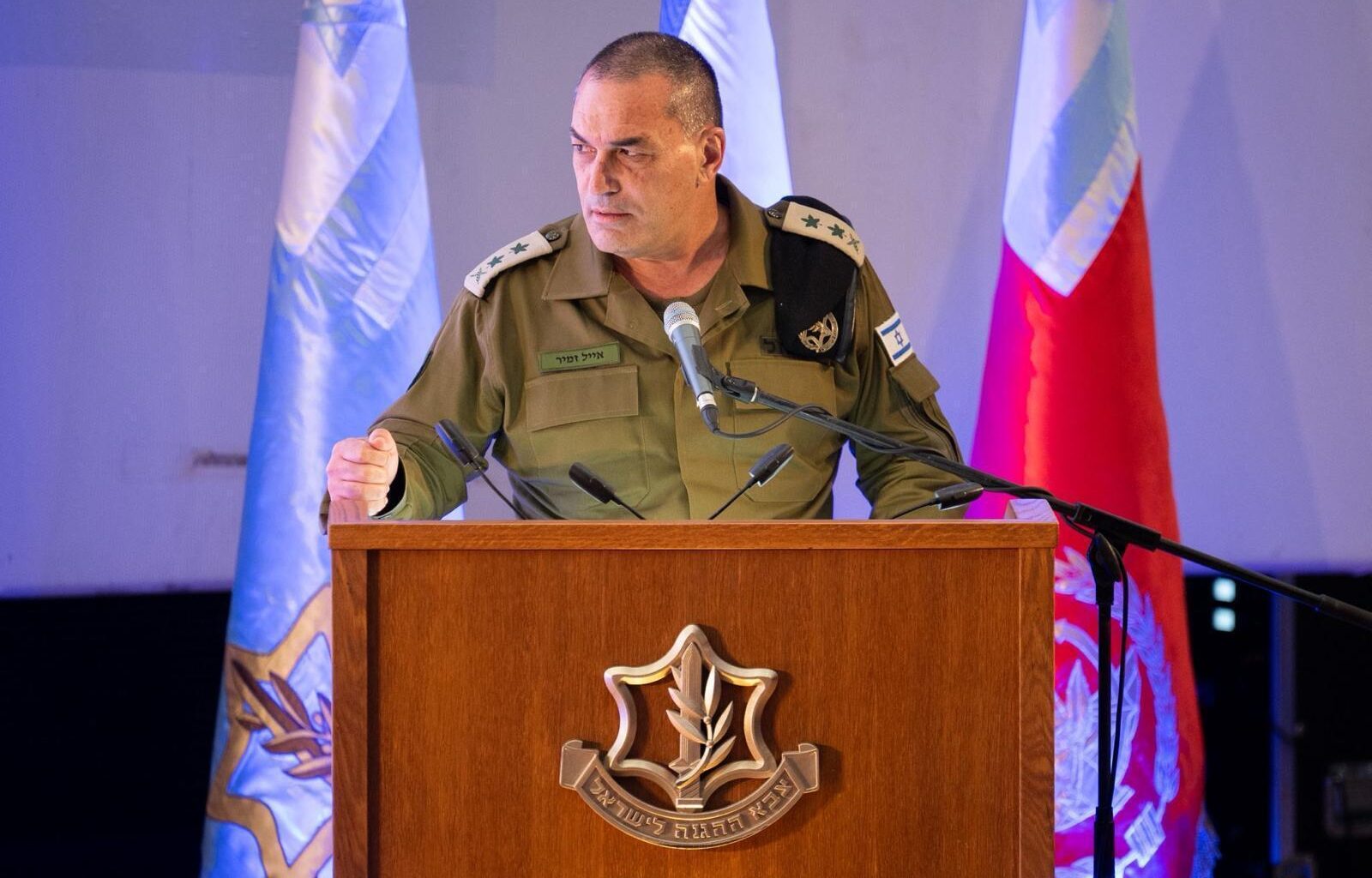
IDF Chief of Staff Lt. Gen. Eyal Zamir on Friday reiterated his call for an “external” commission of inquiry into the failures of October 7, 2023, while saying the Israeli notion of “buying off Hamas with money” in Gaza had proved disastrous.
In a missive to officers summarizing the findings of a team of former senior officers who conducted a review of the IDF’s internal probes into the failures on October 7, Zamir focused on the failures of the military, but indicated his belief that an investigation into the failures on all levels was crucial.
In the years prior to the devastating Hamas attack, Israeli governments, mostly led by Prime Minister Benjamin Netanyahu, had adopted and maintained a policy of transferring Qatari money to Gaza, out of the belief that the financial incentive would buy it quiet on the southern border.
“The IDF has taken responsibility and investigated itself, but the incident is not [the army’s] alone, and it would not be appropriate to direct all the attention solely toward it,” Zamir wrote
“To reach the truth and full national-level conclusions, an external and objective commission of inquiry must be established, as was done after the [1973] Yom Kippur War,” he said.
Get The Times of Israel’s Daily Edition
by email and never miss our top stories
By signing up, you agree to the terms
The chief of staff added: “Among other things, the interface between the political echelon and the military echelon, and the political and security conceptions that preceded the war, must be investigated.”
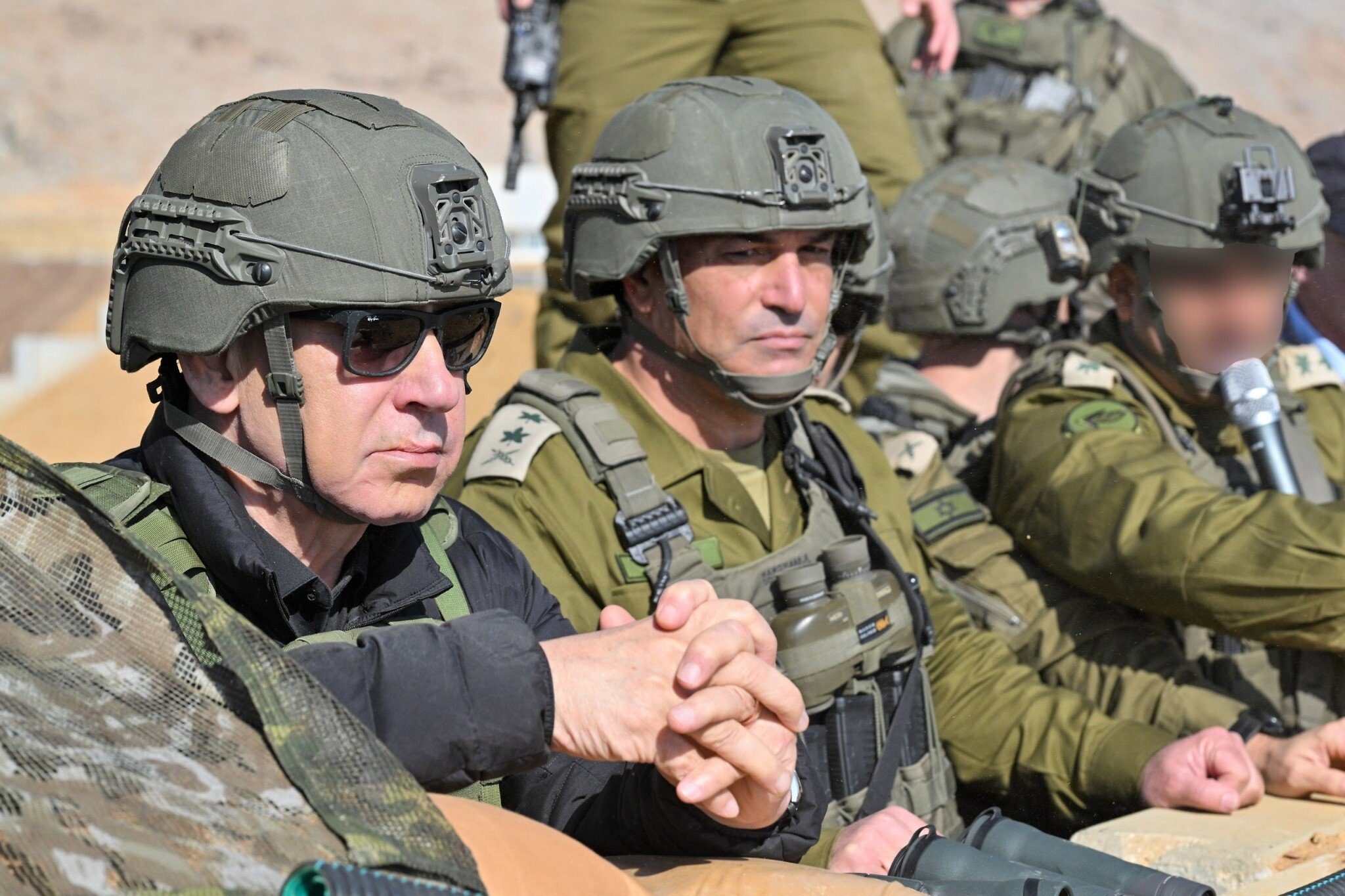
Prime Minister Benjamin Netanyahu (foreground) visits IDF troops in southern Syria, accompanied by IDF Chief of Staff Lt. Gen. Eyal Zamir (right), November 19, 2025. (Kobi Gideon/GPO)
Zamir said October 7 was the result of “systemic and long-standing failures.” He criticized the doctrine of “defensive containment” that developed in the years before the attack, based on the notion that “buying off Hamas with money” would allow Israel to focus on other threats. “This doctrine of ‘avoidance’ enabled Hamas to carry out a broad military build-up.”
Zamir notably avoided explicitly calling for a state commission of inquiry, which the government opposes despite surveys showing a majority of the public supports it.
The army’s investigative team, led by Maj. Gen. (res.) Sami Turgeman, a former head of the Southern Command, noted that during 2023, senior military officials warned political officials, including Netanyahu, that Israel’s enemies were perceiving “internal weakness” in Israeli society over the government’s planned judicial overhaul. While the IDF’s probes have determined this was not the reason for Hamas launching its attack — which it had planned to launch years prior — the military did not adjust its level of alert or deployments in light of the warnings.
Zamir, in his summary, wrote that “during 2023, several warnings were sent to the military and political leadership. The warnings were general and dealt with identifying the development of a perception among our enemies that the State of Israel was undergoing a process of internal weakening, which harmed its deterrence and increased the likelihood of escalation.
“It is necessary to examine the interface between the political and military leadership regarding the warning, and at the same time to examine why the military echelon, which sent the warning, did not prepare the forces and alert levels accordingly,” he wrote.
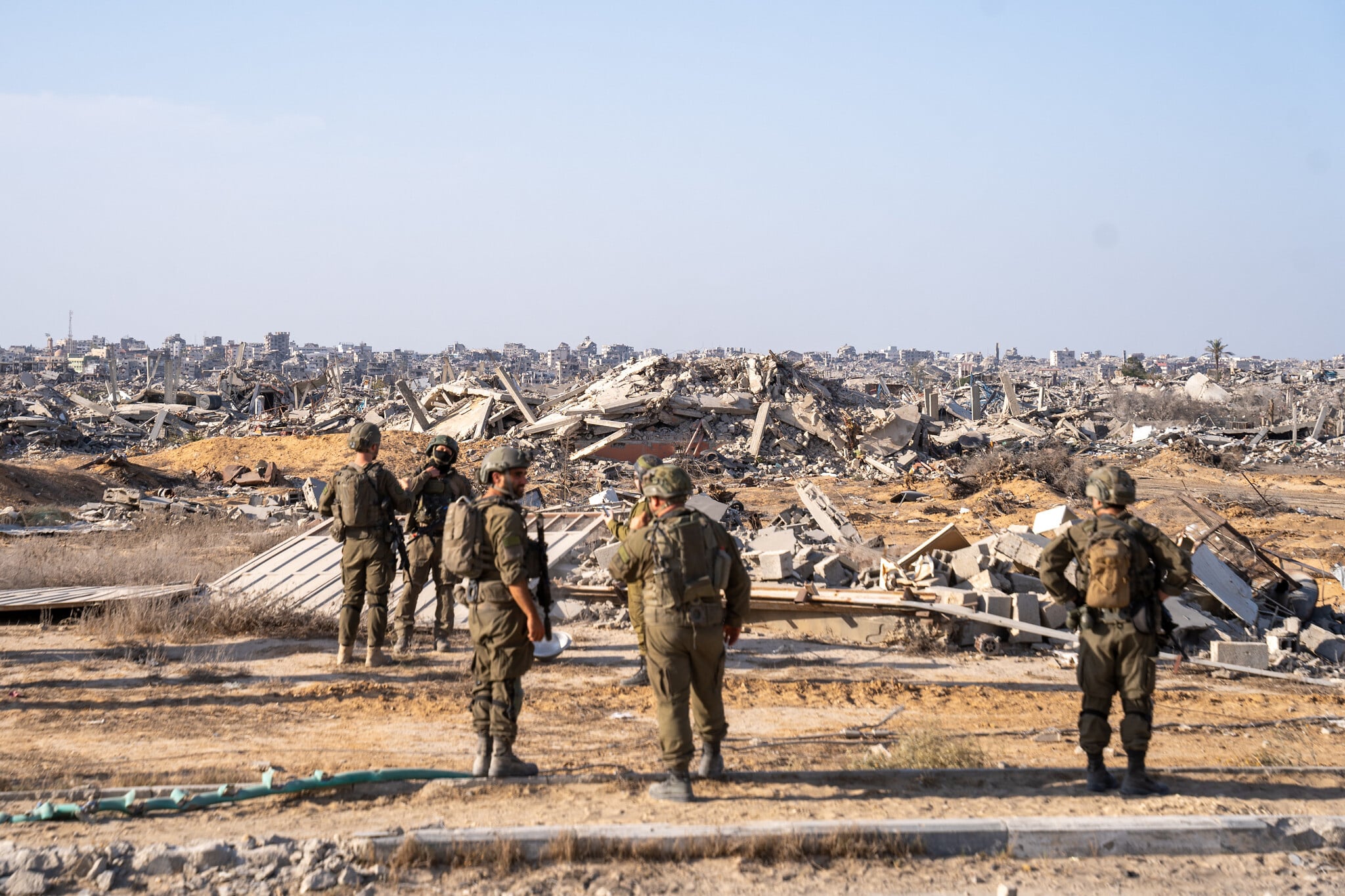
IDF troops are seen in southern Gaza’s Rafah, November 23, 2025. (Emanuel Fabian/Times of Israel)
Zamir, in his summary, said that all of the IDF’s operations carried out in the Gaza Strip from 2008 and 2021, especially Operation Protective Edge in 2014, “helped entrench the conception” that Hamas had no intention to invade Israel. Zamir himself also served as chief of the Southern Command from 2015 to 2018.
“Relevant operational plans were not built, plans whose purpose was to decisively defeat Hamas were not advanced, and were even abandoned,” Zamir wrote, referring to operational plans in the Southern Command to defeat Hamas that were nixed after the end of his tenure in 2018.
Turgeman’s team noted that the intelligence received by the military on the eve of October 7, hours before the onslaught, “could and should have led” to actions being taken by the army, which may have changed the outcome of the attack.
Zamir similarly concluded that it could have been possible to change the outcome of the onslaught, saying that “the situation assessments and decision-making processes were conducted unprofessionally. The information that existed required raising the alert level, at the very least.”
Watch DocuNation Season 3: The Heart of Israel
when you join the ToI Community
In this season of DocuNation, you can stream five outstanding Israeli documentaries with English subtitles and then join a live online discussion with the filmmakers. The selected films show Israel beyond the conflict: a place of storytellers and musicians, of dreamers, makers, and communities rooted in meaning and trust.

When you watch DocuNation, you’re also supporting Israeli creators at a time when it’s increasingly difficult for them to share their work globally.
To learn more about DocuNation: The Heart of Israel, click here.
Support ToI and get DocuNation
Support ToI and get DocuNation
Already a member? Sign in to stop seeing this
You appreciate our journalism

You clearly find our careful reporting valuable, in a time when facts are often distorted and news coverage often lacks context.
Your support is essential to continue our work. We want to continue delivering the professional journalism you value, even as the demands on our newsroom have grown dramatically since October 7.
So today, please consider joining our reader support group, The Times of Israel Community. For as little as $6 a month you’ll become our partners while enjoying The Times of Israel AD-FREE, as well as accessing exclusive content available only to Times of Israel Community members.
Thank you,
David Horovitz, Founding Editor of The Times of Israel