
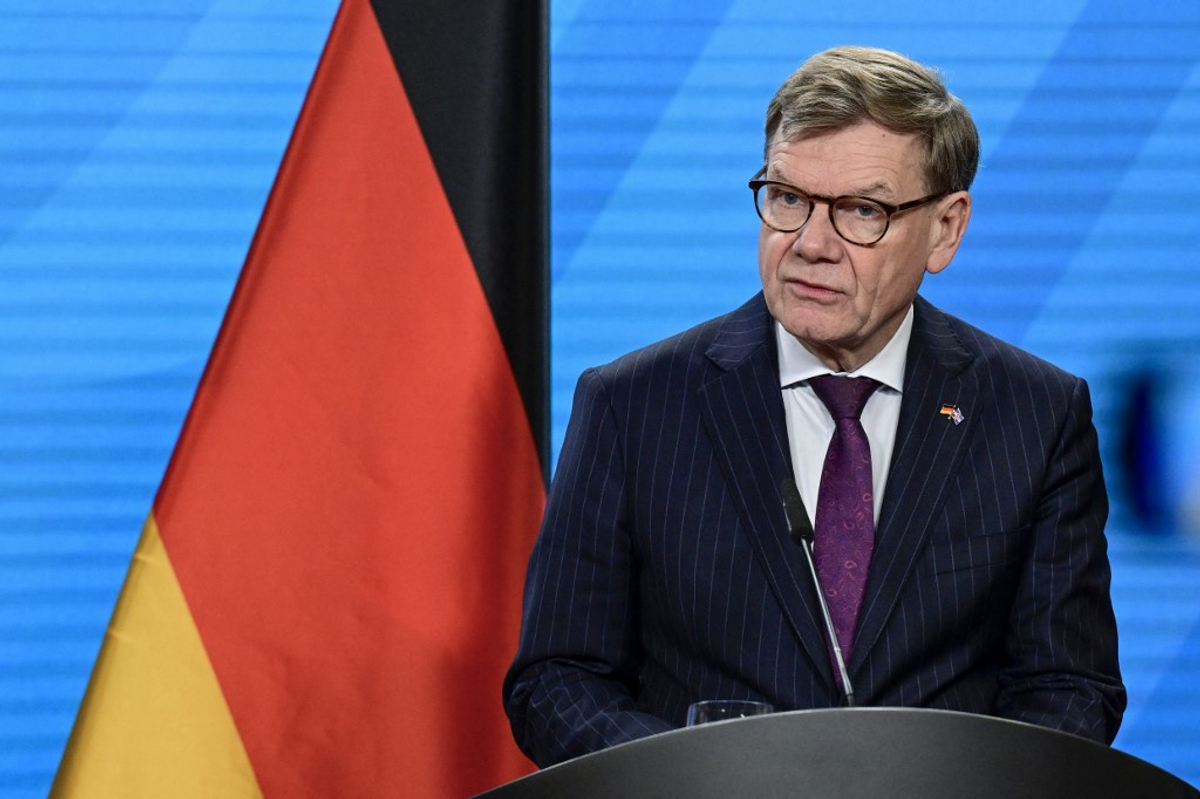
Senior European officials and politicians have given a hostile reaction to a strategic overview of US security strategy published by the Trump administration that criticizes the EU for alleged democratic and civilizational backsliding.
Critics said the US broadside was a slap in the face for Europe and a gift to Russian President Vladimir Putin.
JOIN US ON TELEGRAM
Follow our coverage of the war on the @Kyivpost_official.
Germany’s foreign minister, Johann Wadephul, said his country did not need “outside advice” while a former French ambassador to the US said the document read like a “far-right pamphlet.”
In a 33-page National Security Strategy, the US president questioned whether some European countries could remain reliable allies given what he called their “prospect of civilizational erasure.”
“It is far from obvious whether certain European countries will have economies and militaries strong enough to remain reliable allies,” the document says.
The strategy, which Trump described as a “road map” for his vision of ensuring the US remains “the greatest and most successful nation in human history,” delivered a scathing critique of the European Union, claiming that if current trends continue, the continent will be “unrecognizable in 20 years or less.”
He accused the EU of “censorship of free speech and suppression of political opposition” and called for a revival of “Western identity,” with a particular focus on migration policy.
Other Topics of Interest
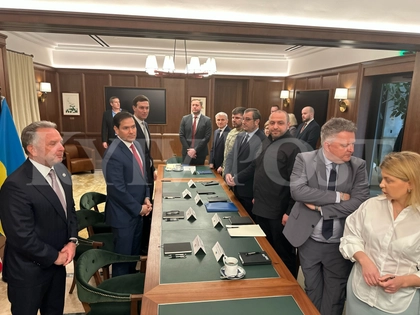
US, Ukraine Drive ‘Durable Peace’ Push as Talks Continue
Sixth round of high-level meetings in two weeks signals Kyiv’s mounting urgency, but advocates say the real test isn’t Ukraine’s openness but Russia’s willingness to halt aggression.
The document also called for a halt to NATO expansion, drawing the ire of Ukraine and other prospective members and was widely seen as a hands-down win for Russia.
‘I absolutely do not agree’
A spokeswoman for the European Commission said the bloc rejected Trump’s criticisms but cautioned: “We did not yet have the time to look into it, assess it, so therefore we’re not yet in a position to comment on any of it.”
When asked about accusations that the EU suppressed free speech and political freedom, the spokeswoman said: “I absolutely do not agree.”
But while the Commission remained guarded, individual politicians were more forthright.
Germany’s foreign minister, Wadephul, said his country did not need “outside advice” and addressed the security implications of Trump’s new stance.
“The United States is and will remain our most important ally in the [NATO] alliance,” Wadephul said. “This alliance, however, is focused on addressing security policy issues.
“I believe questions of freedom of expression or the organization of our free societies do not belong [in the newly published US strategy], in any case at least when it comes to Germany,” the minister added.
‘Far-right pamphlet’
Gérard Araud, France’s ambassador to the US from 2014 to 2019, posted on the X platform that “the stunning section on Europe reads like a far-right pamphlet.”
He added: “The document’s claims of ‘civilizational erasure’ are a direct attack on the fundamental values of the European project.”
Former Swedish Prime Minister Carl Bildt also took to X to express his exasperation.
“The only part of the world where the new [US] security strategy sees any threat to democracy seems to be Europe,” he posted. “Bizarre.”
The U.S. document—a Congress-mandated policy overview usually published once per presidential term—is in stark contrast to its predecessor, published by the Joe Biden administration in 2022. Beyond the harsh criticisms of Europe, the differences are most apparent in the approach to Russia.
While the Biden strategy emphasized “constraining” Russia and condemned its “brutal and unprovoked war,” Trump talks about achieving “strategic stability” with Moscow. The strategy also stresses the need to reallocate American resources.
“The days of the United States propping up the entire world order like Atlas are over,” the document says, adding that the administration will work towards restoring “American preeminence in the Western Hemisphere.”
On the need to cease NATO expansion, the strategy specifies that emphasis should be placed on “ending the perception, and preventing the reality, of NATO as a perpetually expanding alliance.”
‘Tremendous victory’ for Russia
Dmitry Rogozin, a former deputy prime minister of Russia, said of the text: “Washington has effectively abandoned its previous position and accepted a core element of Russia’s strategic worldview. This is a tremendous victory for our long-term policy.”
But in an interview with TVP World, Ukraine’s ambassador to Poland decried Trump’s stated objective, saying NATO membership remained a “key goal” for Kyiv.
“It is in our constitution, and no one can push us off this path…” Vasyl Bodnar said. “Now we are in discussions with all our partners, and it depends on both Ukraine and NATO partners to decide whether and how Ukraine will become a NATO member.”
One former senior Russian diplomat joined the criticism of Trump’s approach to the Kremlin, arguing that the U.S. strategy document failed to recognize Russia as a revisionist power undermining European security.
Boris Bondarev, who worked for the Russian mission at the UN until he resigned over the Ukraine war, said Trump sees Putin and the Kremlin merely as potential business partners.
“In effect, the United States abandons its previous position and accepts a core element of Russia’s strategic worldview,” Bondarev wrote on Substack.
A senior European official speaking anonymously to the press concurred, commenting: “The message is clear: Washington is offering Moscow a major strategic prize without demanding anything in return. It completely undercuts the NATO open-door policy that has been core to European stability for decades.”