
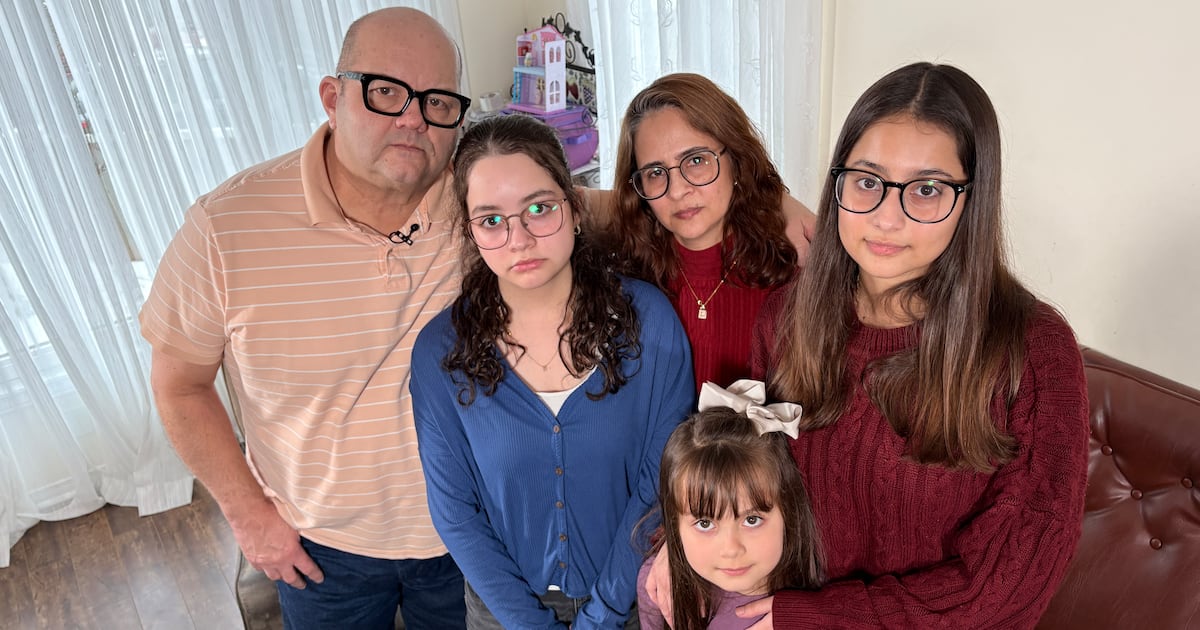
The life a family built in Ottawa is unravelling after the licensed immigration consultant they hired failed to do her job properly.
Just a few short months ago, Paulo and Leila Miera, who are Brazilian nationals, were dreaming of making Canada their permanent home. Instead, they are now facing possible deportation after they were ghosted by their consultant who they relied on to keep their immigration file up to date.
The family moved to Canada in 2016 from Vitoria da Conquista, after Leila was issued a religious worker visa to work with the Shivitei Israel Congregation. A few months after they landed, Paulo’s application for an open work permit was approved. He first found work with a cleaning company, then later in construction.
They came with their two daughters, Ester who was 11 years old at the time. Hadassa was seven. A third daughter, Hannah would be born at the Ottawa hospital 18 months later.
After nine years of working and raising a family in Ottawa, the couple are now holding a letter from federal immigration officials informing them they have no “status” in Canada and must leave the country voluntarily or face enforcement action.
“I don’t want to go back to Brazil because I have my life here. My (youngest) daughter was born here. She says all the time – I want to stay here,” said Leila in a tearful interview with CTV News with her children at her side.
In 2023, the Meiras hired Ana Raquel Aparico Perdomo to help them get a work permit for their eldest daughter Ester, and later help the family get permanent residence (PR).
Perdomo was accredited by the College of Immigration and Citizenship Consultants (CICC) in 2021, and her company was called Pursue Canada Immigration Services.
Perdomo told the Meiras that they didn’t qualify for an express entry application for skilled workers, but that she could help the family obtain PR based on humanitarian and compassionate grounds.
At that time, Leila was no longer working as a religious worker, and the company Paulo worked was reducing its number of temporary foreign workers.
Paulo says Perdomo initially quoted the family $3,000 to deal with their immigration matters. But in January 2025, knowing that visas for himself, his wife and daughter were set to expire in upcoming months, Paulo transferred Perdomo the full payment without signing a contract.
The family showed CTV News the receipts of the money transfers.
In March of this year, Perdomo sent the family an email saying she would pay the family’s biometric fees that were required to renew their visas and that they could reimburse her later.
Paulo says he called and emailed her dozens of times for an update but got no response.
On June 25, Paulo visited Perdomo’s office in downtown Ottawa, only to be told that she had moved out and did not leave a forwarding address.
Then a few weeks later, Paulo’s eldest daughter Ester found photos of Perdomo in Italy – purportedly posted that summer – on a Facebook page that was listed under her name. There was photo of Perdomo posing in front of the Rialto bridge that was date stamped July 22.
In early August, unable to track down their consultant, Leila decided to call Immigration Refugees Citizenship Canada (IRCC) to report what had happened to them. Instead, the family learned that their work permits had been rejected, that their application contained missing documentation and that the family biometric fee of $170 was left unpaid.
Most shockingly of all, the family learned they no longer had temporary resident status.
IRCC sent out a letter on May 29 to Perdomo’s mailing address, advising of the loss in status, but the consultant did not pass the information on to the Meiras.
“I don’t know how (Perdomo) sleeps. She has destroyed the dreams of (my) family. Destroyed the dreams of my girls,” said Paulo.
Without status, Paulo was let go from his construction job making concrete sewer tunnels. Leila had to quit working at McDonald’s. While their eldest daughter Ester lost her job doing social media marketing. To help pay the bills, the Meira’s are relying on the generosity of friends, some who have a crowdfunding campaign to help them pay for an immigration lawyer to plead their case.
Ester, now 21, says her life is stuck in a loop of “waking and sleeping and doing the same thing every day.”
“It feels like you’re at the top of a cliff, not knowing if you’ll fall or if you’ll be saved,” Ester said.
On June 24 of this year, following a complaint from another person, the College of Immigration and Citizenship Consultants suspended Ana Raquel Aparicio Perdomo. Her license was revoked in November after she did not respond to the College’s request for information within 90 days.
In a statement to CTV News, Stef Lach, the manager of Stakeholder and Government relations, says that Perdomo’s license was revoked because of “non-responsiveness.”
“As per the Code of Professional Conduct, all licensees are required to fully and promptly respond to any communication from the College.’
Lach says CICC understands the “gravity of the situation the client of this former licensee is now facing,” but emphasizes that the organization “does not provide immigration advice, process applications or influence decisions made by IRCC.”
Ottawa immigration lawyer Warren Creates, says what the Meira’s have experienced is “tragic” but says they have few options.
“A lot of people in similar circumstances have tried to plead their case to the department of immigration when they’ve been victimized by unscrupulous consultants, but (immigration officials) have not provided that relief.”
Creates says the family can try to find an empathetic employer willing to go through the “tedium” of applying for government approval to hire a temporary worker, but they may have to return to Brazil until the approval comes through.
But even that is a long shot. The federal government is in the process of making it harder to get temporary work permits and have accelerated the pace of deportations.
In 2024, the government deported a total of 17,357 people. In the first three quarters of this year, 18,785 people have already been deported.
The lesson here, Creates says, is “Caveat emptor. Buyer beware. Everyone has to do their due diligence and research.”