
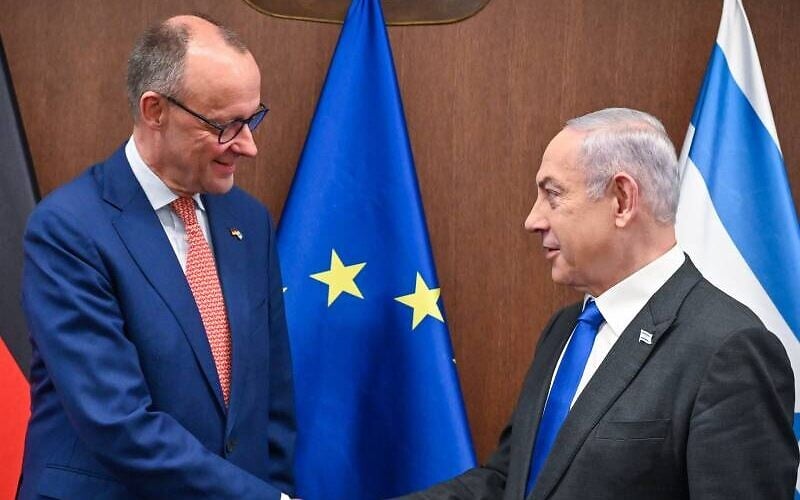
It is hardly surprising that the first leader of a major European country to visit Israel following the October ceasefire in Gaza, and the first such leader to make the trip in over a year, will be Germany’s Friedrich Merz.
His scheduled arrival this weekend underscores Berlin’s status as one of Israel’s strongest allies in Europe, where Jerusalem’s standing has significantly deteriorated over the course of its two-year war with Hamas.
While many European capitals issued a stream of harsh condemnations, proposed or imposed sanctions, and unilaterally recognized a Palestinian state in protest of Israel’s wartime conduct in Gaza, Germany repeatedly stressed its support for the Jewish state and its right to defense, largely avoided any punitive measures, and made sure that criticism didn’t become too strident.
Though Berlin’s approach was not nearly as confrontational as those of Paris or London, the relationship has not escaped unscathed since Merz came to power in May as head of a coalition that includes both his conservative Christian Democratic Union party and the more liberal Social Democrats, or SPD. In August, the chancellor announced a partial arms embargo on Israel, lifting it only last month in light of the ceasefire agreement.
Merz’s arrival takes place shortly after Israel’s landmark handover of its Arrow 3 missile defense system, which fell on the 60th anniversary of German-Israeli relations — creating an opening to return ties to their pre-Gaza war status.
Get The Times of Israel’s Daily Edition
by email and never miss our top stories
By signing up, you agree to the terms
“The timing is no coincidence,” said Gil Murciano, CEO of Mitvim, an Israel-based foreign relations think tank.”The visit will attempt to return to the former German-Israeli relationship, as the exchange between the two countries has slowed down since the war in Gaza.”
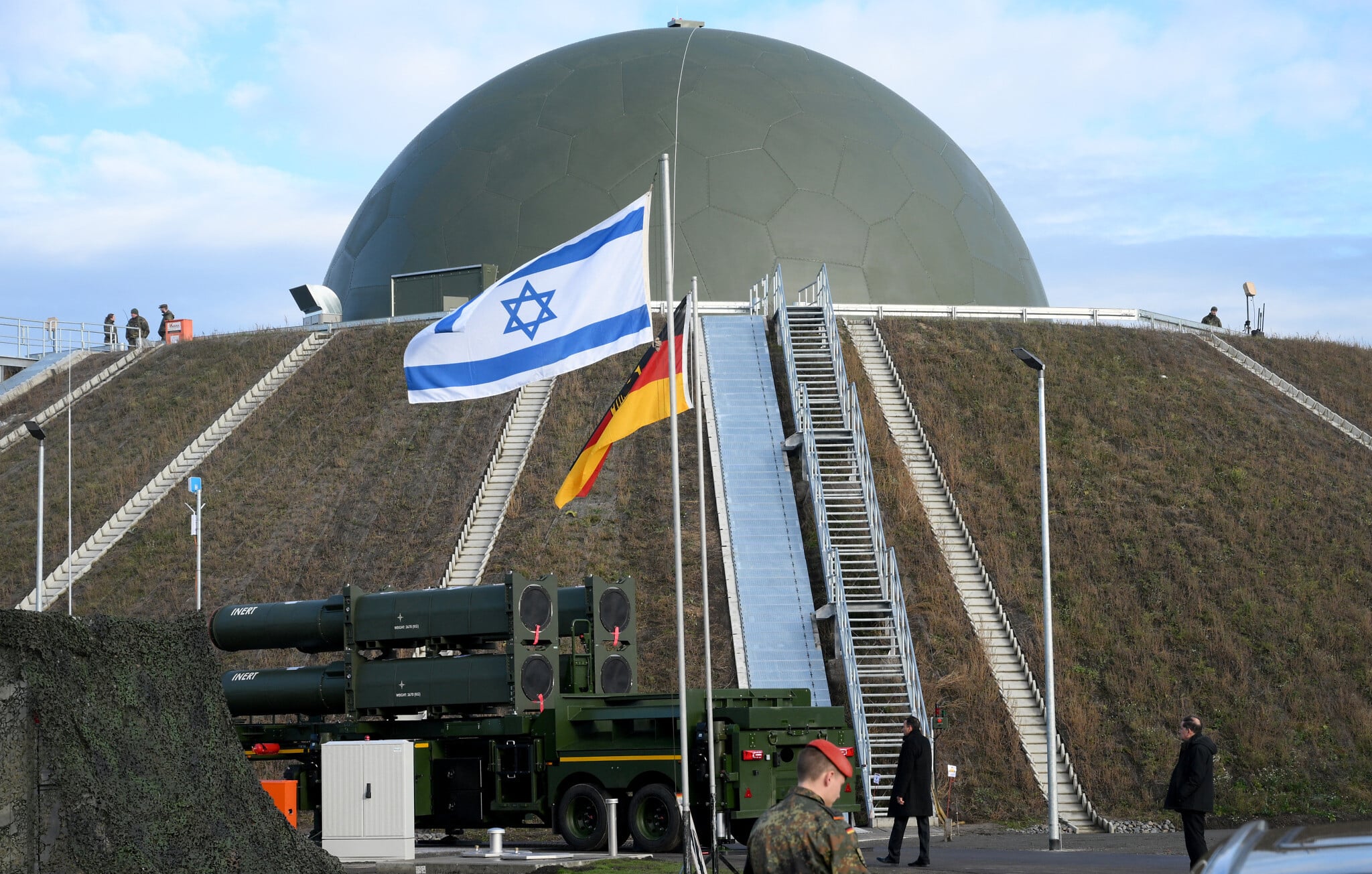
The flags of Israel and Germany fly in front of the Arrow 3 missile defense system and a radar dome during an event of the German Air Force at the Holzdorf Air Base, eastern Germany, on December 3, 2025. (RALF HIRSCHBERGER / AFP)
Merz is scheduled to arrive in Israel on Saturday for a two-day trip during which he will meet Prime Minister Benjamin Netanyahu to discuss bilateral relations, the ceasefire in Gaza and other international issues, a German government spokesperson said late last month.
He will also visit the Yad Vashem memorial and hold talks with local representatives from society, the spokesperson added.
For Germany, the trip reflects both strategic interest in Israel’s defense technologies and regional power, and expresses its longstanding sense of historical responsibility to the Jewish state following the Holocaust. It also serves Israel, as Prime Minister Benjamin Netanyahu hopes the visit will spotlight Jerusalem’s renewed diplomatic standing and its defense partnerships as the Gaza war winds down.
Yet despite the symbolism, disagreements over Israel’s policies in Gaza and the West Bank continue to test how far cooperation can go.
From embargoed to essential
Germany faces a fundamental dilemma in its relationship with Israel, Murciano explained. The humanitarian crisis in Gaza and the damage to Israel’s international standing over the war have raised the political cost of close alignment — yet at the same time, “Israel remains an essential partner for Germany’s defensive capabilities,” he said.
In August, amid global outcry over Israel’s planned offensive in Gaza City, Merz announced an arms embargo on offensive weapons that could be used in Gaza, marking a sharp departure from Berlin’s previously staunch support.
Volker Beck, President of the German-Israeli Society and former Green Party lawmaker, said the embargo had adverse consequences. “The German-Israeli relationship has noticeably suffered under the arms embargo. It wasn’t a cosmetic or symbolic decision, but rather a halt to relevant military components, such as spare parts for tanks,” he said.
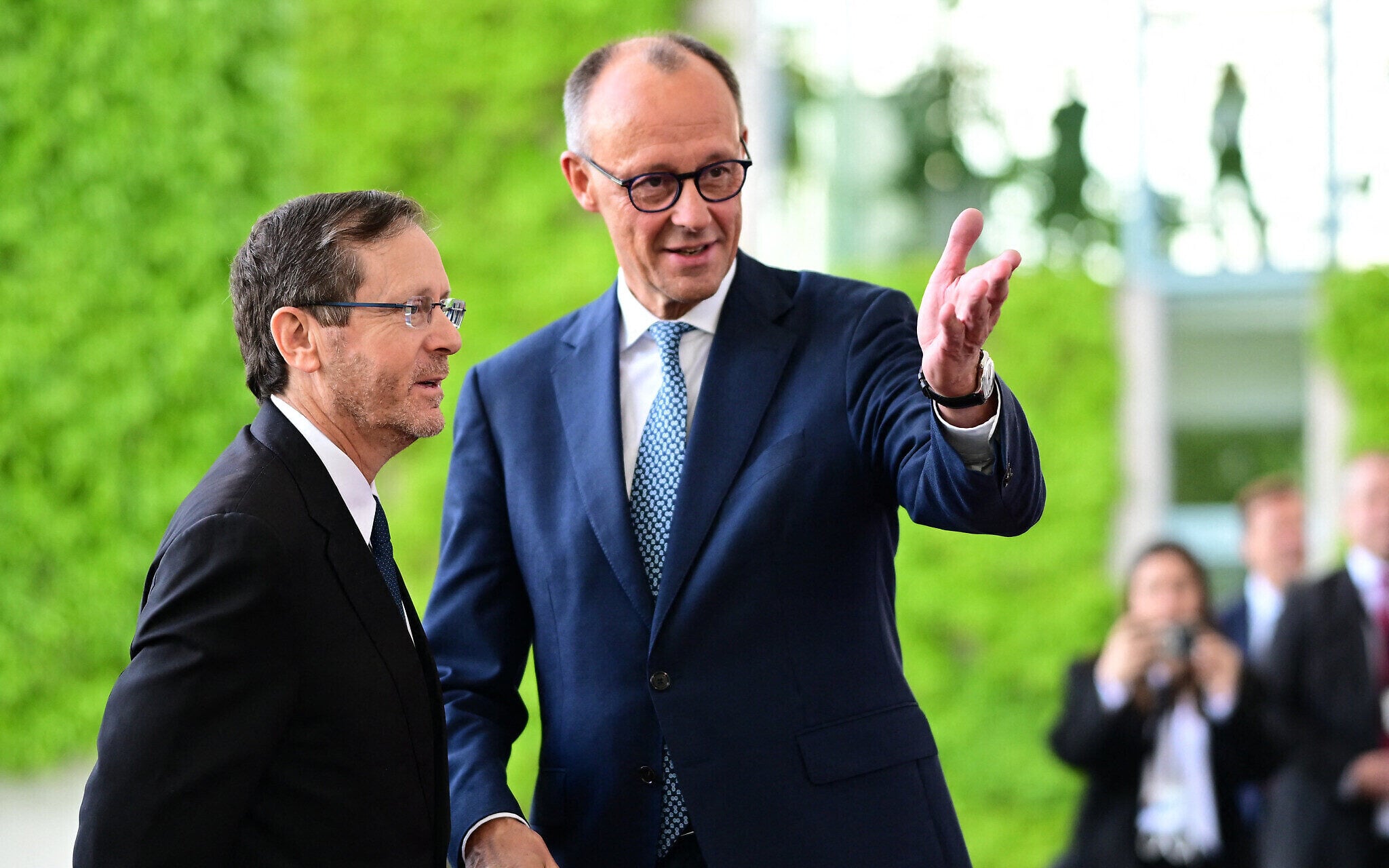
German Chancellor Friedrich Merz (R) welcomes President Isaac Herzog on May 12, 2025 at the Chancellery in Berlin, Germany. (Tobias SCHWARZ / AFP)
He warned that Germany’s “reliability has been damaged” as a result, and that “the dynamics have since reversed: It’s no longer Israel that depends on German technology, but rather German defense that depends on Israel.”
It’s no longer Israel that depends on German technology, but rather German defense that depends on Israeli.
It is unclear to what extent conflict over the embargo has been resolved ahead of the visit, but Murciano stressed that “arms cooperation, technology exchange, and academic collaboration should be at the top of the agenda.”
A broad agenda
For Berlin, the regional agenda includes emphasizing its interest in sustaining the fragile ceasefire in Gaza, advancing a postwar political framework for the territory, and addressing rising settler violence in the West Bank — issues on which there will likely be disagreement.
Murciano noted that a priority for Merz will be “laying the groundwork for the Palestinian Authority to take over in Gaza” — an element of US President Donald Trump’s peace plan that remains conveniently unclear, as the current Israeli government is adamantly against PA rule of the postwar strip. Berlin contributes resources to the ceasefire verification mechanism running out of Kiryat Gat and has sought to play a constructive role supporting the Gaza plan, though its influence is limited.
Merz is also likely to bring up rising cases of settler violence in the West Bank, which the government is accused of allowing to metastasize. The attacks are frequently condemned by Germany and most of Europe, and have also led to tensions with some of Israel’s most staunch supporters in the US.
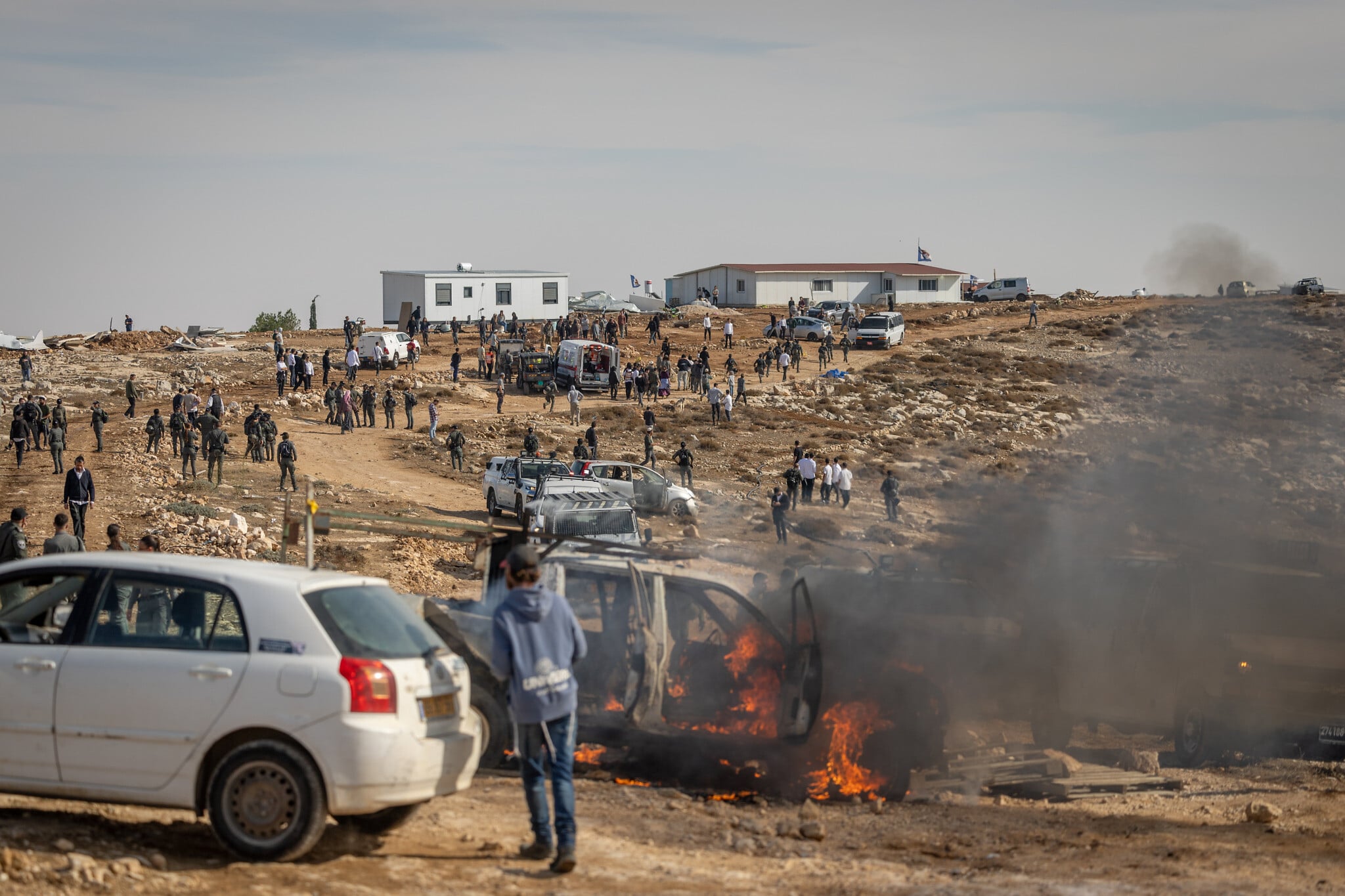
Israeli security forces clash with settlers during the evacuation of the illegal outpost of Tzur Misgavi, in the Gush Etzion area of the West Bank, November 17, 2025. (Chaim Goldberg/Flash90)
“This violence is unacceptable and massively endangers Israel’s own security,” said conservative lawmaker Roderich Kiesewetter, who also criticized the extremist rhetoric of some Israeli ministers. The chancellor, he argued, must make clear that Germany “stand[s] by democratic Israel, but reject[s] policies that undermine the rule of law and isolate the country internationally.”
From the opposite side of the German political spectrum, Social Democrat Adis Ahmetović sharpened those critiques, insisting that “the unchecked and rampant settler violence in the West Bank and East Jerusalem must end.”
He urged Merz to meet with Israeli civil society groups opposing the government’s policies and to speak with the PA “at the highest level” as a reaffirmation that “they are our point of contact on the Palestinian side.”
Broader issues, including Iran, Hezbollah in Lebanon, the new Syrian regime, and Israel’s role in supporting European defense, are also likely to be addressed.
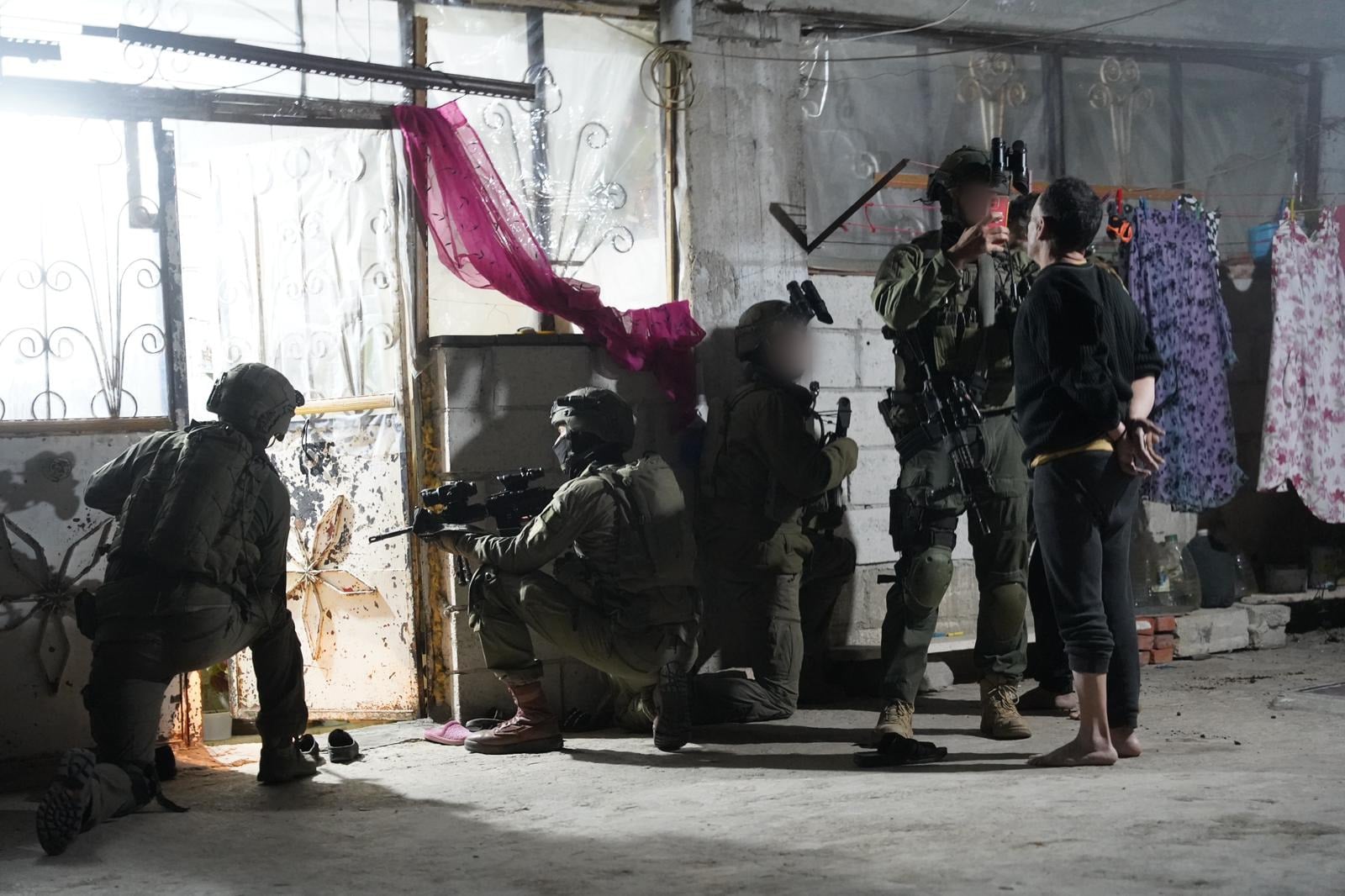
Troops of the 55th Reserve Paratroopers Brigade detain a suspect in the southern Syrian village of Beit Jinn, early November 28, 2025. (Israel Defense Forces)
Kiesewetter noted the need for Germany to recognize Israel as “an absolute key player in Syria” and in Europe’s defense architecture, especially against the Russian threat.
The Arrow 3 sale came as part of the German-led European Sky Shield Initiative to beef up continental Europe’s air defenses in response to Russia’s 2022 invasion of Ukraine. German defense, Kiesewetter said, depends on systems like Arrow 3 and cooperation with Israeli intelligence agencies.
But little influence
Still, Germany’s leverage is limited. Throughout the war, Israel made clear its unwillingness to alter core policies in Gaza or the West Bank because of European pressure. That is why, for Berlin, the visit is less about extracting concessions and more about reestablishing channels of influence that have been damaged during the war.
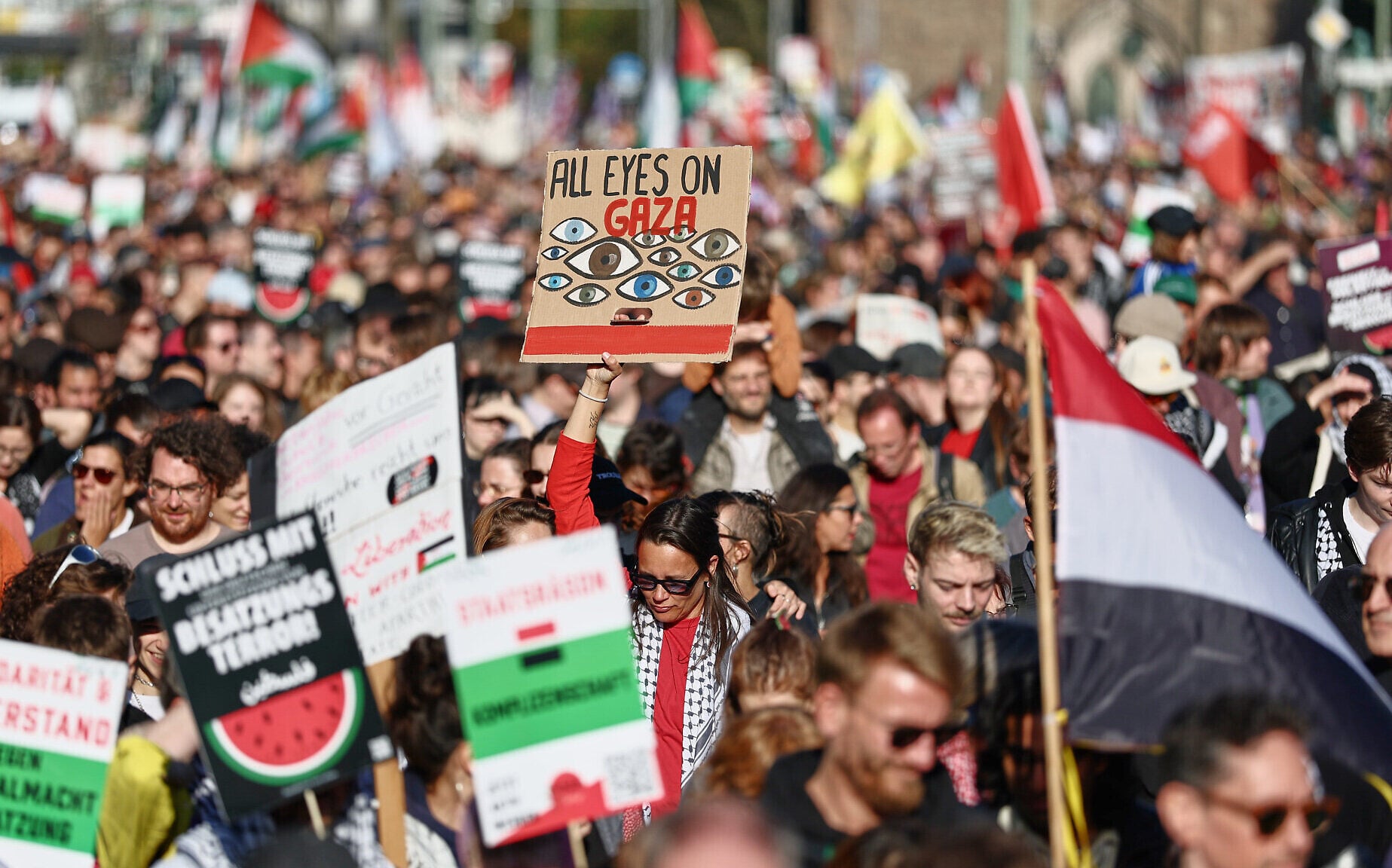
People protest against Israel during a pro-Palestinian, anti-Israel demonstration in Berlin, Germany, September 27, 2025. (AP Photo/Christoph Soeder)
Israel’s Ambassador to Germany Ron Prosor framed the visit as a demonstration of continuity: “Merz will be welcomed with open arms — even if there are occasional differences,” he told The Times of Israel, emphasizing that the trip sends “a clear signal to Israeli society that Germany and Israel will continue to stand firmly together in the future.”
Murciano warned, however, that Israel’s perceived reluctance to take the concerns of European partners — even those as close as Germany — into serious consideration leaves the relationship as strictly transactional.
“Unfortunately, Israel at the moment is not giving sufficient priority to diplomacy and does not allow partners like Germany to meaningfully influence its political course,” Murciano said. “The question is how to preserve the special German-Israeli relationship — which at present is largely interest-based due to military cooperation. How can it be grounded in shared values again? This is the part that worries me, and it needs to be addressed.”