
TANZANIA breathed a sigh of relief when President Samia Suluhu Hassan took power.
After her authoritarian predecessor President John Magufuli died in 2021, the softly-spoken Hassan was widely expected to be a less tyrannical replacement.
Sign up for The US Sun newsletter
Thank you!
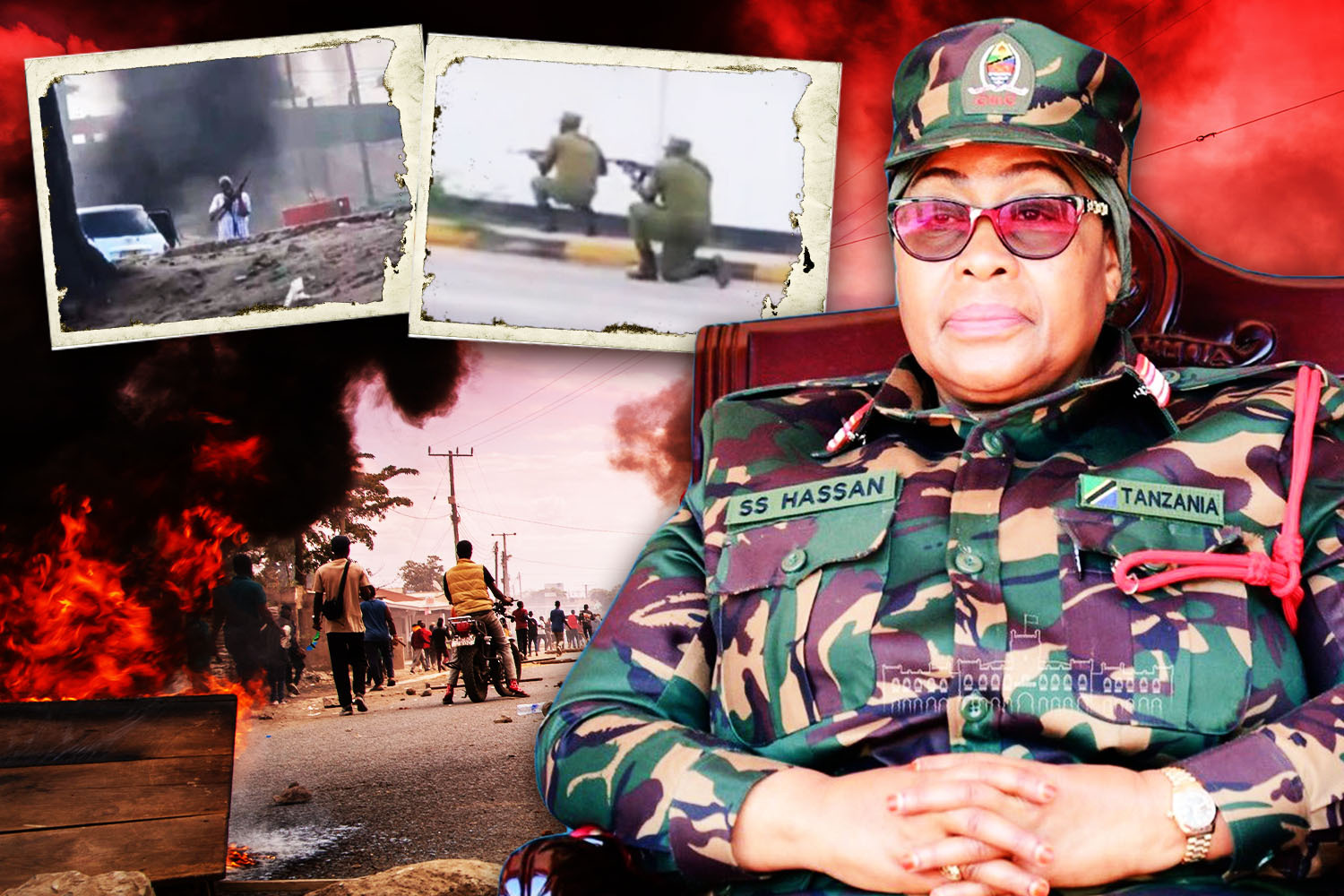
President of Tanzania Samia Suluhu Hassan is accused of war crimesCredit: The United Republic of Tanzania
Hassan, Tanzania’s first female president, was re-elected in OctoberCredit: The United Republic of Tanzania
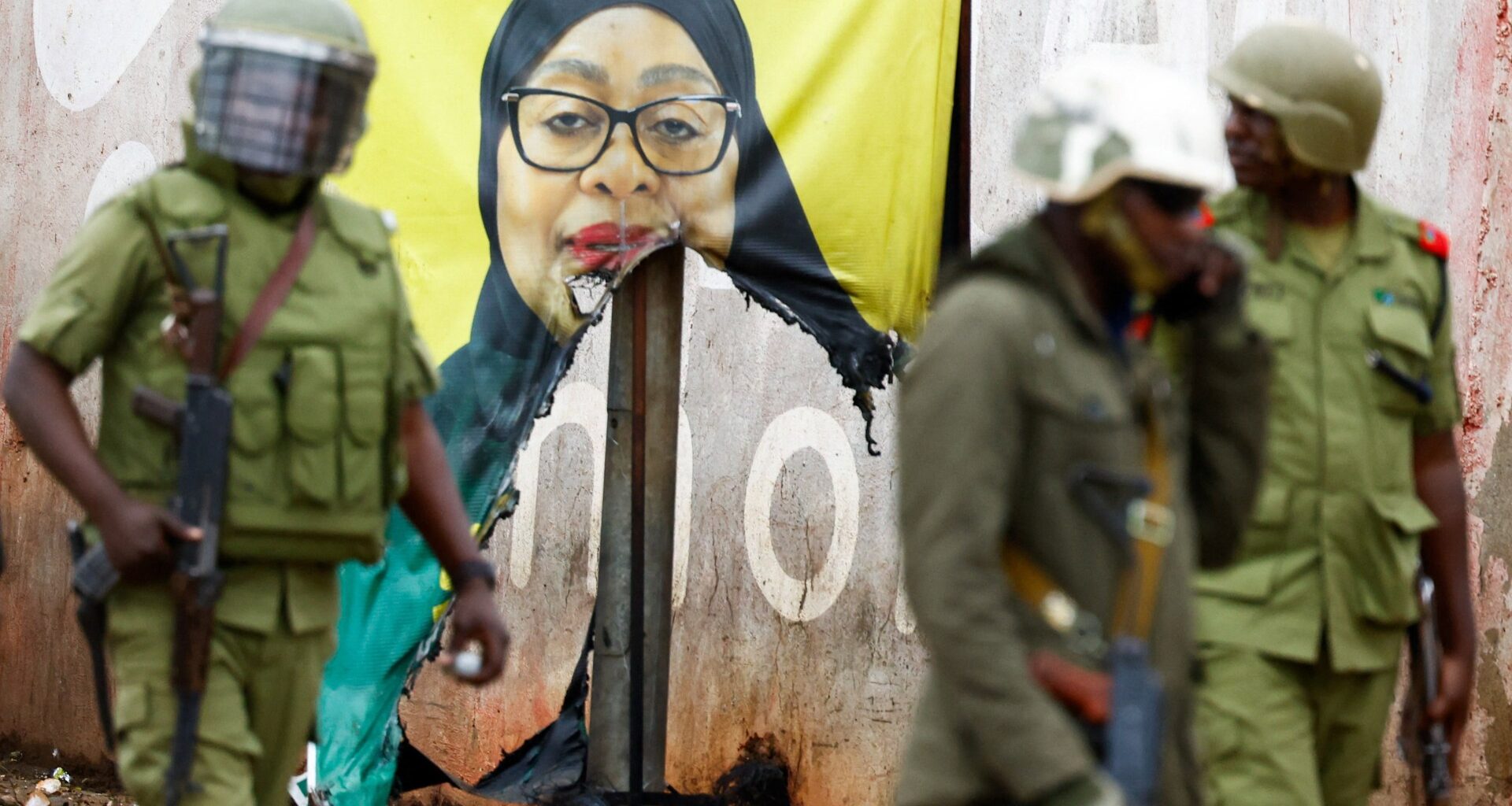
Protests erupted across Tanzania in the days following a rigged electionCredit: AP
Hundreds were killed as unrest spread across the country, starting in Dar es SalaamCredit: AP
Instead, the so-called “Butcher of Tanzania” has plunged the country into chaos.
Brutal killings marked Hassan’s re-election last month – with up to 10,000 civilians thought to have been killed by law enforcement.
And there is evidence that the brutal violence was pre-planned by the Tanzanian government, Intelwatch director Dr Paula Cristina Roque told The Sun.
Roque said: “We’re still trying to get the exact number, but it could be as many as between five and 10,000 civilians killed.
HELL ON EARTH
Mystery illness where victims ‘vomit blood’ and ‘die within hours’ kills 15
TEEN REVOLUTION
Now Gen Z protests spread to ANOTHER country as rioters clash with cops
“This shows a level of planning that was systematic.
“It wasn’t a spur-of-the-moment reaction to a group of youths and Gen-Z that decided to boycott the elections and protest, this was a much deeper and pre-planned operation.
“We’re getting evidence of that on many fronts that can tie this directly to orders given months before, of what to do in the case of unrest.”
Intelwatch has an “overwhelming amount” of evidence of human rights violations by The Butcher, Roque said.
And the organisation is calling on the International Criminal Court (ICC) to investigate Hassan and her government for crimes against humanity.
The president and her government are accused of murder, rape, torture and kidnapping going back to 2022 in a damning 85-page dossier presented by activists and lawyers to the ICC.
On Friday, the British High Commission, the EU Delegation and 15 other European countries also condemned the violence sweeping the nation.
Protests erupted on October 29 in the city of Dar es Salaam and dissent spread across the country – sparking a deadly response from law enforcement.
Bodies stacked up in the streets and horrifying videos, verified by the BBC, showed a pile of ten young men lying dead in Tanzania’s second-largest city, Mwanza.
There is evidence that corpses were “disposed of in Lake Victoria”, Roque added.
She said: “If we’re talking about killings in the thousands, we would be talking about an equal amount of mass graves, burning their bodies, dumping them in Lake Victoria.
“This makes it very, very difficult in terms of actually coming across real numbers and verifying them.
“There are so many victims and many of them were shot in their head, many were shot in the back, as they were running.”
Demonstrations were mostly led by young people angry at the dominance of a single party in Tanzania as Hassan’s party has held control since the country won its independence in the 1960s.
Footage of the unrest was suppressed for days as The Butcher’s government put a near-total internet blackout in place and threatened to jail anyone showing videos of protests.
President of Tanzania, Samia Suluhu HassnaCredit: The United Republic of Tanzania
Tear gas was used against activists, as well as live ammunitionCredit: Reuters
The BBC has verified videos of protesters being shot by uniformed menCredit: X
When the block was lifted on November 4, dozens of videos of brutal violence appeared online, showing uniformed officers firing live ammunition at crowds.
A joint statement released by the British High Commission, EU Delegation and 15 other European countries urged Tanzania’s security forces to act with “maximum restraint”.
They called on the Tanzanian government to protect the “rights to access information and freedom of expression for all Tanzanians”.
“Credible reports from domestic and international organisations show evidence of extrajudicial killings, disappearances, arbitrary arrests, and concealment of dead bodies,” they added.
“We call on the authorities to urgently release all the bodies of the dead to their families, to further release all political prisoners and allow detainees legal and medical support.”
The African country’s first female president had promised “reconciliation, resilience, reform and rebuilding”.
Yet, once in office, she doubled down with dictatorial tactics, rigging elections, locking up opponents, and handing key cabinet jobs to family members.
Hassan claims she won 98 per cent of votes in her October re-election, but international observers reported ballot-stuffing and other irregularities.
The president had put all her main opponents behind bars or banned them from running in the election.
At least hundreds – likely thousands – were killed in the protests that followed the rigged vote, but the nationwide internet blackout made it hard to verify exact numbers.
Hassan said the election in which she won 98 per cent of the vote was ‘free and democratic’Credit: Reuters
Hassan declared the election had been “free and democratic” and called protesters “unpatriotic”.
And Tanzania’s Catholic church called the spate of killings since 2022 as “a disgrace before God”.
Archbishop Jude Thaddaeus Ruwa’ichi told a service at St Joseph’s Church in the capital that “the country has lost its dignity”.
Volker Türk, the UN High Commissioner for Human Rights, has also called for an investigation into the killing of protesters and other human rights breaches committed during the election.
Roque is worried about a repeat of the violence next week, on Tanzania’s independence day, December 9.
Hassan has cancelled planned celebrations for the independence day, but that won’t deter protesters, Roque told The Sun.
She said: “We truly believe that the violence is not going to stop. We may have difficulties with the internet again to stop information coming out of the country. We may see another clampdown.”
Collecting evidence of human rights violations is a dangerous job.
Some who have given evidence “have left the country because they feel threatened”, according to Roque.
She said that others “have evidence of being hunted across the borders”.
“It takes a lot of individuals with a lot of courage to collect this evidence,” she added.
Citizens are documenting the deaths of their friends and family members, with graphic photo evidence.
Roque told The Sun that many protesters ‘were shot in the back, as they were running’Credit: TikTok
An internet blackout made it hard to know how many protesters had been killedCredit: Reuters
Several opposition leaders who Hassan had jailed in the build-up to her October re-election were let out after the deadly protests – but one key figure remains behind bars.
In April, the autocrat had arrested the leader of the country’s main opposition party, Tundu Lissu.
She charged him with treason, a crime which carries the death penalty in Tanzania.
Lissu survived an assassination an attempt in 2017 when he was shot 16 times.
He is yet to be released, joining a long list of dissidents who have been locked up or mysteriously disappeared under The Butcher’s regime.
In September last year, Mohamed Ali Kibao, a senior member of Lissu’s party Chadema, was brutally murdered.
After Kibao was forced off a bus by suspected security agents, the father of six died a “painful death” according to Freeman Mbowe, Chadema’s former chairman.
Mbowe said Kibao’s post-mortem showed that he had been “severely beaten and had acid poured on his face”.
Before becoming president, The Butcher had a more affectionate nickname – “Mama Samia”.
In 2005, she overturned a ban on young mothers going back to school after giving birth in Zanzibar, where she was minister of labour, gender development and children.
Mohamed Ali Kibao was brutally murdered in September last yearCredit: Chadema
Tundu Lissu survived an assassination attempt in 2017, and is currently behind barsCredit: Getty – Contributor
As president, she undid the ban across Tanzania, but this is where the break with her predecessor seems to have ended.
Last month, in a dramatic cabinet reshuffle, Hassan gave top jobs to members of her own family.
She named her daughter, Wanu Hafidh Ameir, as the new deputy minister of education.
At the same time, Hassan put her son-in-law, Mohamed Mchengerwa, in post as health minister.
Her government has launched its own investigation into the killings that followed the election.
But Intelwatch director Roque is not optimistic, telling The Sun: “The ruling Party has a complete stranglehold on the judiciary, on any of the institutions that we would expect to be able to conduct impartial investigations.
“Other commissions of inquiry have existed in Tanzania, and they haven’t amounted to justice or accountability.
“Unless there’s a change in government, I don’t think we’ll see any justice right now.”
Roque is not completely without hope for Tanzania, however.
She thinks that the ICC will open a case, and that “justice can hopefully prevail”.
She added: “At this point, not doing anything would be a disgrace for the international community because we have evidence.
“They’re well informed, and there is a responsibility to act to avoid further bloodshed.”
Hassan put both her daughter and son-in-law into her cabinet as ministersCredit: AP
President Samia Suluhu Hassan is accused of many human rights offencesCredit: AFP