
Western Australia’s first recorded death in youth detention was preventable and the notorious facility where he died should be closed as a matter of urgency, a coroner has found.
WARNING: This story discusses incidents of self-harm and contains the name and image of an Indigenous person who has died.
Cleveland Dodd was 16 years old when he fatally self-harmed inside his cell in Unit 18, and he died in hospital a week later.
During the inquest, the facility, which was meant to be temporary, was compared to a war zone and described as inhumane, with staff shortages keeping young people locked in their cells for up to 24 hours a day at times.
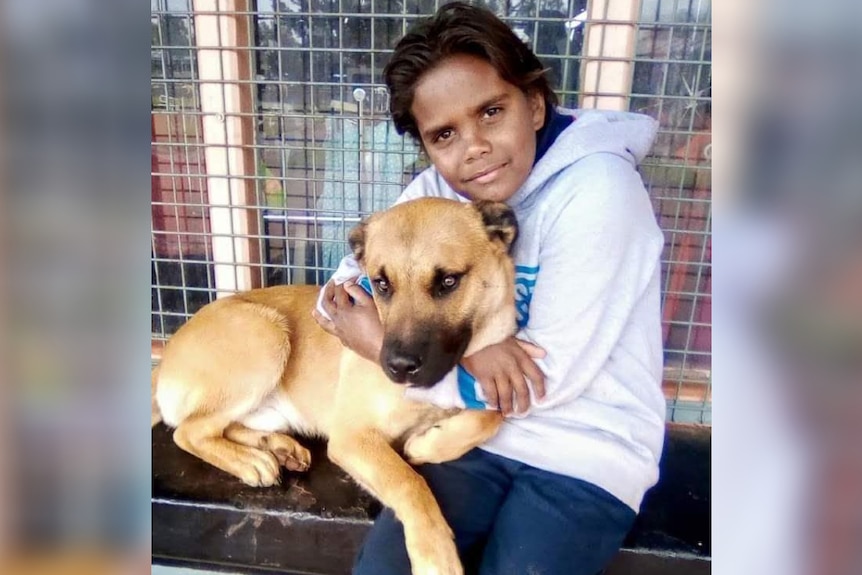
Cleveland Dodd died a week after he self-harmed in his cell. (Supplied: Family)
For around 80 per cent of Cleveland’s final three months in detention he was let out of his cell for less than two hours a day — the international definition of solitary confinement.
Coroner Philip Urquhart said those numbers were “deeply disturbing to hear” and “reminiscent of 19th century jails”.
If you or anyone you know needs help:Suicide Call Back Service on 1300 659 467Lifeline on 13 11 14Aboriginal & Torres Strait Islander crisis support line 13YARN on 13 92 76Kids Helpline on 1800 551 800Beyond Blue on 1300 224 636Headspace on 1800 650 890ReachOut at au.reachout.comMensLine Australia on 1300 789 978
“It is difficult to comprehend the despair and despondency Cleveland would have felt living in these appalling conditions,” he said.
“It is unsurprising that Cleveland threatened to self-harm on the night of 11 and 12 October 2023 before taking the tragic action that he did in the early hours of 12 October.”
He said Cleveland’s death “was not only predictable but had been predicted, and … the department [of justice] was aware of those predictions”.
Unit 18 closure recommended
One of the coroner’s most significant recommendations is to close Unit 18 “as a matter of urgency”, having described it as a place unfit to house some of the state’s most vulnerable young people.
The WA government has maintained it cannot close Unit 18 until a replacement facility is built and says conditions have improved since Cleveland’s death.
“The equipment provided to our personnel, the interventions, the external supports, the practices and policy are all significantly changed and improved since that time,” Corrective Services Minister Paul Papalia said today.
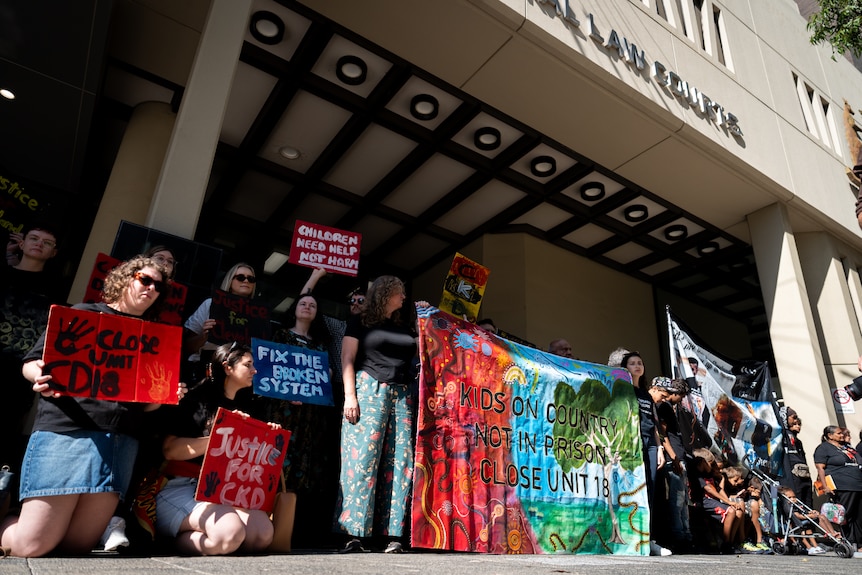
People gathered outside the District Court in Perth ahead of the coroner’s findings. (ABC News: Cason Ho)
But Coroner Urquhart said despite improvements at Unit 18 since Cleveland’s death, it is still not fit for purpose to house detainees with severe neurocognitive disorders.
The government last month committed the funds for the new facility, which is not due to open for another three years.
New WA youth detention centre to be ‘world leading’
The coroner said the government should trial moving the young people back to the main facility at Banksia Hill in the meantime.
“The harrowing evidence I heard as to how Unit 18 was operating in the months before Cleveland’s death has made this inquest the saddest I have presided over,” he told the court.
“As a community, we must do better.”
‘Lost hope’
Cleveland’s mother Nadene did not speak after leaving court, but issued a statement saying her pain today “is as intense as it was when I heard that Cleveland had taken his own life”.
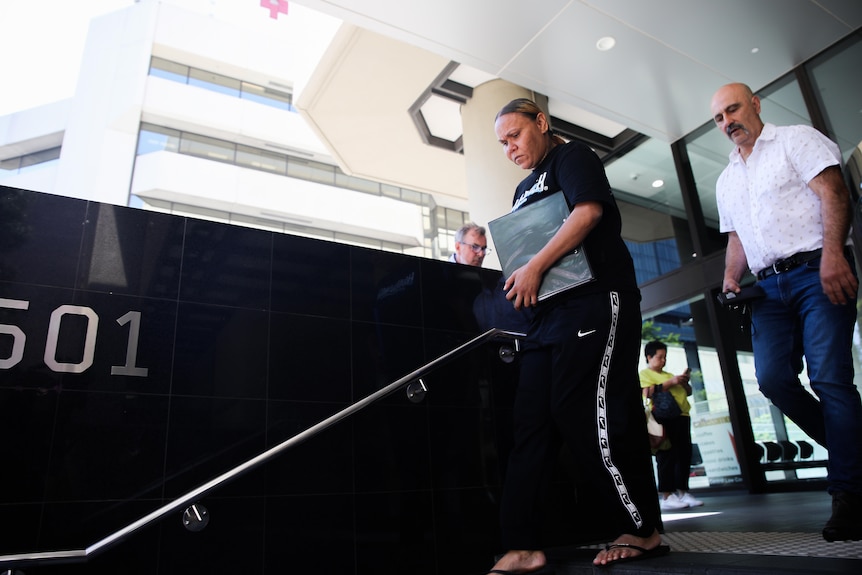
Nadene Dodd made no comment as she left court. (ABC News: Keane Bourke)
“I believe that Cleveland’s death was the product of institutional abuse and neglect, and it breaks my heart to know that Cleveland spent 23 hours a day, or more, for days on end, locked down in a filthy cell with no end in sight,” she said.
“I can understand why my son lost hope and the will to live.
“While I hope that Cleveland’s death, and Coroner Urquhart’s findings and recommendations, will lead to the change required to prevent other children from suffering the way my son did, it depends upon a massive, fundamental shift in the Department of Justice’s approach to youth justice, which is yet to be seen.”
Speaking outside court, Cleveland’s aunt Eunice Mippy said she was not satisfied.
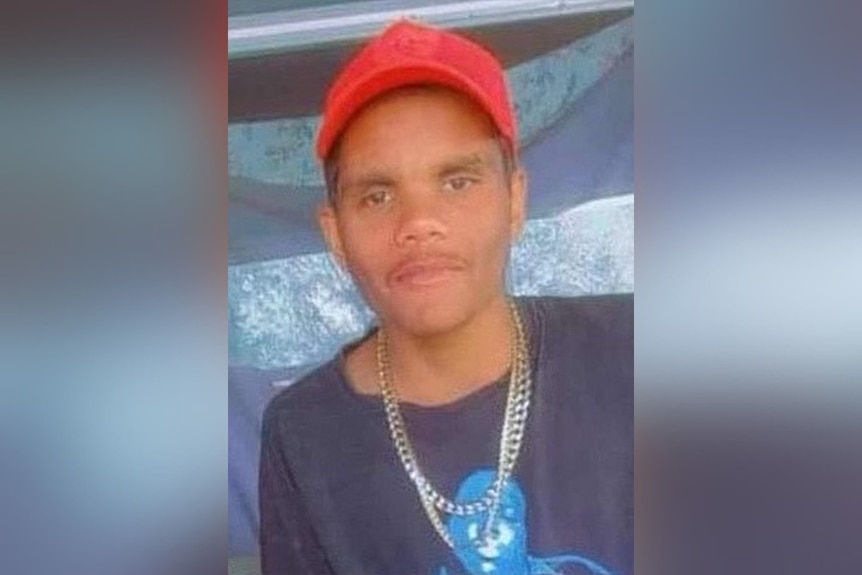
Cleveland Dodd. (Supplied: Family)
“We just want justice,” she said.
“We want someone to be held accountable for our nephew’s death, and what’s been done, and what’s been happening in that place [Unit 18].”
Adverse findings against eight
The inquest findings span 377 pages and include adverse findings against eight Justice Department staff.
That included the senior officer on duty in Unit 18 that night, Kyle Mead-Hunter, who “did not respond appropriately to Cleveland’s incident”.
Mr Mead-Hunter had been on his break at the time of Cleveland’s self-harm, with the lights off and his feet up on the desk.
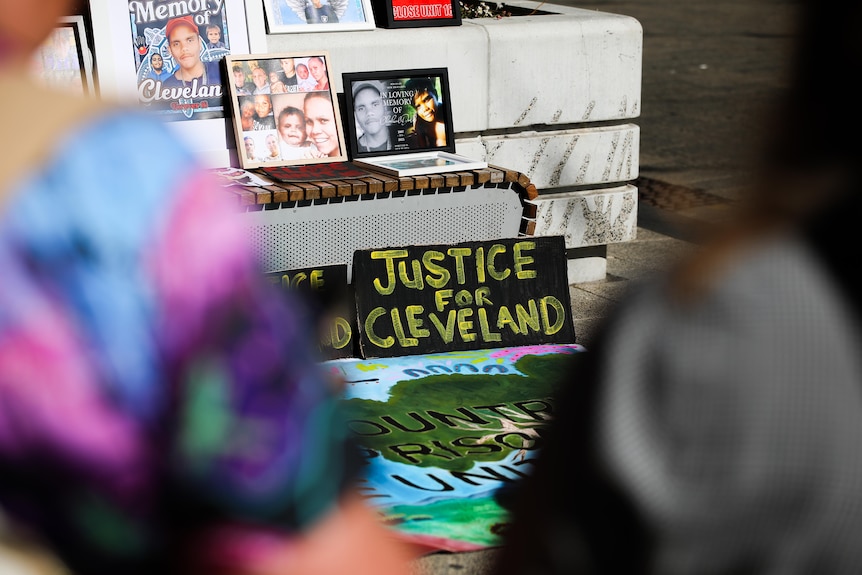
Supporters gathered outside court before the inquest findings were handed down. (ABC News: Keane Bourke)
The officer heard a colleague say Cleveland was hanging but he “did not appreciate than an actual life-threatening hanging had occurred”.
Four staff working on the night were not wearing radios as they were required to, but the coroner stressed the actions of those staff “did not cause or contribute to [Cleveland’s] death”.
Cleveland Dodd warning signs ignored
And former department director general Adam Tomison “failed to ensure there were sufficient custodial staff to operate Unit 18 safely” without locking down young people.
Coroner Urquhart also found Unit 18 superintendent Doug Coyne failed to resolve the issue of detainees covering cameras in their cells, nor did he alert his superiors about it.
The coroner found if Cleveland’s camera had been uncovered, staff likely would have seen him preparing to self-harm and been able to intervene.
But it had been covered for almost all of the afternoon and evening — like almost every cell in the unit — with staff unable to fix it because there were not enough staff to enter the cell safely.
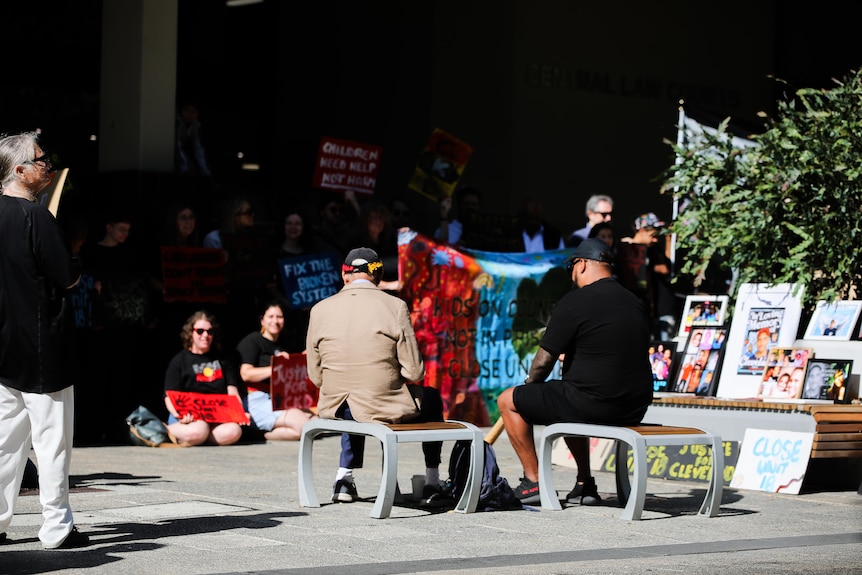
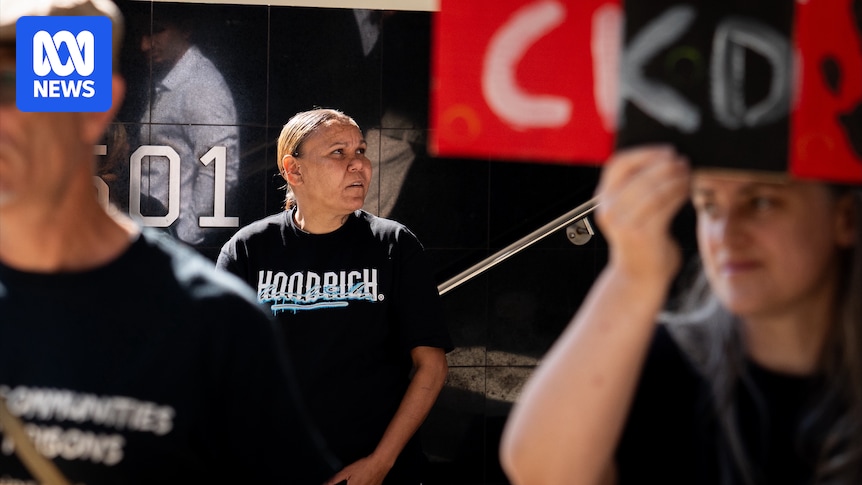
A group of supporters gathered outside the WA District Court as Coroner Urquhart delivered his findings. (ABC News: Keane Bourke)
And then-acting Deputy Superintendent Marc O’Siochain failed to prepare plans for detainees at Unit 18 to help staff understand their background and disabilities and how to manage their behaviour.
Suicide prevention advocates Gerry Georgatos and Megan Krakouer have supported Nadene and the family throughout the inquest.
Mr Georgatos said it was disappointing that a lot of the coroner’s recommendations to improve youth justice were yet to be taken on by the Department of Corrective Services.
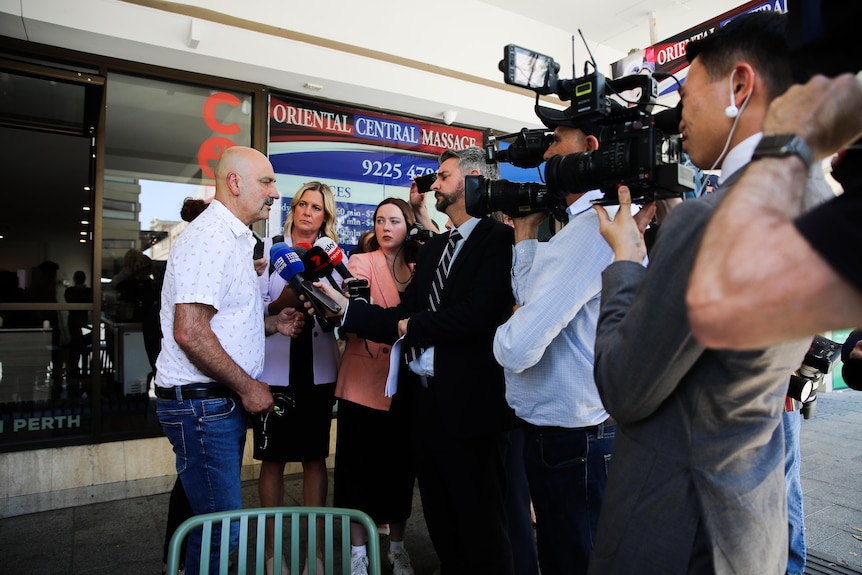
Youth justice advocate Gerry Georgatos speaks with reporters after the findings were delivered. (ABC News: Keane Bourke)
Ms Krakouer said the government needed to close Unit 18 immediately and “not continue to perpetrate this cycle of wilful blindness.
“We need strong leaders, strong humanitarians that will stand up and fight back against the system saying ‘no, this is wrong’,” she said.
Loading