
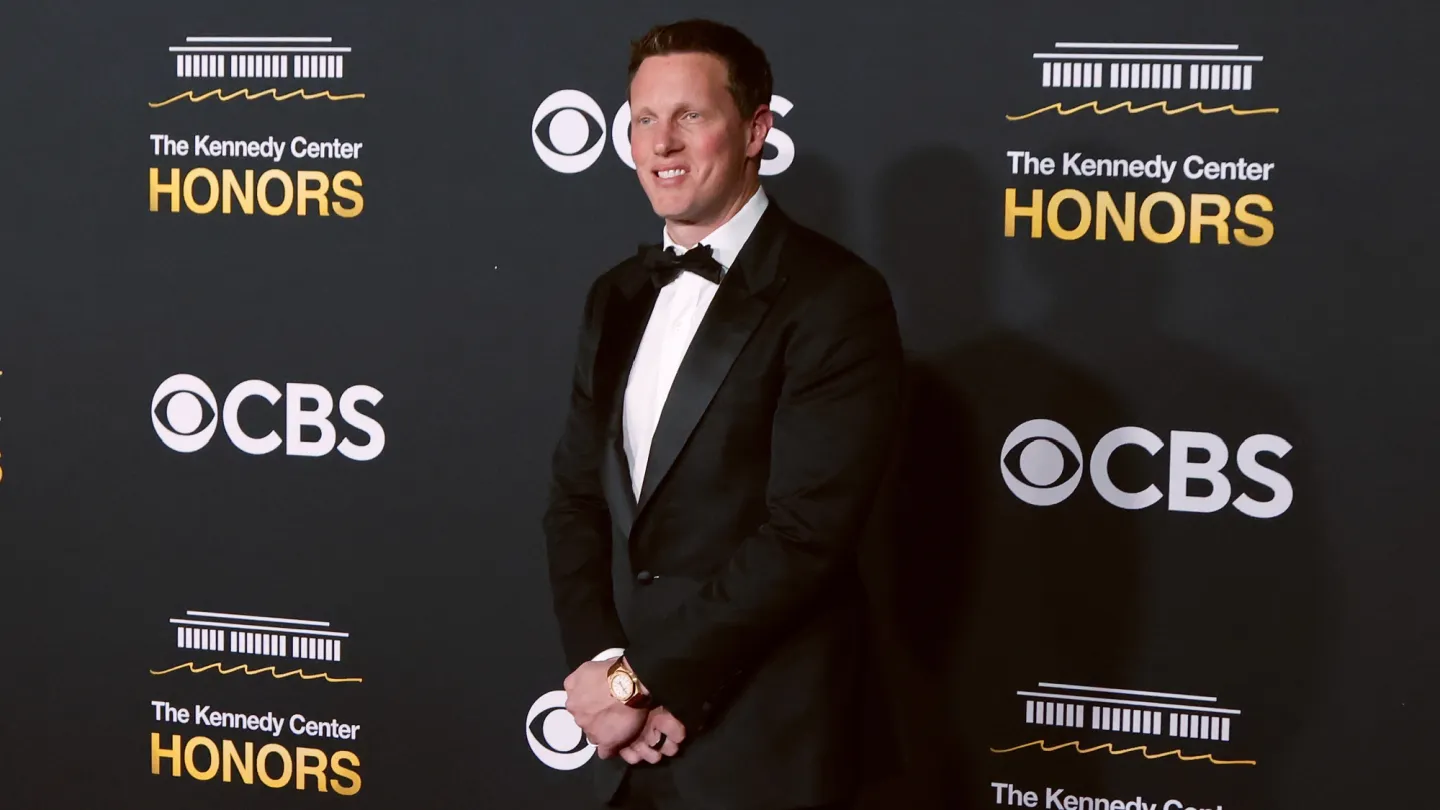
It’s a bidding war. David Ellison’s Paramount went on the offensive on Monday, launching a hostile offer to take over all of Warner Bros. Discovery, go directly to its shareholders and appeal to Hollywood that its ownership will be better for the entertainment industry.
The mogul, fresh off attending the President Trump-hosted Kennedy Center honors in Washington, D.C. on Dec. 7, described Netflix’s $82.7 billion deal as an “inferior proposal” and said that Warners decision to split the company is an unsound move. In the deal agreed to with Netflix co-chiefs Ted Sarandos and Greg Peters, Warner Bros., HBO and HBO Max will go to the streaming giant while WBD’s embattled cable networks division (TNT, CNN, HGTV, the Food Network and Discovery) will be spun out as a separately traded company.
“The Paramount offer for the entirety of WBD provides shareholders $18 billion more in cash than the Netflix consideration,” the Ellison-owned company stated. “WBD’s Board of Directors recommendation of the Netflix transaction over Paramount’s offer is based on an illusory prospective valuation of Global Networks that is unsupported by the business fundamentals and encumbered by high levels of financial leverage assigned to the entity.”
“WBD shareholders deserve an opportunity to consider our superior all-cash offer for their shares in the entire company,” Ellison said. “Our public offer, which is on the same terms we provided to the Warner Bros. Discovery Board of Directors in private, provides superior value, and a more certain and quicker path to completion. We believe the WBD Board of Directors is pursuing an inferior proposal which exposes shareholders to a mix of cash and stock, an uncertain future trading value of the Global Networks linear cable business and a challenging regulatory approval process. We are taking our offer directly to shareholders to give them the opportunity to act in their own best interests and maximize the value of their shares.”
The tender offer is for $30 per share, all in cash, a contrast to Netflix’s offer, which is a $27.75 mix of cash and some stock, with shareholders also getting a stake in the linear TV spinout. Netflix is also only buying WBD’s streaming and studios business, while Paramount is pursuing the whole company, making for a complicated comparison, depending on how you value the linear TV business.
Because it is a tender offer, Paramount will need to persuade shareholders to sell their stock to it, rather than sign off on the Netflix deal. The result will likely be a public, extended campaign from Paramount, Warner Bros. and Netflix to make their case.
To that end, Paramount launched a website called “StrongerHollywood,” which outlines the company’s offer and throws shade on Netflix’s deal, with Ellison arguing that a takeover by his company will be better for the industry. “We believe our offer will create a stronger Hollywood,” Ellison wrote. “It is in the best interests of the creative community, consumers and the movie theater industry. We believe they will benefit from the enhanced competition, higher content spend and theatrical release output, and a greater number of movies in theaters as a result of our proposed transaction.”
Up next may be a war of words to convince shareholders, Wall Street, Hollywood stakeholders and government regulators who may be the best suitor for Warner Bros. Upon inking a deal on Dec. 5, Warners chief David Zaslav, in line to receive hundreds of millions of dollars if the deal closes, called a move based on “the realities of an industry undergoing generational change – in how stories are financed, produced, distributed, and discovered.”
And in opening remarks to Street analysts the same day, both Sarandos and Peters stressed the deal would benefit the industry at large. “This deal is pro-consumer, pro-innovation, pro-worker, it’s pro-creator, it’s pro-growth,” said Sarandos, with counterpart Peters adding that there’ll be “more jobs created across the entire entertainment industry.”
Those may be the telling quotes as Netflix girds for what may be emerging opposition research-style lines — Paramount already has a dossier with a long list of them — that it’s taking out a major studio buyer, possibly decimating the theatrical window over time and becoming a subscription streaming monopoly.
Hollywood labor, too, has come out against the Netflix deal, although that’s not to say that the guilds would be for a Paramount offer either. The Writers Guild of America went scorched earth on the deal (“This merger must be blocked“) and the chief of the Teamsters’ motion picture division called for it to be blocked. Theater owners group Cinema United (aka NATO) called it “an unprecedented threat to the global exhibition business” and its European equivalent UNIC says it “fails in every regard.”
But SAG-AFTRA, which also has a Netflix deal to air the Actor Awards, appeared to withhold judgment, saying the buy “must result in more creation and more production, not less.” And the Christopher Nolan-led Directors Guild just said the deal raises “significant concerns.”