
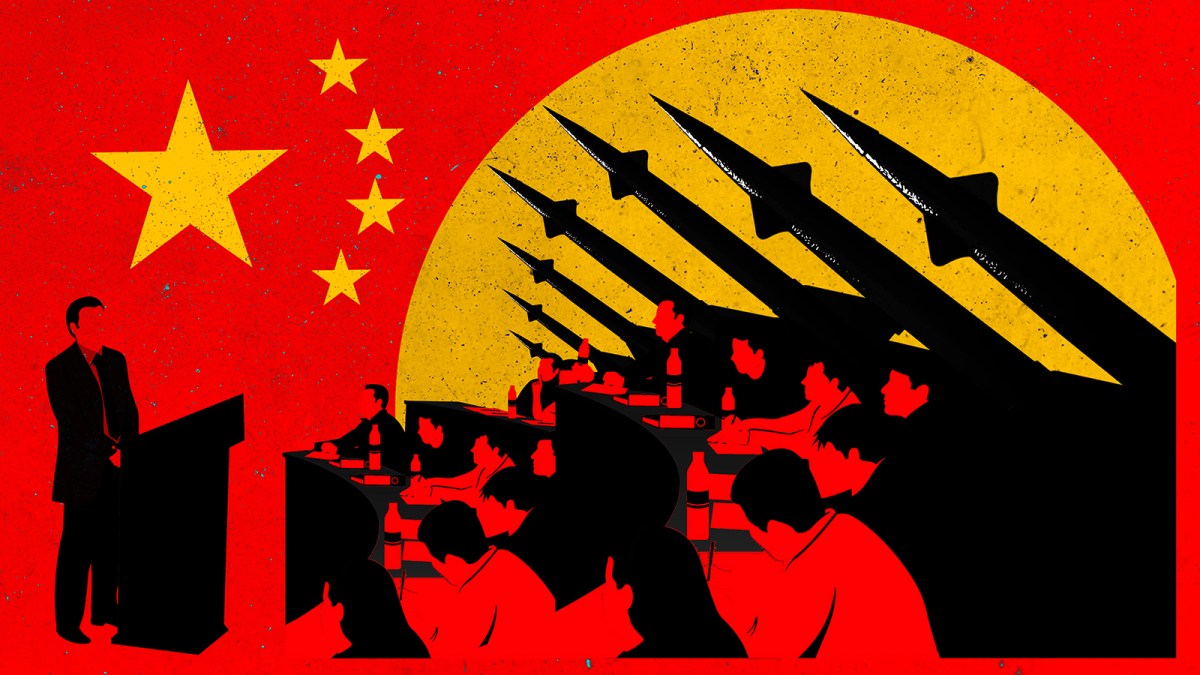
Thousands of researchers from UK universities have co-authored scientific papers with academics at Chinese institutions linked to the People’s Liberation Army (PLA), including several sanctioned by the United States government.
The scale of British collaboration with China is exposed in a new report that warns Beijing is “systematically” using “scientific partnerships to accelerate its technological and military ambitions”.
It reveals that more than 5,000 researchers affiliated with UK organisations, including laboratories and institutes, have been involved in scientific papers alongside individuals from dozens of research organisations connected to the PLA since 2020.
The report by Strider Technologies, an intelligence firm understood to employ ex-security services personnel, found 8,000 scientific papers that have been published in collaboration with PLA-linked institutes.
These span critical technologies including artificial intelligence, quantum computing and aerospace engineering, while others appear likely relevant to military use, such as anti-jamming communications, hypersonics and laser-directed technologies.
China has partly achieved its rapid military ascent via a network of defence-focused universities. They include the “seven sons of national defence” group of institutions with deep links to the Chinese defence industry, which is overseen by the government. This enables them to take part in top-secret weapons research, while dozens more are involved in military projects.
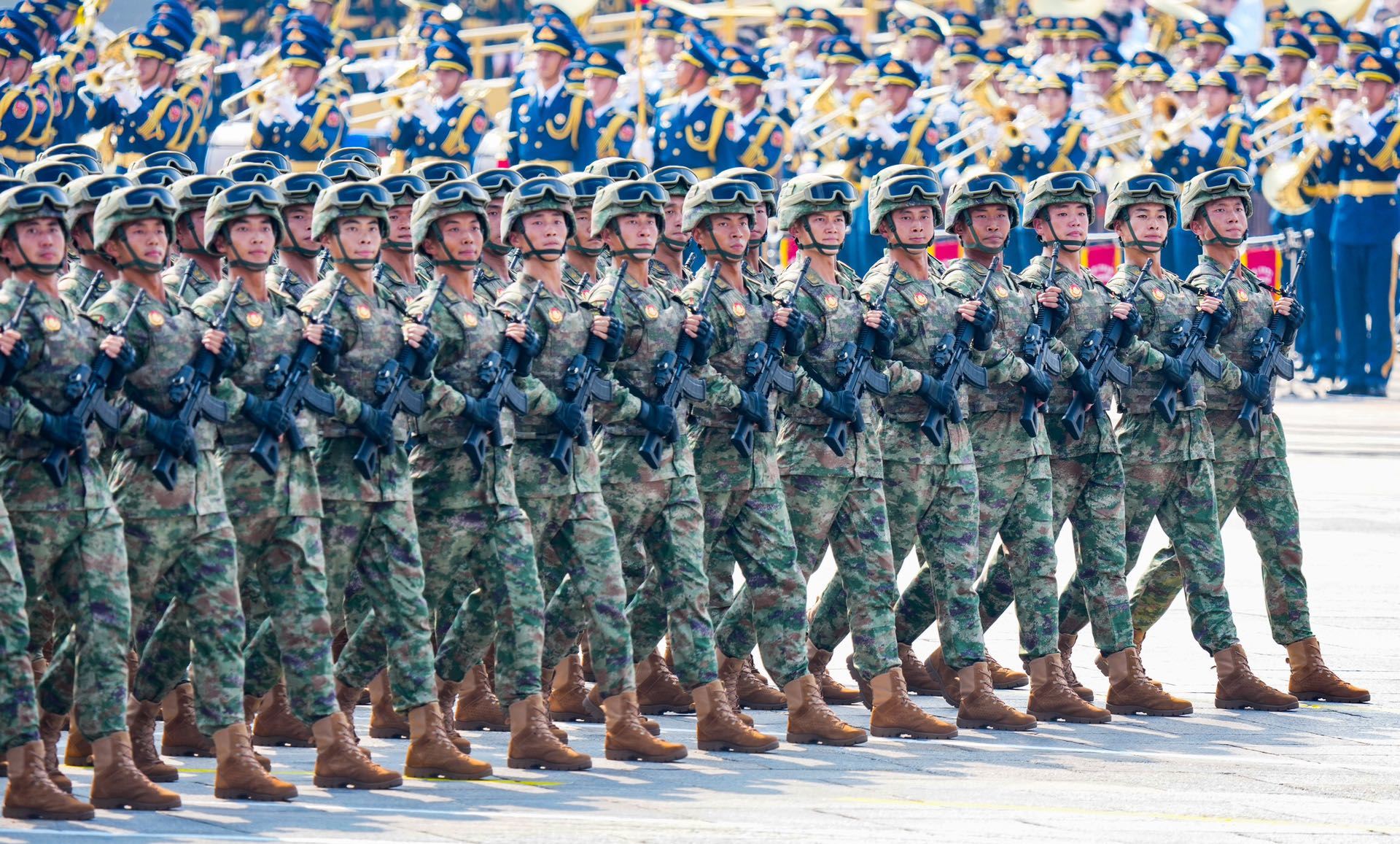
The People’s Liberation Army aerospace force on parade in Tiananmen Square in Beijing in September
VCG/GETTY
More than a dozen of these institutions are subject to export controls and US sanctions, put in place on national security grounds and to prevent American technology and research aiding Beijing.
Strider’s findings have been shared with the Ministry of Defence (MoD), with the report urging British universities and institutions to begin “eliminating” these collaborations in the interests of national security.
It comes weeks after it emerged that Sheffield Hallam University halted research by Laura Murphy, a British academic, into human rights abuses in China after pressure from Beijing. The university has been referred to counterterrorism police over allegations that it may have broken the UK’s National Security Act.
• She stood up to China. Now she’s exposing how her university caved in
The act, which came into force in 2023, created new offences for covert influence, espionage and undeclared collaboration with foreign-linked entities. It also expanded powers to investigate and restrict activities that could enable foreign states to improperly access sensitive research or technology.
Sir Ken McCallum, the director-general of MI5, briefed university vice-chancellors last year that hostile states were targeting sensitive British research to boost their militaries and undermine the UK’s national security.
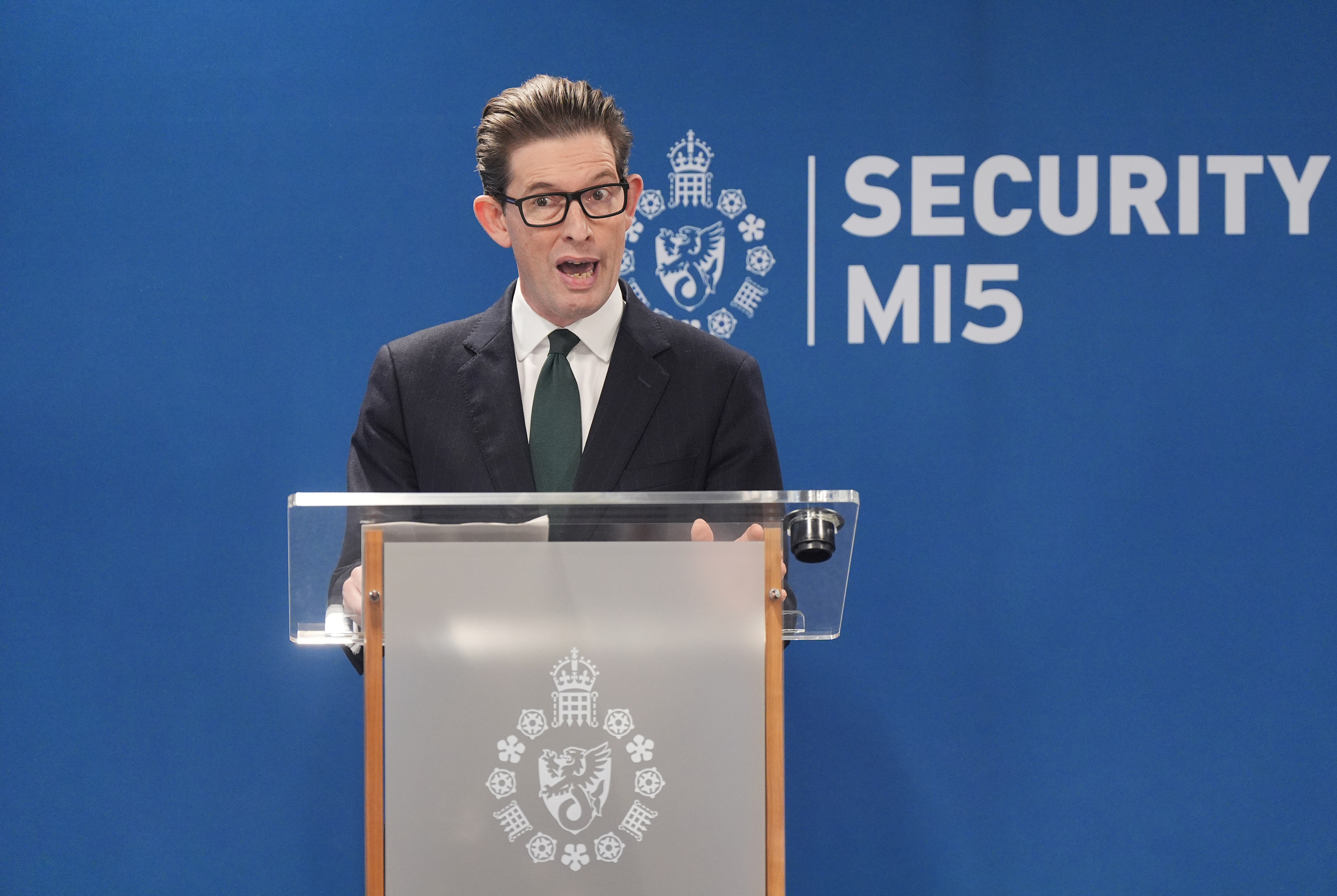
Sir Ken McCallum
YUI MOK/PA
The Sunday Times has independently found several examples of academics from UK universities, including Warwick, Manchester and Cranfield, collaborating on scientific papers with researchers affiliated with Chinese military universities sanctioned by the US.
While there is no suggestion that these specific examples are in breach of UK legislation, Strider’s report has reignited calls for universities to end such ties with China.
Tom Tugendhat, the Conservative former security minister, said: “UK institutions have now been warned frequently by both this government and those before to be aware of the reality of working with CCP [Chinese Communist Party] institutions, particularly the so-called Seven Sons. They have been warned that the UK is vulnerable and they have responsibilities to the taxpayers who fund the research.
“As security minister, I met vice-chancellors who demonstrated remarkable naivety as to their partnerships and complained that government security requirements interrupted their financial support.”
Cutting-edge scientific research has for decades entailed a high degree of collaboration between academics at universities and institutions around the world. From an academic perspective, working with Chinese experts who are leaders in their field is seen as mutually beneficial. However, some critics believe that financially strained universities and research institutions are increasingly reliant on funding and financial partnerships with China.
The Times has previously revealed how British universities had accepted £240 million from Chinese institutions, many with links to the military, with £60 million coming from sources sanctioned by the US government.
Last week, Sir Paul Nurse, the head of the Royal Society, warned that British universities appeared increasingly “third-worldish” compared with their Chinese rivals. He argued there was a need for close scientific ties with China and that concerns about espionage should be kept in proportion, adding: “The first thing is we do have to be realistic. We will spy on each other. So let’s not get too moral about it.”
Strider’s report suggests that the links between China and British-based researchers are continuing despite the warnings, with an average of 1,500 joint publications annually up to 2024.
It finds that more than 100 UK organisations have collaborated on Stem (science, technology, engineering and mathematics) papers with researchers associated with 50 institutes linked to the PLA since 2020. These include military research bodies, state-owned defence conglomerates and the Seven Sons.
The report warns that these partnerships “may be used to cultivate relationships with UK experts as a pathway for eventual recruitment” to Chinese institutions, adding that they also risk creating a “potential channel for the transfer of critical knowledge and technical expertise to the PLA”.
Almost 400 of the co-authored publications were linked to the PLA National University of Defence Technology (NUDT), based in the city ofChangsha. It is a military research and development institute subordinate to the Central Military Commission of the CCP and its president, Li Xiang, is a major-general in the PLA.
According to the US Department of Justice, the NUDT was first added to the Department of Commerce’s entity list — which places export restrictions on companies deemed to be a national security risk — due to its use of US-sourced components to “produce supercomputers believed to support nuclear explosive simulation and military simulation activities” in China.
Eric Levesque, the president and co-founder of Strider, said: “These are not benign collaborations. They involve state-run research entities that directly support China’s defence establishment, advancing the PLA at the expense of the UK.
“This is not about blaming individual academics; it’s about recognising a systemic risk. UK universities and research bodies are being targeted precisely because they lead the world in areas that underpin next-generation defence and intelligence capabilities. The government has taken important steps, but voluntary compliance and awareness campaigns are not enough. It’s time for universities to take a clear stand and end research that contributes to China’s military build-up.”
• China military parade: what weapons did Xi Jinping unveil?
Luke de Pulford, executive director of the Inter-Parliamentary Alliance on China, said: “There should be a rock solid firewall between sensitive UK research and anyone even remotely affiliated with the People’s Liberation Army.”
Strider’s report highlights that “multiple joint publications” focus on “anti-jamming communications”, a pivotal technology in “modern military command, control and communications systems”.
Strider also found publications focused on hypersonics and hypersonic vehicles, which it said is a scientific field “almost exclusively military in nature” due to its importance to next-generation weapons and missile defence. Beijing’s rapid development of hypersonic missiles, which can fly at many times the speed of sound, is a major concern for the US military and its western allies.
A paper published in June 2023 focused on improvements to anti-jamming technologies to protect wireless satellites. It was authored by Gan Zheng, an engineering professor at the University of Warwick, alongside two academics from NUDT’s 63rd Research Institute. The fourth and fifth authors were associated with the Army Engineering University in Nanjing.

The University of Warwick
ANDREW FOX FOR THE SUNDAY TIMES
Warwick said it took research ethics and national security “seriously” and followed all UK government guidance.
“All of our prospective research partnerships and collaborations go through a robust due diligence and triaging process to ensure compliance with government advice, best practice with research security, and compliance with legal obligations,” it added.
The Sunday Times has found two papers on hypersonics that involved researchers from Chinese institutions. The first, published in April 2023, relates to fluid movements at supersonic and hypersonic speeds, and was co-authored by Dr Timothy Craft and Professor Hector Iacovides, from the University of Manchester. Their co-authors were Jianqiang Chen and Xinguang Wang, who are both from the China Aerodynamics Research and Development Centre (CARDC), which is involved in the development of hypersonic missiles and has been on the US entity list for years.
Manchester University said it carefully considered research collaborations and followed all government guidance and legislation. A spokesman added that the university was “working with the government on development and implementation of relevant research security measures in academia”, adding: “The publication reports the findings of experimental research work conducted by staff and students at the University of Manchester. All necessary government clearance for this research to be conducted was obtained.”

The University of Manchester
GETTY
A third report, on tracking the trajectory of hypersonic vehicles, was published in 2019 by two academics, Antonios Tsourdos and Hyo-sang Shin, from Cranfield University, which is known for its close links to British defence. Two of their co-authors are from Beihang University in Beijing, which is involved in research for China’s aircraft and military technology. Beihang is a Seven Sons university and is also on the US entity list.
Cranfield University said: “The 2021 research paper relates to flight control systems for civil high-speed aircraft and was conducted when the challenges around hypersonic civil passenger flights were under discussion in the aerospace industry. Cranfield University adheres to all UK government guidance and regulations on academic and research collaborations with international institutions.”
A government spokesman said: “We provide robust support to the UK’s research sector on managing the risks of collaboration, including ensuring that institutions are alert to security risks and able to make informed decisions when collaborating internationally.”