
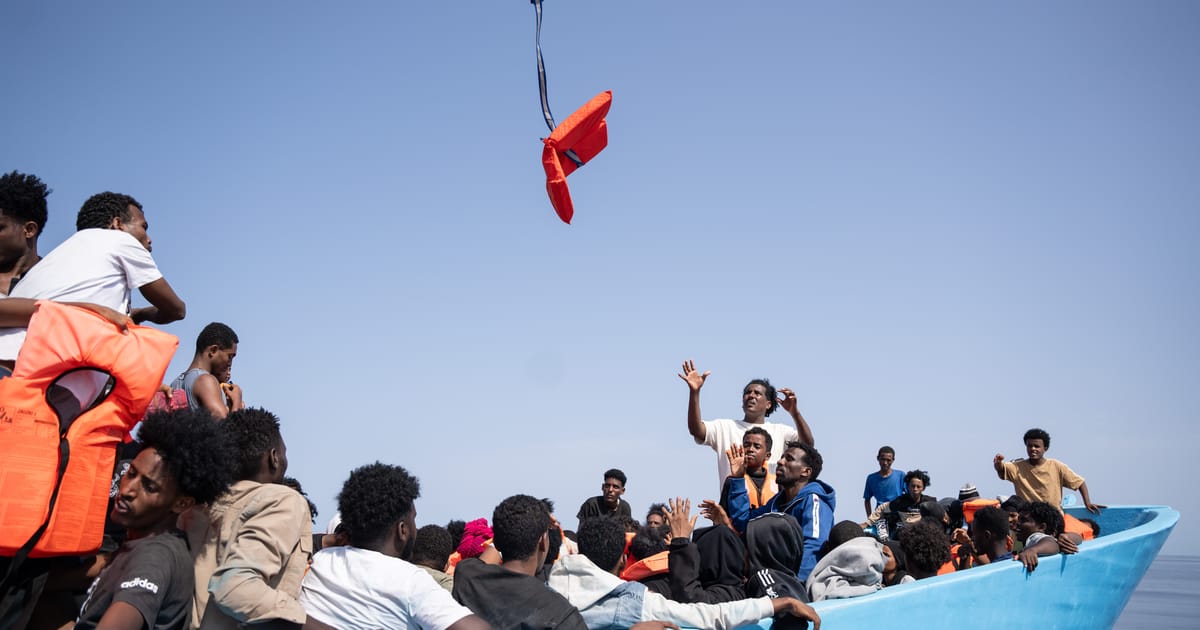
“We are at a turning point of the European migration and asylum reform,” European Commissioner for Migration Magnus Brunner told POLITICO’s Brussels Playbook. “These are all measures that will help process claims more effectively and reduce pressure on asylum systems. And they all send the same signal: Europe will not tolerate any abuse of its systems.”
The draft legislation includes a new “solidarity pool” in which countries — apart from those already facing high levels of migratory pressure — will be asked to resettle migrants or pay for other countries to support them. In addition, a new list of “safe countries” has been drawn up, from which asylum applications will be rapidly rejected unless there are extenuating circumstances.
Additional rules, also agreed by ministers on Monday, would mean countries are able to set up asylum processing centers in non-EU countries, as well as “return hubs” from where people whose claims are unsuccessful can be removed.
The changes have been pushed by Denmark, which holds the six-month rotating presidency of the Council of the EU, with the country’s center-left government setting out a hard-nosed approach to irregular migration both at home and in Brussels.
“We have a very high influx of irregular migrants, and our European countries are under pressure,” said Danish Minister for Immigration and Integration Rasmus Stoklund. “Thousands are drowning in the Mediterranean Sea or are abused along the migratory routes, while human smugglers earn fortunes.”
“This shows that the current system creates unhealthy incentive structures and a strong pull-factor, which are hard to break.”