
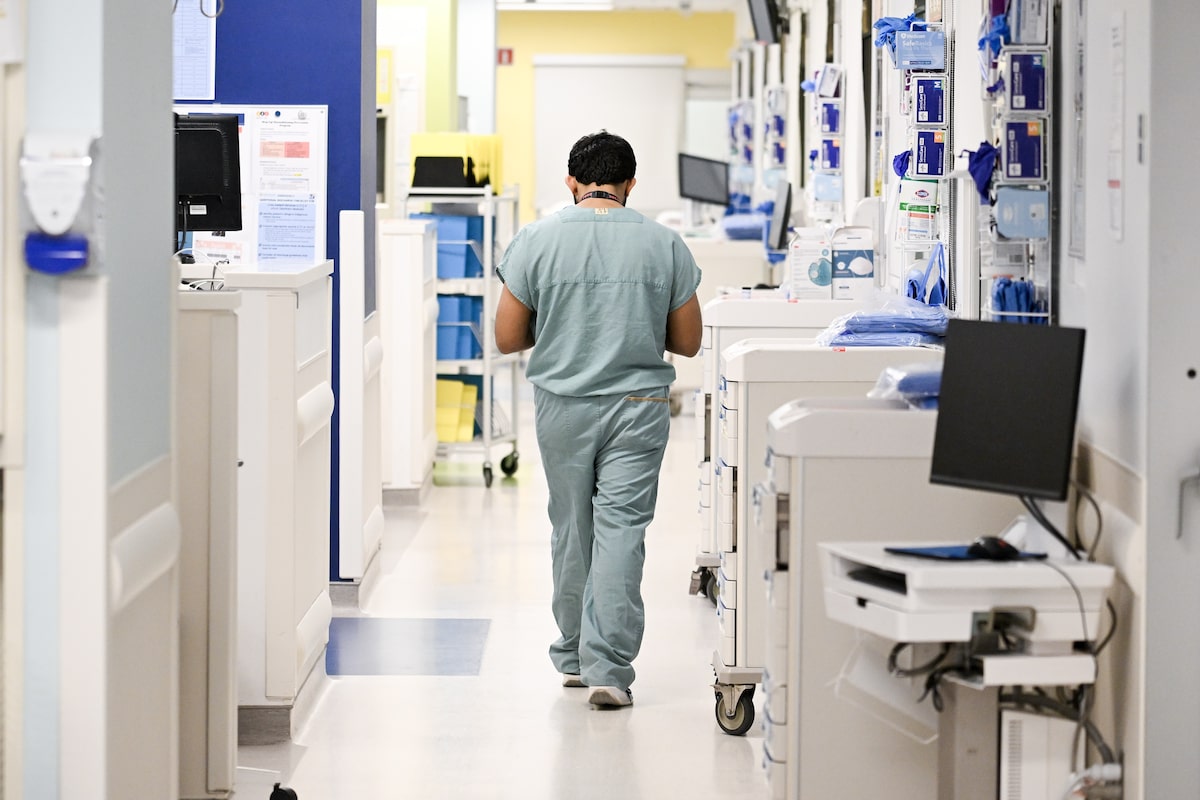
In a bid to fill local gaps in medical services, provinces and territories will be able to nominate 5,000 health care professionals for fast-tracking.Graham Hughes/The Globe and Mail
Foreign doctors are to be offered a fast track to permanent residency in a bid to persuade more medical professionals to stay and work across Canada.
The announcement Monday by Immigration Minister Lena Metlege Diab of a new pathway to permanent residency is designed to increase the number of family doctors in Canada and cut wait times to see specialists and surgeons.
The new express entry stream will be opened next year for foreign physicians who have worked in Canada for more than a year over the past three years. The government hopes it will attract more foreign health service professionals to relocate here.
Provinces and territories will also be given the power to nominate a total of 5,000 health care professionals for fast-tracking in a bid to fill local gaps in medical services. The permanent residency spots for medical professionals will be in addition to the overall number of permanent residency places reserved for provinces and territories.
Claims of a doctor shortage oversimplifies the issues with health care
In the immigration levels plan announced last month, the government increased the number of foreign nationals provinces and territories can nominate as permanent residents to help fill labour gaps.
Foreign doctors who have been offered jobs and have been nominated by provinces and territories will have their work permits processed within 14 days so they can start work within weeks.
Speaking in Toronto, Ms. Metlege Diab said that “provinces and territories are best placed to determine where their pressures are.”
She said staff shortages have led to “strain in our emergency rooms” and on the front line.
The new measures would apply to family doctors as well as surgeons and specialists, including oncologists, cardiologists and gynecologists, as well as people working in clinical and laboratory medicine.
Maggie Chi, the parliamentary secretary to Health Minister Marjorie Michel, said the pathway to permanent residency will help plug staffing gaps.
Last year, about 5.7 million Canadian adults and 765,000 children and youth reported not having a regular health care provider.
The responsibility for recognizing foreign medical credentials and licensing their holders to work in Canada lies with the provinces and territories.
Ontario hospitals tackle doctor shortage with hefty incentives for locums
Health care professionals from abroad have complained for years that getting qualified to work in Canada is fraught and full of obstacles and delays.
Margot Burnell, president of the Canadian Medical Association, said Canada is short about 23,000 family physicians. She has called for planning at a national level and the creation of one coherent, sustainable system, including addressing immigration and training.
In a statement, Dr. Burnell said there are more than 13,000 internationally trained physicians in Canada not working in their field.
“We must do more to recognize the medical talent already here – and to attract, welcome and retain more from around the world,” she said.
American doctors are among the largest groups of physicians coming to Canada, alongside others from Britain, Germany, Spain and the Netherlands, said Kevin Beigel, an immigration lawyer who works with several Toronto hospitals.
“As soon as the word starts to spread that you can get people here but staying here is difficult, I think people are going to reconsider the prospect of moving,” he said.
For foreign doctors, a work permit without permanent residency brings limitations. Work permits are generally issued for three years and can be both cumbersome and costly to renew. And in Ontario, a doctor without permanent residency is subject to a 25-per-cent foreign buyer tax if they purchase a home. Some choose to rent instead.
“We have brought our families to another country, uprooted our children’s lives and moved into rental homes. It’s very hard to feel settled in a place living in a rental,” said Amber McPherson, 43, an emergency medicine physician who recently began working for the Waterloo Regional Health Network.
Dr. McPherson moved to Canada with her family in August from Oregon, leaving the United States in part because of frustration over the inequities in its health care system, and in part because she feared its changed politics after the re-election of Donald Trump.
Across Canada, the numbers of physicians coming north this year have increased.
Ontario has issued certificates to 493 U.S.-trained physicians this year, up from 209 last year. The College of Physicians and Surgeons of BC has seen 405 applications from U.S.-trained physicians this year, nearly double the total from the previous two years. Nova Scotia has issued provincial licences to 34 U.S.-trained doctors this year, more than double the 2024 total.
Dr. McPherson began to plan her U.S. exit shortly after Mr. Trump’s inauguration. But so far she has been unable to qualify for the federal Express Entry route to permanent residency.
She has also encountered problems in another attempt to secure permanent residency. The Ontario Immigrant Nominee Program has a special pathway for physicians, many of whom operate under their own corporations rather than as direct employees.
That pathway, however, is not available to doctors with restricted certificates – which are the certificates issued to virtually all newly arrived foreign doctors. The restriction for Dr. McPherson constrains her to working in her field of practice. (Securing an unrestricted certificate can take years of effort and retesting to secure credentials from the Royal College of Physicians and Surgeons of Canada.)
But the “restricted” designation can also be placed on doctors with disciplinary issues. The Ontario program makes no distinction between the two.
The College of Physicians and Surgeons of Ontario said in a statement that it ”is aware of the concerns raised,” and will include a new provisional class of registration in the new year.