
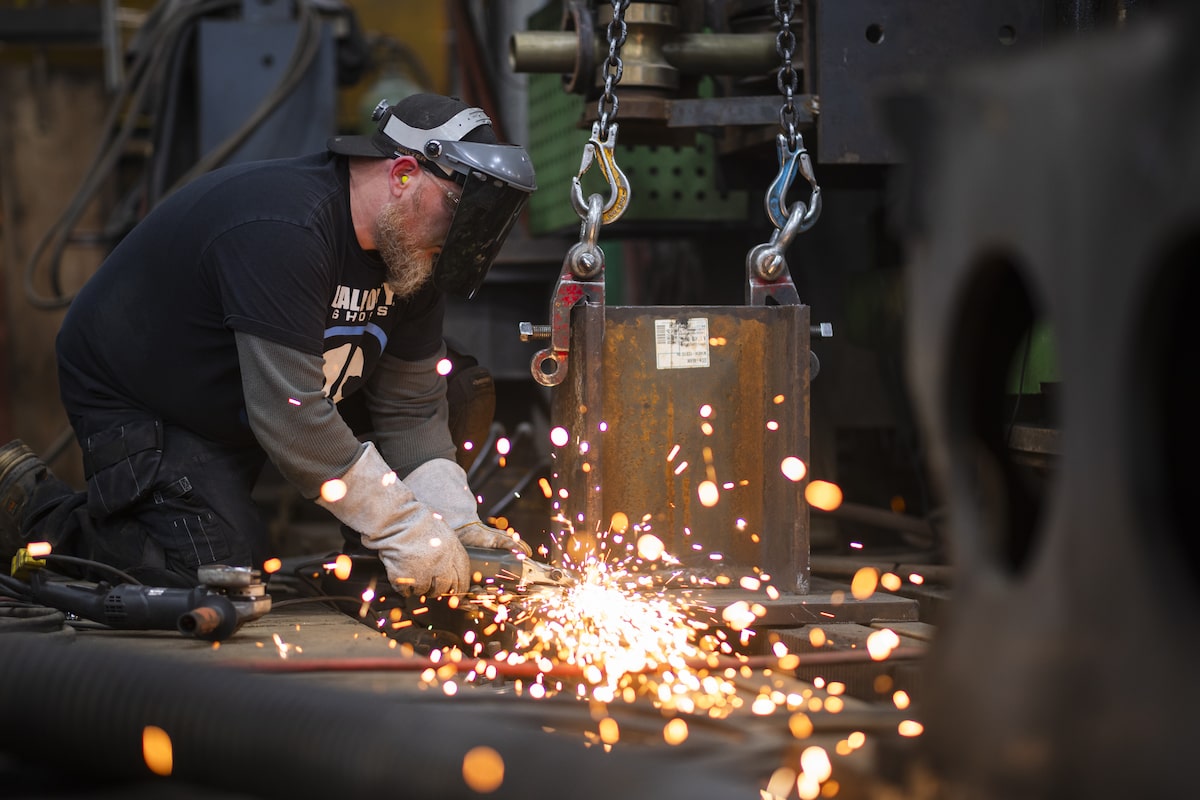
Ottawa and Washington have been negotiating in fits and starts since the spring, when U.S. President Donald Trump imposed a range of tariffs on Canada, including a 50-per-cent tariff on steel and aluminum, as part of a broader suite of tariffs levied on all U.S. trade partners.Nick Iwanyshyn/The Globe and Mail
Before trade talks abruptly ended in October, Ottawa and Washington were discussing a U.S. proposal that would have lowered tariffs on most Canadian steel exports to the United States while effectively capping the amount of steel heading south across the border.
U.S. trade negotiators proposed a tariff-rate quota system that would introduce two tiers of levies based on historical levels of Canadian steel exports, according to three people with knowledge of the October talks.
Under the proposal, Canadian steel shipments below a certain threshold would face a tariff in the range of 10 per cent to 15 per cent – far lower than the 50-per-cent levy currently imposed on Canadian steel.
Shipments above that quota would face a tariff somewhere between 25 per cent and 50 per cent.
Details of the discussions, which were called off after U.S. President Donald Trump became angry about a Government of Ontario TV advertisement, have not been reported before.
These details show specifically how Washington and Ottawa were talking about resolving one part of Mr. Trump’s punishing tariff regime, which has effectively shut Canadian steel out of the U.S. market and pushed up input costs for U.S. manufacturers.
Ottawa announces further limits on foreign steel, promises more money for lumber mills
U.S. eyes high tariffs on Canadian fertilizer, subsidies for farmers
Formal trade talks between Ottawa and Washington remain frozen. When asked on Sunday whether he’d resume trade talks with Canada, Mr. Trump responded, “we’ll see.”
U.S. President Donald Trump said ‘we’ll work it out’ when asked about the state of trade discussions with Canada on Sunday after he met with the leaders of Canada and Mexico on Friday.
Reuters
The three sources said they expect steel discussions to centre on a tariff-rate quota system once trade talks resume.
A TRQ system that cuts tariffs on most exports would be a relief for Canadian steel producers. But it would also solidify a shift from a system of free trade to one of managed trade, where the level of Canadian steel exports to the United States would be effectively capped by the size of the quota. This would prevent steel shipments from rising much beyond historical levels.
Much of the discussion between Canadian and U.S. trade negotiators in October revolved around the appropriate tariff levels both inside and outside the quota, the sources said.
There was also disagreement about how to determine the size of the quota, and whether it would be based on historical steel exports from a single year or an average of several years, they said.
“There was a lot of effort to try to get that higher outside-of-the-TRQ rate well below 50 per cent and to try to keep the inside [rate] as close to 10 as possible,” said one of the sources, Kip Eideberg, senior vice-president of government and industry relations at the Association of Equipment Manufacturers, a lobby group that represents offroad equipment manufacturers in the U.S. and Canada.
In hearings on the future of the USMCA, business leaders call on Trump to drop tariffs
Mr. Eideberg’s description of the talks was confirmed by the two other sources. The Globe and Mail is not naming them as they were not authorized to speak on the talks.
The U.S. has opted for TRQ systems in several trade deals it has struck in recent months, including for car imports from Britain and steel imports from the European Union.
Mr. Eideberg said in an interview he expects the two sides to re-engage in steel and aluminum talks in the new year, with the goal of getting a deal done some time in the first quarter.
The White House and Congress are looking to address various inflationary pressures ahead of the midterm elections in the second half of the year, he said.
“I’ve never seen as much attention being put on it by both parties on both ends of Pennsylvania Avenue to try to address that as I have currently. And I think that is good news because tariffs are the number 1 driver of costs going up. And so if that is what’s going to get us back to the negotiating table and get some of these tariffs off and get trade moving between the two countries, I think that’s a good thing,” he said.
Ottawa and Washington have been negotiating in fits and starts since the spring, when Mr. Trump imposed a range of tariffs on Canada as part of a broader suite of tariffs levied on all U.S. trade partners.
These include a 50-per-cent tariff on steel and aluminum, a 25-per-cent tariff on Canadian-made automobiles (with some carveouts) and a 35-per-cent blanket tariff for Canadian products that aren’t compliant with the United States-Mexico-Canada free-trade agreement’s rules of origin.
How Trump’s tariffs are squeezing Canadian factories
Because of the USMCA carve-out, most Canadian goods continue to enter the U.S. tariff free. But key Canadian sectors, including steel, aluminum and automobiles are getting hammered by Mr. Trump’s sector-specific tariffs, known as Section 232 tariffs.
Initially, Prime Minister Mark Carney said he was looking to secure a comprehensive deal with Mr. Trump that addressed all trade irritants between the two countries. But after failing to reach an agreement over the summer, Mr. Carney began to focus on trying to get relief from Mr. Trump’s industry-specific tariffs.
After meeting in the White House in early October, the two leaders tasked their trade teams to find some sort of arrangement for steel, aluminum and energy products. These were the talks that Mr. Trump ended several weeks later, after the Government of Ontario ran a television ad in the U.S. featuring the late president Ronald Reagan talking critically about tariffs.
Discussions about a TRQ system have so far focused more on steel than aluminum.
Mr. Trump met with Mr. Carney and Mexican President Claudia Sheinbaum in Washington on Friday for the FIFA World Cup Draw. The President told reporters on Sunday that the three leaders had spoken for half an hour. “Very good, very productive. We talked mostly trade,” he said.
Alongside talks about sectoral tariffs, the three countries have been preparing for a review of the USMCA that will take place next year.
While Ottawa has sought to secure better access for Canadian steel products to the U.S. market, it has also introduced a series of measures aimed at supporting hard-hit steel mills and creating domestic demand for Canadian steel.
Two weeks ago, Ottawa said it was tightening its own tariff-rate quota system for steel imports from countries other than the U.S., adding tariffs to steel derivative products, and ending a remission system that lowered tariffs on U.S. steel used in Canadian manufacturing.