
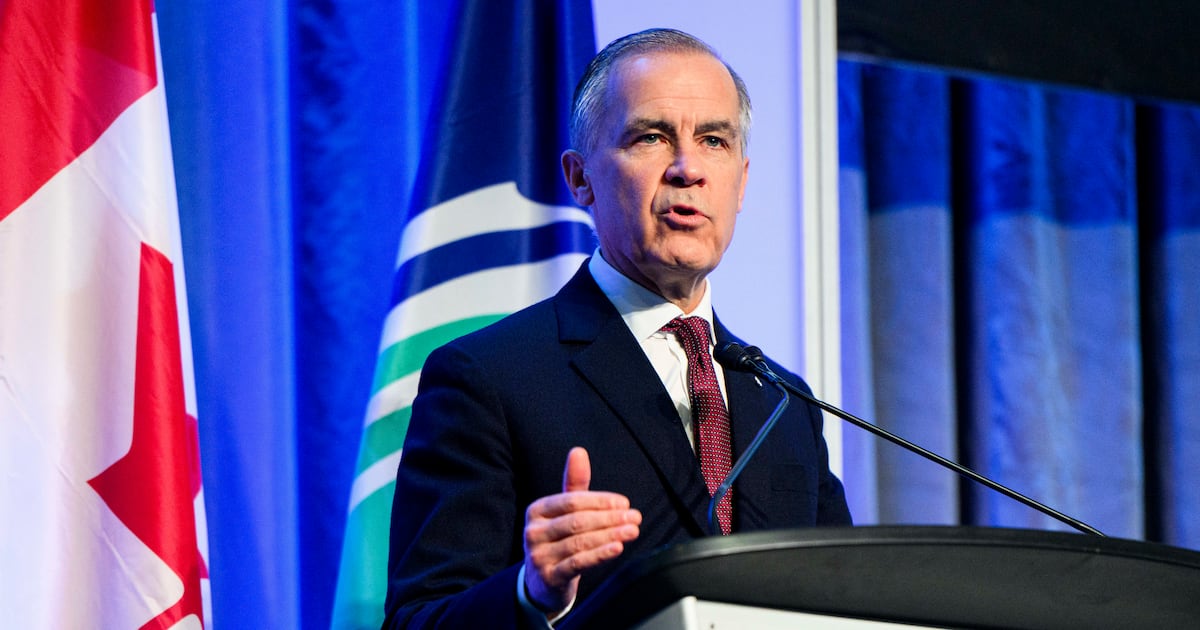
Prime Minister Mark Carney, speaking at the Mayor’s Breakfast in Ottawa, said he’ll be discussing return-to-office plans with unions. CTV’s Austin Lee reports.
The federal government will be speaking with unions and providing details about public servants spending more time in the office in the coming weeks, as rumours circulate about a new return-to-office directive for federal workers.
Speaking at the Mayor’s Breakfast in Ottawa Monday morning, Prime Minister Mark Carney said the government will engage with unions on the “appropriate levels” of in-office work for public servants.
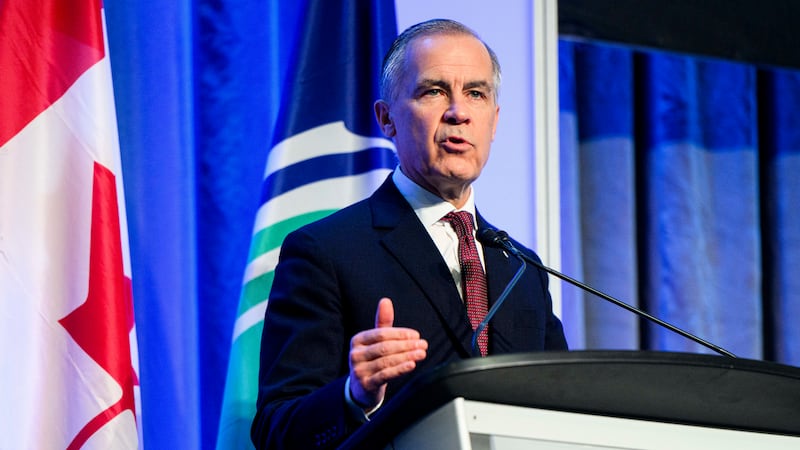 Mark Carney at Mayor’s Breakfast Prime Minister Mark Carney delivers remarks during the Ottawa Board of Trade Mayor’s Breakfast Series in Ottawa, on Monday, Dec. 8, 2025. THE CANADIAN PRESS/Spencer Colby
“We will come to a sharper view on it over the course of the next several weeks and there will likely be different levels of return, depending on seniority, depending on role, and, obviously, depending on capacity,” Carney said during a question-and-answer session with Ottawa Mayor Mark Sutcliffe.
“I’m a huge fan of the public service. We need the public service at this critical time, and we need public servants to have all the tools, including offices and workspaces, that make their jobs as interesting, as impactful as possible.”
The federal government’s hybrid work rules require public servants in the core public administration to be in the office a minimum of three days per week, while executives are expected to be on-site a minimum of four days a week. The rules apply to all employees in the core public service.
 Mark Carney Ottawa Mayor Mark Sutcliffe (left) speaks with Prime Minister Mark Carney during the Mayor’s Breakfast at the Rogers Centre Ottawa on Monday, Dec. 8. (CTV News)
The president of the Public Service Alliance of Canada (PSAC) says she was “shocked” to see the prime minister hint at changes to office mandates during the Mayor’s Breakfast organized by the Ottawa Board of Trade.
“Here we are hearing about it at a private event. I’m just shocked that is where he chose to announce it versus actually telling his employees and even contacting the unions that represent them,” Sharon DeSousa said Monday afternoon.
DeSousa said she has been trying to speak with federal officials since there was a “leak of a slide deck” that outlined an implementation of five days in office for public servants.
“We will do everything in our power to fight this,” DeSousa said, noting the unions are currently in contract negotiations with the federal government.
Two weeks ago, the Canadian Association of Professional Employees (CAPE) said it had heard “persistent rumours of an imminent new return-to-office (RTO) directive.”
“We would be deeply concerned, and frankly extremely disappointed, to learn that the employer is preparing yet another major policy shift without actively seeking and fully integrating union and worker input in advance of making a final decision,” CAPE president Nathan Prier said in the letter.
The Treasury Board of Canada Secretariat would not say last week whether changes to the office mandate for public servants were being considered.
“The Direction on prescribed presence in the workplace has not changed. We have no further information to share,” a spokesperson said in a statement to CTV News Ottawa on Dec. 1.
Last week, La Presse quoted an internal document from the Treasury Board Secretariat that the government is considering requiring public servants to be in the office full time by Jan. 1, 2027.
The Professional Institute of the Public Service of Canada is calling on the government “to ground any return to office decisions in evidence, service outcomes, and operational reality.”
“When the government makes policies about optics instead of outcomes, it risks slowing service delivery, draining talent, and making it harder to recruit the next generation of professionals,” Sean O’Reilly, president of PIPSC, said in a statement.
“We’ve been clear for years: RTO must be about ‘presence with purpose.’ Where in-person work improves innovation, training, or service delivery, that’s great. But forcing people back just to be seen and to sit in on video calls from another location is not leadership. It’s theatre.”
Carney mentioning possible changes to the hybrid work arrangements for federal public servants comes as City of Ottawa employees prepare to return to the office five days a week.
As of Jan. 1, 2026, all City of Ottawa employees will be required to be in the office five days a week as part of a “new standard for all city employees,” according to city manager Wendy Stephanson.
City preparing for possible return of public servants
Mayor Sutcliffe said the city is preparing for the possible return of public servants to the office four or five days a week.
“We want to see our downtown thriving and prosperous. It’s been a challenging time over the last few years since COVID,” Sutcliffe said.
“There are more people coming downtown, that’s clear when you’re in the downtown core. It’s evident more and more people are coming downtown to work.”
The mayor said any decision on the office mandate for public servants belongs to the federal government.
“We’re preparing at the City of Ottawa. We’re building more public transit, we’re increasing the frequency of public transit and we’re about to open the east end extension of LRT, which is going to bring thousands of people from Orléans into the downtown core every day,” Sutcliffe said.
“We’re putting in place what needs to be there to support any transition in the future.”
‘Transformation of the public service’
The prime minister also touted “changes in the way the public service” will operate during his appearance at the Mayor’s Breakfast.
The Canada Strong Budget 2025 outlined a plan to cut another 28,000 positions from the federal public service and achieve $60 billion in savings by 2029.
“This is about a transformation of the public service, a transformation for more interesting, more creative, higher impact jobs,” Carney said, noting federal spending was growing eight per cent a year.
“That’s tough to sustain, and, in fact, it can’t be sustained. There is an adjustment coming to the workforce. A lot of that will come through natural attrition, retirement, early retirement — there will be some other adjustments. At the same time, there will be changes in the way the public service is working. Much greater use of IT and artificial intelligence, other tools which strip out the less interesting components of the jobs.”
Last week, some federal departments began notifying staff if they would be impacted by workforce adjustments that are part of the Comprehensive Expenditure Review.
The Public Service Alliance of Canada said more than 200 employees at Natural Resources Canada received notices warning they may lose their jobs. The largest federal public service union said 109 members at the Public Service Commission of Canada, 92 employees at Crown-Indigenous Relations and Northern Affairs Canada and 74 at the Department of Finance also received notices saying government cuts may affect their jobs.
Shared Services Canada notified staff that employees impacted by workforce adjustments will be notified in January.
The government also issued early retirement notices to approximately 68,000 public servants outlining information on the planned early retirement program.